
15 Essential Fly Fishing Accessories Every Angler Needs
You've got your rod, reel, and flies—but if that's all you bring to the river, you're in for a frustrating day. The difference between a good day and a great day of fly fishing often comes down to the small accessories that solve problems, increase efficiency, and help you adapt to changing conditions. After over a decade on the water and countless hours guiding anglers, I've learned that the right accessories aren't just nice to have—they're essential tools that directly impact your success and enjoyment.
These 15 accessories represent the core items that should be in every angler's vest, pack, or chest pack. They're not expensive gadgets or trendy gear—they're proven tools that solve real problems you'll face on every fishing trip. Whether you're just getting started or looking to optimize your setup, these essentials will keep you fishing effectively from first cast to last. Explore our complete accessories collection to find everything you need for a successful day on the water.
Table of Contents
- Why the Right Accessories Matter
- Line Management Essentials (Items 1-3)
- Fly Preparation Tools (Items 4-6)
- Fish Handling Equipment (Items 7-9)
- On-Stream Convenience (Items 10-12)
- Safety and Comfort (Items 13-15)
- How to Organize Your Accessories
- Frequently Asked Questions
- Final Thoughts
Why the Right Accessories Matter
I've watched countless anglers lose prime fishing time fumbling with knots, struggling to clip line, or searching through disorganized gear for a simple tool. The right accessories eliminate these frustrations and keep you focused on what matters: fishing. Here's why investing in quality accessories pays immediate dividends:
They Save Time: Every minute you spend untangling line, searching for tools, or struggling with equipment is a minute you're not fishing. Quality accessories let you change flies in 30 seconds, adjust your rig instantly, and stay focused on reading water and presenting flies.
They Solve Problems: Flies sink when they should float. Leaders get tangled. Fish need to be released quickly and safely. Each accessory on this list solves a specific, recurring problem you'll face on the water.
They Protect Your Investment: Proper tools for handling fish protect the resource. Quality nippers cut cleanly without fraying tippet. Good forceps remove hooks without injury. These accessories help you fish responsibly while preserving the sport.
They Increase Success: Using floatant on dry flies, weight on nymphs, and strike indicators properly dramatically increases your catch rate. The right accessories ensure your flies fish the way they're designed to fish.
Line Management Essentials (Items 1-3)
Managing your line, leader, and tippet efficiently is fundamental to fly fishing success. These three tools should be within easy reach at all times.
1. Nippers/Line Cutters
Nippers are the single most-used accessory in fly fishing. You'll reach for them dozens of times per trip to trim tag ends, cut tippet, and remove old flies. Quality nippers make clean cuts that prevent tippet from fraying, which is critical for knot strength and fly presentation.
What to Look For:
- Sharp, precise cutting edges (not crushing blades)
- Built-in needle for clearing hook eyes
- Retractable tether or zinger to keep them accessible
- Stainless steel construction for durability
Price Range: $8-$30
Pro Tip: Attach them to a retractor on your vest or pack so they're always within reach. Fumbling for nippers wastes valuable fishing time.
2. Hemostats or Forceps
Forceps serve multiple critical functions: removing hooks from fish (especially deep-hooked fish), crimping down barbs, clearing hook eyes, and retrieving flies from brush. The locking mechanism lets you grip hooks firmly while keeping your fingers safe from points.
What to Look For:
- Curved tips for better hook access
- Serrated jaws for secure grip
- Locking mechanism that's easy to release
- 5-6 inch length for versatility
Price Range: $8-$25
Why It Matters: Quick, safe hook removal reduces stress on fish and gets them back in the water faster, improving survival rates.
3. Tippet Spools (Multiple Sizes)
You'll need various tippet sizes to match different flies and conditions. Most anglers carry 4X, 5X, and 6X for trout fishing, with 3X for larger flies or bass. Having the right tippet diameter ensures proper fly action and prevents break-offs.
Essential Sizes for Trout:
- 4X (0.007"): Larger dries, nymphs, small streamers
- 5
- 5X (0.006"): All-purpose size for most dry flies and nymphs
- 6X (0.005"): Small flies, selective fish, clear water
- 7X (0.004"): Tiny midges and ultra-technical fishing (optional)
Price Range: $5-$8 per spool
Storage Tip: Use a tippet holder or tippet tender to keep spools organized and prevent tangles in your vest or pack.
Fly Preparation Tools (Items 4-6)
Your flies won't fish properly without the right preparation. These tools ensure dry flies float, nymphs sink, and everything looks natural in the water.
4. Floatant (Gel and Powder)
Dry flies need to float to be effective. Floatant waterproofs your flies, helping them sit high on the surface where trout can see them. Carry both gel floatant for treating flies before use and powder desiccant for drying and restoring waterlogged flies.
Types You Need:
- Gel Floatant: Apply to dry flies before fishing. Creates water-repellent coating.
- Powder Desiccant: Absorbs moisture from wet flies, restoring floatability instantly.
Price Range: $6-$12 per bottle
Pro Tip: Apply gel floatant to flies at home before your trip, then use powder to restore them on the water. This saves time and keeps flies fishing longer.
5. Split Shot or Tungsten Putty
Nymphs need to get down to where fish are feeding, often near the bottom. Removable weight lets you adjust depth quickly as water conditions change. Split shot is traditional and effective, while tungsten putty is reusable and environmentally friendly.
Split Shot Sizes to Carry:
- BB and smaller for moderate depth
- Size 4-6 for deeper or faster water
- Removable (not permanently attached) for easy adjustment
Price Range: $4-$10
Alternatives: Tungsten putty ($12-$15) is reusable, molds to any shape, and contains no lead.
6. Strike Indicators
Strike indicators suspend your nymphs at the right depth and signal when fish take your fly. They're essential for nymph fishing success. Carry multiple types and sizes to match different water conditions.
Types to Have:
- Yarn indicators: Sensitive, adjustable, don't damage leader
- Foam indicators: High visibility, buoyant, good in faster water
- Bio-indicators: Use a buoyant dry fly as an indicator (my preferred method)
Price Range: $5-$15 per pack
Size Guide: Match indicator size to fly size—small indicators for small flies, larger for weighted rigs.
Complete Your Setup
Don't piece together your gear from random sources. Our accessories collection features all these essential tools in one place, carefully selected for quality and value. Get equipped properly and spend more time fishing.
Fish Handling Equipment (Items 7-9)
Proper fish handling ensures healthy releases and preserves the fishery for future anglers. These tools help you land, photograph, and release fish quickly and safely.
7. Landing Net
A good landing net protects fish from injury, helps you land larger fish more reliably, and makes unhooking easier. Rubber or silicone nets are best—they don't remove the protective slime coating from fish and hooks don't tangle in the mesh.
Features to Look For:
- Rubber or silicone bag (not nylon—it removes slime)
- Medium-deep bag that fully contains fish
- 18-22 inch hoop for most trout fishing
- Magnetic net release for easy access
Price Range: $40-$150
Why It Matters: Nets reduce handling time and stress on fish. You can unhook fish in the water, which significantly improves survival rates.
8. Fishing Pliers (Needle Nose)
While forceps handle most hook removal, needle-nose pliers are invaluable for crimping barbs, removing deeply embedded hooks, and adjusting split shot. They provide extra leverage and reach that forceps can't match.
What to Look For:
- Stainless steel or corrosion-resistant coating
- Long, thin nose for reaching deep hooks
- Side cutters for trimming leader material
- Comfortable grip for extended use
Price Range: $15-$40
When You Need Them: Bass fishing, saltwater, any situation with larger hooks or strong-jawed fish.
9. Fish Grips or Wet Gloves
Handling fish properly protects their slime coat and increases survival after release. Wet your hands before touching fish, or better yet, use rubberized fish grips or wet cotton gloves that provide grip without removing protective slime.
Options:
- Wet Hands: Always wet hands before touching fish (free!)
- Rubberized Gloves: Provide grip, protect fish, keep hands warm
- Fish Grips: Mechanical tools for larger fish like bass (less common for trout)
Price Range: $0 (wet hands) to $25 (quality gloves)
Best Practice: Handle fish as little as possible, keep them in the water when unhooking, and release them facing upstream in calm water.
On-Stream Convenience (Items 10-12)
These accessories make your time on the water more efficient and organized, letting you spend more time fishing and less time fumbling with gear.
10. Fly Box(es)
Your flies are worthless if you can't access them quickly. Quality fly boxes protect your flies, keep them organized, and make fly selection fast and intuitive. Most anglers carry 2-3 boxes: one for dry flies, one for nymphs, and one for streamers.
Box Types:
- Compartment Boxes: Individual slots for each fly, best for dry flies
- Slotted Foam: Secure hold, good for nymphs and streamers
- Magnetic Boxes: Easy access, work for any fly type
- Waterproof: Essential feature—look for sealed gaskets
Price Range: $10-$50 per box
Organization Tip: Organize by fly type and size, not color. You'll find what you need much faster.
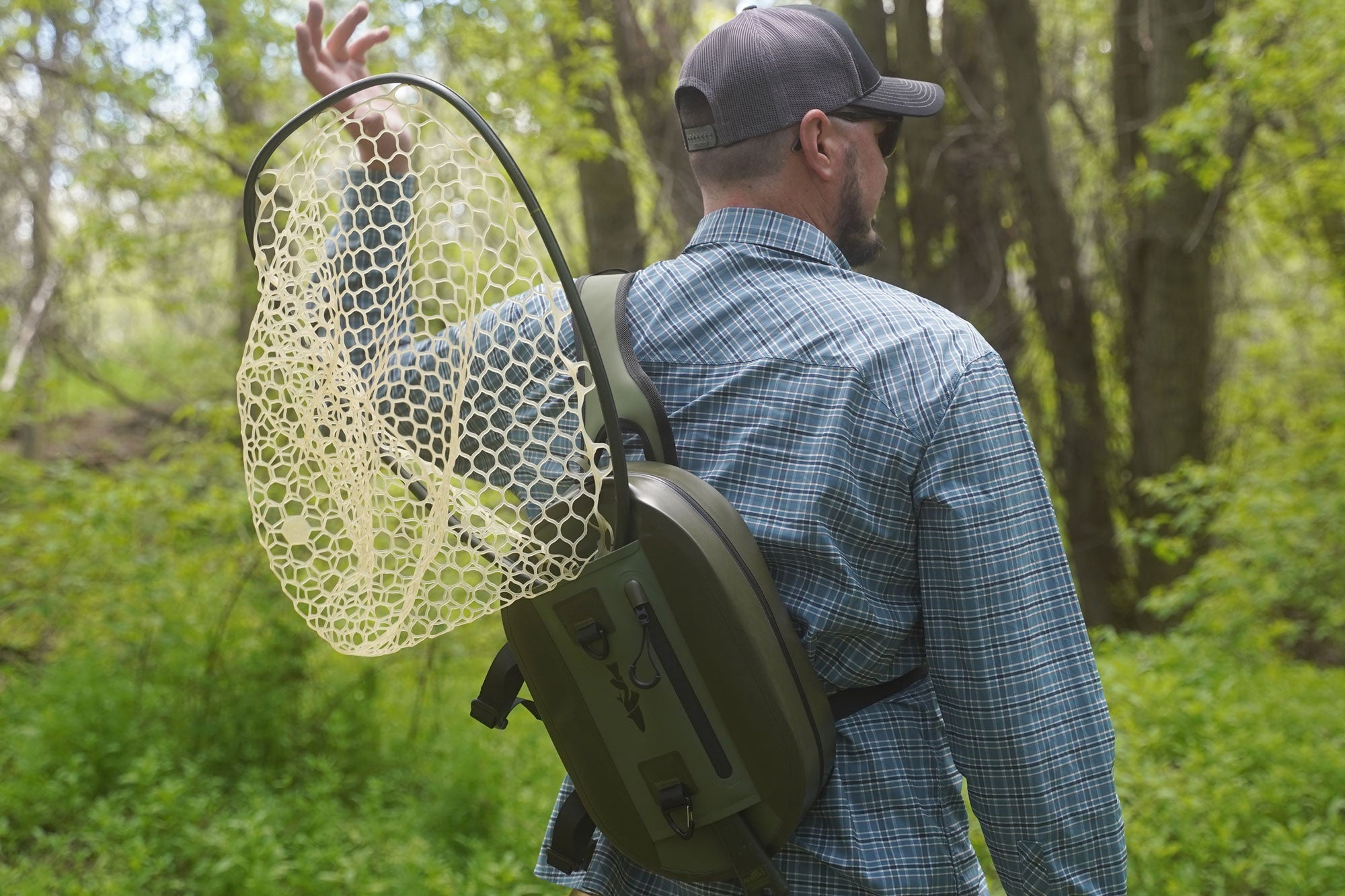
11. Vest, Chest Pack, or Sling Pack
You need a way to carry all these accessories within easy reach. The right storage solution depends on your fishing style and personal preference. Modern chest packs have largely replaced traditional vests, but both work well.
Options:
- Chest Pack: Compact, accessible, works with waders, most popular choice
- Vest: Maximum storage, traditional, good for warm weather
- Sling Pack: Larger capacity, rotates to front for access, holds water bottles
- Hip Pack: Minimalist option for light tackle fishing
Price Range: $40-$200
What You Need: Enough pockets for 2-3 fly boxes, tippet, tools, floatant, and strike indicators. Foam patches for quick-drying flies are a valuable feature.
12. Zinger/Retractor System
Zingers keep your most-used tools (nippers, forceps, floatant) attached but instantly accessible. The retractable cord extends when you need the tool, then retracts automatically. This simple system prevents lost tools and eliminates fumbling.
What to Attach:
- Nippers (most important—you'll use these constantly)
- Hemostats/forceps
- Floatant bottle
- Thermometer (for water temperature)
Price Range: $5-$15 each
Pro Tip: Get heavy-duty retractors for heavier items like hemostats. Standard zingers work fine for nippers.
Safety and Comfort (Items 13-15)
These final three accessories protect you and make long days on the water more comfortable and safe.
13. Polarized Sunglasses
Polarized sunglasses are non-negotiable. They cut glare, let you see into the water to spot fish and structure, protect your eyes from errant casts, and reduce eye strain during long days on the water. This is one accessory where quality truly matters.
Critical Features:
- Polarized lenses (non-polarized won't cut glare)
- UV protection (400+ rating)
- Wraparound style to block side light
- Secure fit that won't slide or fall off
Lens Colors:
- Copper/Brown: Best all-around for most conditions, enhances contrast
- Gray: True color perception, good for bright conditions
- Yellow/Amber: Low-light conditions, overcast days
Price Range: $25-$300
Worth Noting: Quality matters here. $100-200 glasses offer significantly better optics than budget options. Protect your eyes and invest wisely.
14. Sun Protection (Hat, Buff, Sunscreen)
Hours on the water means serious sun exposure. Protecting yourself from UV damage isn't optional—it's essential for your health and comfort. A good system includes multiple layers of protection.
Complete Sun Protection:
- Wide-Brim Hat: Shades face and neck, look for UPF 50+ rating
- Neck Gaiter/Buff: Protects neck and can cover face
- SPF 50+ Sunscreen: Reapply every 2 hours, water-resistant formula
- Long-Sleeve Shirt: UPF-rated fishing shirts provide excellent protection
Price Range: $20-$60 for quality hat and buff
Health Note: Skin cancer is a serious risk for anglers. Don't skip sun protection.
15. Small First Aid Kit
Accidents happen on the water. A compact first aid kit handles minor cuts, embedded hooks, blisters, and other common injuries. You'll rarely need it, but when you do, you'll be glad it's there.
Essential Items:
- Adhesive bandages (various sizes)
- Gauze pads and medical tape
- Antibiotic ointment
- Pain reliever (ibuprofen/acetaminophen)
- Tweezers for removing hooks or splinters
- Moleskin for blisters
- Antiseptic wipes
Price Range: $10-$30 for complete kit
Pro Tip: Include personal medications (allergy medicine, EpiPen if needed) and emergency contact information.
Complete your fishing setup with quality gear from our accessories collection. We've assembled everything serious anglers need to stay safe, comfortable, and productive on the water.
How to Organize Your Accessories
Having the right accessories doesn't help if you can't find them when you need them. Here's how to organize your gear for maximum efficiency:
The Quick-Access Zone
Tools you use constantly should be immediately accessible without opening pockets or compartments:
- Nippers on a zinger/retractor (front of vest or pack)
- Forceps on a separate zinger
- Primary fly box in easiest-to-reach pocket
- Floatant attached with zinger or in mesh pocket
The Secondary Zone
Items you need regularly but not constantly go in easy-access pockets:
- Additional fly boxes
- Tippet spools in tippet holder
- Split shot container
- Strike indicators
- Extra leaders
The Backup Zone
Items you might need but don't access frequently can go in larger pockets or external pouches:
- First aid kit
- Sunscreen
- Extra buff/gloves
- Backup tools
- Snacks and water
Before Every Trip
Develop a pre-trip routine to ensure you have everything:
- Check that all tools are present and functional
- Ensure nippers are sharp and forceps open/close smoothly
- Verify you have adequate tippet in needed sizes
- Confirm fly boxes contain patterns appropriate for the season
- Test that zingers retract properly
- Restock any depleted items (floatant, split shot, leaders)
Seasonal Adjustments
Your accessory needs change with the seasons:
Spring: Add extra weight (split shot), larger strike indicators, and patterns for high water
Summer: Maximum sun protection, smaller flies require more delicate tippet
Fall: Streamer gear, larger tippet sizes, thermometer to monitor water temps
Winter: Hand warmers, smaller flies and indicators, lighter tippet for technical fishing
For more guidance on what gear you need as you progress, check out our beginner gear collection, which includes starter accessory packages for new anglers.
Frequently Asked Questions
How much should I budget for essential fly fishing accessories?
Plan to spend $150-300 to acquire all 15 essential accessories with quality items that will last. You can start with about $75-100 for the absolute basics (nippers, forceps, tippet, floatant, one fly box, and basic sunglasses), then add the rest as budget allows. Prioritize tools you'll use most often (nippers, forceps, fly boxes) and don't cheap out on polarized sunglasses—your eyes are worth the investment.
What's the difference between expensive and cheap nippers?
Quality nippers ($15-30) make clean cuts that don't fray tippet, have sharp points for clearing hook eyes, and last for years. Cheap nippers ($5-10) often crush line instead of cutting cleanly, dull quickly, and may break under regular use. Since you'll use nippers dozens of times per trip, spending $20-25 on a quality pair pays off immediately. Look for stainless steel construction and a lifetime warranty.
Do I really need both forceps and fishing pliers?
For most trout fishing, forceps alone are sufficient. Add pliers if you're fishing for bass, pike, or saltwater species with larger hooks and stronger jaws. Forceps are lighter and easier to carry, making them ideal for stream fishing. Pliers provide more leverage and cutting power for tougher jobs. Most anglers start with forceps and add pliers only if their fishing style requires them.
What's the best way to carry my accessories while wading?
Chest packs are the most popular modern solution—they keep accessories high and dry while wading, put everything at chest level for easy access, and work seamlessly with waders and wading belts. Traditional vests work well but can be hot in summer and aren't as waterproof. Sling packs offer maximum storage but require rotating the pack forward for access. Hip packs work for minimalist setups but can be submerged when wading deep. Choose based on how much gear you carry and your typical wading depth.
Can I use regular sunglasses instead of polarized fishing sunglasses?
Regular sunglasses reduce brightness but won't cut glare off the water's surface, meaning you can't see into the water to spot fish or structure. This dramatically reduces your effectiveness. Polarized lenses filter reflected light, letting you see beneath the surface—essential for reading water, spotting fish, and locating structure. For fly fishing, polarized sunglasses aren't optional; they're fundamental equipment. Even budget polarized glasses ($25-40) are far better than expensive non-polarized sunglasses for fishing.
Final Thoughts: Gear Up for Success
The difference between struggling on the water and fishing effectively often comes down to having the right small tools at the right moment. These 15 accessories aren't frivolous add-ons—they're essential equipment that directly impacts your success, efficiency, and enjoyment on the water.
Start with the non-negotiables. Nippers, forceps, tippet, floatant, fly boxes, and polarized sunglasses form your core setup. These six items will immediately make your fishing more effective and enjoyable. Budget $75-100 for quality versions of these essentials.
Add items as you identify needs. After a few trips, you'll recognize what's slowing you down or limiting your effectiveness. Need to get nymphs deeper? Add split shot. Losing flies in the sun? Get a better hat. Let your experience guide your purchases.
Invest in quality where it matters. Polarized sunglasses, nippers, and landing nets are worth spending extra on—they're used constantly and cheap versions fail quickly or perform poorly. Strike indicators, split shot, and tippet holders are fine as budget options.
Organization equals efficiency. The best accessories are worthless if you can't access them quickly. Develop a consistent organization system so you can reach any tool without thinking. Attach frequently-used items to retractors. Keep fly boxes in consistent pockets. Build habits that become automatic.
Maintain your gear. Rinse saltwater off tools after each use. Sharpen nippers periodically. Replace worn-out floatant. Check that zingers still retract properly. Well-maintained accessories last for years and perform reliably when you need them.
The anglers who consistently catch more fish aren't just better casters—they're better prepared. They can change flies quickly, adjust their rig for conditions, handle fish properly, and stay comfortable all day. That preparation starts with having the right accessories organized and accessible.
Browse our complete accessories collection for all these essential items, carefully selected for quality and value. We've done the research and testing so you don't have to. And when you're ready to expand your knowledge, visit our blog for in-depth guides on techniques, gear, and destinations.
Gear up right, stay organized, and spend your time on the water doing what matters: fishing.
Fly Fishing Insider Podcast has a referral partnership with Frontiers International Travel. If you book after being introduced through us, we may receive compensation at no additional cost to you.