
Short answer: base yourself in Bozeman, come between late June and early August for your first trip, book one or two guided days at the start and fish independently after that, and bring a 9-foot 5-weight. That combination gives a first-timer the highest chance of a great week.
Standing waist-deep in the Madison River on a crisp August morning, watching a 20-inch brown sip PMDs off the surface while the Tobacco Root Mountains provided the backdrop, I understood why Montana has become a pilgrimage destination for fly anglers worldwide. I guide at home in Utah, and over the years I've hosted a lot of anglers on their first trips to Montana — and the pattern is always the same. Success here isn't about luck. It's about planning, realistic expectations, and understanding what makes these waters special.
Montana offers more than 450 miles of designated blue-ribbon trout water, ranging from technical spring creeks to roaring freestone rivers. For a first-time visitor that abundance can feel overwhelming. Where do you start? When should you come? What should you expect?
Why Montana should be your next destination
Montana contains some of the best fly fishing regions in the world, with areas like Bozeman offering access to four iconic rivers within thirty minutes: the Gallatin, Madison, Yellowstone, and Missouri, plus small creeks, mountain lakes, and ponds — just about every kind of fly fishing you could want.
The state's geography creates diversity that accommodates any preference. Montana arguably ranks as the best state in the west for a DIY trip, thanks to stream access laws that allow anglers onto private land along rivers, abundant public land, and a huge variety of wade-friendly fisheries.
Unmatched fish density. Rivers like the Missouri hold more than 5,000 trout per mile, with wild fish typically measuring 17 to 19 inches. These aren't hatchery fish — they're wild populations adapted to their environment over generations.
Year-round opportunity. Unlike destinations that shut down seasonally, Montana offers quality angling from April through November, each season presenting its own opportunities and challenges.
Diverse water types. From the technical spring creeks near Livingston to the boulder-strewn Madison, Montana's waters teach you every aspect of fly fishing in a single trip.
WATCH: Montana's best spots for fly fishing
Want the river-by-river breakdown? Read our top 10 fly fishing rivers in Montana.
Choosing your base camp
Your home base dramatically influences the trip. Each region offers distinct advantages, river access, and character.
Bozeman: the Swiss Army knife
Four iconic rivers within half an hour of Main Street, plus the comfort of a mid-sized town with good restaurants, varied accommodation, and plenty of family-friendly, non-fishing activities. It's the base I steer most first-timers toward for exactly that reason — if the weather ruins a day, there's somewhere to go.
The Madison flows 45 minutes south, offering classic riffle-run fishing with consistent hatches. The Yellowstone, an hour northeast, remains the longest undammed river in the Lower 48. The Gallatin provides intimate mountain stream fishing minutes from town, while the Missouri tailwater delivers technical challenge and trophy fish.
West Yellowstone: gateway to legendary water
This puts you at the epicentre of Western fly fishing lore. The Madison exits Yellowstone Park here, and the town supports a remarkable number of fly shops. Proximity to the park adds the dimension of fishing water that hasn't changed substantially since the 1800s.
Ennis: authentic Montana character
If an authentic Montana town appeals, Ennis is hard to beat — the world-famous Madison runs along the east side of town with convenient wade access within walking distance.
Missoula: early season paradise
Local waters include the Clark Fork, Bitterroot, and Blackfoot, plus world-class smaller streams like Rock Creek. West of the continental divide, Missoula's winters are milder and runoff arrives weeks earlier, which makes it the pick for early season.
Seasonal timing: when to visit
Spring (April to May): technical precision. Excellent DIY opportunities before runoff, with another window just after runoff in late June and early July. Spring demands technical skills — longer leaders, smaller flies, precise presentations. Fish are selective, but the crowds haven't arrived.
Early summer (June to July): prime time chaos. Peak season brings peak pressure but also peak opportunity. June heralds caddis and salmonfly hatches, making it one of the best months on Montana water. The most consistent dry fly fishing of the year, but it requires booking accommodation and guides well ahead.
Late summer (August to September): terrestrial paradise. Mid-August gets tougher on public water because fish have seen a lot of flies, but it's excellent for targeting backcountry if you enjoy hiking. Terrestrial patterns dominate, which means larger flies and more aggressive takes.
Fall (September to October): trophy season. Excellent for DIY anglers since water is lower and more accessible, with opportunities inside and outside Yellowstone for fall-run browns.
Essential gear for Montana
Rod selection
A 9-foot 5-weight, fast or medium-fast, is the best all-around choice for Montana trout, though a 9-foot 6-weight adds heft for heavy nymph rigs or punching into stiff wind.
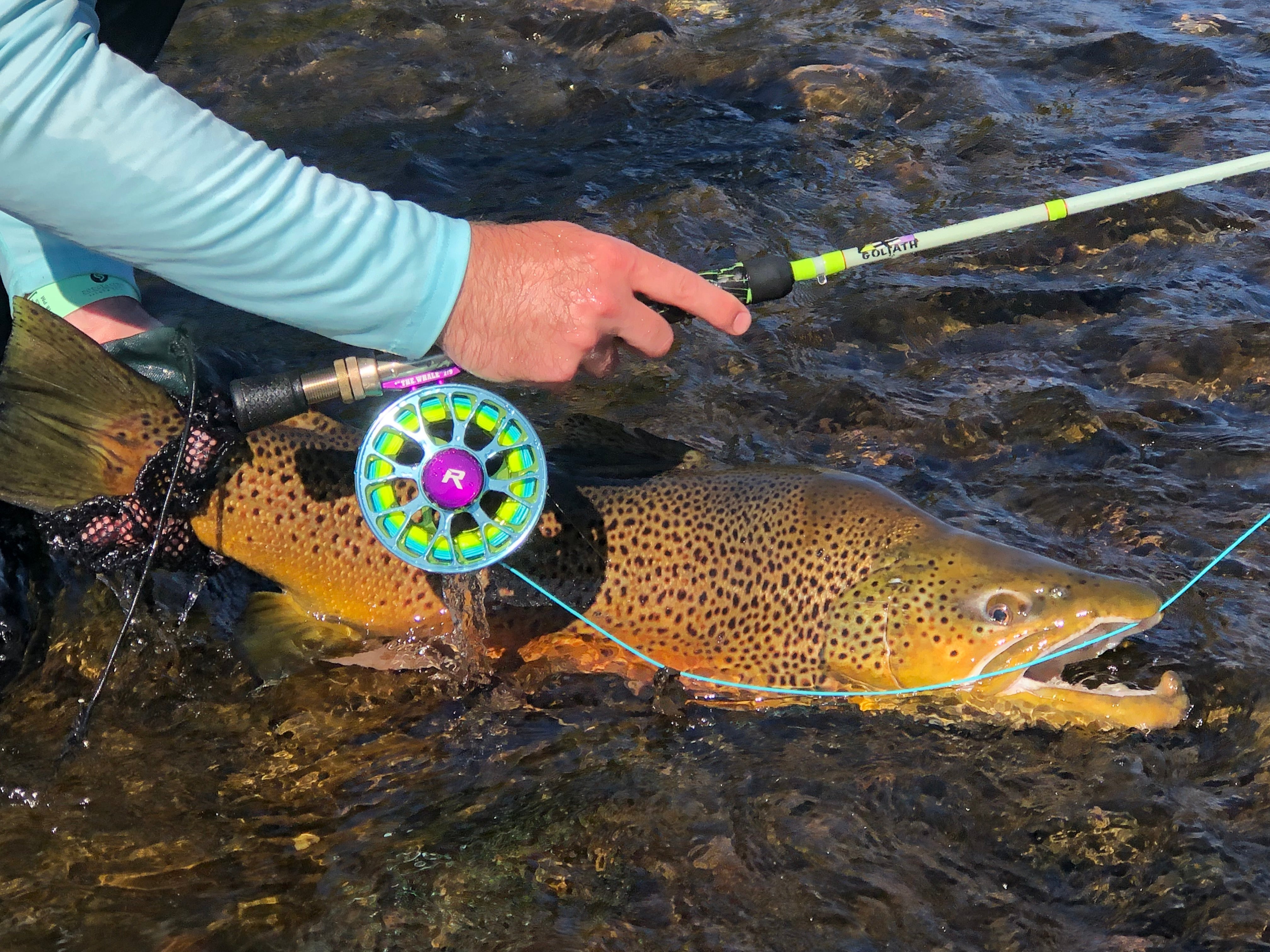
For a first trip, start with the 5-weight. It handles 90% of Montana situations while remaining manageable for a developing caster. The Genesis Rod and Reel Combo or the 23PS both cover it, and the Goliath steps up if you plan to throw streamers. See all rod and reel combos.
Weather protection
Weather can change by the half-hour in Montana — snow is possible in August and sunburn in November. Typical temperatures run 30s to 60s from April through June and September through November, and 60s to 80s in July and August.
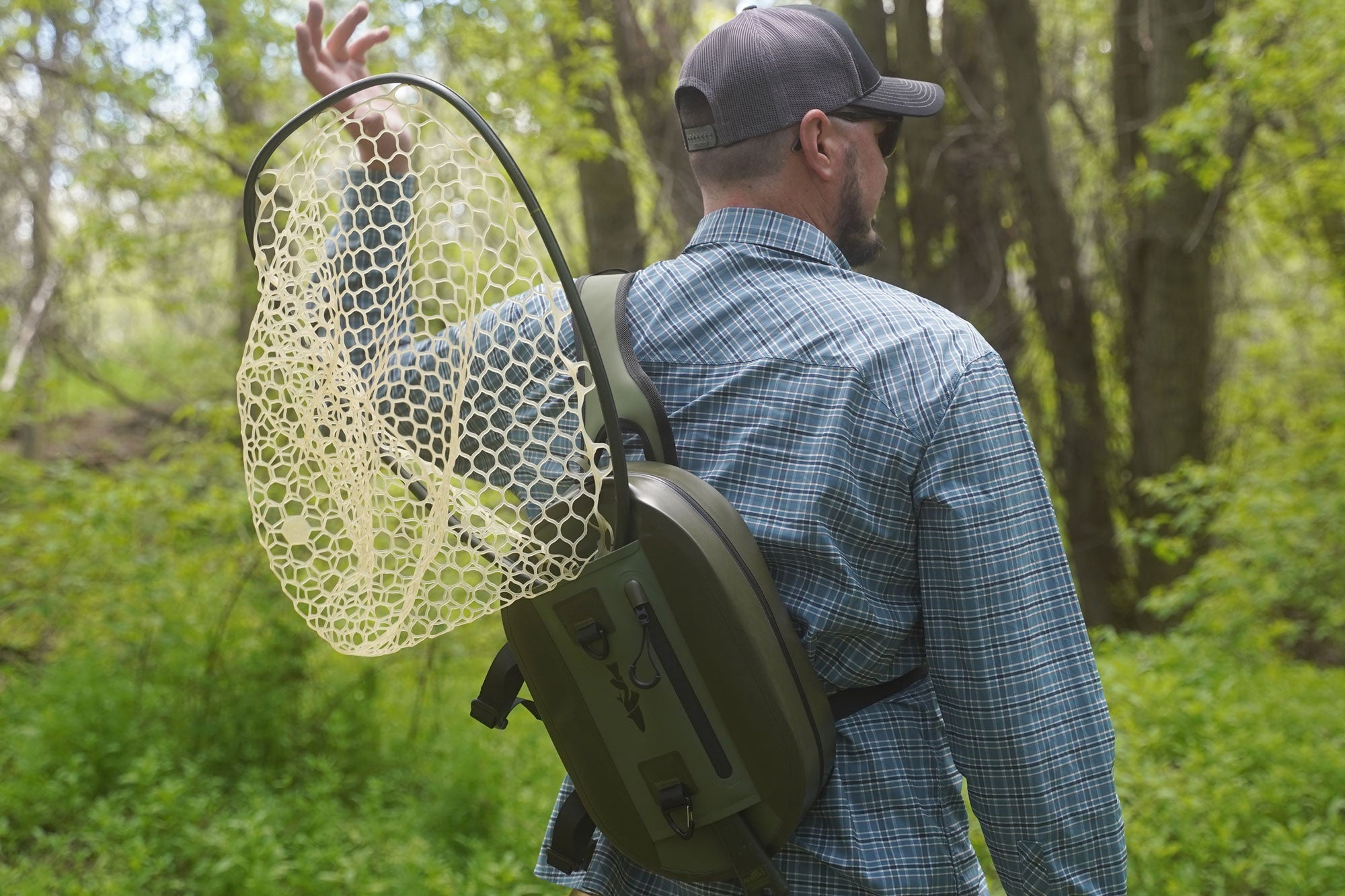
Montana weather doesn't follow rules. I've had trips start in t-shirts and end with everyone digging out rain gear as afternoon thunderstorms rolled through. Pack a packable shell like the Frogg Toggs Cascades Pack Jacket that lives in your bag, and a proper wading jacket with wrist gaiters such as the Whetstone or Deep Eddy. Add a Deckhand Puffy for mornings and evenings, and merino base layers from the cold weather collection — they keep insulating when damp, which matters on a river.
Waders and boots
Rocky bottoms and variable flows mean traction is a safety issue, not a comfort one. The Whetstone II Chest Wader or the MERIDIAN Z with a front zip, plus a wading belt — that belt is safety equipment. For boots, Slate Felt Sole Wading Boots grip slick rock well, and there are Women's/Youth Stonefly options. Check Montana's current regulations on felt before you travel.
Leader and tippet
A few 7.5-foot 3X tapered leaders and spools from 2X to 5X cover nearly every Montana situation, with 9-foot 4X leaders for primarily dry fly work and fluorocarbon for technical tailwaters. Stock up on Stone Creek Mono Tippet and see all tippets.
Hatch chart and fly selection
| Season | Primary Hatches | Essential Patterns | Sizes | Best Waters |
|---|---|---|---|---|
| April-May | BWO, midges | Parachute Adams, BWO emerger | 16-22 | Spring creeks, tailwaters |
| June-July | Salmonfly, caddis, PMD | Stimulator, Elk Hair Caddis, PMD dun | 8-16 | Freestone rivers, upper reaches |
| August | Hoppers, ants, PMD | Chubby Chernobyl, parachute ant | 10-18 | All water types |
| Sept-Oct | BWO, midges, mahogany dun | October caddis, rusty spinner | 14-20 | Lower elevations, spring creeks |
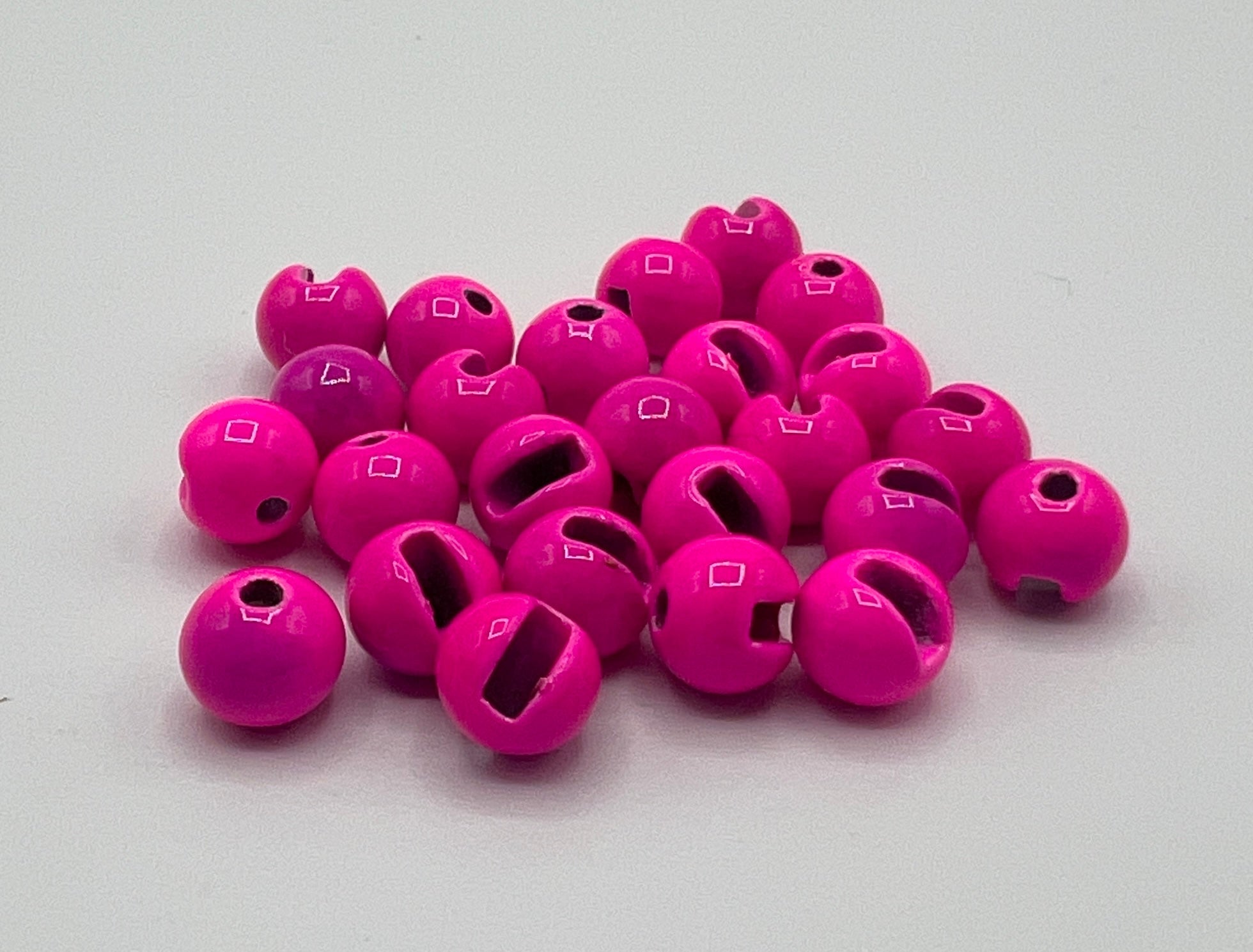
Ten general patterns catch trout across Montana much of the time: parachute Adams, elk hair caddis, chubby Chernobyl, parachute ant, bead head hare's ear, bead head prince, brown rubber legs, bead head pheasant tail, and olive woolly bugger.
Rather than assembling that piecemeal, the Postfly First Cast Beginner Trout Assortment covers the spread, the Hopper Dropper Assortment is the August answer, and the Crystal Woolly Bugger Assortment handles streamers. See all fly pattern assortments.
Guide services vs DIY
The case for a guide. A guide flattens the learning curve and gets you into fish, whether you're new and grasping fundamentals or experienced and taking on new water. Montana guides are required to hold current first aid certification, knowledge of equipment, terrain and hazards, and endorsement by a licensed outfitter. Most have years of experience on the water, at the oars, and in the backcountry.
The case for DIY. Montana is arguably the best state in the west for it, thanks to stream access laws, abundant public land, and wade-friendly water. Independent fishing gives you flexibility, cost control, and the satisfaction of solving the puzzle yourself.
The hybrid approach. This is what I recommend to everyone I've hosted on a first Montana trip: start with one or two guided days to gain local knowledge, then apply those lessons independently. Even committed DIY anglers benefit from a day with an outfitter to get dialled in on current conditions, what fish are eating, and where they're sitting.
Our Certified Guides & Lodges are operations we know personally and stand behind. If you'd rather have the whole trip arranged — flights, lodging, and guides coordinated together — the Book a Trip page covers that through Frontiers International Travel, who have been booking sporting travel since 1969.
Fly Fishing Insider Podcast has a referral partnership with Frontiers International Travel. If you book after being introduced through us, we may receive compensation at no additional cost to you.
What experienced visitors say
Don't try to do everything. First-time visitors consistently attempt too much. Even if you spend the rest of your life fishing Montana you'll never see all of it. Pick an area that looks interesting and focus — you'll have more fun getting to know two rivers than running all over the state constantly starting over.
Manage seasonal expectations. Some creeks don't open to angling until late May, which can make June and July a better bet than April and May for a beginner.
Match the rod to the job. Experienced visitors recommend a 6-weight for streamers and a 5-weight for dries and hoppers.
Frequently asked questions
What's the best time for a first Montana trip?
Late June through early August offers the most forgiving conditions and consistent fishing. Water levels stabilise after runoff, hatches are reliable, and weather generally cooperates. September offers excellent fishing for more experienced anglers willing to work harder for larger fish.
How many days should I plan?
A minimum of five to seven days. That allows two or three guided days for learning local technique and water reading, then two or three DIY days to apply it. A week lets you fish two or three river systems while accounting for weather and travel.
Should I hire a guide for the entire trip?
For a first visit, the hybrid approach wins: one or two guided days up front, then fish independently using what you learned. Full-week guided trips work well for groups celebrating an occasion, or for anglers who prefer comprehensive service.
What rivers should I prioritise as a beginner?
Start with the Madison for its consistent fish populations and forgiving structure. The Missouri near Craig offers technical challenge with high reward. The Yellowstone provides classic Western scenery and diverse opportunity. Save the demanding spring creeks until you've developed Montana water-reading skills.
How much should I budget?
Roughly $200 to $300 per day for guided trips, $50 to $100 per day DIY (licences, flies, fuel), $100 to $200 per night for good accommodation, and $50 to $75 per day for meals. A week for two anglers typically runs $3,000 to $5,000 depending on service level. Factor in equipment if you're travelling without gear.
Can I fish Montana successfully without a drift boat?
Absolutely. The Madison, Missouri, and Yellowstone all have extensive public access for wade anglers. Focus on access points during planning, and consider a pontoon or a pedal kayak for reaching deeper water while keeping wade flexibility.
Getting there
From Denver: eight hours north via I-25 and I-90 to Bozeman, Montana's central fly fishing hub, putting the Madison, Yellowstone, Gallatin, and Missouri within 90 minutes.
From Salt Lake City: I-15 north then I-90 east through Butte reaches southwestern Montana in five hours, with early access to the Clark Fork system around Missoula. This is the drive I know best, and it's a genuinely good one.
Flying direct: Bozeman Yellowstone International (BZN) is the most convenient access to Montana's premier regions and puts you within an hour of world-class fishing.
Fly shops worth visiting
Blue Ribbon Flies in West Yellowstone has served as the information hub for Yellowstone area fishing since 1980, with expert guidance on park regulations, current hatches, and seasonal patterns.
The River's Edge in Bozeman combines comprehensive gear selection with deep local knowledge of southwestern Montana, and its central location puts multiple river systems within an hour.
Madison River Fishing Company in Ennis has provided quality tackle and service since 1984. Staff fish the Madison daily, so conditions reports and pattern advice are genuinely current.
The bottom line
Montana success depends more on preparation and realistic expectations than on luck or advanced technique. Your first trip should focus on learning to read Western water, understanding seasonal patterns, and experiencing the diversity that makes Big Sky Country special.
Match your expectations to the water you choose. Start with forgiving rivers like the Madison or Missouri where fish populations support a learning curve. Invest in quality waders and boots that keep you safe and confident. Most importantly, stay flexible — Montana's weather and water change rapidly, and successful anglers adapt.
Plan during stable seasons, prepare for variable weather, and embrace the process. Montana rewards preparation, persistence, and patience. Your first trip won't be your last.
Share your Montana planning questions on Instagram @dupeafish.
Related reading: ready to look beyond Montana? See our Naknek River Alaska guide, or the destinations and travel FAQ.
Go on a fly fishing trip you'll never forget
The water you keep thinking about is bookable. Tell us where you want to go and we'll help you get there. Don't wait.
Book a TripTight lines, everyone!

By Christian Bacasa
Host of the Fly Fishing Insider Podcast
Fly Fishing Insider Podcast Official Website
Instagram Fly Fishing Insider Podcast
Instagram Dupeafish
Watch on YouTube