
When Darkness Falls, Giants Hunt: The Night Advantage
Night streamer fishing opens up a completely different world where the largest, most cautious trout abandon their daytime security and hunt aggressively in shallow water. Under cover of darkness, trophy-class fish that would never risk daylight exposure become aggressive predators, creating opportunities for some of the most exciting and productive fishing possible.
This specialized discipline combines low-light techniques, large patterns, and aggressive presentations to consistently catch fish that most anglers never see. Night fishing reveals the true predatory nature of large trout and provides access to fishing experiences unavailable during daylight hours.
You should follow Kyle Glass, who has dedicated a large portion of his fly fishing and professional career to night fishing. @Trout_trap on Instagram.
Understanding Night Fish Behavior
Why Fish Feed at Night
Reduced Predation:
- Aerial Predators: Birds cannot hunt effectively in darkness
- Visual Predators: Reduced threat from sight-based predators
- Security: Darkness provides security for cautious fish
- Shallow Access: Can hunt in areas too risky during daylight
- Reduced Competition: Less competition from smaller fish
Enhanced Hunting Ability:
- Lateral Line Advantage: Enhanced vibration detection in darkness
- Ambush Opportunities: Darkness favors ambush predators
- Prey Vulnerability: Many prey species more vulnerable at night
- Sound Orientation: Increased reliance on sound for hunting
- Scent Detection: Enhanced chemical detection in low light
Nocturnal Feeding Patterns
Night Activity Cycles:
- Twilight Transition: Peak activity during light transitions
- Full Darkness: Sustained feeding throughout night
- Moon Phases: Lunar effects on feeding behavior
- Weather Influence: Cloud cover affecting activity levels
- Seasonal Variations: Changing night activity through year
Predatory Behavior:
- Aggressive Strikes: More violent takes than daytime
- Territorial Defense: Increased territorial behavior
- Feeding Urgency: Concentrated feeding during limited windows
- Large Prey Focus: Willingness to attack substantial meals
- Risk Taking: Increased willingness to expend energy
Night Water Dynamics
Thermal Changes:
- Cooling Water: Evening air cooling surface water
- Thermal Mixing: Reduced thermal stratification
- Oxygen Enhancement: Cooler water holds more oxygen
- Current Changes: Night cooling affecting flow patterns
- Fish Movement: Temperature-driven depth changes
Sound and Vibration:
- Enhanced Sensitivity: Increased reliance on lateral line system
- Reduced Noise: Less ambient noise for better detection
- Vibration Importance: Sound becomes primary hunting tool
- Stealth Requirements: Quiet approach becomes critical
- Equipment Noise: Any noise becomes magnified
Essential Night Patterns
Large Profile Streamers
Mouse Patterns:
- The Ultimate Night Fly: Large profile with realistic action
- Surface Disturbance: Creates sound and vibration
- Aggressive Response: Triggers violent strikes
- Size Range: #2-6 hooks for substantial profile
- Proven Effectiveness: Consistently produces largest fish
Essential Mouse Patterns:
- Morrish Mouse: Realistic profile with excellent action
- Drunk and Disorderly: Articulated mouse with incredible movement
- Mouserat: Modern design with lifelike characteristics
- Foam Mouse: Simple but effective foam construction
- Deer Hair Mouse: Traditional pattern with proven results
Large Streamer Patterns
Big Baitfish Imitations:
- Substantial Profiles: 4-8 inch patterns for trophy targeting
- Dark Colors: Black, brown, and purple work best at night
- Action Patterns: Built-in movement for attracting fish
- Noise Makers: Patterns that create sound and vibration
- Proven Designs: Use patterns with night fishing track records
Night Streamer Selection:
- Articulated Leeches: Large, undulating patterns
- Bunny Streamers: Rabbit strip patterns with natural action
- Large Woolly Buggers: Classic pattern in big sizes
- Zonker Patterns: Natural swimming action
- Sculpin Imitations: Large bottom-dwelling patterns
Specialized Night Flies
Sound-Producing Patterns:
- Gurgler Patterns: Create surface disturbance and sound
- Popper Streamers: Combine popper action with streamer profile
- Rattle Patterns: Built-in noise makers for attraction
- Articulated Noise: Multiple joints creating vibration
- Metal Elements: Bead chains and cones for sound
Glow and Flash Patterns:
- Phosphorescent Materials: Glow-in-the-dark elements
- Flash Integration: Strategic flash placement
- Reflective Materials: Enhance visibility in low light
- Light-Colored Accents: White and light colors for contrast
- Subtle Glow: Avoid overly bright patterns
LISTEN: Why You Need to Start Night Fishing
Night Fishing Equipment
Lighting Systems
Headlamps:
- Red Light Capability: Preserve night vision while providing illumination
- Multiple Modes: White light for setup, red light for fishing
- Long Battery Life: Extended runtime for night sessions
- Waterproof Construction: Protection from moisture
- Hands-Free Operation: Leave hands free for fishing
Recommended Headlamps:
- ACTIV 1000 LED Headlamp: Maximum output for covering open water
- PRO 1000 LED Multi-Beam Rechargeable Headlamp: Rechargeable with multiple beam modes
- ACTIV 520 LED Headlamp: Dependable mid-output lamp with long runtime
- ACTIV 350 LED Headlamp: Lightweight lamp for wading and rigging
- FLEX 300 LED Headlamp: Compact, affordable and reliable
Backup Lighting:
- Secondary Headlamp: Always carry backup lighting
- Handheld Flashlight: Emergency and specific task lighting
- Area Lighting: Lantern for camp and gear setup
- Glow Sticks: Emergency signaling and marking
- Phone Light: Last resort emergency lighting
Safety Equipment
Personal Flotation:
- PFD Requirements: Essential for night water safety
- Inflate Options: Manual and automatic inflation systems
- Visibility: Bright colors and reflective materials
- Comfort: Comfortable for extended wear
- Accessibility: Easy to don in emergency
Communication Devices:
- Cell Phone: Primary communication (waterproof case)
- Satellite Messenger: Remote area emergency communication
- Marine Radio: Water-based communication
- Emergency Whistle: Audio signaling device
- GPS Device: Navigation and emergency location
Specialized Night Tackle
Rod Selection:
- Sensitivity: Feel strikes in low visibility
- Power: A heavy-line rod to handle large patterns and aggressive fish
- Length: 9-10 feet for better line control
- Action: Fast action for accurate casting
- Quality: Reliable performance in challenging conditions
Line and Leader Systems:
- High-Visibility Lines: Light-colored lines for night visibility
- Floating Lines: Primary choice for night fishing
- Heavy Leaders: 6-9 feet of strong leader material
- Simple Rigs: Avoid complex setups in darkness
- Quality Components: Reliable knots and connections
Night-Specific Accessories:
- Large Landing Net: Handle excited fish in low light
- Magnetic Net Release: Quick release and retrieval
- Pliers: Reliable tools for hook removal in the dark
- Waterproof Storage: Protect essential items
- Emergency Kit: First aid and emergency supplies
Night Fishing Techniques
Mouse Pattern Fishing
Surface Mouse Techniques:
- The Wake Retrieve: Create V-wake behind swimming mouse
- Erratic Swimming: Irregular retrieve mimicking panicked mouse
- Pause and Twitch: Let the fly sit dead still, then move it once to trigger a follower
- Broadside Swing: Swim the fly across current so the wake stays wide and easy to track
- Bank Hugging: Land tight to the grass and swim the mouse away from the edge like something that fell in
The first real mouse eat I ever felt didn't sound like a rise. It sounded like somebody dropped a cinder block in the river about thirty feet upstream of me, and my line went slack because the fish had already turned. I set on nothing. That's the lesson every night angler learns the hard way: your ears get to the fish before your hands do, and your hands have to wait.
Mouse Presentation Details:
- Angle of Attack: Cast down and across so the fly swims broadside, not straight at the fish
- Steady Speed: Keep the retrieve slow and constant so the wake never dies
- Rod Tip Low: Tip in the water keeps the fly pushing water instead of skipping
- Cover Water: Take two steps between casts and fan the whole bank
- Rest and Return: A fish that swipes and misses will usually eat again in ten minutes
Answering the Take:
- Wait for Weight: Set only when you feel the fish, never when you hear it
- Strip Set: A long, hard strip drives a big hook home better than lifting the rod
- Keep Retrieving: If you miss, keep the fly moving instead of yanking it out
- Sharp Hooks: Big hooks in heavy jaws need constant touch-ups on a file
- Loose Line: Manage slack at your feet so the first run doesn't tangle
Streamer Presentation After Dark
Not every night is a mouse night. When fish are hunting below the surface, I switch to a big subsurface pattern and slow everything down. Think of it like the difference between calling elk and still-hunting: the mouse is the call, the streamer is the quiet walk through the timber. Both work, but the pace is completely different.
Swing and Strip Methods:
- The Down-and-Across Swing: Let current do the work and the fly sweep through the run
- Hang Down: Pause at the end of the swing before you pick up
- Slow Strip: Long, lazy pulls with a pause between them
- Wall-to-Wall Drift: Fish the fly right up against the far bank before you move it
- Short Casts: Thirty feet of controlled line beats sixty feet you can't manage
Depth Control at Night:
- Sinking Lines: Get big flies down in deep runs and tailouts
- HOGzilla Furled Leader: A sinking power leader that turns over heavy patterns
- Floating Line with a Long Leader: My default for shallow flats and gravel bars
- Count-Down System: Count the sink on every cast so you can repeat what worked
- Read the Bump: When you tick bottom, shorten your count by two
Retrieve Cadence and Contact
Cadence Choices:
- Slow and Steady: The night default, especially in cold water
- Two-and-Pause: Two short strips, then a full second of nothing
- The Dead Drift: Let a black leech pattern tumble with no action at all
- Speed Burst: One fast pull to trigger a following fish into committing
- Change the Recipe: If two passes produce nothing, change cadence before you change flies
Staying Connected:
- Tight Line: Keep a straight path from rod tip to fly at all times
- Feel, Don't Look: Strike detection is entirely in your line hand
- Heavy Tippet: 1X to 0X so a hot fish can't break you in the dark
- Simple Knots: Tie connections you can retie by feel alone
- Check for Wind Knots: Run the leader through your fingers between runs
Reading Water in the Dark
Here's the thing about night water: the fish aren't where you left them. A brown that spent the afternoon buried under a logjam will be standing in eight inches of water on a gravel bar at midnight, hunting like a wolf. If you fish the same lies you fished at noon, you'll spend the night casting to empty holes.
Prime Night Holding Water
Where Big Fish Move:
- Shallow Flats: Ankle-deep water that would be suicide for them in daylight
- Tailouts: The soft shelf at the back of a pool where food funnels through
- Grass Banks: Undercut edges where mice and voles actually fall in
- Riffle Heads: Broken water with oxygen and constant food delivery
- Soft Seams: Slow water beside fast water, where an ambush costs nothing
Water to Skip:
- Deep Slow Pools: Hard to cover and rarely where night fish hunt
- Heavy Whitewater: Fish can't find a big fly in the churn
- Tangled Cover: Not worth the lost flies and lost fish after dark
- Unfamiliar Wading: Any stretch you haven't walked in daylight
- Crowded Access: Fish that got hammered all day need a night to settle
Scouting Before Sunset
The Daylight Walk-Through:
- Walk the Whole Beat: Know every step you'll take before it gets dark
- Mark Entry and Exit: Pick your in and out points and remember the landmarks
- Note the Hazards: Drop-offs, slick ledges, fence wire, sweepers
- Find the Casting Room: Locate the trees that will eat your backcast
- Plan the Landing Spot: Pick the beach or slack pocket where you'll net a big one
Rigging While You Can See:
- Tie Everything Early: Leader, tippet and fly all done before dusk
- Pre-Rig a Spare: A second rod or a ready leader saves half an hour
- One Small Fly Box: Six patterns you trust, not sixty you don't
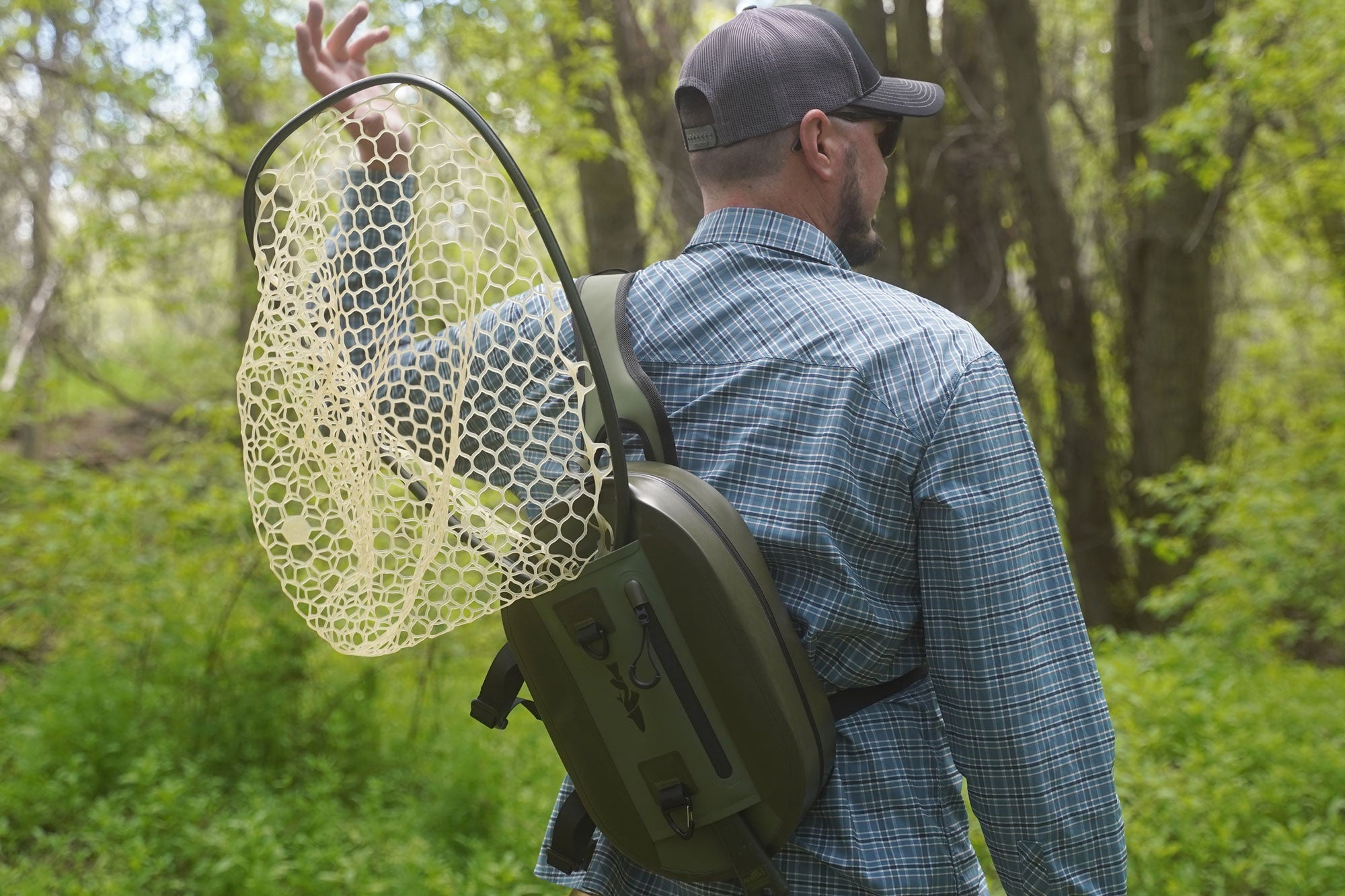
- Pack Light: A sling you can spin around and work by feel
- Same Pocket Every Time: Muscle memory replaces eyesight after dark
Timing Your Night Sessions
Moon, Weather, and Pressure
Reading the Sky:
- Dark Moon: New moon and cloud cover give fish the most confidence
- Bright Moon: Full moon fishes well early and late, slower at peak light
- Cloud Cover: Overcast nights extend the aggressive window
- Warm Fronts: Stable, muggy nights consistently outproduce cold snaps
- After a Rain: A slight bump in flow moves big fish into the shallows
The Hours That Matter:
- Last Light: The half hour after you can't see your fly is often the best
- Full Dark: A steady grind that rewards patience more than speed
- The Midnight Lull: Many rivers go quiet for an hour or two
- Pre-Dawn: A second peak right before the sky greys out
- Keep a Log: Your home water has its own schedule, and it repeats
Seasonal Windows
Through the Year:
- Early Summer: Warm nights and high terrestrial activity get things started
- Midsummer: Prime time, and often the only comfortable water temperature all day
- Late Summer: Low, clear water makes darkness the only real opportunity
- Early Fall: Pre-spawn browns get territorial and mean
- Winter: Slow, but a warm night on a tailwater can still surprise you
Stealth, Safety, and Light Discipline
My buddy Todd taught me more about night fishing in one evening than a season of reading did, and he did it by making me stand still for ten minutes before my first cast. Sound travels through water far better than it travels through air. A gravel crunch, a dropped pair of pliers, a bright white beam swept across a flat — any one of those can shut down a run for an hour.
Moving Quietly
Wading Discipline:
- Slow Feet: Slide your boots instead of stepping and splashing
- Stay Low and Shallow: Wade less than you think you need to
- Grippy Boots: Sticky rubber soles that hold on slick rock
- Comfortable Waders: You'll be standing in cold water for hours
- A Real Jacket: Night air gets colder than the forecast suggests
Light Discipline
Using Your Headlamp Well:
- Red First: Red light preserves your night vision and spooks less water
- Face the Bank: Turn away from the river any time you switch on white
- Light Only to Fix: Knots, hooks and net work — nothing else
- Let Your Eyes Adjust: Twenty minutes of true darkness and you'll see plenty
- Carry a Backup: Batteries fail on the walk out, every time
Safety Habits That Matter:
- Tell Someone: Share your access point and your out time
- Fish With a Partner: Two anglers is the single best safety upgrade
- Know Your Exit: Have a route out that doesn't require crossing back
- Respect the Flow: Never wade water at night that you'd hesitate to wade at noon
- Warm Layers in the Truck: Dry clothes waiting is cheap insurance
Landing Trophy Fish After Dark
The Fight
Handling a Hot Fish:
- Side Pressure: Steer the fish away from wood instead of lifting straight up
- Fight Hard: Heavy tippet exists so you can end the fight quickly
- Feel the Runs: You'll track the fish by rod load, not by sight
- Move to Soft Water: Walk the fish toward the spot you scouted
- Stay Off the Reel Handle: Let a screaming run go rather than palming it hard
Handling and Release
Doing Right by the Fish:
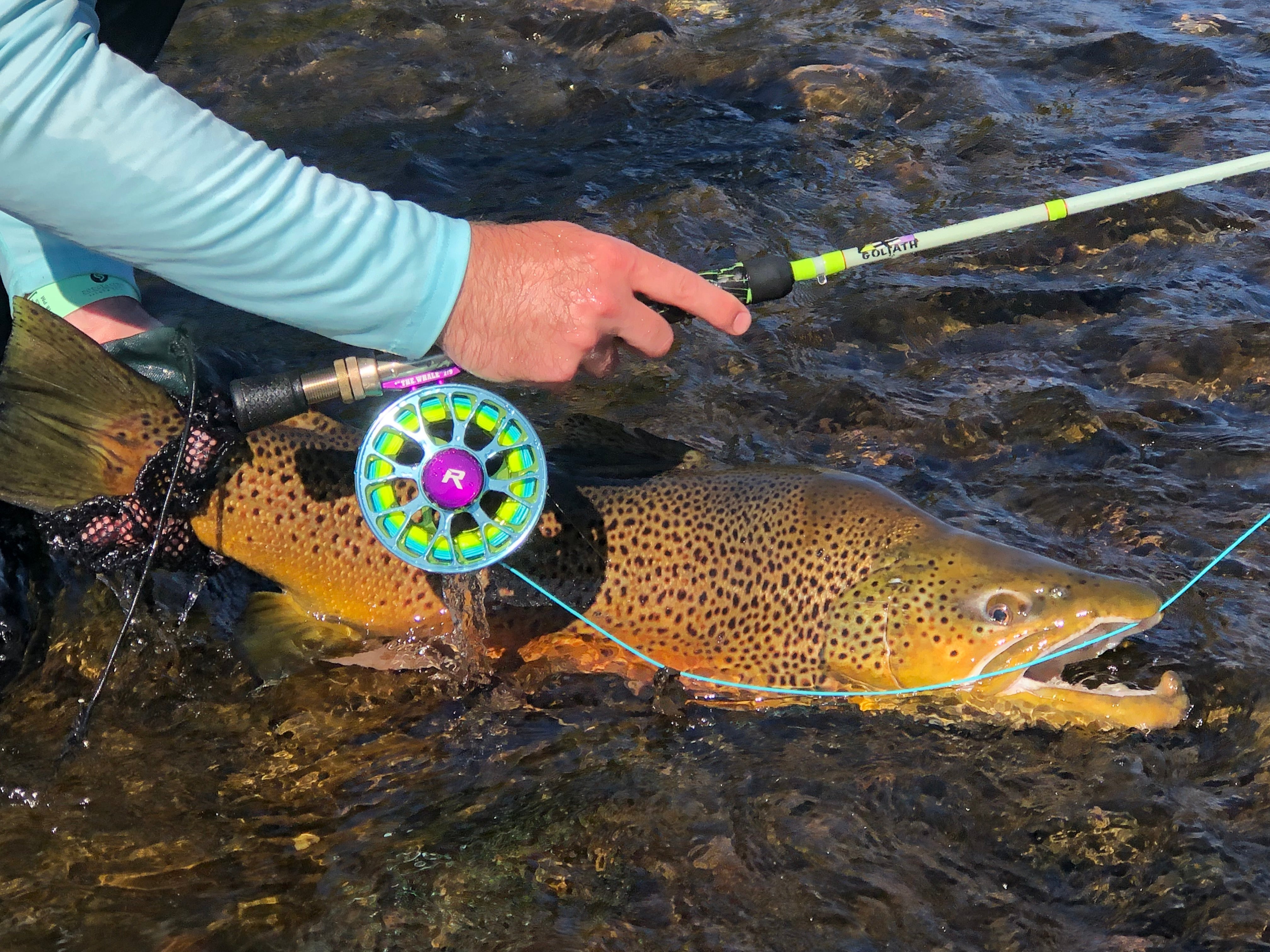
- A Big Net: Deep, rubber-coated bag that fits a twenty-plus-inch fish
- Forceps Ready: Clipped where your hand already knows to reach
- Fish in the Water: Unhook in the net, in the river, every time
- Skip the Photo: Or set the camera up first and keep it under ten seconds
- Revive Fully: Hold the fish in current until it kicks out of your hand
Building Your Night Game
A Progression That Works
Your First Few Nights:
- Start at Dusk: Fish into darkness on water you already know cold
- One Fly: Tie on a deer hair mouse and leave it on all night
- Short Sessions: Two focused hours beats a sleepless, sloppy eight
- Practice Blind: Tie knots at home with your eyes closed
- Expect Slow Nights: Night fishing is low-volume and high-reward
Leveling Up:
- Add Subsurface: Work in articulated streamers when the surface goes quiet
- Explore New Water: Scout one new beat per month in daylight
- Track Everything: Moon, temperature, flow, fly, cadence and result
- Fish the Ugly Nights: Wind and drizzle move more big fish than bluebird calm
- Bring Someone Along: Teaching a friend will sharpen your own habits
The Payoff for Losing Sleep
Night fishing costs you something. You give up sleep, you lose flies you can't see to retrieve, and you'll have nights where you cast for four hours and touch nothing. I've had plenty of them. But the trade is that you get access to fish that simply do not exist for daylight anglers on the same water, in the same season, with the same flies.
What surprised me most is how much it improved the rest of my fishing. When you can't see, you learn to feel a fly working, to read current by the pull on your line, and to trust your ears. Take those skills back into daylight and everything gets easier — your streamer game especially.
Start close to home. Pick a stretch you could walk blindfolded, go out on a warm, cloudy night, and swim a mouse along a grass bank until something tries to kill it. That first take will rearrange how you think about the river you thought you knew.
That's really the whole promise here — any fish, any time, and anywhere. Darkness is just another time. Tight lines, everyone!
Ready to try it? Scout your water in daylight, charge two headlamps, tie on one big fly, and give yourself two hours after last light. That's all it takes to find out what's been living in your home river the whole time.
Fly Fishing Insider Podcast has a referral partnership with Frontiers International Travel. If you book after being introduced through us, we may receive compensation at no additional cost to you.