
Guide School Series | Fly Fishing Insider Podcast
There are two real ways into fly fishing guiding: work your way up from the unglamorous jobs, or go to guide school. Working your way in costs time. Guide school costs tuition but compresses the learning. The right one depends on how much time you have and how close you live to a guiding operation.
I love this question because the honest answer is "it depends," and two guests on the show show both sides better than I ever could. One worked his way in from the bottom while playing Division I football. The other has spent decades teaching people through a guide school. Neither path is wrong. They just cost different things.
Path one: how do you work your way into guiding?
Source: Life as a College Athlete/Fishing Bum and a Cost Effective Way Into Guiding, with Michael Mathews
Michael Mathews guides out of Missoula, Montana, and he played linebacker for the Montana Grizzlies while doing it. His way in was not guiding at all. He called the manager of a ranch on the Clark Fork, offered to do whatever they needed, and got told to call back in the spring. He called back, got hired as a ranch hand that day, and started running shuttles for the guides. Guiding came within a season.
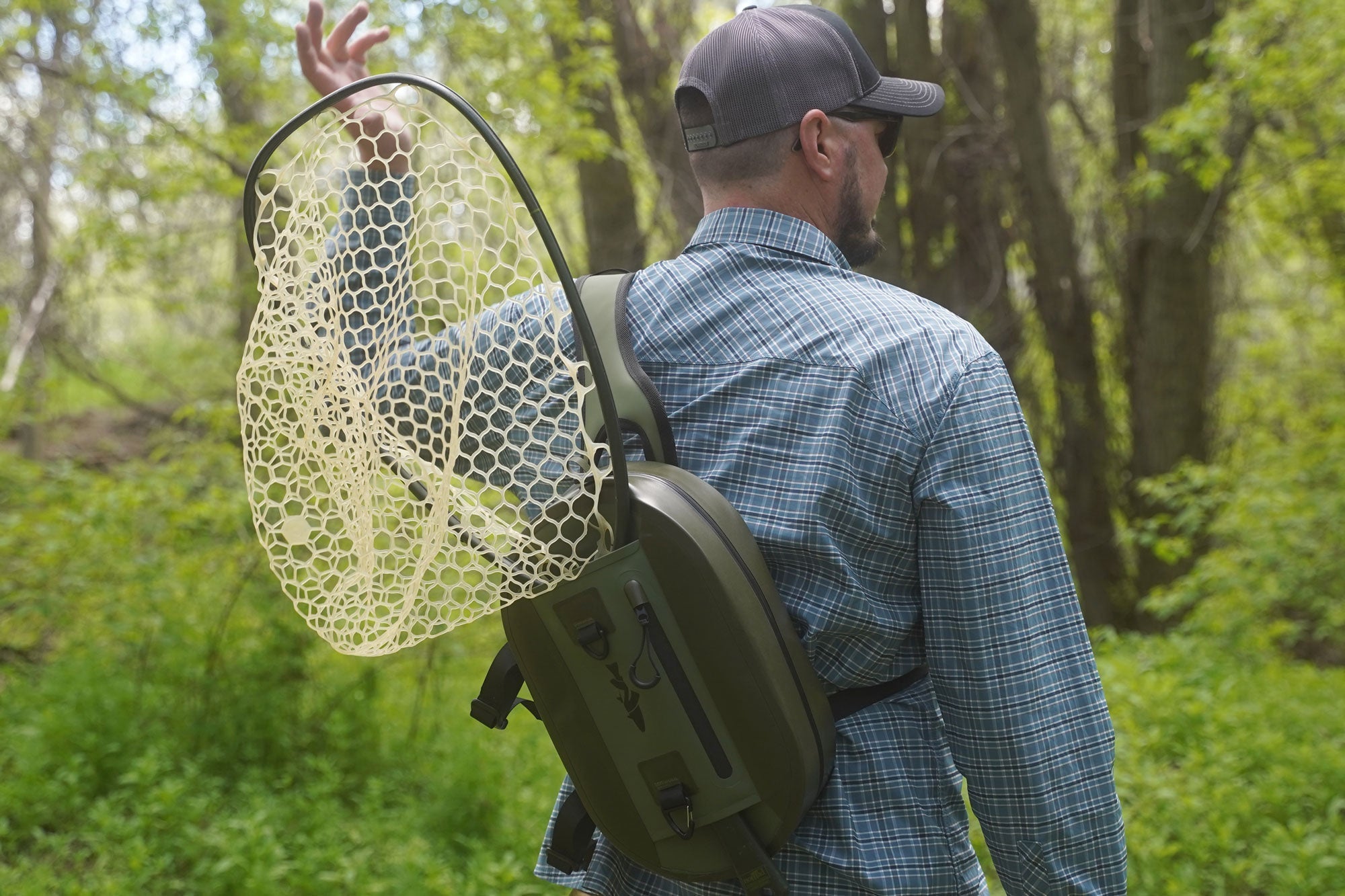
His gear advice is the best budget talk we have had on the show. He guides with entry-level rod and reel combos around 150 dollars, runs one line weight heavier than the rod so beginners can feel it load, skips waders in summer, and learned to row on a used raft instead of a drift boat he could not handle yet. Rowing people into fish only comes from repetition, so he did his reps on a boat where mistakes cost nothing.
What this path costs: time, and access. You need to live near an operation that will take a chance on you, and you need the patience to do grunt work for a season or more before you put a client in the boat.
Path two: what does guide school give you?
On Episode 18, Mac Brown described a guide school week built around everything the ranch-hand route teaches slowly: rowing and whitewater on real water with an experienced rower in every boat, casting taught deep enough that you can coach it, drift control, and evening sessions on the business of guiding. His students run from about 18 to 65.
What this path costs: tuition and a block of time off. What it buys you is speed, structure, and instructors who catch your mistakes before a client does.
In some states it can also count toward licensing. Montana's Board of Outfitters, for example, lists completion of a board-approved guide education program as one of the qualification paths for a guide license. See the licensing by state section of our guide school hub.
Which path is right for you?
Here is how I would think about it. If you are 22, live in a fishing town and can work a season of shuttles, Michael's route is a great education and it pays you a little along the way. If you are changing careers, live far from guide water, or want the full framework in weeks instead of seasons, guide school is the shortcut. Plenty of guides do both: school first, then a season or two learning one river under an outfitter.
The short version
- Working your way in: low cash cost, high time cost, needs a local operation.
- Guide school: tuition cost, low time cost, structured feedback on real water.
- Either way: buy cheap gear, learn to row on a forgiving boat, and get reps.
- Either way: casting you can teach beats casting you can only do.
Do you need guide school to become a fly fishing guide?
Not always. Michael Mathews broke in through ranch work and running shuttles. Guide school compresses that learning into a structured program with instructors on the water.
What is the cheapest way into guiding?
Michael Mathews guides with entry-level rod and reel combos around 150 dollars, over-lines his rods by one weight, and recommends a used raft over a drift boat.
Which path is faster?
Working your way in can take seasons of shuttles and grunt work before you get a client. Guide school is built to get you trip-ready in a much shorter window, which matters if you are changing careers.

Free eBook
How to Become a Fly Fishing Guide
15 pages: what guide schools teach and cost, licensing by state, a guide resume and a first-season plan.
Get the free eBookReady to look at schools? Every FFIP Certified guide school on Find a Pro shows its programs, session dates, class size and "Starting from" tuition, with a way to ask the school directly.
Run a guide school? Put your school on FFIP.
Tight lines, everyone! Here is to catching any fish, any time, and anywhere.