
Few anglers have fished as many exotic places as Jeff Currier, and on Guided Episode 10 he walks through how a job in a fly shop turned into a career of jungles, flats and open ocean. The stories are great, but what stood out to me was the practical teaching about fishing heavy. If you are planning a trip for peacock bass or giant trevally, this episode is a crash course in what actually matters.

The one rule: do not give line
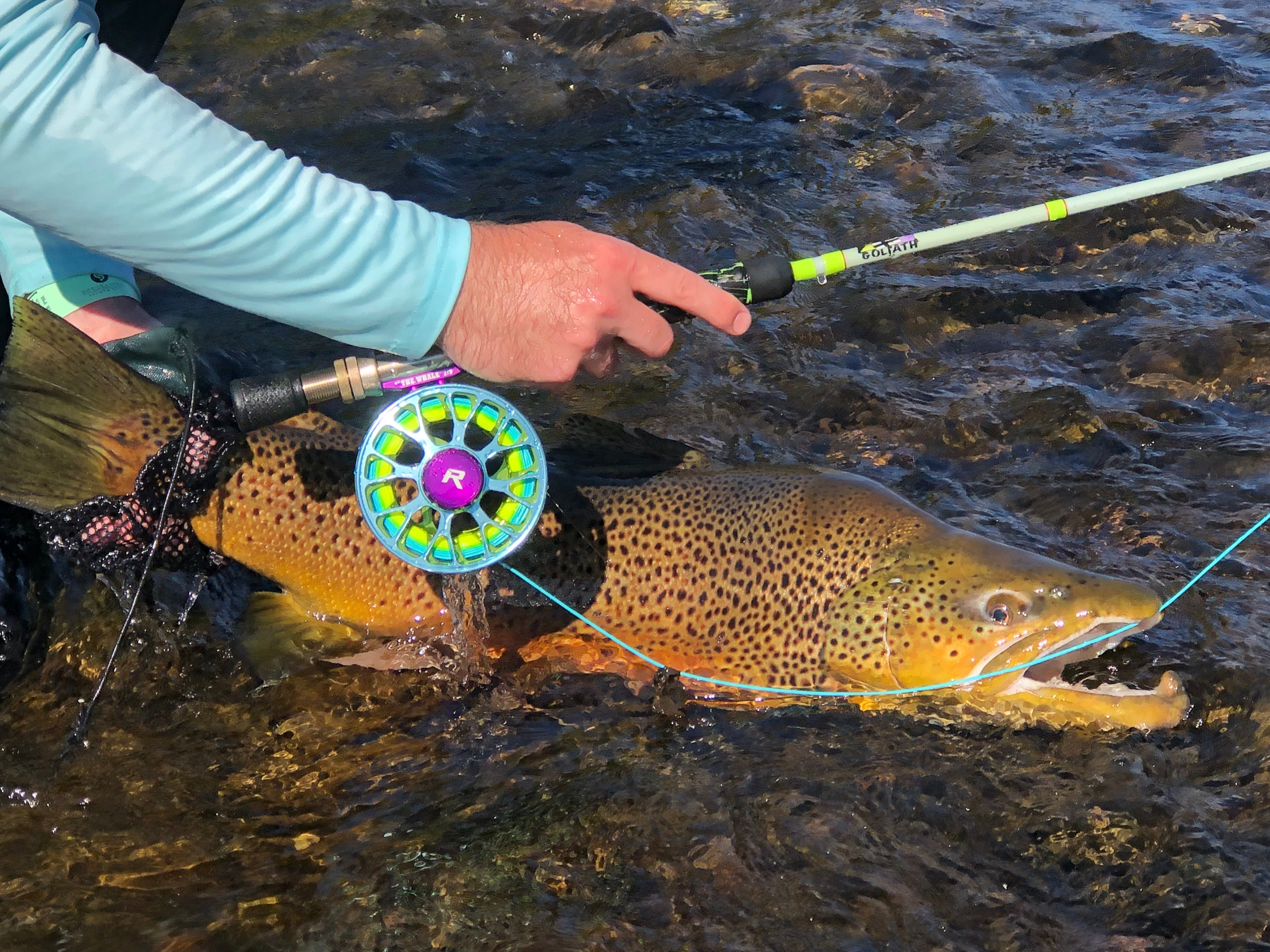
Jeff says it for peacock bass and for giant trevally alike. When the fish eats, you cannot let it take line. A big peacock bass pulls with enormous force for only a short burst, perhaps fifteen seconds, but that is long enough to wrap you around a log or bush and break you off. Newcomers often put a big bend in the rod the way they have seen in photos. Jeff coaches the opposite: keep the rod only slightly bent, flexing mostly in the cork, and use the strength of the heavy leader to stop the fish before it reaches cover. He calls it breaking the fish's spirit early.
Peacock bass: team up in the boat
Peacock bass trips usually put two anglers in the boat, and Jeff suggests splitting roles. The angler in the front throws a popper, which catches fish on its own and also wakes up bigger ones holding deeper. The angler in the back fishes a streamer to reach those larger fish down deep. Flies are big, often 4/0 streamers, and he likes bright colors such as yellow and orange. His best tip for first-timers is to join a hosted trip run by someone with real peacock bass experience who will drill the rule about line into you before the first cast and make sure your leader is built correctly.

Giant trevally: building a line and leader that holds
Jeff described learning to fish for giant trevally with South African guides in the Indian Ocean, where the goal is landing fish, not chasing light-tippet records. The guide's advice was blunt: fish straight heavy mono and do not let the fish take line. On his first fish, the fly line itself broke, and the experience helped push line makers to build much stronger lines. Today his GT setup uses a floating big-water taper from Scientific Anglers, connected straight off the line's loop to roughly four to six feet of 130 pound mono, with sinking lines when fishing deeper water. The reel's drag is set firmly so the angler can hold the rod, keep it bending a little, and stay in the boat.
Why the trip planning matters
The thread connecting all of these stories is preparation. Do not wing a destination fishery. Learn the rig, practice the fight, and arrive with the right line, leader and expectations. Jeff also touched on the tiger he met in a thick jungle in northern India, writing a saltwater guide book, and the online presentations he runs, so there is plenty here beyond the technical advice.
Gear
To get the fundamentals right before a big trip, the Tips and Tricks for Fly Fishing eBook covers rigging, leaders and knots, and the Five Panel Cap keeps the sun off during long days on the water. For heavy mono, a big-water taper line and a rod that suits your destination, your local fly shop can set you up properly and help with knots and spooling.