
Made by Wayward Trading Post: See Wayward's handcrafted nets on waywardtradingpost.com
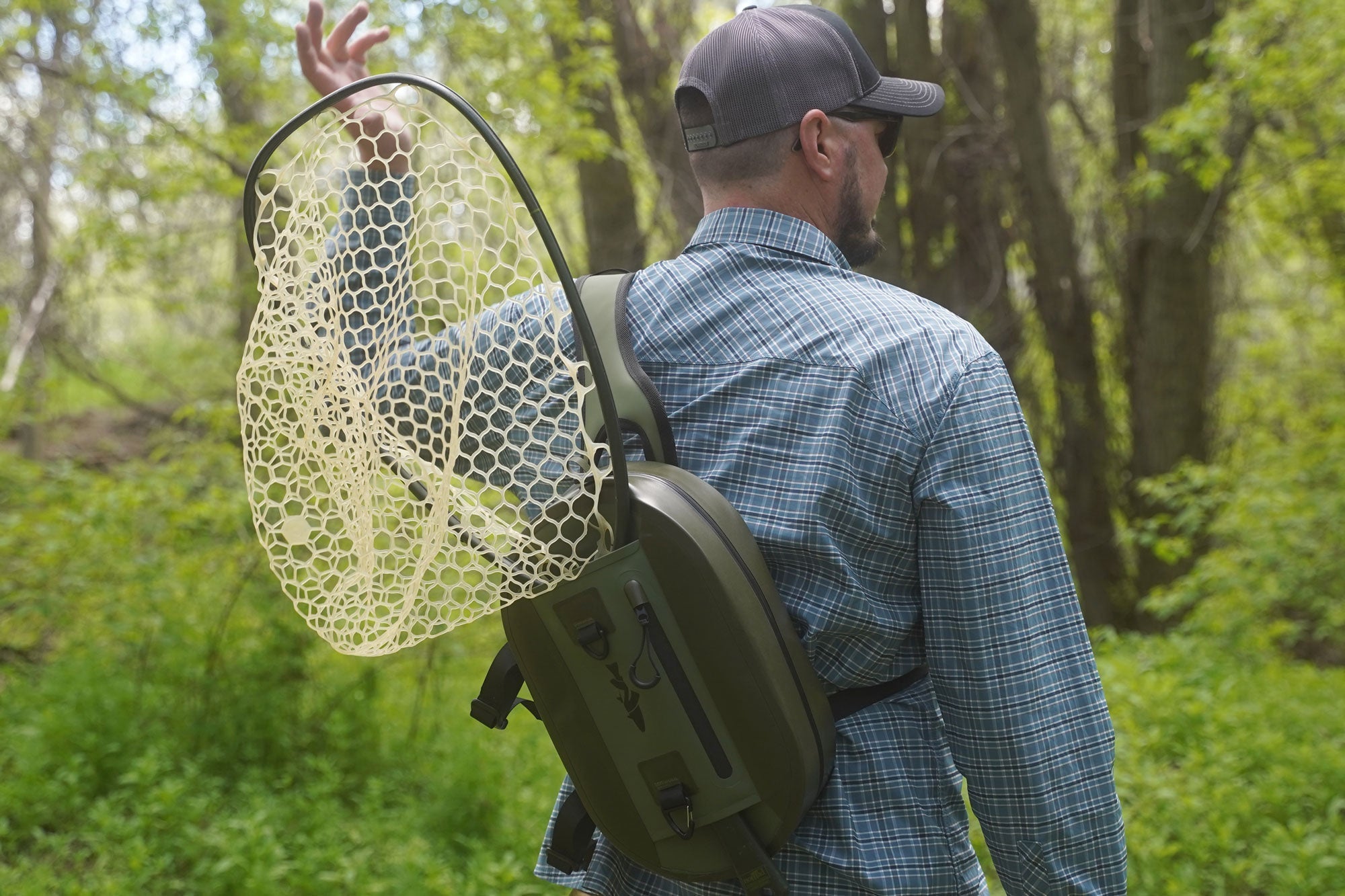
The Wayward Trading Post wooden landing net is a handcrafted, long-handle net with a wood hoop, a fish-safe rubber bag and an inlaid fish on the handle. It is built for anglers who want a classic wood net that still treats fish like a modern one should. FFIP score: 8.3/10.
Overall: 8.3/10 · Badge: Highly Recommended
Verdict: A handcrafted net that doesn't break the bank and will last a long time.
Best For: Anglers who value a handmade wood net with a rubber bag, and who want real reach for fishing from high banks without bending the rod.
Not For: Anglers who want a feather-light, nearly indestructible net for long backcountry hikes, or anyone who does not want to wax and look after a wooden frame.
Price: Starting from $129 in the FFIP Shop.
Pros:
- Natural wood has real warmth in the hand and looks great
- A fish-safe rubber bag that is gentle on a fish's slime coat
- Long handle gives reach and doubles as a makeshift wading staff
Cons:
- Heavier than carbon and aluminum nets
- The finish needs periodic maintenance because UV wears down coatings
- Not the net for a long, ounce-counting hike
The FFIP Scorecard
| Criterion | Weight | Score | Why |
|---|---|---|---|
| Fish care (bag/material) | 30 | 10 | A fish-safe rubber bag that protects the slime coat. |
| Handling/reach | 20 | 10 | Long enough to land fish from the bank, short enough to stay out of your calves. |
| Weight/portability | 15 | 7 | Wood looks great but runs heavier than carbon or aluminum. |
| Durability | 20 | 5 | Durable wood, but UV eats the finish so it needs upkeep. |
| Value | 15 | 8 | A slightly custom net with inlays and quality materials at a fair price. |
| Overall (weighted) | 100 | 8.3/10 | |
How Is the Wayward Net Built? The Engineering Behind a Handcrafted Wood Net
Wayward Trading Post builds its nets by hand in Pennsylvania, USA, from American hardwoods sourced in central Pennsylvania. I am writing here about what I can see in my photos and what the maker states about its nets, so you get the engineering without guesswork.
The laminated hoop
The hoop in my photos is a single loop of thin wood with a visible stripe running along it. That striping is typical of a laminated hoop: several thin strips of hardwood are glued together face to face and bent around a form, then left to cure. A laminate beats a single piece of solid wood because the grain follows the curve instead of fighting it. A solid piece bent into a loop is likely to split along the grain; a laminate is stronger and stays truer to shape. Wayward's Natural series, for example, pairs a hickory hoop with a walnut handle and a walnut pinstripe, and the maker also offers burl, walnut and fish-engraved versions.
A teardrop hoop and a fish-safe bag
Wayward shapes its hoops as a teardrop so the end of the net is large enough for any catch, which is a practical answer to the problem of a fish being longer than the hoop is wide. The bags are what the maker calls fish safe rubber net bags, with small holes so smaller fish are not lost through the mesh. Rubber is non-absorbent, so it does not hold water or stay wet like knotted nylon, and it is gentler on slime and scales than rough mesh. It also tends to snag fewer hooks, which helps when you are releasing a fish with a fly still in its jaw.
Why wood floats, and why that matters
Most hardwoods are less dense than water or close to it, which is why a wooden net floats if you drop it in the current. An aluminum net has to be tethered or it sinks. A wood frame also feels warm in the hand on a cold morning in a way that metal does not. The trade-off is that wood absorbs moisture and the finish takes a beating from sun, so the coating matters and has to be maintained.
Handle details
The long handle is hardwood as well, with a green fish inlaid into it. Besides looking great, an inlay is a grip detail: your thumb finds it without looking. I also see an orange tether clip on the hoop in one of my photos, which is a handy way to hang the net from a wader strap or a pack.
Wood compared with aluminum
The real difference between a wood net and an anodized aluminum one is how each fails and how each feels. Aluminum is stiff and will shrug off a bump against a boulder, but it can dent or bend and it transmits cold to your hand. Wood is slightly forgiving, quieter when it knocks against a rod or a rock, and it can be sanded and refinished instead of replaced. If you want a net that feels like part of the angling tradition, wood has a sound case. If you want one you never have to think about, aluminum or carbon has the edge.
What a wood net asks of you
A wood net is a tool you care for. Rinse it in fresh water after a day on the river, let it dry in the open air and refresh the finish when it dulls. Leave it in a hot truck cab and the glue lines in the laminate are under stress; leave it wet in a closed bag and the wood can mildew. These are the habits we cover in our maintenance that protects your fly fishing investment article.
On the Water with the Wayward Net
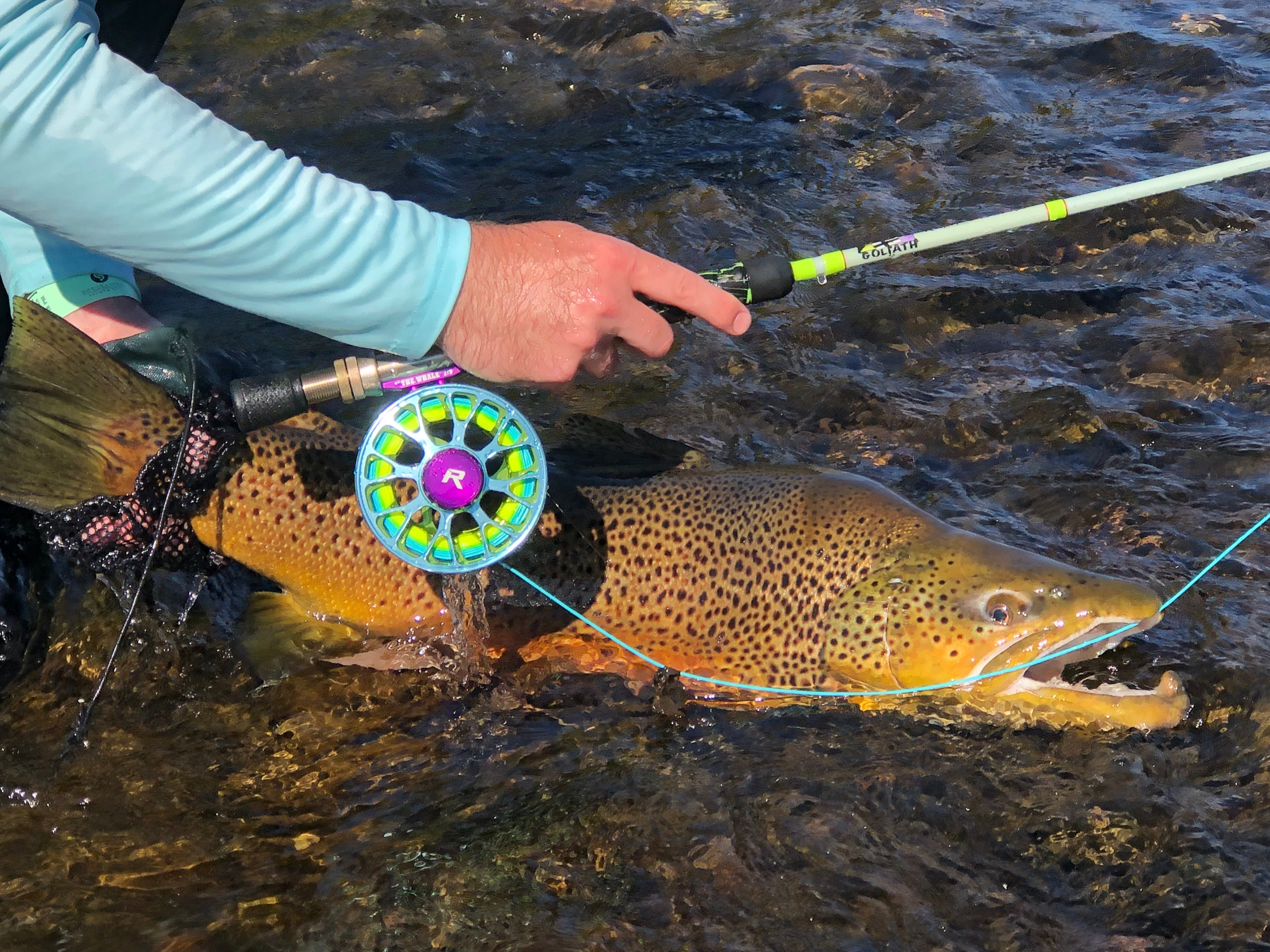
I took my long-handle Wayward net to a small, spring-fed meadow stream in Wyoming. The banks dropped steeply into the water and the fish were so spooky you did not want to be anywhere near the edge. The long handle let me land fish from the bank without spooking the next few pools.
One thing you learn to deal with in the West is sun. The next is wind. This particular day I had to deal with both, though the wind gusts were welcome on a tricky spring creek.
I only had a few hours to fish, because I was supporting some friends on a long-distance cycling race and took advantage of a stop along the route. This was a trip, not a guiding day. Having used the net quite a bit in the past, I knew it was a great choice for those high banks and hidden gopher holes in the tall grass.
I am a net-aholic, so picking a net for the day often changes, and I have several options. But I love the feel of the wood in this Wayward net. Something about that natural feeling makes it special.
How Does the Wayward Net Score, Criterion by Criterion?
Fish care (bag/material) (Score: 10/10)
Fish care starts with the bag. The Wayward net uses a fish-safe rubber bag, which does not hold water or abrade slime the way rough nylon can. That matters because the slime coat on a fish is made of proteins and polysaccharides that fight bacteria and protect it from infection, and the less of it you remove, the better. As always, keep the fish in the water for the whole landing and wet your hands before you touch it. For more, see wading safety and catch and release.
Handling/reach (Score: 10/10)
I like a long handle, but not one so long that it smacks my calves all day. This one hits the balance. Two things I enjoy about the length: it works as a makeshift wading staff when I need one and did not expect to, and I can net fish without compromising my rod by bending the heck out of it. A wooden handle with an inlay also gives your hand a landmark.
Weight/portability (Score: 7/10)
Wooden nets look good, but they are heavy, or at least heavier than the carbon and aluminum models on the market. For a day near the truck or a spring creek like the one I fished, I never minded. For a long hike where every ounce counts, I would reach for something lighter.
Durability (Score: 5/10)
A good wooden net can be extremely durable and last a long time. The finish on these nets is pretty good, but as with all nets, UV eats the coatings and you need to maintain it. That upkeep is why I scored durability a 5, even though the wood itself should last. My quick fix is furniture wax, which is cheap and fast and goes a long way.
Value (Score: 8/10)
Wayward makes a solid net at a pretty nice price point for what it offers: a slightly custom net with inlays and high quality materials. Shop prices start at $129. It is a great alternative to an inexpensive big-box wooden net or an ultra-light carbon fiber net.
Who Should Buy the Wayward Net (and Who Should Skip It)?
Buy it if
You like a handmade tool with character, you want reach and a deeper basket that will hold larger fish, and you do not mind a little maintenance.
Skip it if
You need the lightest possible net for long hikes, or you want a frame that shrugs off neglect. In that case, look at a carbon or anodized aluminum net.
Get a Wayward Net in the FFIP Shop
Wayward Trading Post nets are in the FFIP Shop, starting from $129. Sizes include the Little Dipper (12" x 8"), Fat Jake (16" x 12"), XL (18" x 14") and Big Dipper (24" x 17"). Shop the Wayward Trading Post collection.
Frequently Asked Questions
Are wooden fly fishing nets good for fish?
A wood frame itself is neutral; what matters for the fish is the bag. The rubber bag on the Wayward net is non-absorbent and gentler on a fish's slime coat than rough mesh. Keeping the fish in the water as much as possible matters more than frame material.
Do wooden landing nets float?
Most hardwoods are less dense than water or close to it, so a wood hoop net generally floats if you drop it in the river. An aluminum net does not, which is why it needs a tether.
How do you care for a wooden fishing net?
Rinse the net in fresh water, let it dry in open air and keep the finish up. UV slowly eats coatings, so a quick coat of furniture wax every so often is a cheap, fast way to protect a wooden net. Avoid leaving it wet in a closed bag or baking in a hot truck.
Who makes the Wayward net and where is it made?
Wayward Trading Post makes it. The nets are handcrafted in Pennsylvania, USA from American hardwoods sourced in central Pennsylvania, and Wayward Trading Post nets are available in the FFIP Shop.
Final Verdict
Nets are somewhat of a personal choice. For me the key is a rubber basket that is a bit deeper, and if I am carrying a net then I want one that will hold larger fish and give me reach. The Wayward net I have is a great fit and, again, not a wallet killer.
Christian's Pro Tip: Try furniture wax spray on your wooden net. You will be surprised how much life it gives back and how well it maintains the finish.
Tight lines, everyone!