
Guides see more water and more clients than almost anyone, which is why their small habits are worth copying. On the Guided series we spoke with Alice Owsley of Riverside Anglers, who guides the Madison River and wade trips inside Yellowstone National Park. Her career path runs through fly shops, guide school, an Alaska season, and an outfitter license, and her approach to dry fly fishing is full of ideas you can use this weekend.
Do your research, then slow down
Yellowstone has a fishing season that shifts with elevation. Early and late in the year the lower-elevation water fishes best, and in mid-summer the higher streams come into their own. Her first tip is to study the season and the specific stream before you arrive so you know which fish and which water to expect. Once at the river, she walks slowly and watches: what the ospreys and eagles are doing, whether fish are rising, which bugs are on the water. Those observations tell you where to stand and what to tie on.

Fish one fly when you are fishing dries
Montana and Yellowstone allow two flies, and she uses both when nymphing or swinging soft hackles. When the fish are on top, though, she fishes a single dry. Small currents and seams in the water make a second fly drag, and one dry with a clean drift will usually take more fish than two flies with poor presentation. Pick the insect that is hatching, such as pale morning duns, caddis, or small stoneflies, and fish ants, beetles, and hoppers when terrestrials are working.
Carry a sharpie
One of her favorite guide tricks costs a couple of dollars. She keeps a black or brown marker and a red or pink one in her pocket to change the color of a fly, color a post or wing so the client can see it, or darken the underside to match the natural. She will also trim a fly so it floats better. The goal is a fly that both the angler and the fish can see.

Leaders, tippet, and landing fish well
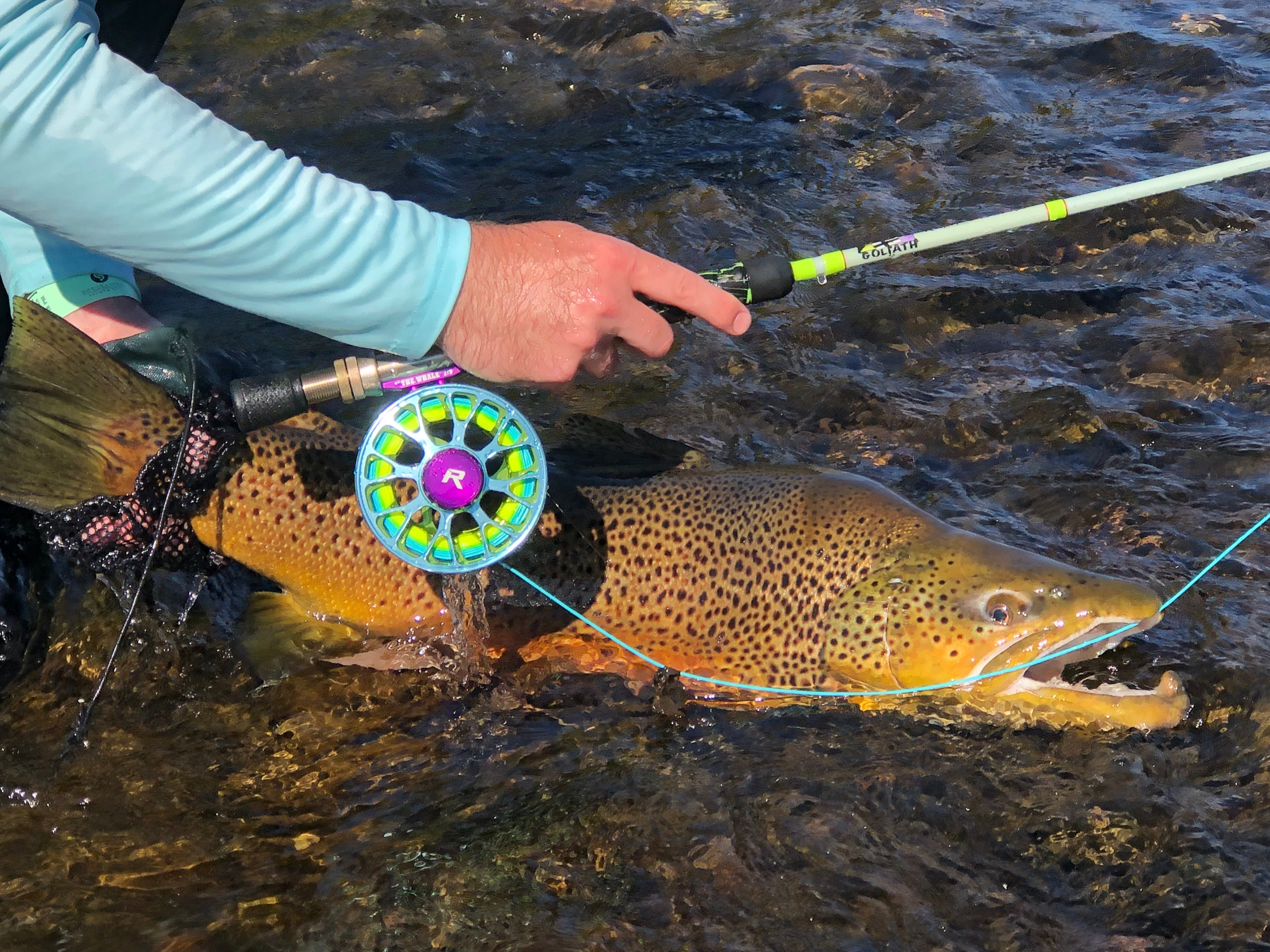
Her go-to setup is a nine-foot five-weight with a floating line and a nine-foot 4X or 5X nylon leader, moving to 4X or 3X when she throws a larger hopper. She tends to avoid fluorocarbon in these dry fly situations. On low, flat water later in summer, a longer 10 to 12 foot leader can be worth it. She also noted that a newer high-strength tippet let her fish 5X in places where she previously worried about breaking off on 6X, and that 7X and 8X are rarely needed out west. Landing fish quickly is also the most responsible way to protect them, so match your tippet to the fish and fight them with purpose.
Teach the whole river
Beyond fishing, she gives clients the geology, history, and wildlife of the area, and treats each trip as a chance to improve casting, water reading, and game planning that will carry over to every river they visit. That is a good model for anyone guiding a friend.

Gear
For leader choices, tippet sizes, and dry fly rigging, our Tips and Tricks for Fly Fishing eBook is a handy reference. Long days on flat, bright water call for sun protection, so grab a Five Panel Cap before your next trip. A pocket sharpie and a nine-foot five-weight are about all else you need, and your local fly shop can help you pick the rest.