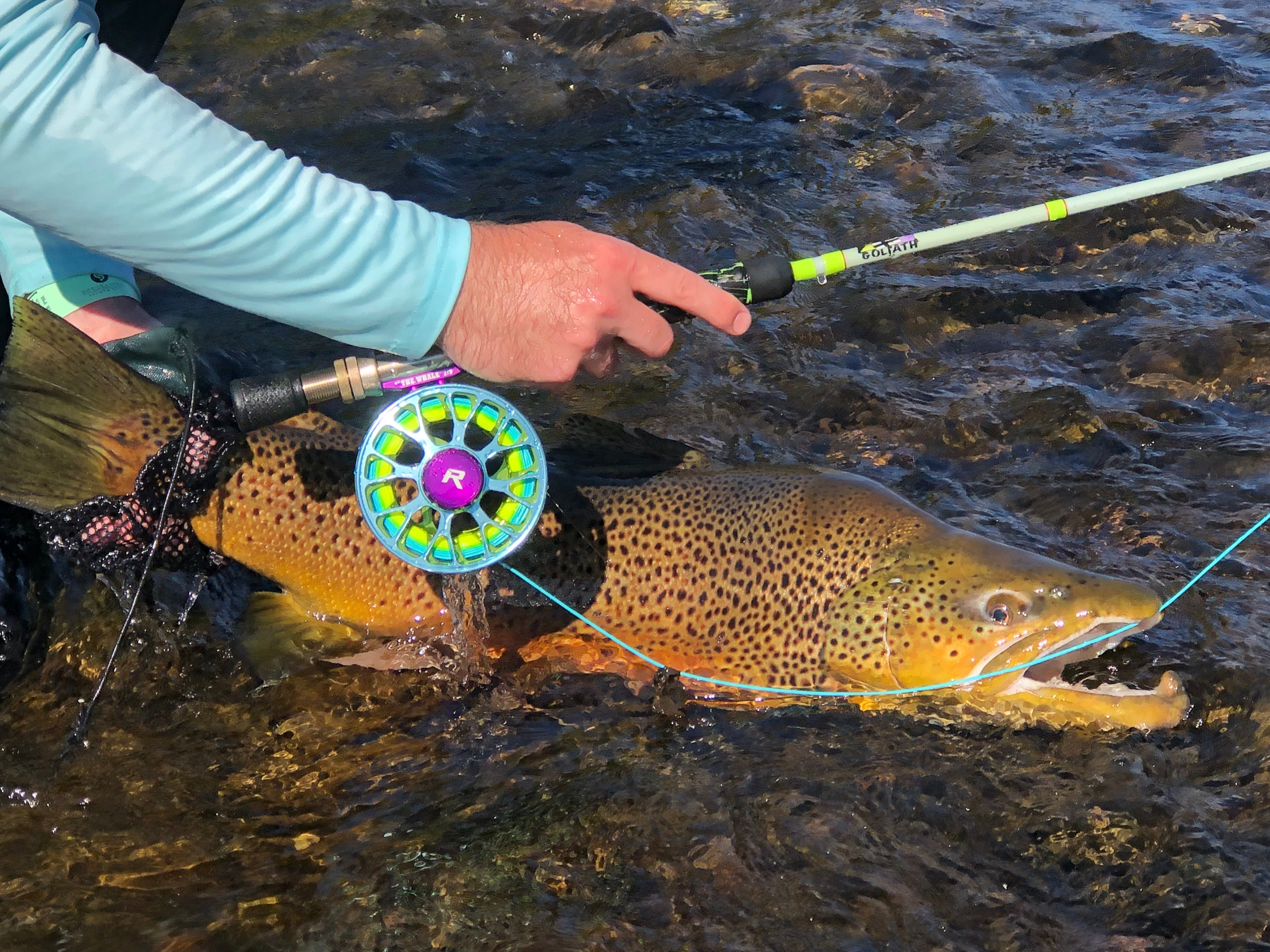

Henry Cowen grew up chasing saltwater stripers around New York City and up and down the Northeast coast. When he moved south and started fishing reservoirs, he assumed the same fish would play by the same rules. They did not. By his telling, he went months without a fish before things clicked. In this episode he walks through what changed, and it is one of the clearest lessons on stillwater striped bass I have heard.
Same Fish, Different Rules
In the salt, stripers earn the nickname rockfish. You find them on bridge abutments, rock piles, and pilings, and you time them with what Henry calls a tide clock in your head: this spot fishes on this stage of the tide. Lakes have no tides, and that saltwater playbook kept sending him down the structure-heavy bank of every cove.
His breakthrough came when he caught a fish off the plain red clay bank on the other side. The fish were not on the structure. They were on the bait, and the threadfin shad liked that clay bank. From that day on, the question changed from "where is the cover?" to "where is the food?"

Water Temperature Is the Tide Clock
Without tides, Henry says, everything in a reservoir comes back to water temperature. Temperature moves the bait, and the stripers move with the bait. That is why lake fish roam so much more than coastal fish, and why a spot that was hot last week can be empty today.
He also draws a clear line between lakes and rivers. Many striper impoundments have rivers feeding them, and fish run up those rivers each year to spawn. In his experience river stripers are much easier, because a river concentrates them in predictable places: holes, creek mouths, current seams. The open lake is the tougher puzzle.
How to Start on a New Lake
Henry's advice for someone brand new to a striper lake is practical and humble:
- Go talk to the local shops, including bait and tackle shops. Find out who is consistently catching fish on artificials and how. If they are throwing topwater, subsurface, or deep lures, you now know which water column to target with your fly line.
- Match the depth, then match the bait. The fly's advantage is that it can imitate the real baitfish better than most lures. Your job is to get it to the same depth the successful lure anglers are fishing.
- Build a network. Share what you learn with a few other anglers and the learning curve shortens dramatically.

Electronics: Find the Structure, Then the Bait
For the lake game, Henry considers an electric trolling motor a must, and good electronics close behind. Interestingly, he does not describe sonar as a fish finder first. He uses it to read depth, bottom contours, and where the bait is holding, then fishes those zones. Detailed lake mapping, he says, has been one of the biggest game changers since he started, because it shows points and drop-offs at a glance instead of making you decode contour lines.
You do not need a big boat to do this. He sees anglers fishing stripers from kayaks, micro skiffs, and pontoons with trolling motors. What you need is mobility and a way to see underwater.

A Fishery Worth Learning
Henry makes the case that freshwater stripers and hybrids are an underrated fly rod fishery across a huge swath of the country, roughly everywhere south of a line from Pennsylvania west to California. He also shares the story behind his book on freshwater stripers, a project Lefty Kreh pushed him to take on. Notably, only a chapter or two is strictly about fly fishing; the rest is about understanding and locating the fish, which tells you where the real work is.
Gear
Our Tips and Tricks for Fly Fishing eBook is a good companion for the line and presentation side of this. Striper bites often happen at first light, so grab an FFIP Logo Angler's Coffee Mug for the early launch. For the biggest upgrade, a sinking or intermediate fly line matched to an 8- or 9-weight, stop by your local fly shop and ask what is working on your nearest striper water.