
Catch and release only works if the fish actually survives the release. In Episode 116 we sat down with the anonymous creator behind Purist on the Fly, an Instagram account that calls out poor fish handling in the fly fishing world. We kept our guest's identity private for the show, but the message came through loud and clear: the way we hold fish is not a joke, and small habits on the water add up to a lot of dead fish.
The Photo Is Usually the Problem
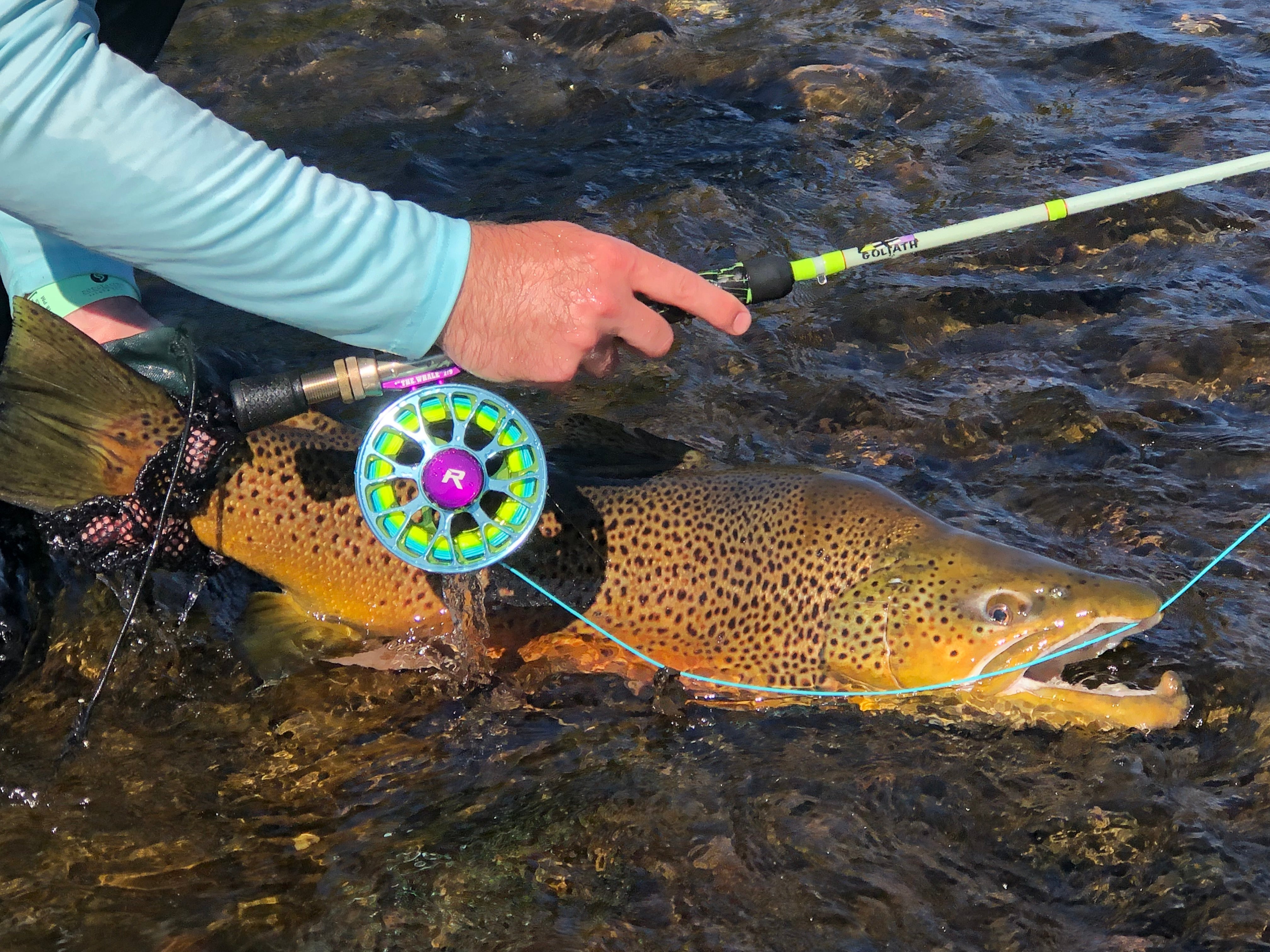
Our guest said they get far more bad-handling photos than they could ever post, so they only feature the most egregious ones. The pattern behind most of them is familiar. Someone lands a big brown, then keeps it in the net for ten minutes while they change outfits, swap out the nymph for a streamer, and shoot both sides of the fish for social media. That fish swims away, maybe, but it's exhausted and stressed.
You can still get a great photo. You just have to plan it before the fish is on:
- Agree on the shot ahead of time. Your buddy has the camera ready and knows the angle before you set the hook.
- Keep the fish in the water until the camera is up. Lift, shoot a few frames, and lower it back.
- Count your air time. If you'd be uncomfortable holding your breath that long, the fish is uncomfortable too.
- One fish, one photo session. Don't re-stage it.

A Simple Catch-and-Release Routine
Here's the routine I try to follow every time. None of it is complicated; it just has to become habit.
- Play it fast. Use tippet strong enough to land the fish quickly rather than fighting it to exhaustion.
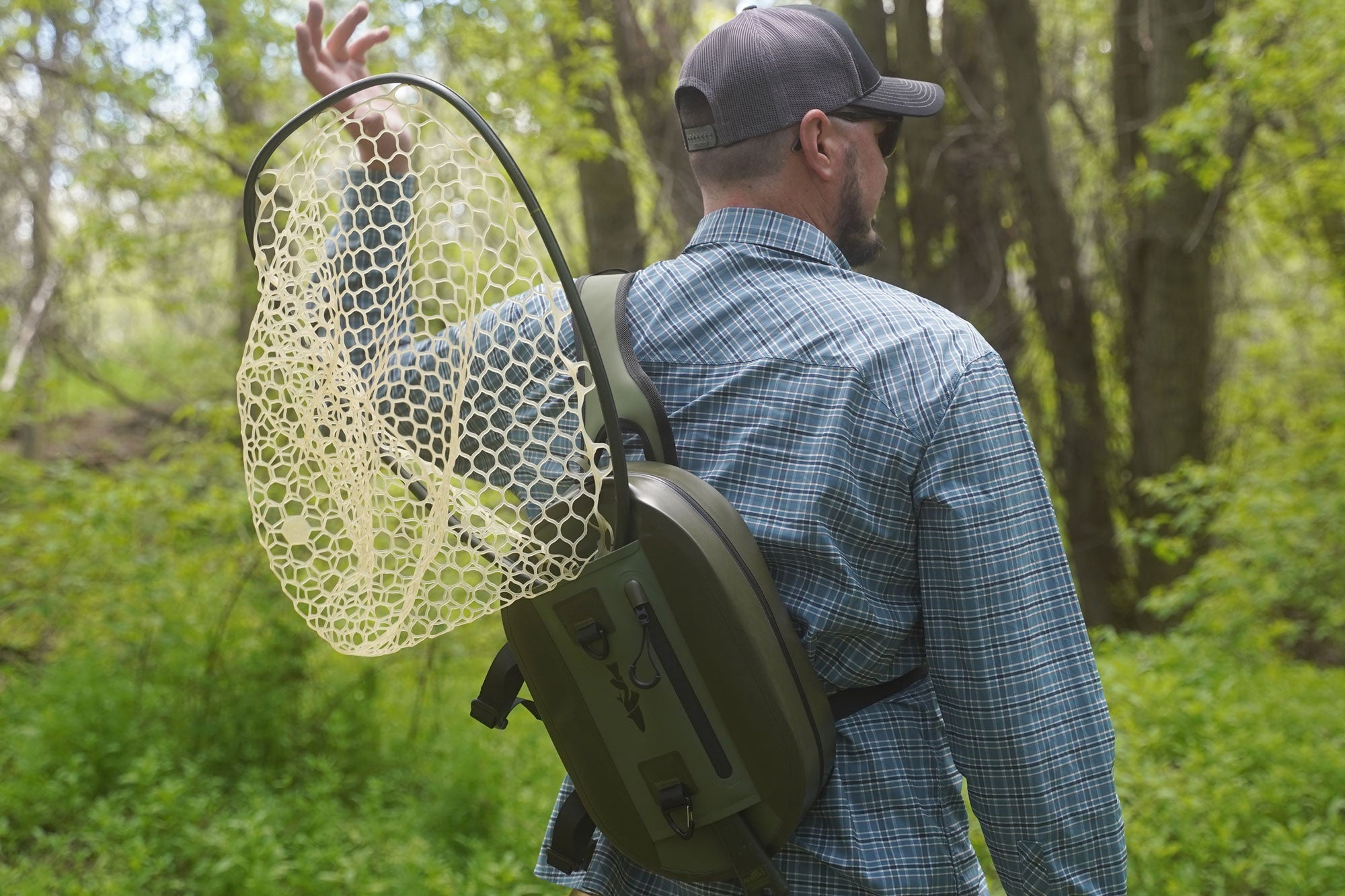
- Net it with a rubber net. Rubber or coated mesh is gentler on slime and fins and less likely to tangle hooks.
- Wet your hands before you touch the fish.
- Cradle, don't squeeze. One hand near the tail, one supporting under the belly behind the gills. Keep fingers out of the gills.
- Unhook in the water. Forceps or pliers make it quick. Barbless hooks make it quicker.
- Revive facing upstream in gentle current until the fish swims off on its own.
On barbless hooks, our guest mentioned that in British Columbia, where they fish, regulations on many waters require a single barbless hook. Wherever you fish, pinching your barbs is an easy upgrade even when it isn't required.
Know When to Leave Them Alone
Timing matters as much as technique. Our guest pointed out that fish handled roughly during spawning periods, especially when water is still warm, are more prone to infection afterward. A few rules worth adopting:
- Don't target fish on their redds. Learn what spawning gravel looks like and give it room.
- When water temperatures climb in summer, fish early, shorten fights, and consider calling it a day by afternoon.
- Avoid gill-plate grips and vertical holds on big fish. Our guest also called out practices like gill banging on bass as simply wrong.

Lead by Example
One of the more thoughtful parts of the conversation was about calling people out. Our guest acknowledged it's a fine line: shaming can make some people dig in rather than change. The better path for most of us is modeling good handling, sharing photos of fish kept wet, and gently helping a newer angler on the water. Fly fishing has always prided itself on stewardship. Our guest's view was that fly fishing should hold itself to a higher standard, and that starts with every fish we touch.

Gear
The single best handling upgrade is a rubber-mesh landing net, and a good pair of forceps or pliers is a close second. Your local fly shop can set you up with both. For more on landing fish, hook choice, and fighting fish efficiently, check out our Tips and Tricks for Fly Fishing eBook.