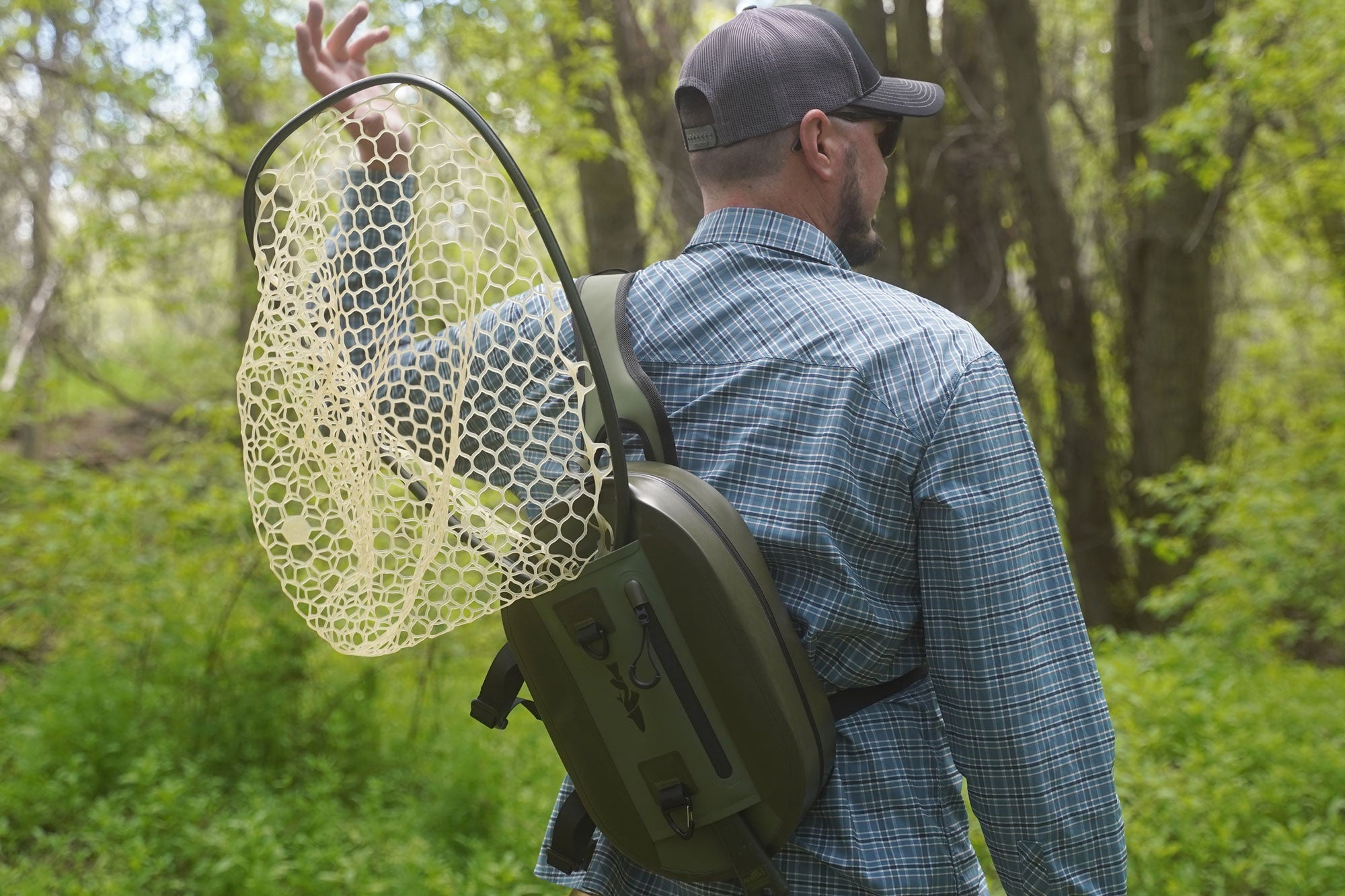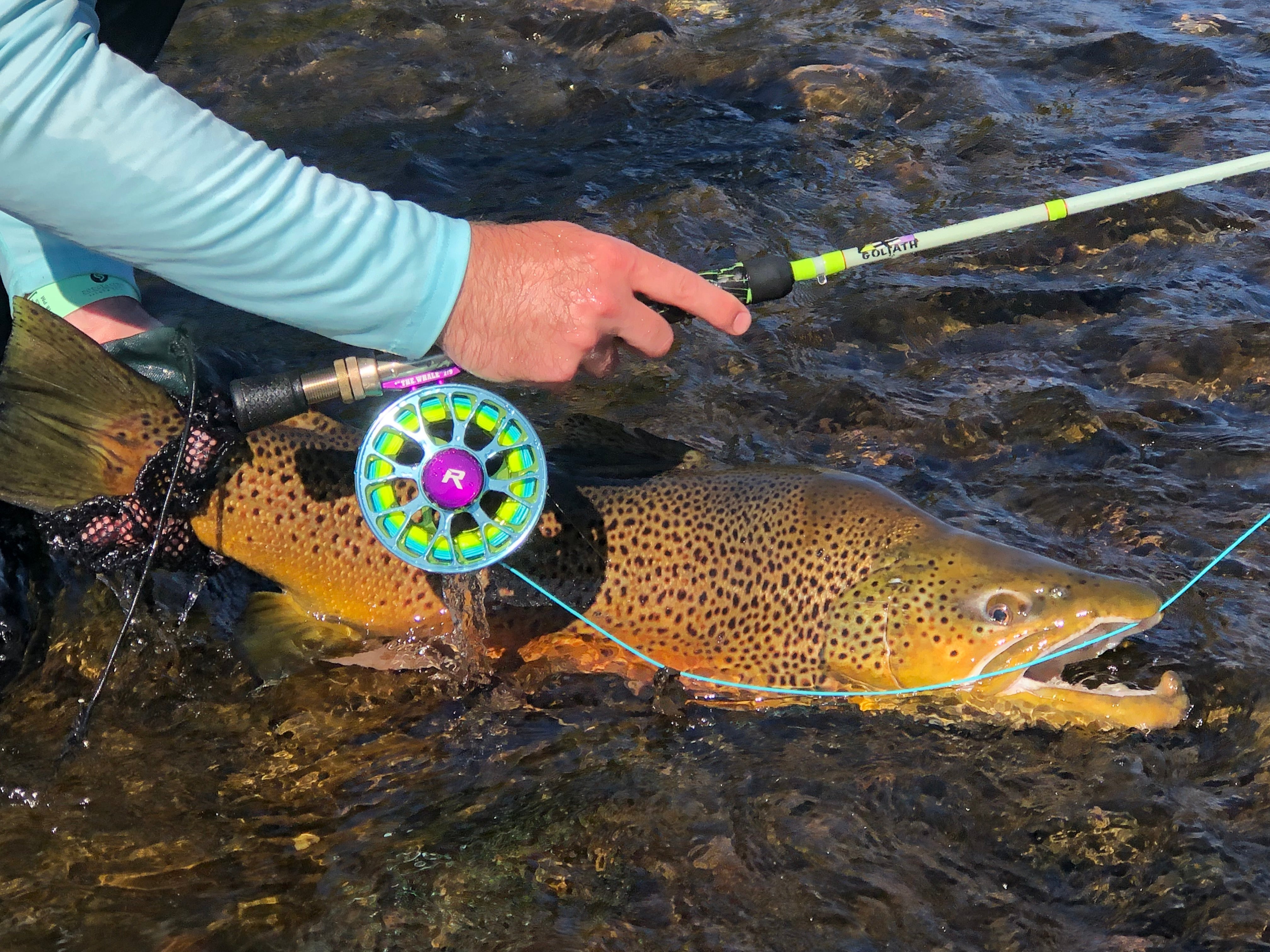

Most of us measure a day on the water in casts. More casts, more chances, more fish — it feels like arithmetic. Then you talk to somebody who hunts trophy brown trout for a living and the arithmetic inverts completely. On this episode of Guided, Colorado guide Matt McCannel walked through a day that produced what he called the most beautiful brown trout he'd ever seen: a 35-inch fish that took six hours and a grand total of six casts. Not six hours of fishing with a lull. Six casts.
That number is the whole lesson. Once you understand why it's six and not sixty, the way you approach a big fish you've actually spotted changes permanently.
Rehearse the cast somewhere the fish can't see it
This is the single most transferable thing in the episode, and almost nobody does it. When McCannel has a client on a big fish, he doesn't let them cast at the fish. He has them practice the exact cast they're going to make — same distance, same angle, same line speed — somewhere well away from the target. Sometimes that rehearsal happens several times over before the first real presentation goes out.
Think about what that solves. The first cast at a spotted fish is the highest-value cast of the day and it's also the one you're least warmed up for. You haven't found the distance, your timing is cold, and your adrenaline is up. Firing that cast at the fish means you're using your best opportunity as a practice stroke. Rehearsing off-target converts the cast that would have blown the fish out into a free calibration.
Do it on your own next time you spot a good fish: turn ninety degrees away, pick a rock or a foam line at the same range, and put three casts on it. When it feels automatic, turn and make the real one.

Waiting is an active technique, not a lack of one
McCannel described making a client wait a full half hour between casts. Not because the fish was gone — because a big brown that has been cast over needs time to settle, and so does the water around it. The fish's willingness to eat resets on its own schedule, and rushing it costs you the only version of the opportunity you get.
This reframes patience from a virtue into a tool with a purpose. A 35-inch brown with pectoral fins the size of your hand didn't get that old by eating carelessly. Every presentation you make teaches it something. Six deliberate casts spread over six hours give it nothing to learn from. Sixty casts in twenty minutes teach it exactly what you are.
The corollary McCannel raised is worth sitting with too: he'd rather see ten casts produce ten eats than a high cast count with a low conversion. Quality of presentation is the number that matters, and cast count is at best a poor proxy for it.
Stealth is a stack of small advantages
Asked how stealthy to be, McCannel's answer was essentially as stealthy as you possibly can — take any advantage available, because there's no such thing as too little disturbance. A few concrete pieces of that:
Keep the back cast off the water. He named this specifically, and it's the most commonly ignored rule in sight fishing. Your forward cast gets all your attention while your back cast slaps down behind you and telegraphs your presence up and down the run. If you can't keep it high, roll cast or reposition.
Get low and stay low. Some anglers have taken the profile question to the opposite extreme — he mentioned people fishing from ladders to get a better viewing angle — but for most of us the useful version is kneeling, using streamside brush as a backdrop, and never breaking the skyline above a fish you intend to cast to.
Approach and then stop. The instinct when you spot a fish is to keep closing until you're comfortable. Pick your casting position from a distance, get there quietly, and don't adjust once you've arrived. Shuffling feet in gravel carries a long way.
The line matters more than the rod here
When the conversation turned to tackle, McCannel pulled out a Scientific Anglers Amplitude Trout taper and explained what it's built to do: a 70-foot head with a long front taper, made for delicate presentation. It lays out softly, which is exactly the property you want when a single cast has to land without announcing itself.
He was equally clear about its limits — it's so delicate that he wouldn't run a nymphing rig on it. That's an honest and useful boundary. A presentation taper and a nymphing taper are solving different problems, and trying to make one line do both is how people end up frustrated with good equipment.

Gear
The two things that would help you most on a day like this are a dedicated presentation-taper line and genuinely good polarized glasses, and we don't sell either — go see your local fly shop. The glasses in particular are not a place to save money: this entire approach depends on seeing the fish before it sees you, and cheap lenses simply don't let you read into a run at depth.
What we can help with is everything downstream of spotting the fish. Leader length, tippet choice, and the rigging decisions that let a soft line actually deliver softly are covered in our Tips and Tricks for Fly Fishing eBook. And since sight fishing means hours of staring into glare, a brimmed FFIP Five Panel Cap paired with those polarized lenses does real work — a brim kills the top-down light that washes out everything you're trying to see. If big browns are your obsession, the Brown Trout Hoodie is our nod to the fish worth six hours.