
The best steelhead fly fishing tips from our podcast guests come down to five habits: study the run before you wade, fish the walking-pace water three to six feet deep, cap your cast so you fish the near seams, mend and let the fly hang at the dangle, and commit to one fly long enough to cover water.
Steelhead are the fish that make grown anglers stare at a river for an hour and call it a great day. Every steelheader I know has lost count of their grabless swings. What changes your steelhead fishing usually isn't a new rod or a secret fly; it's the hard-won habits of the guides and lifers who sat down with us on the Fly Fishing Insider Podcast.
This list pulls 15 of those lessons straight from our steelhead and salmon Tips Library roundup and the episodes behind it. Every tip is paraphrased and credited to the guest who gave it, and several come from early episodes hosted by former FFIP host Greg. I just sorted them into the order you'll use them on the river.
From Thursday, November 26 through Monday, November 30, 2026, take 15% off everything in the FFIP shop with code HOLIDAY15, plus free US shipping on orders of $100 or more. Partner listings and travel are excluded.
- Look first, cast second. Roger Hinchcliff and Zack Walters both start every run by reading it: walking-pace water, three to six feet deep, often closer to the bank than you think. Jump to No. 1
- Shorter casts catch more steelhead. Jeff Liskay caps his cast so the running-line loop roughly matches his rod length. Jump to No. 4
- The grab lives at the end of the swing. Mend upstream, then let the fly hang longer than feels comfortable. Jump to No. 7
- Line and water temperature beat fly choice. Brian Silvey matches sink rate and fly size to the water, then commits. Jump to No. 11
- Count moments, not fish. Wild steelhead deserve a quick, gentle release. Jump to No. 15
How did we pick these steelhead fly fishing tips?
Every lesson on this list comes from a tip card in the FFIP Tips Library, and each tip card comes from a real podcast conversation. I skipped anything I couldn't trace to a named guest or episode. If a tip sounds simple, that's the point: steelhead reward anglers who do the simple things on every cast.
How do steelhead guides read a run?
Four of our guests said nearly the same thing in different words: most anglers fish past the steelhead. These four lessons fix where your fly goes before it ever swings.
Study the run before you make a cast
Great Lakes steelhead angler Roger Hinchcliff, creator of the Steelhead Manifesto blog, told former host Greg on Episode 88 that the first thing to do at a new run is stop and watch it. Steelhead often hold much closer to the bank than people expect, and wading straight in walks you right past them.
Try it: stand at the head of the run for a full minute, check the near water first, then fish it top to bottom. Read the original tip card
Judge steelhead water by walking pace and depth
Zack Walters, a steelhead swing guide and publisher of Swing the Fly Magazine, described classic steelhead holding water on Episode 89 as walking-pace current about three to six feet deep: not the heavy riffle, not the dead pool, but the steady water in between, often over cobble or boulders.
Try it: if the current would feel moderate to wade, and the surface looks darker and steady, swing it. If a full pass produces nothing, step on to the next likely run. Read the original tip card
Read the invisible seams, not just the rocks
Ohio steelhead guide Jeff Liskay, a swung-fly specialist on the Lake Erie tributaries, pointed out on Episode 90 that a big rock or log is obvious holding water, but the structure most anglers miss is invisible: the line where fast and slow current meet. In cold water, steelhead often sit just off that seam.
Try it: find the visible structure, then look past it for where the surface speed changes. Start your swing in the softer water off the seam when it is cold. Read the original tip card
Stop bombing your cast across the river
Jeff Liskay also said the long bomb cast is a habit that costs fish. On small runoff rivers, a full cross-river cast usually lands in six inches of water on the far bank, while the steelhead are mid-river to the inside curl on your side. On the episode page, Liskay notes that in dirty water steelhead often hold within a rod or a rod and a half of the bank.
Try it: cap your cast so the running-line loop from reel to hand roughly matches your rod length, and fish your own bank first. Read the original tip card
If you want to go deeper on this part of the game, our breakdown of how to read a steelhead river before you make a cast walks through head, gut and tailout in detail.
How should you fish the swing for steelhead?
Once your fly is in the right water, the swing itself does the fishing. These five lessons are about depth, speed, patience and paying attention.
Wade the ugly, deep bank to reach the bucket
Joshua Boese, a guide who swings flies for steelhead on rivers within a few hours of Minneapolis, explained that most anglers wade the easy, shallow bank, so their fly passes over fish holding in the deep bucket. When you stand on the deeper side and cast toward the shallow side, the fly gets deeper as it swings toward you and reaches the fish right at the hang-down.
A safety note from me: only wade as deep as you can safely hold your footing. Cinch a wading belt, carry a wading staff on boulder-strewn banks, shuffle your feet, and back out the moment the current starts pushing you. Our 13 wading safety tips cover the rest. No steelhead is worth a swim in cold water. Read the original tip card
Mend upstream to sink and slow your swung fly
Roger Hinchcliff said the upstream mend is the step new swing anglers skip without noticing. Throwing a mend as soon as the cast lands lets the fly sink deeper, slows it down and makes it hunt through the run. Otherwise the fly still looks like it is fishing, just too shallow and too fast.
Try it: mend right after the cast, ease off when fish are holding shallow, and otherwise fish deep; Hinchcliff says steelhead typically hold 8 to 10 inches off the bottom. Read the original tip card
Let the fly hang at the end of the swing
This is the one I think about most. Roger Hinchcliff said to always assume a steelhead is following the fly, because the grab often comes only when the fly slows or pauses at the dangle, which is exactly when impatient anglers start stripping in.
Try it: let every swing finish until the line is straight downstream, then hold the fly there longer than feels comfortable before you strip or recast. Read the original tip card
Cover water methodically instead of camping on one run
Pacific Northwest steelhead guide Brian Silvey, who has guided since the early 1980s, said on the podcast that you want to be methodical and still keep moving: you want to be hunting. Steelhead fishing rewards water covered, not water fished over and over because it should hold a fish.
Try it: fish a run once with a purposeful swing through every likely lie, step down between casts, and move on. Read the original tip card
Flag every bump so the water can be rested
Brian Niska, who owns and guides at a winter steelhead lodge on the Skeena River in British Columbia, said experienced anglers speak up the moment something feels different. A steelhead often shows soft interest before it commits, and anglers who write the tap off as a leaf lose their best chance of the day.
Try it: stop and tell your guide or partner right away, rest the water for a minute or two, then come back with a different fly or angle. Read the original tip card
Change fish, not flies. A Michigan and Alaska guide who specializes in streamer fishing for migratory fish told us that when nothing is working, the answer is rarely another fly change. Pick one or two confidence patterns for the water color, fish them through as much water as you can, and only change for a real reason, like not getting deep enough.
Ohio steelhead guide Jeff Liskay sat down with former FFIP host Greg on Episode 90 and broke down how he reads small Lake Erie runoff rivers: water clarity, where steelhead hold in dirty water, sink tip weight, the dangle test and why shorter casts win. Episode page.
What steelhead flies and lines do guides trust?
Most of us waste steelhead hours digging through the fly box. Our guests were blunt: pick a sensible fly, put it at the right depth, and keep it in the water. If you need to restock, our streamer fishing products cover the leeches and baitfish patterns these guests lean on.
Commit to one fly instead of chasing switches
Brian Silvey said on Episode 89 that steelhead do not give you the instant feedback of a rising trout, so it is easy to second-guess yourself into constant fly changes. Sometimes you just have to stick with a fly and put your energy into covering water and hitting the right angles.
Try it: ask the local fly shop what has been working, tie it on and fish it through a full run before you even think about changing. Read the original tip card
Match fly size and sink rate to water temperature
Brian Silvey said steelhead fly choice comes down to water temperature. When the air drops into the low 40s and the water is colder, you need something that gets down; size up, go heavier and fish a leech slowly through soft water. In milder conditions, a smaller traditional wet fly covers the shallower, more active fish.
Try it: check air and water temperature before you open the box, and let that decide size and weight. Read the original tip card
Match your sink line, not your fly weight, to depth
On Guided Episode 8, Brian Silvey explained that he relies on a Skagit intermediate or a similar line that gets the fly down and slows it in fast water. His point: you do not have to drag the bottom to catch a steelhead, but you do have to be within that range, and line choice controls depth and swing speed far more than a heavier fly does.
Try it: when a run is deep and fast, change your sink tip or line before you reach for a heavier fly. Read the original tip card
Silvey goes much deeper on this in our write-up Swinging for Steelhead: Brian Silvey on Sink Tips, Covering Water and Confidence, and if you're new to two-handers, start with getting into two-handed rods and spey lines.
How do you land and respect a steelhead?
Hooking a steelhead is the hard part. Landing one cleanly, and sending it back strong, is the part that keeps steelheading worth doing for the next generation.
Bow to the fish and steer with the rod
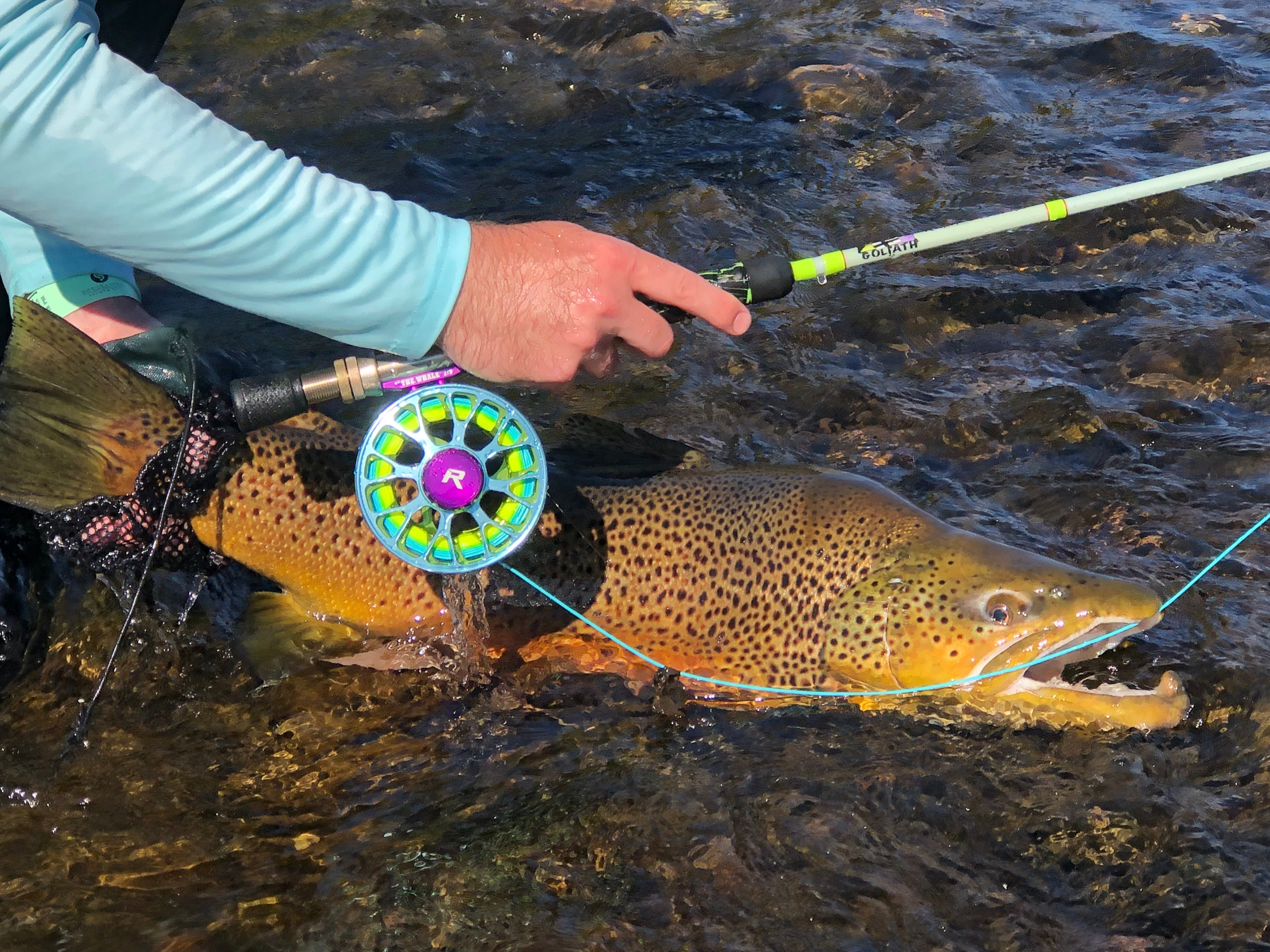
Veteran guide and former casting instructor Dan Gracia described the fight as give and take: pull hard when the fish is not pulling, and ease off the moment it shakes its head, jumps or runs hard. Too much pressure during a jump loses fish, and so does a rod that flattens out completely.
Try it: move the fish away from cover early, ease off on the jumps, and keep the rod angled low, no more than about 45 degrees, to steer it toward slower water. Read the original tip card
Fish barbless and keep the banks wild
Author Mark Kurlansky, who wrote a history of salmon, said on Episode 105 that keeping riverbanks wild matters, and that catch and release should be done with barbless hooks. Barbless hooks make a fast release easier and cut down on handling.
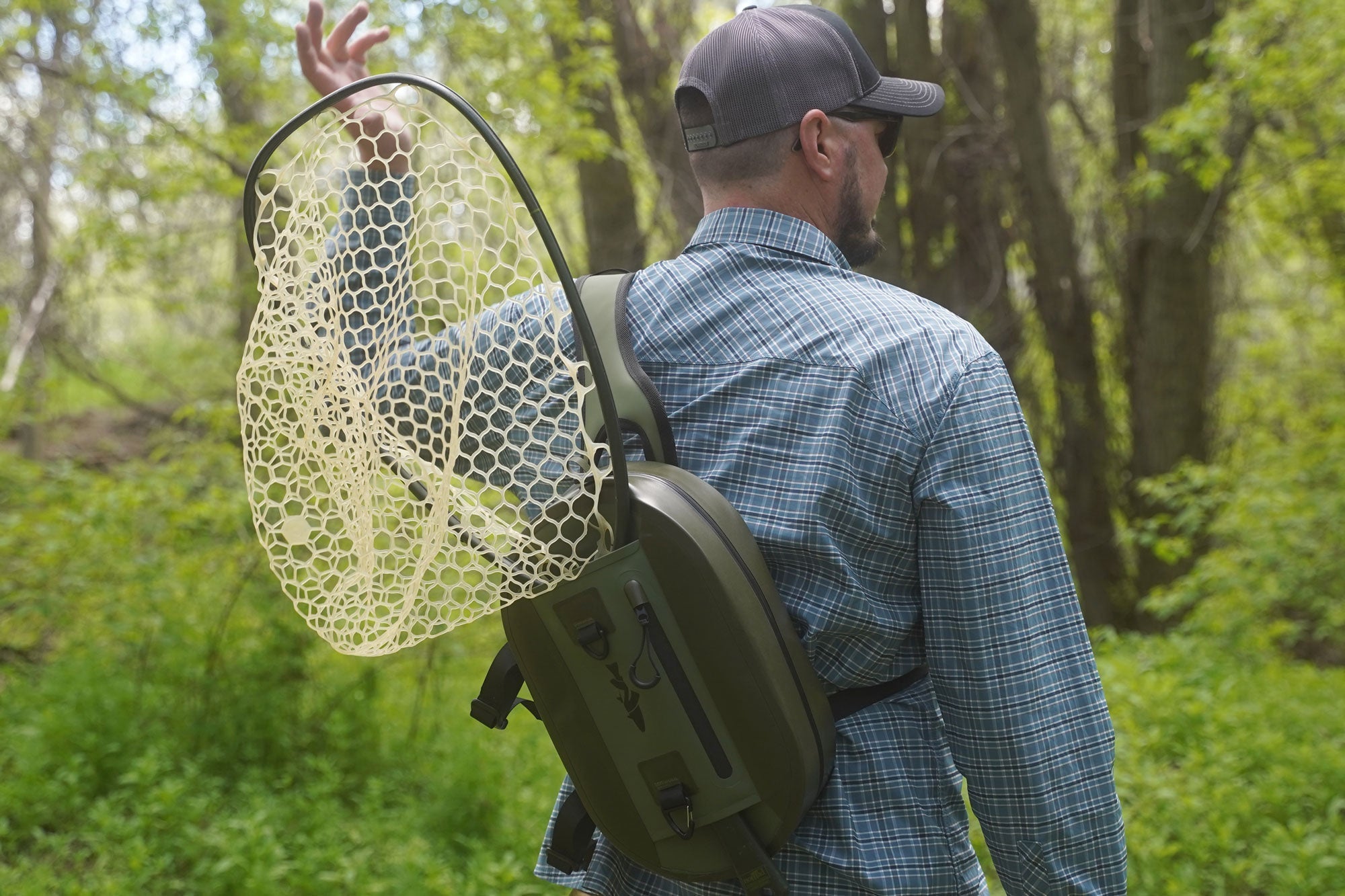
Try it: pinch your barbs before the first cast, wade rather than trampling the bank, and keep your release quick. A good rubber-bag net helps keep the fish in the water. Read the original tip card
Measure a steelhead day by moments, not fish count
Zack Walters said on Episode 89 not to get too caught up in numbers, because wild steelhead up and down the West Coast are in a lot of trouble. A good day can be one grab, one fish, or one perfect swing through a run you finally figured out.
Try it: set a goal that is not a fish count, handle every landed fish quickly and gently, and actually look at it before you let it go. Read the original tip card
Steelhead are a privilege, not a scoreboard. For the full set of tips, plus more on salmon and trip timing, the Steelhead and Salmon Tips roundup is the place to start. And if you want to rep the fish you're chasing, browse the STLHD Gear collection.
Get the FFIP holiday deals first
Drop your email and we'll tell you the moment a holiday sale goes live, starting with Thanksgiving to Cyber Monday. No spam; unsubscribe anytime.
Frequently Asked Questions
What is the most important steelhead fly fishing tip?
The most important steelhead fly fishing tip from our guests is to put the fly where the fish actually are. Study the run first, fish walking-pace water about three to six feet deep, and cap your cast so you cover the near seams instead of bombing it to the far bank.
Why do steelhead grab the fly at the dangle?
Steelhead often follow a swung fly and commit only when it slows or pauses at the end of the swing. Roger Hinchcliff suggests always assuming a fish is following, and holding the fly at the dangle longer than feels comfortable before you strip or recast.
How do you pick a steelhead fly?
Brian Silvey says steelhead fly choice comes down to water temperature. In colder water, go bigger and heavier and fish a leech slowly; in milder water, a smaller traditional wet fly works. Then commit to that fly for a full run instead of switching every few casts.
Should steelhead be fished barbless?
Many steelhead anglers fish barbless, and author Mark Kurlansky recommended barbless hooks for catch and release on Episode 105. Barbless hooks make a fast release easier. Always check the regulations for the river you fish.
Tight lines, everyone!
Get one steelhead lesson, gear deal or trip idea in your inbox each week, so you can catch any fish, any time, and anywhere.
Join freeShow us your steelhead on Instagram @flyfishinginsiderpodcast