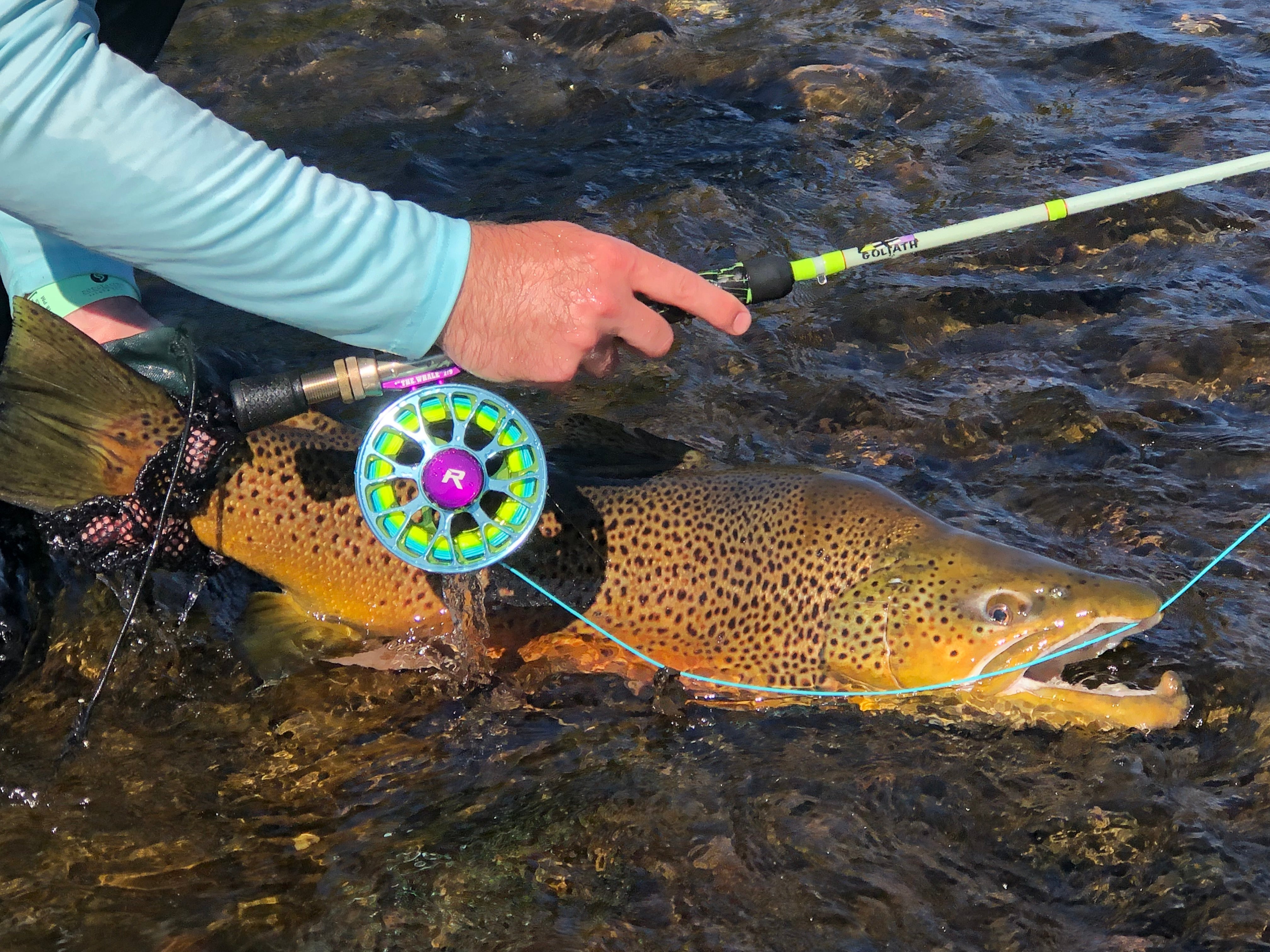

There is a funny moment in this episode where our guest from Scott describes a fly rod for what it physically is: a hollow tapered tube. That's it. A few ounces of material shaped into nine feet of cone. And yet you can pick up two nine-foot five-weights from two different builders and they will feel like different tools entirely, and the reason why is not marketing. It comes down to three things you can actually learn to think about — taper, resin, and layup. Understanding them will make you a much better rod shopper and will stop you from buying based on price.
The lesson buried in the early graphite era
The most instructive part of this history is a mistake the whole industry made. Scott's founder came up as a fiberglass rod specialist, building in the pre-graphite, pre-carbon-fiber days. Then unidirectional graphite materials were commercialized — Fenwick was the first company out with graphite rods in the early seventies — and everyone got access to a dramatically better material.
And what most builders did with it was simply substitute graphite prepreg for the fiberglass in the tapers they were already using. Same designs, new material. So the first wave of these high-tech graphite rods were fiberglass rods in disguise — seven-foot six-weights and the like — which is to say the material got better while the design stayed put.
What separated Scott was taking their own niche — multi-piece, light-line designs — and actually redesigning for the new material rather than translating. The result was a nine-foot four-weight, which sounds unremarkable now and was a genuine leap then. The takeaway for you as a buyer: a spec sheet listing an impressive material tells you almost nothing. What was done with the material is the entire question.
Taper: where the rod decides what it is good at
Taper is the rate at which that hollow tube changes diameter from butt to tip, and it is the single biggest determinant of how a rod behaves. A taper that keeps more material low and thins quickly toward the tip loads in the tip — delicate, accurate at short range, forgiving of a soft stroke. A taper that carries stiffness further up the blank bends deeper into the butt under load, which is what you want when you have to drive a heavy fly into wind or pick up forty feet of line off the water.
This is why "fast" and "slow" are nearly useless words in a product description. They describe where and how the rod bends, which is a taper question, and taper is only meaningful relative to how you cast and what you are casting. A rod that a strong caster calls crisp will feel like a broom handle to someone with a smoother, slower stroke. Neither person is wrong about the rod.
Resin and layup: the quiet half of the equation
Here is the part almost nobody thinks about. The graphite fibers do the work, but they are held in a resin matrix, and that matrix has changed enormously — from polyester and phenolic resins in the early days to the epoxy resins used now. Our guest's framing of how rod performance actually advances is worth internalizing: it is a small leap forward in resin chemistry, combined with unidirectional layups, combined with maybe a tweak to a taper, combined with designing a new component. Not one breakthrough. Four small things compounding.
Layup is how the sheets of material are oriented and stacked around the mandrel. Fibers running lengthwise resist bending; fibers running around the circumference resist the tube going oval and collapsing under load. Get that balance wrong and the rod either feels dead or feels unstable and loses accuracy when you push it. Get it right and the rod recovers cleanly from the bend instead of wobbling — which is what people are describing when they say a rod feels smooth without being soft.
Which is why the complexity is real. For a few ounces of tapered tube, there is an enormous amount of engineering decision in there, and the differences between two rods at the same price often come down to choices in this layer that no spec sheet will ever show you.
How to use all of this when you shop
Three rules fall out of it. First, cast the rod, with the line you will actually fish, at the distance you actually fish — because taper only expresses itself in your hands and most people fish far closer than they test. Second, stop reading material claims as quality claims; the early graphite era proved a superior material poured into an old design is just an old design. Third, be skeptical of the idea that more money buys a better rod rather than a more specialized one. Scott building the first graphite series dedicated to West Coast coastal salmon and steelhead anglers, and a switch rod before graphite switch rods were a category, are examples of specialization, not of upgrade.
Gear
I am not going to tell you which rod to buy off the back of this, because the entire point of the episode is that the right rod is a function of your stroke and your water. The genuinely useful move is to go to a local fly shop, ask to cast three rods at different price points on the lawn with a line matched to each, and pay attention to which one you can hit a target with at twenty-five feet. Most shops will happily do this and it costs you nothing. That single afternoon is worth more than any review, including this one.
What we do have that fits: once you have a rod you trust, the limiting factor is usually everything hanging off the end of it — leader design, knots, rigging choices. Tips and Tricks for Fly Fishing is where that lives. And if this is the kind of thing you read in the offseason at the tying bench with something hot next to you, the FFIP Angler's Coffee Mug is honestly the correct accessory for a rod-design deep dive in February.
It really is just a tapered tube. That is what makes it interesting.