
Most anglers spend their day casting to water that simply looks fishy. The anglers who consistently find fish do something different: they ask what a trout needs and then go looking for the one spot where all of it comes together. In this short lesson, our guest shares a simple memory tool called FEES that turns a confusing stretch of river into a handful of obvious targets. FEES stands for food, energy, efficiency, and safety, and once you start running through it every time you walk up to the water, your hit rate changes.

Food: Where Is It Concentrating?
Start with the menu. Trout do not eat randomly; they sit where the current delivers food. Look for eddies that gather drifting insects, riffles that push nymphs and emergers through in a steady stream, and the rocky bottom where insects live. Ask yourself whether the bugs are down on the substrate or higher in the water column, because that tells you whether to fish deep or closer to the surface. If you see mayflies or caddis coming off, the food is up. If nothing is hatching, think bottom.
Energy: Find the Slow Water Beside the Fast Water
Now put yourself in the fish's position. Every moment in heavy current burns calories, so a trout wants to hold where the flow is gentle and step into the food lane only when it needs to. The lesson highlights three classic spots. First, an eddy line, where a fish can sit in the slower water and dart in and out of the seam. Second, the pocket behind or beside the substrate, where rocks break the current and create a cushion. Third, the drop-off at the head of a pool just below a riffle, where fast water shoots over the fish's head while it rests right at the lip.

Efficiency and Safety: The Tie-Breakers
Efficiency is the link between the first two elements and the last. A good lie lets a fish reach food and rest without wasting effort. Those subtle, smooth lines along the edge of a river, where the surface is calm right beside faster water, are perfect examples: a trout can sit, slide out to eat, and slide back.
Safety is what separates a spot where fish visit from a spot where they live. If a predator shows up, can the fish escape? Look for deeper water right next to the feeding lie, an eddy that drops back into a deeper slot, or fast current a fish can use to scoot downstream quickly. When food, low energy cost, and an escape route all sit within a body length of each other, you have found a premium lie.
How to Use FEES on the River
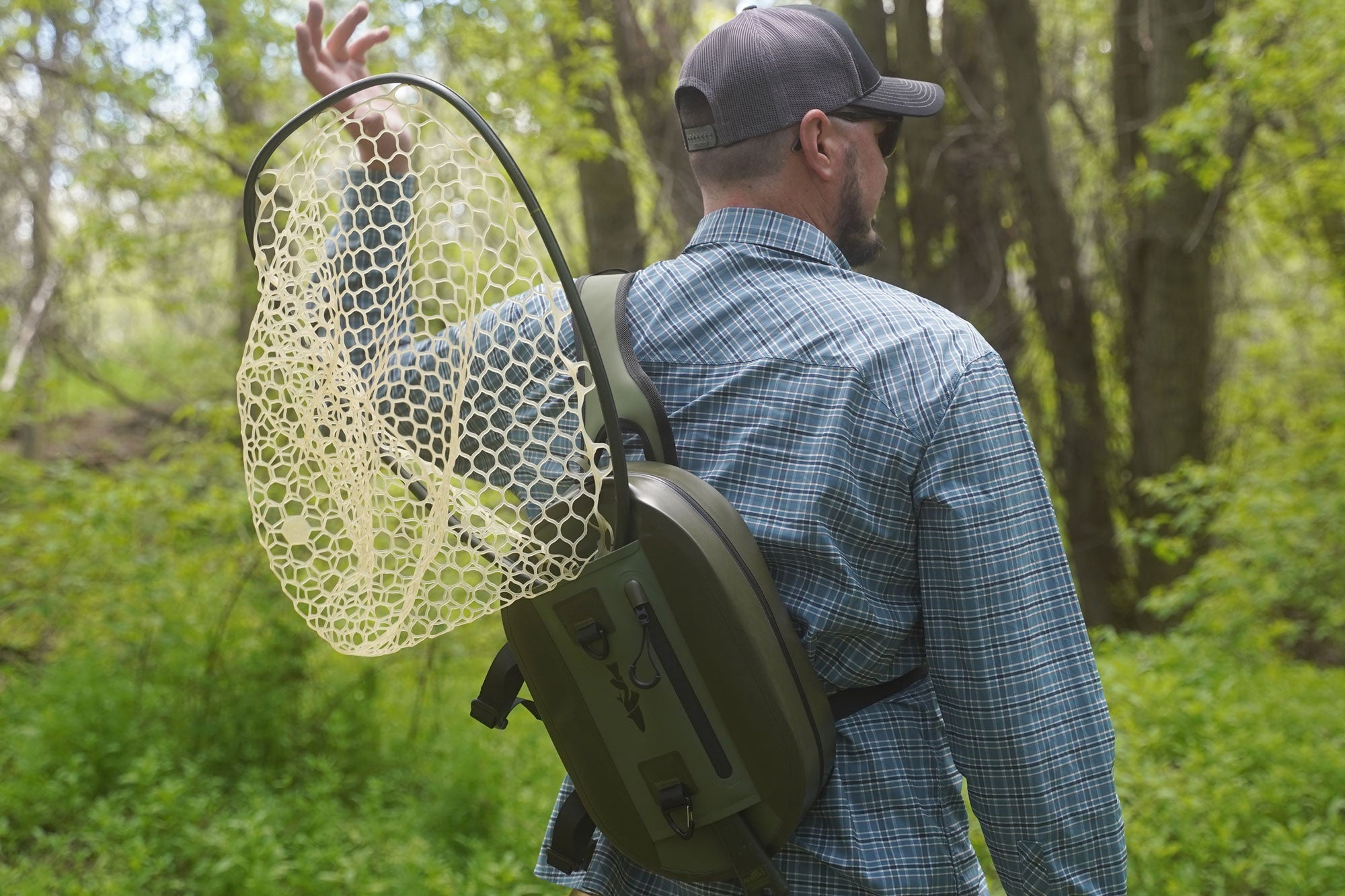
Make it a habit. Before you cast, pause and run the checklist out loud if you need to. Where is the food? Where could I rest? Can I reach both without effort? Where would I bolt if something scared me? Combine the answers and a few feet of a stretch you would have blown past will light up. One more point worth remembering from the video: the best fish are often not along the obvious trail. Places the path does not lead to, because they are harder to reach or easier to overlook, tend to hold the fish that see the least pressure.

Practice it on a familiar stretch first. Fish it normally, then fish it again with FEES in mind and note how many of your best takes came from spots that checked every box. You will start to see patterns that carry from river to river, which is exactly what makes this a skill rather than a trick.
Gear
Reading water is a skill, not a gear problem, but a good reference helps. Our Tips and Tricks for Fly Fishing eBook collects rigging and approach ideas you can pair with this lesson. For the days you hike past the trail to find less pressured water, a good layer matters too, and the Brown Trout Hoodie is our go-to for chilly mornings on the bank. If you want help matching a rig to the type of lie you find, your local fly shop is the best next stop.