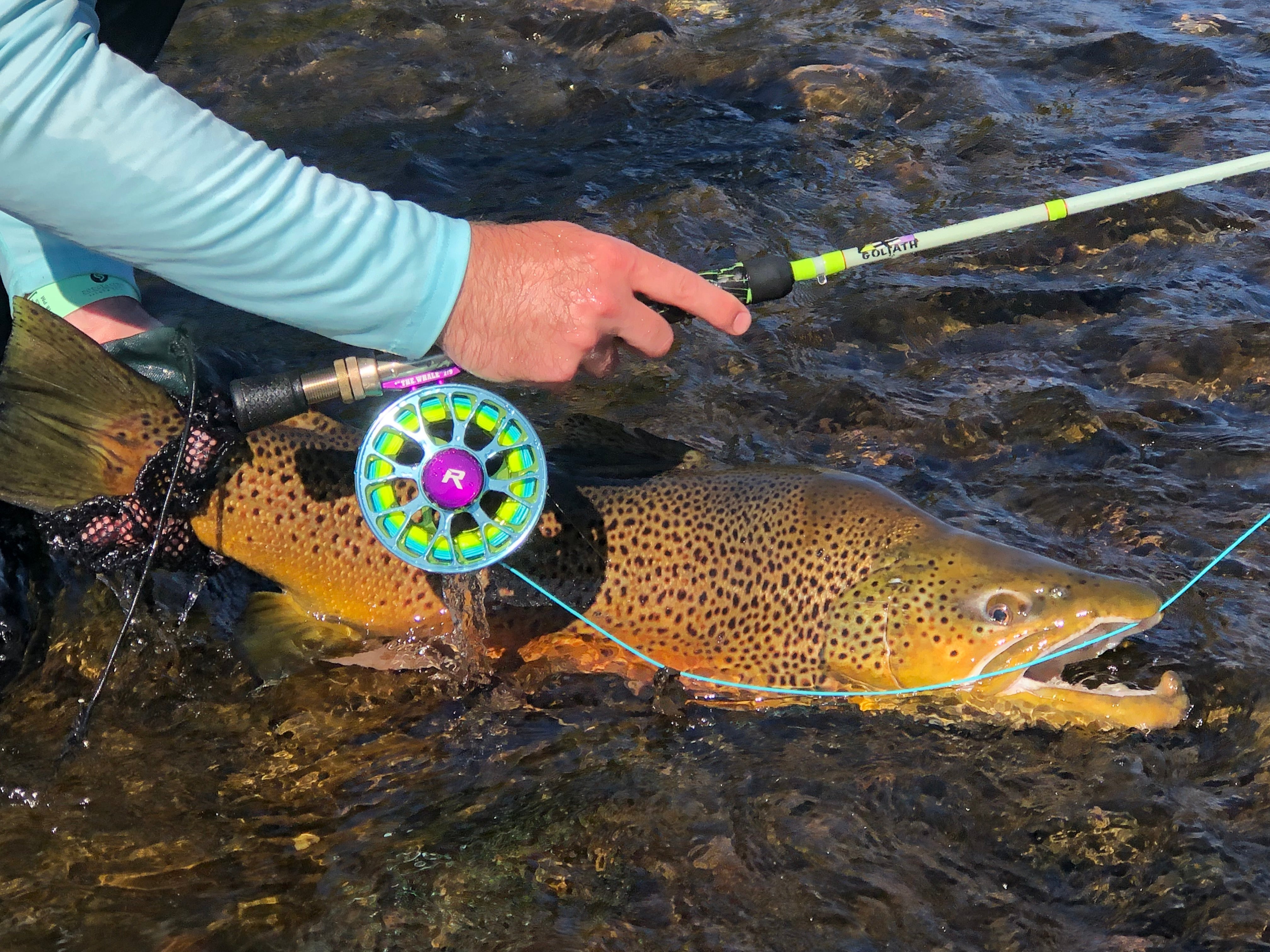

Our guest on this episode has seen fly fishing from just about every angle: he started guiding in his late teens to pay for college, guided in Missoula, ran his own outfitting business out of Livingston, Montana, and now helps lead Cheeky Fishing, the brand that took a chance on brightly colored reels more than a decade ago when the rest of the industry was still anodized black and gold. But the thread that ran through the whole conversation wasn't reels. It was a mindset: every fish is a problem to solve, and the do-it-yourself angler who learns to break that problem down step by step catches more fish and has more fun doing it.
Your Real Job Title Is Problem Solver
Our guest compared fishing to work: whatever your title says, your actual job is solving problems. On the water the list is familiar. What's the fly? What's the depth? How much weight? Is drag killing the drift? The anglers who improve fastest are the ones who stop guessing and work that list in order instead of changing three things at once.
He pointed out that almost none of the memorable fish in his life were easy. Most started with an assumption about what was going on, and the fish only came once he broke the situation down: change one variable, watch what happens, change the next. That's the core of DIY fishing. Nobody is handing you a rig or telling you where to stand, so the process is yours to own. Try it on your next slow day: before you swap flies, write down (even mentally) what you think the fish are doing and what single change would test that idea.
He also had a good word on attitude. As a guide he never got sick of tangles or tough clients; each one was just another small problem. And on a brutal day of wind and snow, when the indicator was literally ripping off the water, the right call was to drop the agenda and enjoy being out there instead of forcing a technique the conditions wouldn't allow.

Reading a Tidal Flat on Foot
Much of the conversation turned to wade fishing for striped bass in Massachusetts, where public shoreline access makes DIY saltwater fishing remarkably open. You don't need a boat or a guide: you can fish a creek mouth in sandals, work a jetty, or walk the flats. And the flats fishing he described is as good as anywhere: 10- and 20-pound stripers moving onto bright sand in less than knee-deep water, visibly working bait.
The skill that makes it work is reading the tide before you go. Our guest described studying satellite imagery of a flat to understand how it fills and drains: where the water comes in, where it goes out, and where you want to enter as the tide recedes so you're positioned where fish will be funneled rather than chasing them. A few practical habits follow from that:
- Plan entry and exit with the tide, not the clock. Know which channel fish will use to leave the flat on the outgoing, and know your own safe route back.
- Look for the bait first. Fish working bait on sand are visible if you slow down and scan. Find the bait and you've found the window.
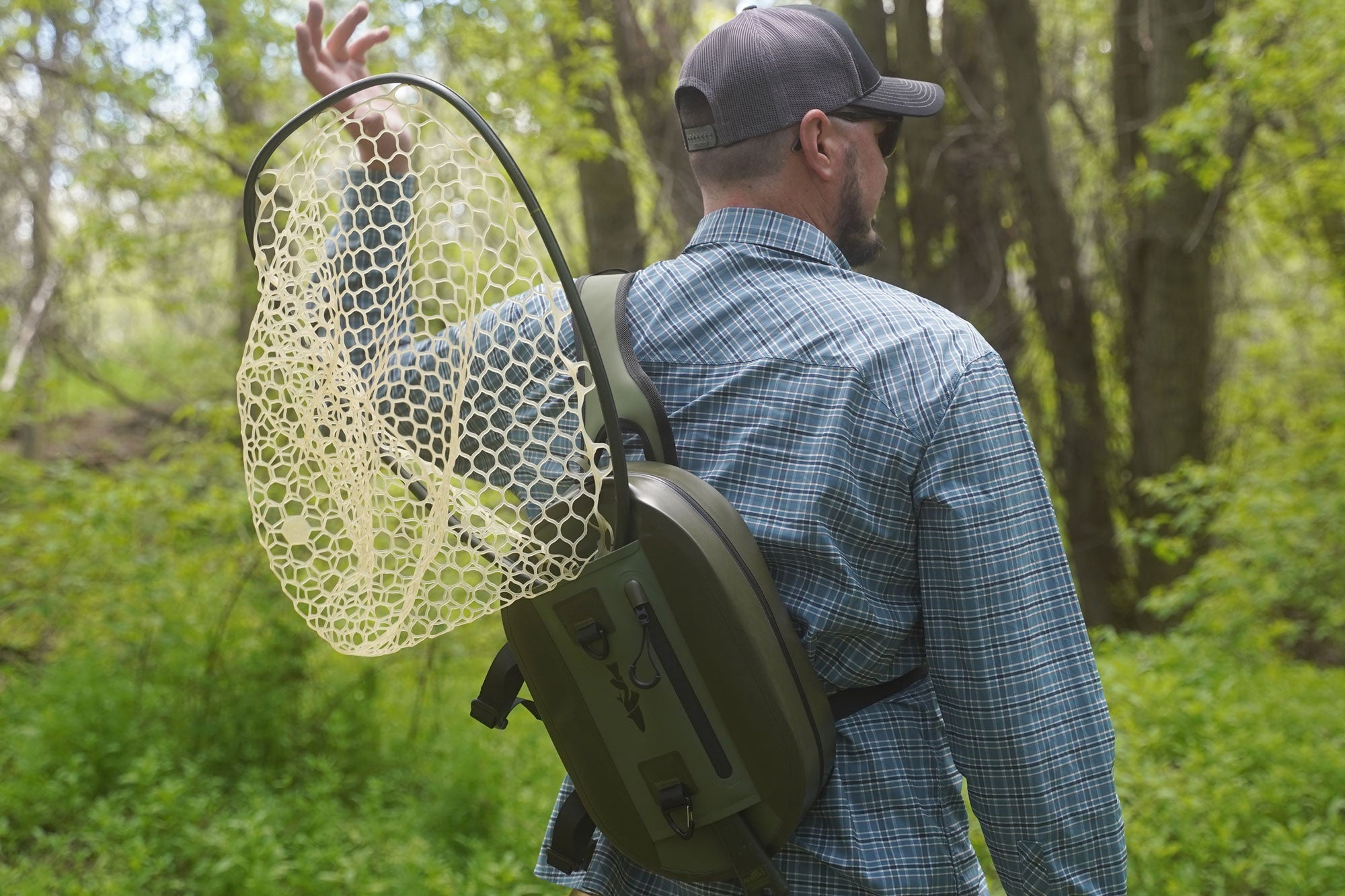
- Keep it light and mobile. On foot, the angler who can cover water quietly beats the one hauling a heavy pack.
He also noted that a big striper on a shallow flat, hooked while you're standing in the water, is a completely different experience from the same fish hooked from a boat. That's the DIY payoff.

Teaching Kids: Sometimes They Just Want to Catch Fish
A great reminder for parents: adults love problem solving, but kids sometimes just want to yank in bluegill one after another. Give them that. Our guest's family also turned casting practice into a game at home using short yarn practice rods: they'd pull up a photo of a fish, set a target, and the kids would have to stalk, cast to it and "hook" it. It built real casting accuracy and gave them a taste of the stalking and sight-casting that make fly fishing special, without the frustration of a slow day on the water.

Gear
For DIY flats fishing, the most useful things you can buy are a tide chart app, a good stripping basket and polarized glasses, and a local saltwater fly shop can point you to flats that fit your skill level. If you want a single reference for the problem-solving fundamentals, our Tips and Tricks for Fly Fishing eBook covers rigging, reading water and troubleshooting. And for long hours of scanning bright sand, a Five Panel Cap paired with good polarized lenses cuts the glare that hides cruising fish.