
When most anglers picture Australia on the fly, they picture one thing: a barramundi exploding on a popper somewhere up north. That's a fair picture, but it's a small slice of what's down there. On this Guided episode I sat down with Josh Hutchins, who runs Aussie Fly Fisher — a guide business, a trip operation across northern Australia's saltwater, and a film crew that has put some of the country's strangest and most beautiful fish in front of the fly fishing world. What came out of it was a practical crash course in three fish every traveling angler should understand: Murray cod, barramundi, and the blue bastard.
Murray Cod: A Freshwater Apex Predator in Trout-Stream Water
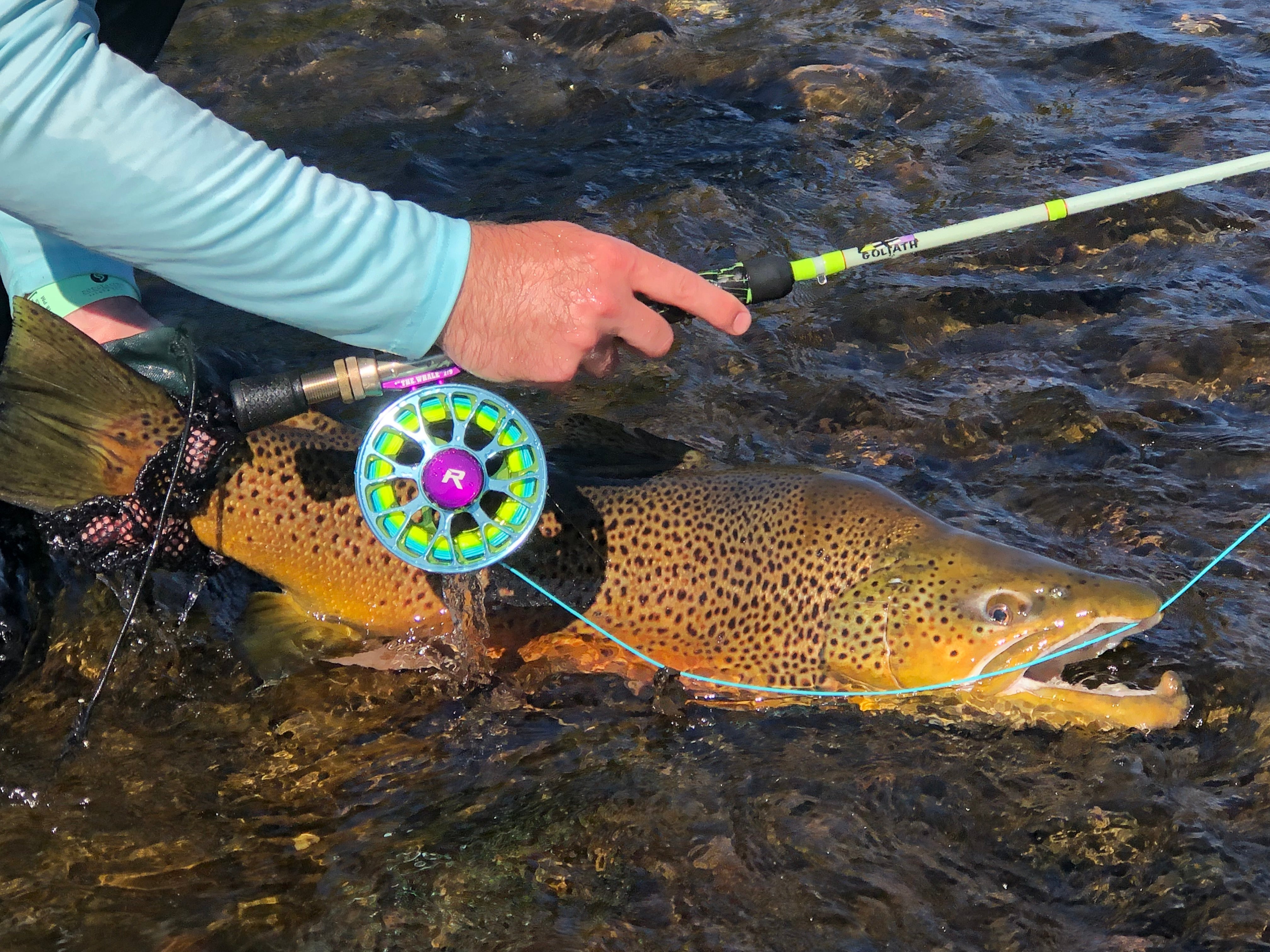
Murray cod are Australia's largest freshwater predator, and Josh made the point that a lot of Australians still think of them as a big-river, dirty-water fish. That reputation is exactly what his team set out to break. Some of the best cod fishing he described happens in water the size of a trout stream — or smaller — where a genuinely large fish can be sitting in a pool you could almost step across. They'll come up and obliterate a surface fly with that cupping, shotgun-blast sound bass anglers will recognize, and in clear upland water you can sight-fish to them.
The takeaway for us: think of cod the way you'd think of big-river smallmouth or pike, scaled up. Big flies, deliberate retrieves, and a willingness to fish subsurface with large streamers when they won't come up. Josh also noted a cultural detail worth respecting — cod have raspy jaws that will shred your hands, so handling them carefully (and quickly) matters.

Barramundi: Fish the Drains on the Falling Tide
Up in the Northern Territory, northern Western Australia and northern Queensland, barramundi are the fish. Josh's go-to tackle is simple: a 9-foot, 9- or 10-weight rod. His most useful piece of water-reading was the "barra drain" — the small, snaking channels that cut through the mud flats. When the tide drops, barra sit in those drains waiting for bait to be flushed out, and a well-placed fly at the mouth is often all it takes.
The presentation he described is patient: cast the big fly or popper, let it sit for a moment, then work it. Along the banks you'll be casting tight to snags, so expect to lose some flies. And don't overlook the flats — Josh recounted a session where barra were cruising open flats and eating nearly every cast for two hours straight.
The critical rigging detail: barramundi have a raspy mouth that wears through leaders over time, but the real danger is the razor edge on their gill plate. Because they jump and headshake so much, that edge only needs to touch your line for a second to cut it. Josh runs a heavy butt section and finishes with roughly a foot of much heavier bite tippet — around 40-pound class — right at the fly.
Blue Bastards: Build Your Own Leader
The blue bastard is an endemic grunter found along the top third of Australia's coastline, made famous by the film Josh's team shot with Jako Lucas. Unlike permit, which roam, Josh said blue bastards often hold in one spot and "tail" over the same patch of bottom, and they tend to favor areas with more structure rather than pure sand.
His leader approach is worth stealing for any flats fish. Twenty-pound is the norm for blues. Rather than relying on store-bought tapered leaders, he builds his own on the flat from straight sections: roughly a 9-to-10-foot leader with about half of it in 40-pound for turnover, stepping down to the 20-pound working section. It's cheap, it's repairable mid-session, and you always know exactly what's in your knots.

Gear
If you're planning a northern Australia trip, the gear that matters most is a 9- or 10-weight, spools of straight 20- and 40-pound fluorocarbon for building leaders, and heavy bite tippet for barra — your local fly shop can set you up with all of it and help you match line to rod. From our shop, the Tips and Tricks for Fly Fishing eBook covers the knots you'll use to build those leaders, and a Five Panel Cap earns its keep when you're staring into the glare looking for tailing blues.