
The lower Provo River was running a little off color the morning I finally understood what leading your nymphs actually does. I was standing in a knee-deep riffle below Deer Creek Dam, my buddy Todd was twenty feet upstream of me, and we were fishing the exact same two flies on nearly identical tight-line rigs. Same tippet. Same tungsten beads. Same seam. In an hour, he put six brown trout in the net and I landed one whitefish that ate out of pity. The difference wasn't the fly, the leader, or the water. The difference was that Todd's rod tip was traveling ahead of his flies down the drift and mine was dragging along behind them like a kid being pulled through a grocery store. That's leading versus tracking, and once you can feel the difference, tight line nymphing stops being a rigging exercise and starts being a hunting skill.
Leading nymphs on a tight line means moving your rod tip slightly downstream of your flies through the drift so the leader stays tensioned and angled ahead of the nymphs. That small, deliberate lead keeps you in constant contact, holds the flies at a consistent depth, and turns a subtle take into a visible sighter stall instead of a strike you never saw. Tracking — matching the flies' speed exactly — feels safer but hides most of your eats.
Key Takeaways
- Leading keeps the rod tip slightly downstream of the nymphs, maintaining tension and a readable sighter angle through the whole drift.
- Tracking matches the flies' speed with zero lead, which drifts beautifully but bleeds strike detection.
- Guiding is a deliberate lead strong enough to steer the flies into a specific lane or lift them over a rock.
- Your sighter angle is the gauge: a leader entering the water at roughly 30 to 45 degrees off vertical usually means you're leading correctly for that depth and current speed.
- Tick bottom every four to six drifts, not every cast — constant grinding means too much weight or too little lead.
I'm Christian Bacasa, and I host the Fly Fishing Insider Podcast. I guide in Utah, I've fished tight-line rigs on everything from the Weber River to tailwaters in Colorado and Montana, and I can tell you that leading your nymphs is the single skill that separates anglers who own a euro rod from anglers who actually catch fish with one. It's also the skill almost nobody teaches properly, because it lives in your hands and not in a leader formula.
The Day Todd Out-Fished Me Six to One
Here's what Todd was doing that I wasn't. He'd tuck-cast his two nymphs upstream at about a 45-degree angle, let them drop for a beat, and then — this is the part I missed for two seasons — he'd start his rod tip moving downstream a half-beat before the flies got there. His rod tip was always the leading edge of the system. The sighter never went slack, never bowed, never collapsed into the water. It sat there at a steady angle like a needle on a gauge, and every time a brown trout so much as breathed on his point fly, that needle twitched and Todd set.
I, meanwhile, was doing what most anglers do when they're told "stay in contact." I was keeping the line tight by chasing the flies. My rod tip followed the drift, trailing behind the nymphs, and every time the current accelerated, my leader went slack for a half-second before I caught up. In that half-second, a trout could eat and spit the fly and I'd never know. Todd wasn't a better caster than me that day. He was just in front of his flies and I was behind mine.
Later, on the tailgate, Todd put it in words I still use with clients: "You're not holding a line tight. You're leaning on the flies." Tension in tight line nymphing isn't a static condition you set and forget — it's a relationship you maintain by staying slightly ahead.
The Misconception: "Tight Line" Does Not Mean "Line Tight"
The phrase "tight line nymphing" has done a lot of damage. It makes anglers think the goal is maximum tension, and maximum tension is exactly what kills a drift. Pull too hard on a tight-line rig and you drag the nymphs off the bottom, skate them across current lanes, and produce a swimming presentation that a wild brown trout has seen a thousand times and refused a thousand times.
But the opposite mistake is just as common, and it's the one I made on the Provo. Anglers over-correct toward slack. They soften the drift, let the sighter sag, and convince themselves the flies are drifting "naturally." What's actually happening is that the leader forms a belly under the surface, the current loads that belly, and the nymphs get pulled downstream faster than the bottom current — which is not natural at all. Worse, every take gets absorbed by that belly before it ever reaches the sighter.
Leading your nymphs is the middle path, and it's a narrow one. You're applying just enough downstream lead to remove slack from the system without accelerating the flies. On a typical Utah freestone riffle running about two feet deep at walking pace, that lead might be four to eight inches of rod-tip travel ahead of where the flies actually are. It is a small amount of movement doing an enormous amount of work.
Think of it like towing a trailer. If the hitch has slop in it, every bump sends a shudder through the whole rig and you feel nothing useful through the steering wheel. Take the slop out — but don't yank the trailer — and suddenly you can feel the road surface through the truck. Leading your nymphs takes the slop out of the hitch.
What Does It Mean to Lead Your Nymphs on a Tight Line?
Leading your nymphs means your rod tip travels downstream at a slightly faster pace than the nymphs themselves, keeping the leader under light, constant tension and angled ahead of the flies. In practice, the sighter stays at a consistent angle to the water, the fly line or mono butt section never touches the surface, and every ounce of feedback from the flies travels straight up the leader to your hand and eye.
Tight line nymphing gives you three distinct relationships you can have with your flies, and good anglers switch between them constantly:
| Technique | Rod tip position | What the flies do | When I use it |
|---|---|---|---|
| Leading | Slightly downstream of the flies | Drift at or just under current speed, held at a stable depth | My default. Riffles, runs, pocket water, anywhere I want maximum strike detection. |
| Tracking | Directly above or matched to the flies | Drift at true current speed with minimal influence | Slow, clear tailwater flats and pressured trout that refuse anything with a hint of tension. |
| Guiding | Well downstream, actively steering | Get pulled into a chosen lane, lifted over rocks, or held in a bucket | Complex pocket water, boulder gardens, and any time I want the flies in one specific seam. |
Most anglers think they're leading and they're actually tracking. A smaller group thinks they're tracking and they're actually dragging. The way to know is the sighter, and that's why the material you choose for it matters as much as the technique. This video from The New Fly Fisher shows the sighter-to-fly relationship better than any diagram I can draw:
Why Leading Beats Tracking for Strike Detection
Leading beats tracking for strike detection because a led leader has no slack to absorb the take. When a trout inhales a size 16 tungsten jig and turns a half-inch, that motion has to travel through the tippet, the sighter, and the butt section before it reaches your eye. Every inch of slack in that chain eats part of the signal. A properly led rig delivers maybe eighty percent of that motion to the sighter. A tracked rig with a small belly might deliver twenty percent. A dragging rig delivers almost nothing until the fish has already rejected the fly.
There's a second reason, and it's depth control. Nymphs on a led leader hold depth. Nymphs on a slack leader sink until the belly loads, then rise as the current pulls that belly downstream, then sink again — a sawtooth pattern that spends very little time in the strike zone. When I started leading consistently, my hookup rate roughly doubled in the same water with the same flies. That wasn't magic; I was keeping the flies in front of trout for more of each drift and seeing more of the eats that happened.
The third benefit is diagnostic. A led sighter tells you things. It tells you when your flies touched a rock, when the current speed changed, when you drifted from a fast lane into a soft one. Trout hold in those transitions, and knowing you just crossed one is worth a lot. I cover this diagnostic thinking in more depth in our guide to nymph depth and presentation, which pairs well with everything here.
The Rig That Makes Leading Possible
You cannot lead your nymphs well on a rig that fights you. Three things matter, in this order: leader mass, sighter visibility, and rod length.
Leader mass. A thick, heavily tapered leader sags. Sag is slack you didn't ask for. A straight or lightly tapered mono leader — something in the 0.013 to 0.015 inch range through the butt, dropping to a sighter, then to 5X or 6X fluorocarbon tippet — hangs almost straight and transmits everything. I build most of mine around a tippet ring so I can swap the business end without rebuilding the whole thing, an approach I break down in our micro-leader nymphing guide.
Sighter visibility. You're going to stare at eighteen inches of colored mono for six hours, so make it easy on yourself. Two contrasting colors — a hot orange and a chartreuse — give your eye a reference that works against dark water and bright glare both. If you can't see the sighter, you're guessing at your lead.
Rod length. Every extra inch of rod is reach you can use to keep line off the water. A 10-foot 3-weight will lead flies through water an 8.5-foot 5-weight simply cannot cover without laying line down. That isn't snobbery about specialty gear — it's leverage, the same reason a longer wrench turns a tighter bolt.
Trade the tapered leader for straight mono and learn what your flies weigh. Gunnison Gorge guide Matt Mccannel — who earned the nickname "The Stealthy Trout Hunter" on his episode of the podcast — argues that a fat tapered leader sinks poorly and parks fly line uncomfortably close to wary trout. He builds instead on a long, straight hard-mono butt down to fine fluorocarbon. The part that matters for leading: once you know how fast a given fly actually sinks, you can start your drift only a few feet above a fish instead of guessing from twenty. That knowledge is what lets a lead be precise instead of hopeful.
How Do You Know If You're Leading or Dragging Your Nymphs?
You know you're leading correctly when the sighter enters the water at a consistent angle of roughly 30 to 45 degrees off vertical, moves at a steady pace, and never collapses or straightens abruptly. You know you're dragging when the sighter goes flat toward horizontal, when your flies skate up out of the zone mid-drift, or when you feel continuous grinding on the bottom instead of occasional ticks.
Here are the four field checks I run constantly, and I'd encourage you to run them on your next trip to the Weber River or wherever your home water is:
1. The bottom-tick audit
Your point fly should touch bottom softly every four to six drifts. Every drift means too much weight or too little lead — you're plowing. Never means your nymphs are riding above the fish. This single check fixes more nymphing problems than any fly change.
2. The sighter angle read
Watch where the colored mono enters the water. If that angle stays consistent through the drift, your lead matches the current. If the angle steepens toward vertical, you've fallen behind and slack is building. If it flattens out downstream, you're pulling and the nymphs are climbing.
3. The pause test
Mid-drift, stop your rod tip for a full second. If the sighter immediately pulls downstream and tightens, you were leading — good. If nothing happens for a beat, you had slack in the system and your strike detection was compromised the whole time.
4. The hookup timing tell
If most of your fish are hooked in the corner of the mouth on a clean set, your lead is right. If you're getting a lot of foul-hooked fish, snags, or takes you feel only after they've turned, you're likely tracking too loosely and setting late.
Dry Fly Tactics for Selective Trout (free eBook)
The same presentation thinking that makes a led nymph drift work is what beats picky trout on top — here it is in one downloadable guide, free from the FFIP crew.
Get the free eBook →How I Actually Lead Nymphs, Cast by Cast
Here's my honest, unglamorous process on a run I've never fished before. It takes about six casts to dial in, and I run it every single time.
Step one: the tuck and the drop
I cast upstream at roughly 45 degrees, tuck the flies with a slight stop of the rod tip so they enter nose-first, and then I do nothing for a beat. That drop phase is where the nymphs get to depth, and rushing it is the most common error I see. On a two-foot riffle with a 3.5 mm tungsten bead, that beat is about one second. In four feet of pushy water, it's closer to three.
Step two: catch up, then get ahead
As the flies come tight, I bring the rod tip to a position just downstream of where I believe the nymphs are — usually a foot or so of lead — and I hold that relationship. I'm not pulling. I'm occupying the space ahead of the flies so the leader has nowhere to sag.
Step three: match the pace, not the surface
This is the part that takes a season to learn. The surface current is faster than the current down where your nymphs are living. If you lead at surface speed, you're dragging. I lead at roughly seventy to eighty percent of surface speed and let the sighter tell me if I got it wrong. When the sighter starts pulling ahead on its own, I slow down.
Step four: end the drift on purpose
Most drifts die from neglect. I finish mine deliberately — I let the flies swing up at the end of the drift, which is an induced lift that draws a surprising number of eats, and then I lift into my recast. If a fish is going to take on the rise, that's the moment, so I stay ready rather than treating the end of the drift as dead time.
Step five: adjust one variable
If two clean drifts through good water produce nothing, I change exactly one thing — lead distance, then weight, then angle of approach, then fly, in that order. Anglers who change flies first end up with a full box and an empty net.
Advanced Leading: Lift-and-Lead, Pace Changes, and Cross-Current Work
Once the basic lead is automatic, three refinements will add real fish to your season.
The lift-and-lead. In water with an uneven bottom, I lift the rod tip slightly as I lead, which raises the point fly a few inches over a known rock and then drops it back into the bucket behind it. Trout sit in those pockets. Getting a fly to land in one without snagging the rock in front is worth practicing on purpose.
Pace changes within a drift. A single fifteen-foot drift on the Provo River might pass through a fast tongue, a soft cushion, and a slow tailout. Leading at one constant pace works in exactly one of those. I slow my rod tip as the flies enter softer water and speed it up in the tongue, reading the sighter for confirmation. This is where tight line nymphing starts feeling like a conversation rather than a procedure.
Cross-current leads. When I reach across a fast seam to fish a soft lane, the fast water grabs my leader and steals my lead. The fix is to lead slightly across as well as downstream, holding the rod tip out over the fast water so the leader hangs above it rather than in it. I'll also drop a tippet size, because thinner tippet gives the current less to push against.
Devin Olsen, a competitive angler whose thinking has shaped how a lot of American anglers approach contact nymphing, breaks down the strike-detection side of this below.
One more advanced note, and it's a practical one: check your regulations before you fish a multi-fly rig anywhere new. Fly and lure rules, fly counts, and gear restrictions vary by water, and Utah publishes the current rules in the Utah Division of Wildlife Resources guidebooks. It takes two minutes and saves a bad conversation with a conservation officer. Flows matter too — I check the USGS gauge on the Provo River below Deer Creek Dam before I decide how much weight to carry, because a hundred extra cubic feet per second changes every lead distance in this article.
Gear That Makes Leading Nymphs Easier
I'm a gearhead, so let me be honest about what matters here. You do not need a thousand-dollar rod to lead nymphs. You need length, a soft tip that telegraphs the take, tungsten flies that get down fast enough to be led rather than dragged, and tippet fine enough to cut current. That's the whole list.
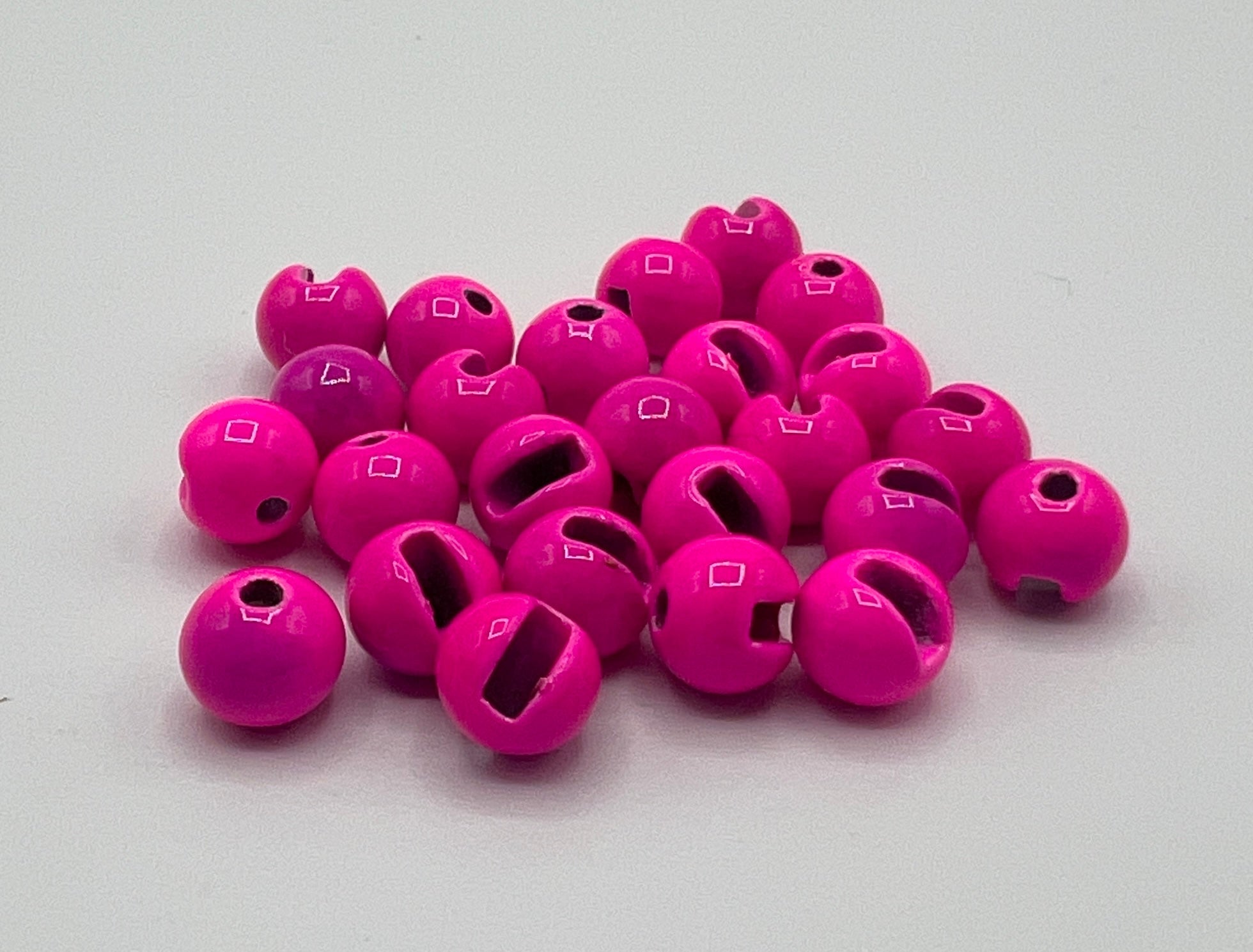
Tungsten is the real unlock. A tungsten bead sinks roughly twice as fast as a brass bead of the same diameter, so you can fish a smaller, more natural fly and still reach the strike zone quickly — which is what lets you lead a short pocket-water drift instead of burning the whole run getting to depth. Our fly patterns collection runs deep on tungsten jigs and perdigons, and the leaders collection covers the connection side.
For weight on the leader rather than the fly — which I use sparingly on a led rig — a small assortment of split shot covers the odd deep bucket without forcing you to re-rig. And if you're building or refining a contact rig, the rods, reels and combos collection is where I'd start looking for the length that makes leading possible.


Frequently Asked Questions
What is the difference between leading and tracking your nymphs?
Leading your nymphs means the rod tip travels slightly downstream of the flies, keeping constant light tension and a readable sighter angle. Tracking means the rod tip matches the flies' speed exactly, producing a very natural drift with less tension. Leading gives dramatically better strike detection and depth control; tracking is the gentler option for slow, clear water and heavily pressured trout.
How far ahead of my nymphs should my rod tip be?
On typical trout water two to three feet deep at walking pace, four to eight inches of lead is about right. Deeper or faster water needs more; slow, shallow tailwater flats need almost none. Rather than measuring, read the sighter: a consistent 30 to 45 degree entry angle that never sags or flattens tells you the lead is correct for that spot.
Do I need a euro nymphing rod to lead my flies?
No, but length helps enormously. A 10-foot or 10.5-foot rod in 2- through 4-weight keeps line off the water and gives you the reach to hold a lead across a seam. A standard 9-foot 5-weight will work at short range in close pocket water, you just lose the ability to fish farther lanes without laying line down on conflicting currents.
How do I know if my nymphs are actually on the bottom?
Your point fly should tick bottom softly every four to six drifts, not every cast. Constant contact with the riverbed means you're carrying too much weight or fishing too slow a lead. Zero contact over a dozen drifts means the flies are riding above the fish and you should add weight or start the drift farther upstream.
Why do I keep missing takes while tight line nymphing?
The most common cause is slack — you're tracking or dragging rather than leading, so the take is absorbed by the leader before it reaches your eye. The second cause is late setting. On a led rig, set at any sighter hesitation, stall, or twitch. A quick downstream sweep set beats a high rod lift because it drives the hook into the corner of the jaw.
Does leading nymphs work in slow, deep pools?
It works, but it's not always the best choice. In deep, slow water beyond about twenty feet away, the leader mass required to hold contact starts to overwhelm the presentation. That's the moment I'll either move closer, convert to a suspension setup, or switch water types entirely. Knowing when a technique stops working is part of knowing the technique.
What tippet size should I use for a led nymph rig?
Most of my leading is done on 5X fluorocarbon, dropping to 6X on clear tailwaters and moving up to 4X when I'm fishing heavier flies or bigger fish. Fluorocarbon sinks and has a smaller effective diameter than mono of the same strength, which gives the current less to push against and helps the flies hold depth.
Go Lead Some Flies
If you take one thing to the river from this article, make it the pause test. Mid-drift, stop your rod tip and watch what the sighter does. That one-second experiment will tell you more about your nymphing than a winter of reading will, and it costs you nothing. Then start leading — deliberately, slightly, constantly — and give it three trips before you judge it. The first trip feels awkward. The second feels clumsy. The third, you'll set on a take you'd never have seen before, and you'll be hooked on it the way Todd is.
That's the whole point of what we do at the Fly Fishing Insider Podcast: helping you catch any fish, any time, and anywhere, by giving you the skills that travel from your home water to whatever river you find yourself standing in next. If you try this on the Provo, the Weber, the Green, or a creek nobody's ever heard of, tag us at @flyfishinginsiderpodcast — I genuinely love seeing what the crew is into.
Join the FFIP Insiders
Get gear deals, trip intel, and tactics to help you catch any fish, any time, and anywhere — start with our free dry fly guide.
Get the free eBook →Tight lines, everyone!