
Most nymphing problems are weight problems wearing a fly-pattern costume. I learned that on a cold March morning on the Lower Provo, watching my buddy Aaron fish a perfectly good run for forty minutes without a single eat.
The short answer
Nymph weight selection comes down to depth and current speed. Pick the lightest weight that reaches the strike zone within the first third of your drift and ticks bottom every few casts. As a rule, slow water under 2 feet needs a 2.0 to 2.5 mm tungsten bead, while fast water over 4 feet needs 3.8 mm and up or added split shot.
Aaron had the right bug, a size 16 perdigon, and he was in the right water. The fly was simply riding a foot and a half over the trout's heads. We swapped to a heavier version of the same pattern, and the indicator dove on the second drift. Same fly, same run, different weight. After years of guiding in Utah and talking nymphing with dozens of guests on the Fly Fishing Insider Podcast, I'd put nymph weight selection right at the top of the list of skills that separate anglers who catch fish from anglers who wonder why they didn't. This guide gives you real numbers: tungsten bead sizes in millimeters, split shot weights in grams, and a water-type chart you can screenshot and take to the river.
Key Takeaways
- Choose weight by depth and current speed first, and by pattern second.
- Tungsten is roughly twice as dense as brass, so size down when you're between bead sizes.
- Your flies should reach the strike zone in the first third of the drift.
- Change weight in small steps of about 0.1 to 0.2 grams.
- Carry your go-to patterns in two or three weights so you can adjust without guessing.
The Run That Taught Me to Carry Three Weights
Back to Aaron on the Provo. That run was about four and a half feet deep, with a steady current coming off a riffle and bending along a gravel bar. It's the kind of run that holds brown trout (Salmo trutta) all winter long. Aaron was rigged with a single 2.5 mm tungsten perdigon under an indicator set at about six feet. On paper, that looks fine. In the water, the fly was never getting there.
Here's the thing about a winter run like that. The fish are hugging the bottom where the current is slowest, and they aren't moving far to eat. If your fly passes eighteen inches above them, you might as well be fishing in the parking lot. Aaron did what most of us do. He changed patterns three times. He tried a zebra midge, a pheasant tail, and a small egg. Every one of them was light enough to ride the same wrong layer of water.
When I handed him a 3.8 mm tungsten version of the same perdigon, he looked at it like I'd handed him a rock. "That's going to snag every cast," he said. It snagged exactly once in the next twenty minutes, and he landed four fish. That day I started carrying every nymph pattern I trust in three weights, and I've never gone back.
Why Weight Matters More Than Pattern
Weight matters more than pattern because a trout can't eat a fly it never sees, and in most rivers trout feed within a foot of the bottom. A perfect imitation drifting at the wrong depth catches fewer fish than a so-so imitation drifting at the right depth. That's not a knock on fly selection. It's just the order of operations.
Think of it like mailing a letter. The pattern is what you write inside. The weight is the address. You can write the most convincing letter in the world, but if it goes to the wrong house, nobody reads it. Nymph weight gets your fly to the right address, and then the pattern does its job.
There are three misconceptions I hear on the water all the time. The first is "heavier means more snags." Heavier flies do touch bottom more, but a fly that never touches bottom is usually a fly that never gets eaten. A snag every ten or fifteen drifts is information, not failure. The second is "one weight works all day." Rivers change every few hundred yards, from a knee-deep riffle to a chest-deep run, and one weight can't fish both well. The third is "match bead size to hook size and you're done." Bead-to-hook charts are great for tying a balanced fly, but they don't tell you anything about the water you're fishing.
If you want the bigger picture on depth, our post on nymph depth and presentation goes deeper into how trout use the water column. This article is about the hardware: how much weight, where, and when.
How Much Does a Tungsten Bead Weigh?
A tungsten bead weighs roughly 0.04 grams at 2.0 mm, about 0.15 to 0.18 grams at 3.0 mm, and around 0.4 grams at 4.0 mm. Because weight grows with the cube of the diameter, each half-millimeter step up adds a lot more metal than it looks like. A 4.0 mm bead carries more than twice the weight of a 3.0 mm bead.
Tungsten is the reason modern nymphs sink so well. Tungsten alloy runs about 18 grams per cubic centimeter, while brass sits around 8.5. So a tungsten bead is roughly twice as heavy as a brass bead of the same diameter. That's why the old brass bead-heads we all grew up with feel like corks next to a modern perdigon. It also means that when you're between two tungsten sizes, you can usually go with the smaller one and still get down, while keeping a slimmer, more natural profile.
Here's the bead chart I use. The hook ranges follow the ones printed by bead makers like Firehole Outdoors, and the weights are my approximate figures for round tungsten beads. Slotted beads weigh a little less because of the slot, and every manufacturer runs slightly different, so treat these as a starting point.
| Bead (mm) | Nearest inch | Typical hook sizes | Approx. tungsten weight |
|---|---|---|---|
| 2.0 mm | 5/64" | #18 to #22 | 0.04 to 0.05 g |
| 2.5 mm | 3/32" | #14 to #18 | 0.08 to 0.10 g |
| 2.8 mm | 7/64" | #14 to #16 | 0.12 to 0.14 g |
| 3.0 mm | ~1/8" | #12 to #16 | 0.15 to 0.18 g |
| 3.5 mm | 9/64" | #10 to #14 | 0.24 to 0.28 g |
| 3.8 mm | 5/32" | #10 to #12 | 0.32 to 0.36 g |
| 4.0 mm | 5/32" | #8 to #12 | 0.38 to 0.42 g |
| 4.6 mm | 3/16" | #6 to #8 | 0.55 to 0.65 g |
Notice how the weight climbs. Going from a 2.5 mm to a 3.0 mm bead nearly doubles the weight of the fly. Going from 3.0 mm to 4.0 mm more than doubles it again. That's why a single bead size change is often all you need to go from floating over the fish to fishing right in front of their noses. This quick video from Fulling Mill covers the tying side of picking a bead for your hook, which is worth understanding before you start adjusting for the river.
Split Shot Sizes and Weights, in Grams
Split shot is the other half of nymph weight selection, and it's the fastest way to adjust on the water. You don't need to retie anything. You pinch on a shot, or pull one off, and your whole rig changes depth. Beads are built into the fly. Split shot is your volume knob.
The catch is that shot sizing isn't consistent between brands, especially here in the United States. So I think about split shot in grams, and I use the UK and European standard sizes as my reference, because those are published with actual weights. Here's the chart:
| Shot size | Weight (lead) | Rough tungsten bead match |
|---|---|---|
| No. 8 | 0.06 g | About a 2.0 to 2.5 mm bead |
| No. 6 | 0.10 g | About a 2.5 mm bead |
| No. 4 | 0.20 g | Between 3.0 and 3.5 mm |
| No. 1 | 0.30 g | About a 3.8 mm bead |
| BB | 0.40 g | About a 4.0 mm bead |
| AB | 0.60 g | About a 4.6 mm bead |
| AAA | 0.80 g | More than any single trout bead |
| SSG | 1.60 g | Heavy flows and big water only |
Two things to keep in mind. First, non-toxic tin shot is less dense than lead, roughly 7.3 grams per cubic centimeter compared with 11.3 for lead, so a tin shot of the same size weighs about a third less. If you switch from lead to tin, go up a size. Second, some waters don't allow lead at all. Yellowstone National Park's fishing regulations, for example, prohibit leaded split shot and lead-weighted nymphing putty. Check the rules wherever you fish, and if you're in any doubt, carry tungsten putty or tin.
Where you put the shot matters too. On an indicator rig, I place split shot about 8 to 12 inches above the top fly, sitting just above a knot so it can't slide down. That lets the shot pull the rig down fast while the flies swing a little more naturally below it. This Orvis video walks through that placement and a few other smart split shot habits.
For a full breakdown of weight types, from beads and shot to putty and weighted wire, our earlier post on fly fishing weights and their pros and cons is a good companion to this one.
What Controls How Fast a Nymph Sinks?
How fast a nymph sinks depends on four things: the total weight on the rig, the speed of the current, the drag created by your tippet and leader, and the profile of the fly. Weight is only one piece. Two rigs with identical weight can sink at very different rates depending on the other three.
I like to think of it like a skydiver. Total weight pulls the skydiver down, but body position decides how fast they actually fall. Arms and legs spread out, they float. Tucked into a ball, they drop like a stone. Your nymph rig works the same way. Everything that catches water slows the fall.
Current speed. Faster water pushes your flies downstream before they have time to sink. A 3.0 mm bead that gets down in a slow, walking-pace run might never reach bottom in a fast chute of the same depth. That's why speed matters as much as depth when you're choosing weight.
Tippet and leader drag. Every inch of line in the water acts like a small sail. Thicker tippet has more surface area, so 4X sinks slower than 6X at the same weight. A long, thick leader or a fly line lying on the surface can hold your flies up too. Tight-line and euro setups use thin leaders for exactly this reason.
Fly profile. A slim perdigon with a smooth, coated body cuts through water. A bushy hare's ear with soft hackle and rubber legs catches water and sinks slower, even with the same bead. That's part of why competition anglers love perdigons and Walt's Worms. They're dense and streamlined.
Put those together and you get the most useful rule I know: your flies need to reach the strike zone within the first third of the drift. If they're still sinking at the halfway point, you're wasting most of every cast. Add weight or change something that reduces drag.
The Nymph Weight Chart by Water Type
This is the chart to screenshot. It pairs common water types with a starting weight for both a tight-line or euro rig and a standard indicator rig. The euro column shows the bead on your heaviest fly. The indicator column shows total added split shot in grams. Start here, then adjust in small steps.
| Water type | Depth / speed | Euro / tight-line | Indicator rig shot |
|---|---|---|---|
| Skinny riffle | Under 1.5 ft, walking pace | 2.0 to 2.5 mm | None to 0.1 g (No. 6) |
| Riffle and shallow run | 1.5 to 3 ft, moderate | 2.5 to 3.0 mm | 0.1 to 0.2 g (No. 6 to No. 4) |
| Classic run | 3 to 4 ft, moderate to brisk | 3.0 to 3.5 mm point, 2.5 mm dropper | 0.3 to 0.4 g (No. 1 to BB) |
| Deep, fast run or plunge | 4 to 6 ft, fast | 3.8 to 4.6 mm or double bead | 0.6 to 0.8 g (AB to AAA) |
| Slow pool or tailwater flat | 3 to 6 ft, slow | 2.5 to 3.0 mm | 0.1 to 0.2 g |
| Pocket water | 2 to 4 ft, fast and short | 3.5 to 4.0 mm | 0.4 g (BB), short drifts |
| High or off-color flows | Any, pushier than normal | Go up 0.5 mm | Add 0.2 to 0.4 g |
| Low, clear flows | Any, slower and shallower | Go down 0.5 mm | Remove a shot size |
For indicator rigs, a good starting depth is about one and a half times the water depth from the indicator to the bottom fly. The extra length gives the flies room to sink at an angle as the current pushes them downstream.
Riffles and shallow runs
Shallow, broken water is where most anglers overweight their rigs. A 3.8 mm fly in 18 inches of riffle spends its whole drift dragging on rocks. Go light, keep the drifts short, and let the broken surface hide your leader. Trout in riffles are usually active feeders, so they'll move a bit for a fly that's close.
Deep, fast runs and plunge pools
This is where you can't be shy. Fast, deep water needs real weight to punch through the fast top layer and reach the slower water near the bottom where trout hold. On the Green River below Flaming Gorge, when flows come up, I'll often fish a double-bead fly or add a BB shot to a 3.8 mm point fly. If you're not ticking bottom every few drifts in a deep run, you're too light.
Slow pools and clear tailwaters
Slow water is the opposite problem. Your flies sink easily, so heavy weight just piles up on the bottom and looks unnatural. In clear tailwaters like the Middle Provo, trout get a long look at everything. Lighter flies, finer tippet, and a slower, more natural drift win here. It's finesse fishing, and it's worth practicing.
Low, clear water is a skill-builder, not a day off. South Platte guide Pat Dorsey made the case in our tailwater tactics episode that skinny, clear flows are exactly when you should lighten everything up. Smaller flies, finer tippet, drab clothes and careful wading, with every cast treated like your only shot. For weight selection, that means stepping down a bead size or pulling a shot, and the finesse you build doing it makes normal flows feel easy.
Dry Fly Tactics for Selective Trout (free eBook)
When the nymphs have done their job and the fish start rising, this guide covers the drift, approach, and fly choices that fool picky trout. Grab it free, plus gear deals and tactics from the FFIP crew.
Get the free eBook →How I Dial In Nymph Weight on the Water
Charts get you close. Your eyes and hands do the rest. Here's the process I use every time I step into a new run, whether I'm guiding or fishing on my own.
Step one: read depth and speed. Before I cast, I estimate the depth of the lane I want to fish and how fast it's moving. Is it walking pace, jogging pace, or running? That one-second read puts me in the right row of the chart.
Step two: start one step light. I start with the lighter end of the range. It's easier to add weight than to recover from a morning of snags and lost flies. A light start also tells me quickly whether I'm getting down at all.
Step three: use the tick test. On a good drift, my flies should touch bottom about once every three to five casts. On a euro rig, I'll feel it or see the sighter hesitate. On an indicator rig, the indicator will pause or tip. No ticks at all means I'm too light. Hanging up every cast means I'm too heavy.
Step four: adjust in small steps. I change weight by about 0.1 to 0.2 grams at a time. That's one shot size, or half a millimeter of bead. Big jumps make it hard to find the sweet spot, and they usually overshoot it.
Step five: re-check when the water changes. Every time I move to a new run, I go back to step one. The weight that was perfect in the last run is almost never perfect in the next one. Tanner, who fishes with me on the Weber, jokes that I change weight more than I change flies. He's right, and it's on purpose.
Where to put the weight on a two-fly rig
On a two-fly euro rig, I put the heavier fly on the point, the bottom of the rig, and a lighter fly on the tag above it. The heavy point fly acts like an anchor, pulling everything down and keeping the rig straight so you can feel the takes. The lighter fly above drifts a bit more freely and covers a slightly higher layer. For more on building those rigs, our micro-leader nymphing guide is where I'd start.
Organize your fly box by weight
This sounds small, but it makes a huge difference. I organize my nymph boxes by weight, not by pattern. Light flies in one row, medium in the next, heavy in the last. When I need to go heavier, I don't dig through the box looking for a heavier version. I just move down a row. Some anglers use different thread colors or bead colors to mark weight at a glance. Whatever system you pick, make it fast.
Advanced: Cover the Water Column in Tiers
Once you're comfortable reading water and adjusting weight, the next step is thinking in tiers. Instead of one weight for the whole run, you fish the run three times: once light to cover the upper layer, once medium, and once heavy to scrape the bottom. Competition anglers use this approach to find exactly where fish are feeding on a given day, and then they commit to that tier.
This is why I carry my go-to patterns, like perdigons, Walt's Worms, and pheasant tails, in at least three bead sizes. It's the fly-box version of a golfer carrying different irons. Same swing, different club for the distance. In this Fly Fishing Insider Podcast episode, we dig into the three-tier approach from a competition angler's point of view, and it's a great next step after this guide.
You can also read our written breakdown of the three-tier approach to covering the water column, which pairs perfectly with the weight chart above.
Gear for Dialing In Nymph Weight
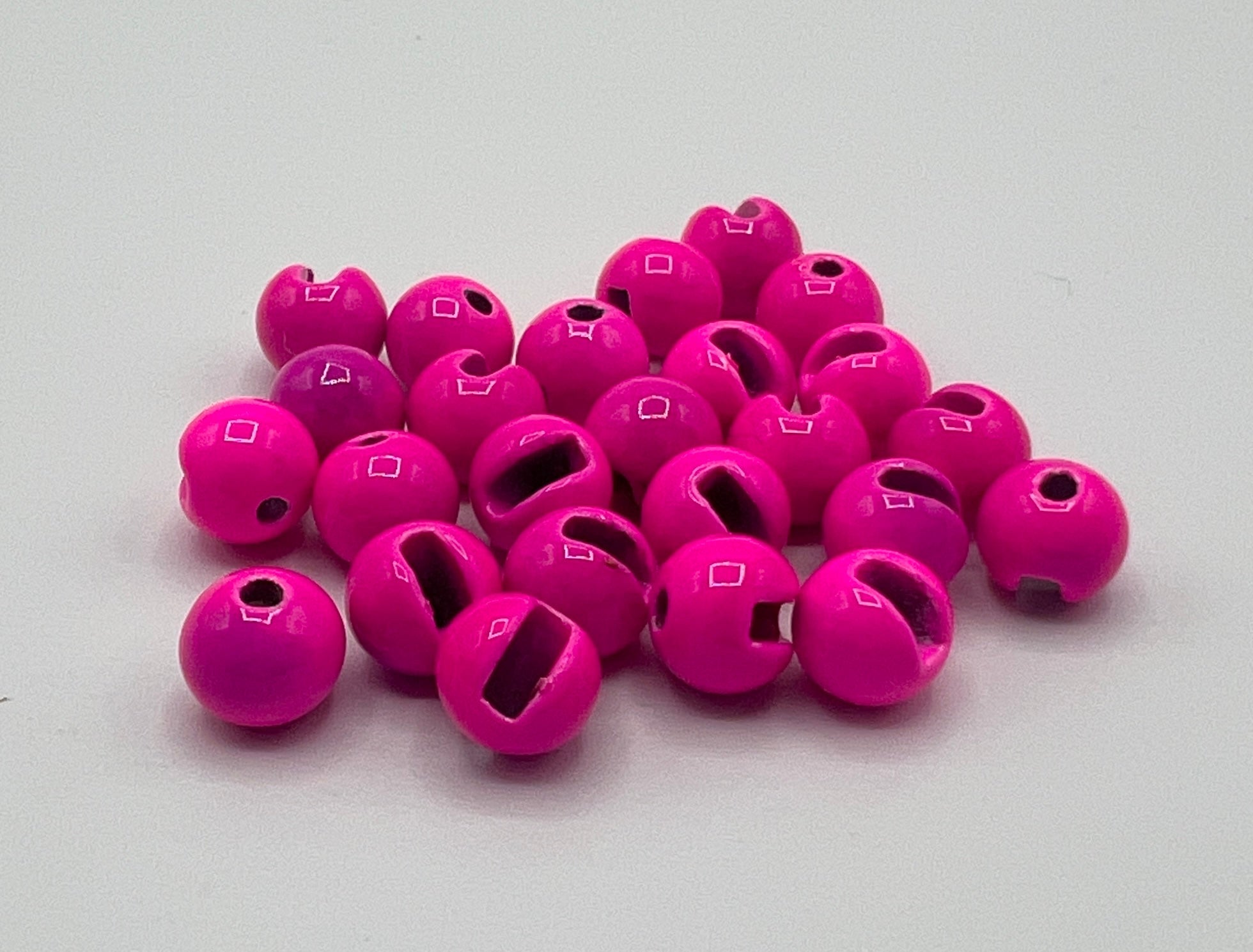
You don't need a lot of gear to get nymph weight right, but a few things make it much easier. If you tie your own flies, a couple of packs of tungsten beads in different sizes let you build the same pattern in light, medium, and heavy versions. Slotted beads are for jig hooks and ride hook-point up, which cuts down on snags. Round countersunk beads are for standard nymph hooks. You'll find both in our fly tying collection.
If you'd rather buy your flies, grab tungsten patterns from our fly patterns collection in more than one size. And for fast adjustments on the water, a split shot assortment with several sizes in one dispenser is hard to beat. Just remember to check local rules on lead before you fish it, and look through our tools collection for the rest of your on-stream kit.


Everything you need for this setup
Frequently Asked Questions
What size tungsten bead should I use for euro nymphing?
For euro nymphing trout in average runs 2 to 4 feet deep, a 2.8 to 3.5 mm tungsten bead on a size 14 to 16 jig hook is a good starting point. Use 2.0 to 2.5 mm beads for shallow or slow water and 3.8 to 4.6 mm beads for deep, fast runs.
How much split shot should I use when nymphing?
Start with about 0.1 to 0.2 grams of split shot, roughly a No. 6 or No. 4, in water 2 to 3 feet deep at moderate speed. Add one size at a time until the flies tick bottom every three to five drifts. Deep, fast runs can need 0.6 grams or more.
Is tungsten heavier than brass for fly tying beads?
Yes. Tungsten alloy beads are about twice as heavy as brass beads of the same diameter, because tungsten runs roughly 18 grams per cubic centimeter compared with about 8.5 for brass. That lets tyers use a smaller tungsten bead and still sink the fly faster with a slimmer profile.
How do I know if my nymphs are deep enough?
Your nymphs are deep enough when they touch bottom about once every three to five drifts. On a euro rig you'll feel it or see the sighter pause; on an indicator rig the indicator will hesitate or tip. No bottom contact at all usually means you need more weight.
Should I use split shot or weighted flies?
Use both. Weighted flies with tungsten beads give a cleaner, more direct connection and fewer tangles, which is why tight-line anglers rely on them. Split shot is the quickest way to adjust depth on an indicator rig without retying. Many anglers carry weighted flies and add shot only when a run demands it.
Why won't my nymphs sink even with a heavy bead?
Heavy nymphs often fail to sink because of drag, not weight. Thick tippet, a long leader in the water, fly line lying across fast current, or a bushy fly pattern all slow the sink rate. Try thinner tippet, a shorter drift, a tuck cast, or a slimmer pattern before adding more weight.
Get Your Flies Down and Go Catch Some Fish
Here's what I want you to remember next time you step into a run. Before you change your fly, ask yourself if it's actually getting down to the fish. Read the depth and speed, start a little light, use the tick test, and adjust in small steps. Carry your favorite nymphs in three weights and organize your box so heavier is always one row away. Get nymph weight selection right and you'll be amazed how often the "wrong fly" suddenly becomes the right one. That's how we help anglers catch any fish, any time, and anywhere.
For more nymphing ideas straight from our guests, browse the nymphing, euro nymphing and streamer tips roundup. Then show me your weight-sorted fly box on Instagram at @flyfishinginsiderpodcast. And if you want deals on equipment, fly fishing trips, and lots of information, join the FFIP Insiders email list.
Tight lines, everyone!
Christian Bacasa, Fly Fishing Insider Podcast
Join the FFIP Insiders
Get gear deals, trip intel, and tactics to help you catch any fish, any time, and anywhere. Start with our free Dry Fly Tactics for Selective Trout eBook.
Get the free eBook →