

His first rig was a spinning rod, and I want to be honest about how long I resisted that.
I run a fly fishing podcast. I had a picture in my head of how this was supposed to go, and in that picture there was a small fly rod and a lawn and a roll cast. What actually happened is that we spent a summer on the lawn producing tangles and frustration, and both of us stopped looking forward to it.
Then I put a push-button spinning rod in his hands at a pond, and he caught four bluegill in twenty minutes. That was the whole turning point. Not a technique — a decision about whose day it was.
Coach's Note
Fish for numbers, not for size or difficulty. Bluegill, perch, stocked rainbows — anything that bites often and bites willingly. Every state agency that teaches families to fish says the same thing, and they say it first: bent rods are what keep kids coming back. A trophy water where nothing happens for two hours is an adult's idea of a good day.
The Lesson
The question isn't which discipline you want your kid in. It's which tool gets them to a fish fastest, because catching is what buys you the patience to teach anything else.
A spinning rod removes almost every failure point at once. No line management, no loop, no timing, no distance problem. Point and press. A six-year-old can be fishing effectively in about four minutes, and effectively is the word that matters — they're not being tolerated, they're actually doing it.
Fly casting asks a kid to coordinate timing, rhythm, and a rod they can't feel loading, all before anything good happens. That's a big ask to front-load onto someone who mostly wants to catch a fish. Nothing about starting on spinning gear closes the door on fly fishing. It just moves the hard part later, after they already like this.
 Brookie Short Furled Leader$10.99
When you do cross over, a short furled leader is what makes the first fly casts work. It turns over on a lazy, short stroke instead of demanding a clean loop the kid can't produce yet.
Coach's Note
Don't rush them toward your discipline. Pushing intensity and specialization early is one of the better-documented predictors of kids dropping an activity entirely. There is no schedule here. A kid who spin fishes happily until eleven and then picks up a fly rod because they want to is a lifelong angler. A kid pushed into fly casting at six is often just done.
On the Water Together
How the crossover actually goes, in the order that's worked for us:
- Spin gear until they're bored of it. Not until you're bored of it. That distinction is the entire article.
- Let them watch you fly fish and ask. The ask has to come from them. If it hasn't come, it isn't time.
- First fly sessions on a pond, not a river. No current, no wading, no mending. Just a fly and a fish that will eat it.
- Keep the spinning rod in the truck. Permanently. It's the escape hatch that keeps a bad fly day from becoming a bad day.
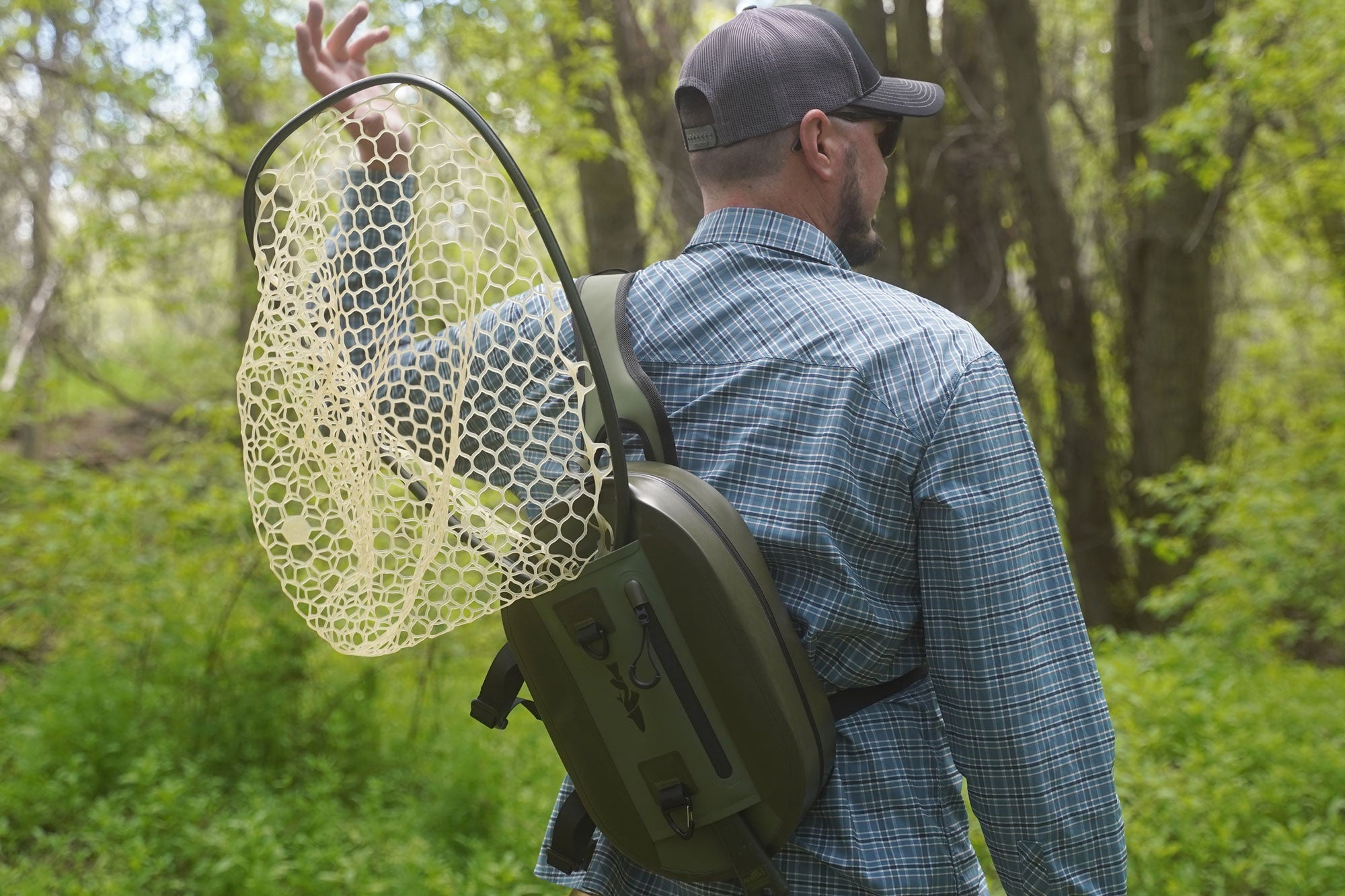
 Rising Brookie Net$159.00
One piece of gear carries across both. A kid who lands a bluegill on spinning gear with a real net learns the same handling habits he'll use on trout later.
Coach's Note
Make feedback specific enough to repeat. "Good cast" teaches nothing. "You let the bobber sit instead of reeling right away — that's why he took it" tells him exactly which behavior produced the fish. Specificity is what turns luck into a skill in a kid's head.
A Note From Dad
I spent a whole summer trying to make you into a small version of me, and it made both of us worse company. That one's on me, not you.
The four bluegill you caught that afternoon did more for your fishing than anything I taught you on the lawn. You'll get to the fly rod. You'll get there because you want to, which is the only way anybody actually gets there.
Go on a fly fishing trip you'll never forget
We partnered with Frontiers Travel to put you on water that's worth the flight. Tell them where you want to go. Don't wait.
Book a TripTight lines, everyone! If the fly rod isn't working with your kid, it isn't a failure — it's information. Put something in their hands that catches fish today.
Fly Fishing Insider Podcast has a referral partnership with Frontiers International Travel. If you book after being introduced through us, we may receive compensation at no additional cost to you.