
Most people picture brook trout sipping tiny dries in a mountain trickle. Our guest on this episode, a self-described "dirty streamer fisherman" and rod builder from northern Minnesota, sees them differently: as aggressive predators that will attack a streamer nearly as long as they are. He's watched six-inch brookies hit six-inch flies. We dug into how he streamer fishes the Lake Superior tributaries, why he fishes glass, and how to put a big fly in front of a fish that's tight to cover.
Know the Fish: Residents and Coasters
Pretty much every tributary of Lake Superior holds some brook trout. Our guest puts the typical fish at around 13 to 14 inches, and he's honest that a 20-inch brook trout is a genuine fish of a lifetime, no matter how many photos you see online. He also pointed out that he gets just as fired up about a 13-incher as a 30-inch fish, which is the right attitude for this game.
Then there are coaster brook trout: brookies that live in Lake Superior or another Great Lake and run into the rivers, similar in spirit to bull trout making a run. Ontario's Nipigon strain is the famous example. Coasters and resident fish key on the same thing when it matters: schools of small baitfish, like the native brook stickleback, that bunch up in side channels and small pools. Brook trout won't chase those baitfish all over the river, so your job is to find where the bait is concentrated at the right water level.

Fly Size and Presentation
His average brook trout streamer is about two and a half to three inches. When a system holds bigger fish, he upsizes. And in fast water he does something that makes other anglers look at him sideways: he skates a four- to six-inch articulated streamer across the surface of whitewater, high-sticking it over the rocks, and fish come completely airborne to hit it.
For a lot of his small-stream streamer work he fishes a floating line with a fairly short leader and uses the elevation of the rod tip to control how high or low the fly rides in the water column, rather than switching to sink tips. Raise the tip and the fly rides up; drop it and the fly digs.
One trick worth stealing for overgrown banks: mend toward the bank so the fly is drawn in tight, then pull the rod downstream. The fly shoots back upstream and up under the overhanging alders, right where a good fish is waiting. The broader lesson he took from years of this is that fish sit tight to the edge of a rock or log, and a fly that swims a foot off that edge often doesn't get a look. Putting the fly where the fish actually holds changes everything.
Timing matters too. Tannic, dark-colored water absorbs sunlight and warms quickly, so some of the best baitfish-driven windows are short, sometimes just a few weeks. Be there when it happens.
Why a Glass Rod Lands More Brookies
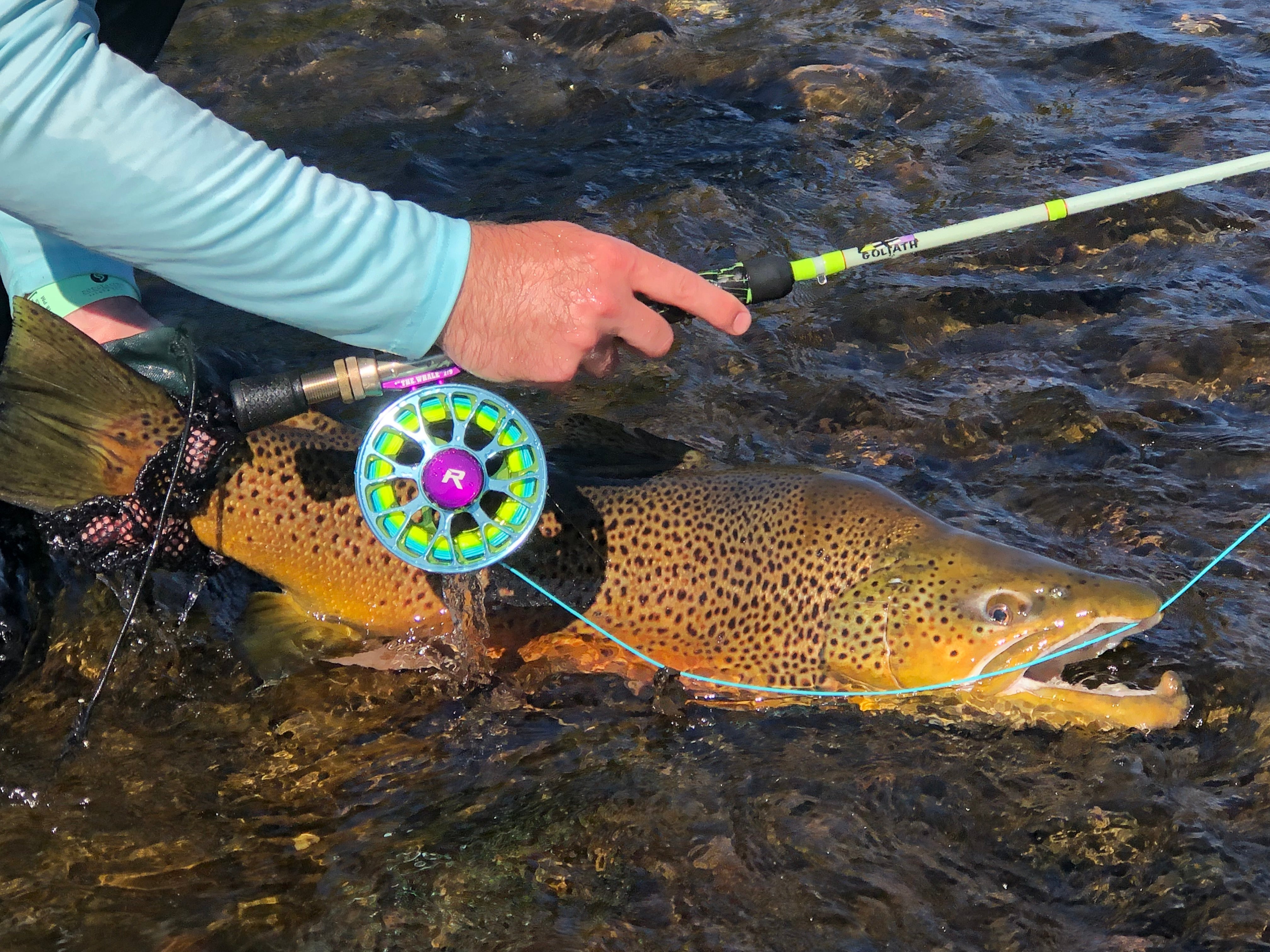
This was the most useful part of the conversation for me. Our guest builds rods and is a big glass guy, for one reason: "shaky" fish. Brook trout tend to fight with violent head shakes instead of long runs. When a two-pound brookie hammers your fly in a foot and a half of water, you can't give it line. You have to absorb those shakes and start working the fish back immediately.
A fast-action graphite rod doesn't have enough absorption for that. As the fish shakes, the stiff rod creates moments of slack, and slack is when hooks fall out, especially on 4X or 5X tippet where you can't simply pull harder. A glass rod, or a very moderate graphite rod, bends deep and stays loaded through every head shake. His point: a five-weight glass rod can handle a good brook trout on a tight small stream and still fight a 22-inch brown with the same control. On very tight, small water he fishes glass or bamboo exclusively.

Before you buy anything, ask yourself what you're actually fishing for. Rods are expensive, and the right action for the fish in front of you matters more than owning a dozen of them.
Gear
The thing that will help most here is a moderate or glass rod in the 4- to 5-weight range and a handful of two- to three-inch baitfish streamers. Your local fly shop can put a few actions in your hand so you can feel the difference before you buy. For more on rigging, leaders, and reading water, check out our Tips and Tricks for Fly Fishing eBook. And for cold spring mornings chasing brookies, the FFIP Brown Trout Hoodie earns its spot in the truck.