Bikepacking and tenkara solve the same problem in the same way: carry less, move under your own power, and stop often at water that other anglers drive past. A collapsed tenkara rod disappears into a frame bag or alongside a seat pack, and at a creek crossing you can be fishing in minutes without a reel, a rod tube, or a vest full of boxes.
Why the pairing works
A bike changes the geography of a fishing day. Water that is too far to walk to before dark and too rough to reach by car becomes a steady ride away. Small creeks, canal paths, forest roads, and river trails string together into a route where fishing is not the destination at one lake but a rhythm along the way. Tenkara fits that rhythm because setup and breakdown are fast. Extend the rod, attach the line at the lillian, add tippet and a kebari, and fish. When the light fades or the route calls, collapse it and ride on.
The research behind this series notes that bikepacking and packrafting tenkara have been covered mostly as product stories, not as knowledge. Riders do not only need a short collapsed rod. They need a system for carrying it safely over rough ground, choosing routes by water, and fishing short sessions well.
Carrying the rod on the bike
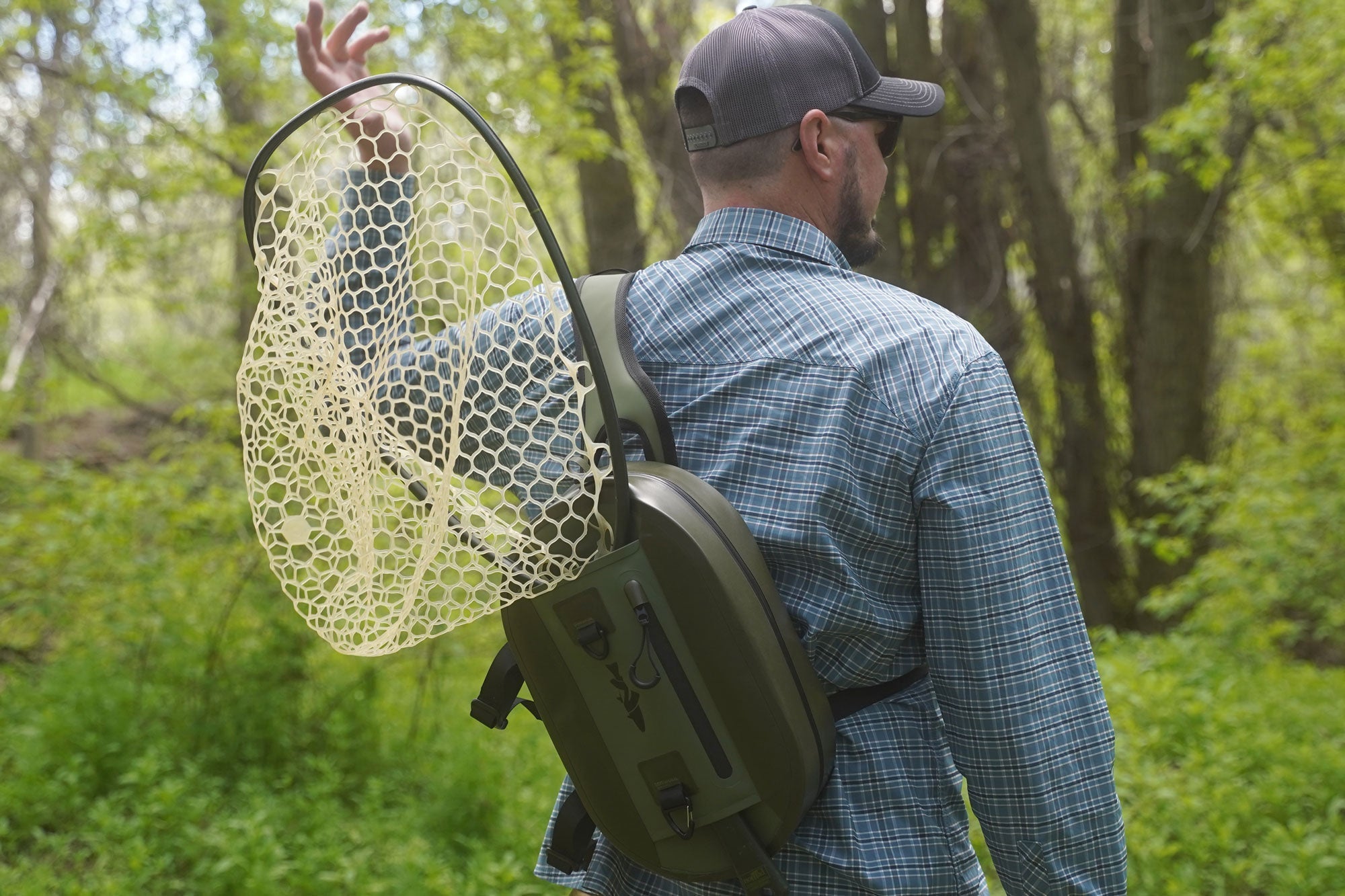
Frame bags reward long, slim items, and a collapsed tenkara rod is exactly that shape. Carry it inside the frame triangle where it is protected from branches and from a fall, padded so it does not rattle against bottles or tools. Seat packs and handlebar rolls can also work, but keep the rod where a crash is least likely to crush it and where grit and road spray will not work into the sections. A light sock or sleeve is usually enough on the bike, with more protection added if the route includes portages, trains, or rough handling by others.
Keep the fishing kit together in one small pouch: line holder with the main line, a spare line, a small spool of tippet, nippers, and a compact fly selection. If fishing gear is scattered across three bags, you will skip short stops because rigging feels like unpacking camp. The best bikepacking tenkara stop is the one that takes almost no decision. Pull off, lean the bike safely off the trail, rig, fish twenty minutes, and ride on.
Think about wet and dry separation. After fishing, flies, line, and hands are wet, and sometimes the lower legs are too. Store the fishing pouch where damp gear will not soak sleeping gear, and dry the line and flies at camp when you can. Small habits like this keep a multi-day ride pleasant instead of slowly damp and tangled.
Building a ride-fish-camp itinerary
Design the route around water first, then distance. Look for a line on the map that follows a river, crosses tributaries, passes ponds or canal pools, and offers legal access and camping that fits local rules. Check access before you go, respect private land, and confirm fishing licences and seasons for each water, because a bike can cross jurisdictions faster than a walking angler notices.
A good daily pattern is simple. Ride in the cooler morning while covering the driest stretch. Fish late morning at a creek crossing or shaded pool. Ride through the heat with short stops only at obvious holding water. Make camp near fishable water so the evening rise and the first light next morning are yours without extra travel. That pattern uses the bike for distance and tenkara for the hours when fish are most approachable.
On the water, fish like a traveller, not a resident expert. You will not learn a pool over a season, so cover the best structure quickly: the head of a pool, the seam beside fast water, the undercut at a bend, the shade line under a bridge. Use a kebari you can present in several ways, dead drift, pulse, and pause and drift, before changing flies. In tenkara, presentation change is usually faster and more effective than a fly change during a short stop.
Rod, line, and fly choices for the bike
Choose a rod for the mix of water on the route, not for one hero pool. An all-round length handles open pools and modest lakes, while a shorter or zoom option helps on brushy creeks. Do not carry two rods on most bikepacking trips. The weight and bulk undo the point, and route choice can favour the rod you have.
A level line you cast well is the practical choice for varied water and tired arms at the end of a riding day. Carry one spare line, as on any multi-day trip, because a line lost in a riverside tree should not end the fishing half of the journey. Flies should span moving and still water in a small box: reverse hackle kebari for pulse, stiffer hackle patterns for current and surface work, and a small streamer style pattern for ponds and deeper pools.
Jason Klass, Tenkara Talk, has written about keeping tenkara simple enough to actually use often, and bikepacking is that philosophy on wheels. His Ichiban Kebari is his signature variation of a Takayama style sakasa kebari, using two glass beads, which he states he did not invent. Credit for that variation belongs to Jason Klass, Tenkara Talk. One trusted kebari, fished with varied presentation, covers more water than a large box fished without confidence.
Safety, ethics, and leaving no trace
Lock or keep sight of the bike at popular access points, and never let a quick stop become a reason to trespass. Carry water treatment, lights, and repair tools for the bike first, fishing second, a flat tyre far from camp is a bigger problem than a missed rise. In hot weather, check water temperatures and local guidance for trout, and shift to warmwater species or stop fishing for trout when conditions call for it. Handle fish with wet hands, keep them in the water where possible, and use barbless hooks to make short stops cleaner for everyone.
FFIP podcast angle: interview a bikepacking route builder who fishes tenkara across a state trail network about route design, access, and camp water.
Practical takeaways and common mistakes
- Carry the rod protected inside the frame area and keep all fishing gear in one reachable pouch.
- Build routes around water, access, and camp near fishable water, not distance alone.
- Fish short stops with presentation changes before fly changes.
- Carry one spare line and a small, versatile fly selection.
- Common mistake: scattering gear across bags so short stops feel too slow to bother with.
- Common mistake: choosing a rod for one pool instead of the whole route.
- Common mistake: ignoring access, licences, and private land because the bike makes new water easy to reach.