
Fiberglass has a reputation problem. Half the anglers I talk to think of it as the thing their grandfather fished before graphite got invented, and the other half think of it as a hipster affectation — something you buy because it looks good on Instagram in a small creek. Courtney Boice of Blue Halo has spent years building glass rods, and this conversation cleared up a lot of what I had wrong about the material.
"Fiberglass" is not one material
This was the part that genuinely surprised me. When you say graphite, you're roughly describing a category. When you say fiberglass, you're describing something closer to a whole aisle — Courtney mentioned there are many distinct types of glass available to a rod builder, and that finding the right one is a real part of the design job, not a formality.
Then there's the resin. The glass fiber is only half of a blank; the resin system that binds it determines how the blank recovers, how much it damps, and how it behaves when you load it deep. Two rods can both be honestly labeled fiberglass and feel nothing alike because the builder picked a different cloth, a different resin, or a different wall thickness.
The practical takeaway for a buyer: you cannot shop glass by the word on the label. "Fiberglass 4wt" tells you almost nothing about how the rod will cast. You have to feel the specific model, or trust a builder whose taper philosophy you already know you like.

Why translucent blanks are hard — and what that tells you
Blue Halo's signature is a translucent blue blank, and Courtney explained why that's more than a cosmetic choice. Most fiberglass rods on the market aren't translucent, because getting a truly clean, clear blank is difficult. Any inconsistency in the layup — a void, a speck, an uneven wrap — shows up where anyone can see it. Painting a blank hides a multitude of sins; leaving it clear does not.
So while you shouldn't buy a rod because it's pretty, a clean translucent blank is at least honest evidence about the manufacturing. You're looking at the construction rather than at a coat of paint over it.
The other thing worth knowing if you're on a budget: blanks sell for a fraction of what a finished rod costs. Courtney mentioned roughly $130 for a blank against about $300 for a built rod. If you've ever wanted to wrap your own, glass is a forgiving material to learn on and the math is friendly.
Pair it with a double taper. This is the big one.
If you take one thing away from this episode, take this: Courtney's answer on the best line for a fiberglass rod was immediate and unqualified — a double taper.
The reasons stack up. A double taper carries its mass evenly through the belly instead of concentrating it in a short head, which is exactly what a slower blank wants in order to load progressively rather than all at once. It mends far better, which matters enormously on the small, broken water where most people fish glass. And the pure practicality: a DT line is symmetrical, so when one end wears out you reverse it on the spool and you've effectively bought two lines.
A lot of people buy a glass rod, hang the weight-forward line they already own on it, decide glass "just feels mushy," and move on. Some of those rods were never given a fair hearing.

Where glass actually wins
Courtney is refreshingly honest that for most anglers a glass rod is a second rod, not the only rod — though plenty of people do fish it exclusively. Most glass gets sold in the 3 and 4 weight range and gets fished on small streams throwing dry flies, and that's not an accident. That's the water where the material's strengths line up perfectly with the job.
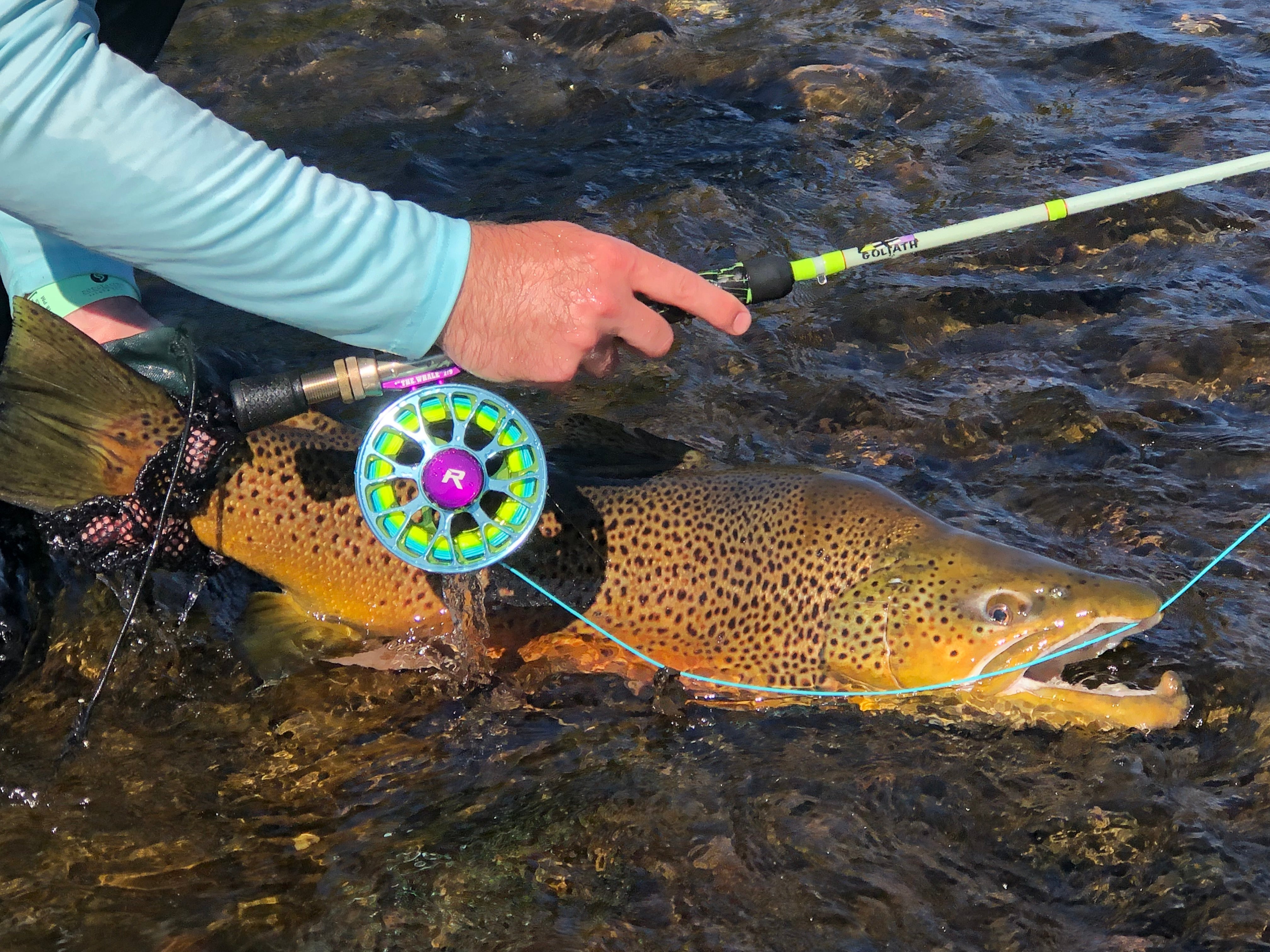
On a creek you're making short casts to fish that are close, and a slow blank loads on twenty feet of line where a fast graphite rod is still waking up. You feel the cast. The soft tip protects light tippet against the sudden close-range hookset that snaps 6X on a stiff rod. And the fight is genuinely better — a ten-inch brookie bends a glass 3wt in a way it will never bend graphite.
What glass is not: a distance tool, or a wind tool, or the right answer for heavy nymph rigs and streamers. Nobody in this conversation pretended otherwise. Buy it for the water it's built for.
Gear
We don't sell rods or fly lines here, and I'm not going to pretend otherwise — if this episode has you wanting to try glass, your local fly shop is the right stop, and the important thing is to actually cast the specific model rather than ordering blind. Ask them to hang a double taper on it while you do.
What we do have that fits: the Tips and Tricks for Fly Fishing eBook goes into leader construction and short-range presentation, which is most of what makes a small-stream glass rod sing. And since fishing glass generally means a long day of walking a little creek in the sun, the FFIP Five Panel Cap keeps the glare off the water so you can actually see the fish you're casting to.