
Short answer: buy stockingfoot waders in a breathable fabric, size to your boot first, wear a wading belt every time, and wash them after each trip. That covers most of what goes wrong. Everything below explains why, and which of ours fits which angler.
Why waders matter
Waders provide protection and comfort while navigating various water environments. They keep you dry and warm so you can focus on fishing rather than wet clothes or cold, and they offer insulation that extends your season into autumn and winter.
They also give you access — deeper water, remote spots, and challenging terrain like rocky riverbeds or muddy banks. That opens up fishing you simply can't reach otherwise. You can wade a swampy mucky area and not smell like the bog on the drive home.
Think of waders as an investment in your experience, and take the selection seriously so you get the best value for money.
Do you actually need them?
If you want to fully immerse yourself in the sport, yes. Whether you're a beginner or seasoned, quality waders significantly enhance the experience — protection from the elements, insulation for cold conditions, and access to secluded water.
They're also a safety measure. They provide traction on slippery surfaces, protect against cold, and shield your legs from sharp rocks and debris.
The three types of waders
Bootfoot waders come with attached boots, providing excellent insulation and making them ideal for colder conditions. The integrated boot is convenient and warm, because your foot sits in an air pocket rather than pressed against cold water. For anglers who prefer simplicity and all-in-one function, they're a popular choice. Our Slipstream PVC Bootfoot Chest Wader and Slipstream PVC Hip Boots are both cleated.
Stockingfoot waders end at the ankle and require separate wading boots. This offers more versatility and a better fit for most anglers, since you choose footwear appropriate to the environment. They're comfortable and flexible, letting you move freely while providing reliable protection.
This is the style I personally use. I've experimented over the years, and my last two pairs have been zipper-front — I don't think I'll be going back to the non-zipper versions.
Convertible waders are similar but made of lighter-weight materials, designed to convert from a full bib to a waist-high setup easily. That versatility suits anglers fishing diverse settings and varying conditions.
Wader materials
Breathable fabrics are highly recommended for their moisture control. They let sweat and moisture escape while keeping water out, which prevents the clamminess that ruins a long day. Breathability matters more than most beginners expect, particularly on the hike in.
Lightweight waders are preferable for extended trips, reducing fatigue and allowing greater mobility. Heavier-duty waders suit freezing temperatures, where the extra insulation retains body heat.
Durability is the other half of the equation. Understanding the weak points of different materials helps you assess longevity — some are more prone to seam failures or punctures. Choose materials known for resistance to wear and your investment pays off.
Beyond the mainstream, plenty of alternative materials are completely suitable. Some manufacturers use fabrics that look like you're wearing a pair of jeans — the design and look can be unique and fun, and it often comes down to preference of look, fit, and specific design elements. However, I highly recommend putting durability and warranty at the top of your priorities.
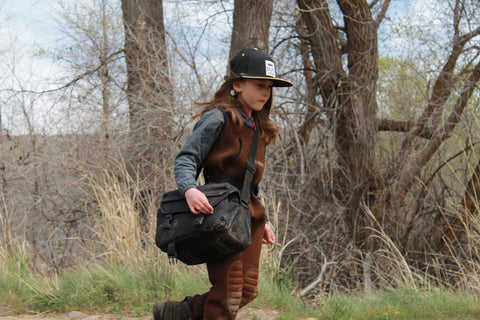
Neoprene waders for my daughter. With shorter days, I opted for a warmer, durable solution.
Warranty considerations
How long should they last? Quality waders are designed to withstand the rigours of fly fishing and should last several seasons with proper care. Exact lifespan varies with usage frequency and maintenance.
What's typically covered: manufacturing defects such as faulty seams, zipper malfunctions, or material delamination. These warranties ensure replacement or repair if the issue stems from craftsmanship or materials within the warranty period.
What's typically not covered: damage from accidents, improper use, neglect, or normal wear. Punctures, tears, and abrasions from sharp objects or rough terrain usually fall outside coverage. Mould and mildew sit in the same category of non-manufacturing problems.
What to do for repairs: contact the manufacturer or retailer about the warranty process. That may involve a claim form, proof of purchase, and a description of the issue. Regardless of whether it's a warranty claim, a repair, or a return — wash your waders first. It retains their integrity and keeps a repair specialist from dealing with stinky, unsanitary gear.
Shopping considerations
Weight matters for comfort on long trips. Lighter waders allow easy movement and reduce fatigue.
Brand reputation is worth considering, but don't stop at the household names. Brands that have been around more than five or six years should be considered too — these are often up-and-comers experimenting with new technology and designs. They frequently offer comforts the older styles don't, and they can be considerably better priced. Look at warranty specifics before you buy.
Price. High-quality waders cost more upfront but can save money long term by lasting longer and needing fewer repairs. Evaluate your budget against features, materials, and warranty coverage.
Here's the thing worth understanding about that price. The fly fishing industry has a relatively small number of manufacturers producing waders, and many labels source from that same pool of factories. The construction techniques — taped seams, laminated breathable fabrics, neoprene bootie assembly — are broadly standardised, which is why waders at very different prices often behave remarkably similarly on the water. What genuinely separates the top tier is the proprietary shell fabric, the warranty programme behind it, and the marketing budget that made you aware of the brand. The first two are worth paying for if you fish 150 days a year. The third you pay for either way, and it doesn't keep you drier.
Our waders
We carry waders from that same manufacturing world without the name on the chest — taped seams, breathable laminates, reinforced knees and gravel guards, and in several cases the same waterproof front zipper technology.
- MERIDIAN Z Zippered Chest Wader — the front-zip convenience I described above, at a fraction of the premium price. Fewer pockets, same daily benefit.
- OBSIDIAN Pro-Series Breathable Wader — skip the zipper and put the money into the shell. The pick if breathability matters most.
- Whetstone II Chest Wader — straightforward and well priced for anglers who get out a dozen times a season.
- Women's Whetstone Breathable Wader — cut for a woman's frame rather than scaled down from a men's pattern, which is rarer than it should be.
- PINNACLE Zippered Camo 1200g — zippered and insulated, so it doubles for late-season waterfowl.
- SUMMIT Insulated 1600g — the warmest breathable wader we carry, for genuinely cold water.
Stockingfoot waders need boots: Slate Felt Sole Wading Boots or the Women's/Youth Stonefly. Check your state's rules on felt before buying, since several states ban it for spreading invasive species.
And add a belt. The Brookie Wading Belt or Rainbow Ridge — cinched at the waist it traps air and dramatically slows water filling your waders if you go in. That's safety equipment, not an accessory.
See everything in waders and wading jackets.
Buying used
If you're on a budget or want a more sustainable option, gently used waders are worth considering. Forums and local fishing communities often list pre-owned pairs in good condition at a fraction of new cost. Photos and asking the right questions are a requirement — ask specifically about pinholes, seam tape condition, and whether they've been stored damp.
Care and maintenance
Wash your waders after each use to remove dirt and debris that damages material over time. Turn them inside out first to clean the interior properly.
Air dry completely before storing to prevent mould and mildew. Check for tears and pinhole leaks regularly and repair promptly. When dealing with mould or fungus, use appropriate cleaning solutions that won't damage the material — or, more commonly the real risk, the adhesives in the seam tape.
Be cautious with solvents, as some chemicals degrade fabric and affect waterproofing. And when the outer fabric starts wetting out instead of beading, treat it with ReviveX Durable Water Repellent rather than replacing the waders — that's usually all it needs.
One more thing that costs nothing: don't stand barefoot on grit while changing. A bag or mat under your feet prevents pinholes in the booties, which is the single most common way expensive waders die.
When is it time to replace them?
The clearest sign is when they can no longer be effectively repaired. Whether from extensive damage or accumulated wear, sometimes it's more cost-effective to replace than to keep fixing.
Visible wear is another indicator — thinning material, weakened seams, or general deterioration that compromises waterproofing. Size and fit issues that affect your comfort and mobility are also worth acting on.
Persistent leaks despite repair attempts mean they've reached the end. One caveat: if the inside feels damp but you can't find a leak, it's often condensation rather than a hole. To find a real leak, fill the waders with water in a bathtub, or shine a light inside in a dark room and look for pinholes.
What to wear underneath
Merino or synthetic base layers, never cotton — cotton holds moisture against your skin and pulls heat out of you. A three-quarter length bottom like the Chugach Zip-Off 3/4 Bottoms avoids bunching inside the boot. And go thin on socks — the Lightweight Over The Calf Wool Socks, because thick socks cram the boot and restrict circulation, which is what actually keeps toes warm.
More on layering in How to Stay Warm When Winter Fly Fishing.
The trip you keep talking about — go take it
Fly fishing trips you'll never forget, planned with Frontiers Travel. Don't wait.
Book a TripTight lines, everyone!

By Christian Bacasa
Host of the Fly Fishing Insider Podcast
Fly Fishing Insider Podcast Official Website
Instagram Fly Fishing Insider Podcast
Instagram Dupeafish
Facebook
Pinterest
Watch on YouTube
Fly Fishing Insider Podcast has a referral partnership with Frontiers International Travel. If you book after being introduced through us, we may receive compensation at no additional cost to you.