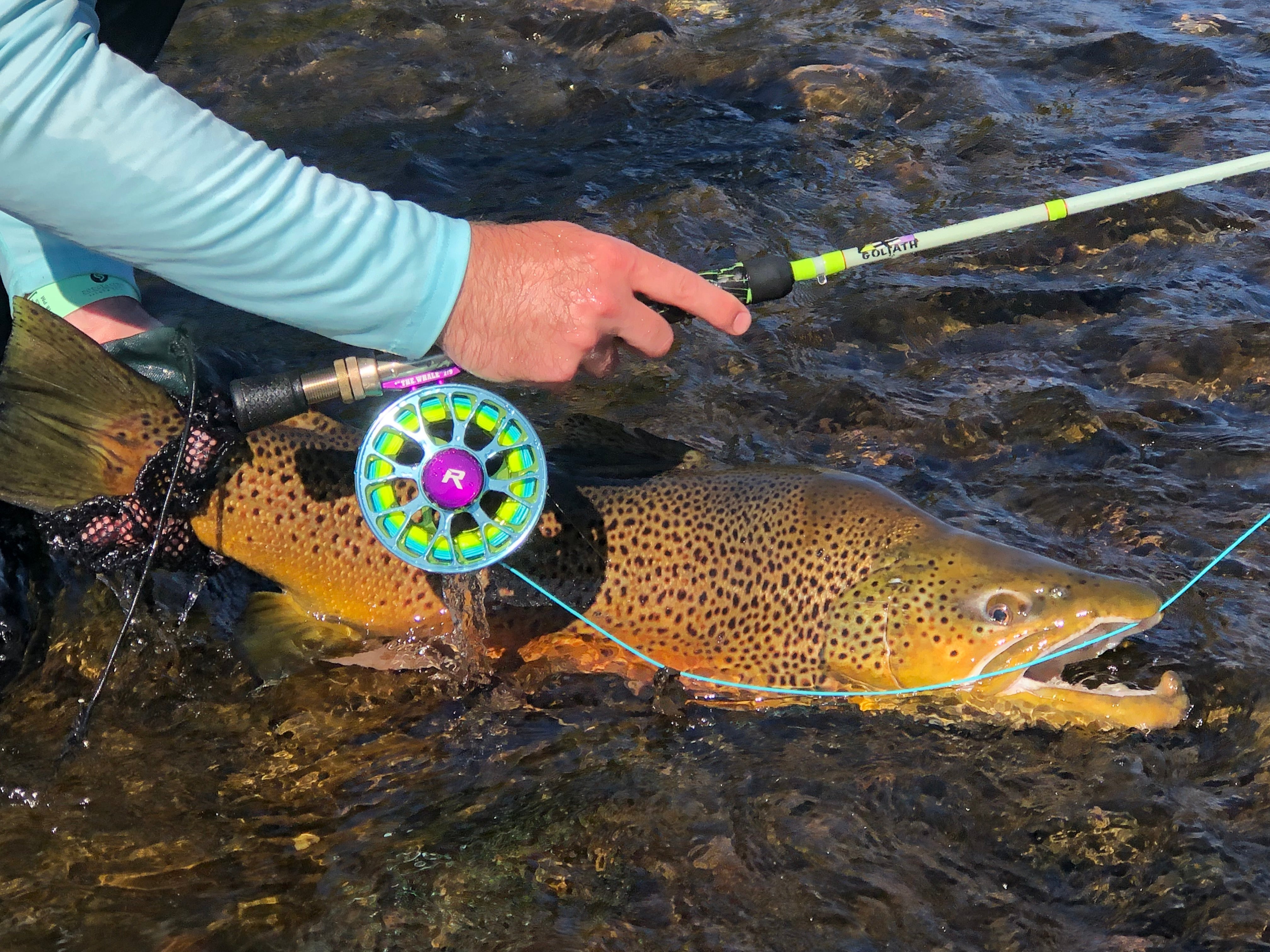

The first time most anglers float the Green River below Flaming Gorge, they stop fishing and just stare. You can count fish holding in fifteen feet of water. Guides call that upper stretch the Aquarium, and it earns the name — but water that clear cuts both ways. Every fish you can see can see you, your leader, and the exact moment your fly stops drifting naturally. On this episode, Green River guide Colby Crossland walked through how he rigs for it, and almost all of it transfers to any tailwater or spring creek where the fish get a long, unhurried look at your presentation.
Long Leaders Are the Whole Game on Clear Water
Colby's starting point for dry flies is a nine-foot nylon leader, but he rarely leaves it there. On most days he's running 13 to 14 feet with a fluorocarbon tip added on. That extra length isn't fussiness — it's distance between the fly line and the fly. In water this clear, the fly line landing anywhere near a fish is the end of that drift, and a longer leader buys you the separation to put a fly in front of a trout that never registered the cast.
Tippet size follows the bug, not the water clarity. His point on this is one worth internalizing: during the big mondo cicada hatch in mid-July, he has no problem fishing 0X. When trout are keyed on a size 2 or size 4 dry, they are not inspecting your tippet diameter — and heavier tippet turns over a wind-resistant foam bug far better than 5X ever will. The rule isn't always fish light. It's fish as light as the bug demands and no lighter.

Build Nymph Rigs Straight, Not Tapered
His nymph rigs run long — 12 to 15 feet is normal — and the construction detail is the part most anglers skip. Instead of a tapered leader, Colby runs a straight leader: a sighter section of about 18 inches, then level tippet the rest of the way down to the flies.
There are two real advantages. First, a level leader sinks and tracks more predictably than a tapered one, because you aren't fighting a thick butt section that resists going down. Second, it's simply easier to build, rebuild and adjust on the water — when the depth changes, you're adding or removing level tippet rather than rebuilding a taper. The Euro-nymphing boom has made pre-made sighter material easy to find, which is why he leans on it now rather than tying his own indicator sections.
If you nymph long rigs in clear water, this is the single change with the biggest payoff.
Streamers: Go Short and Heavy, Then Pause
Streamer rigging flips the logic completely. Colby runs a heavy sink tip with a short leader — around three feet — straight to the fly with a loop knot. The long leader that helps a dry fly hurts a streamer, because it lets the fly ride up away from the sink tip instead of tracking down with it.
The clear-water wrinkle here is real: on the Green, you watch fish follow your streamer for yards without committing. That visibility is fun and maddening in equal measure. His fix is the pause. When the fly stops and starts to rise slowly in the water column, that's when the eat comes. Mending matters for the same reason — mend upstream and you're giving the fly time to get down, so how you mend should be driven by how deep you're trying to fish, not by habit.

Slow Down Your Hook Set
The most common mistake he sees on that river isn't rigging at all — it's timing. When a trout rises from six or eight feet down, it comes slowly, meanders up, and opens its mouth without urgency. Anglers who cut their teeth on freestone water set the hook the instant they see the fish move, and they pull the fly away before it's ever eaten. On clear, slow water, you have to let the fish close its mouth and turn down before you lift.
If You're Rowing It Yourself
Two boat-handling points worth repeating. Colby's anchor rule: never put an anchor down anywhere you wouldn't be comfortable dealing with the consequences. Get to the bank to drop anchor whenever you can. An anchor hung on the wrong current line in the middle of a river is how a routine float becomes an emergency. And back-rowing on eddy lines is what buys your anglers a good drift — owning a drift boat and rowing one well are two different skills.
Gear
Honestly, the two things that matter most for this kind of fishing are polarized glasses good enough to see fish at depth and a spool of quality sighter material — go see your local fly shop for both, since fit and lens tint are personal and worth trying on in person.
On our side, the Tips and Tricks for Fly Fishing eBook covers leader construction, knots and rigging logic in more depth if you want the fundamentals behind everything above. And if you're going to spend a day squinting at a bright, clear river, a brimmed FFIP Five Panel Cap does more for your ability to spot fish than most people give it credit for.
Plan your trip: See our Utah Location Details page for guides, seasons, regulations and tips.