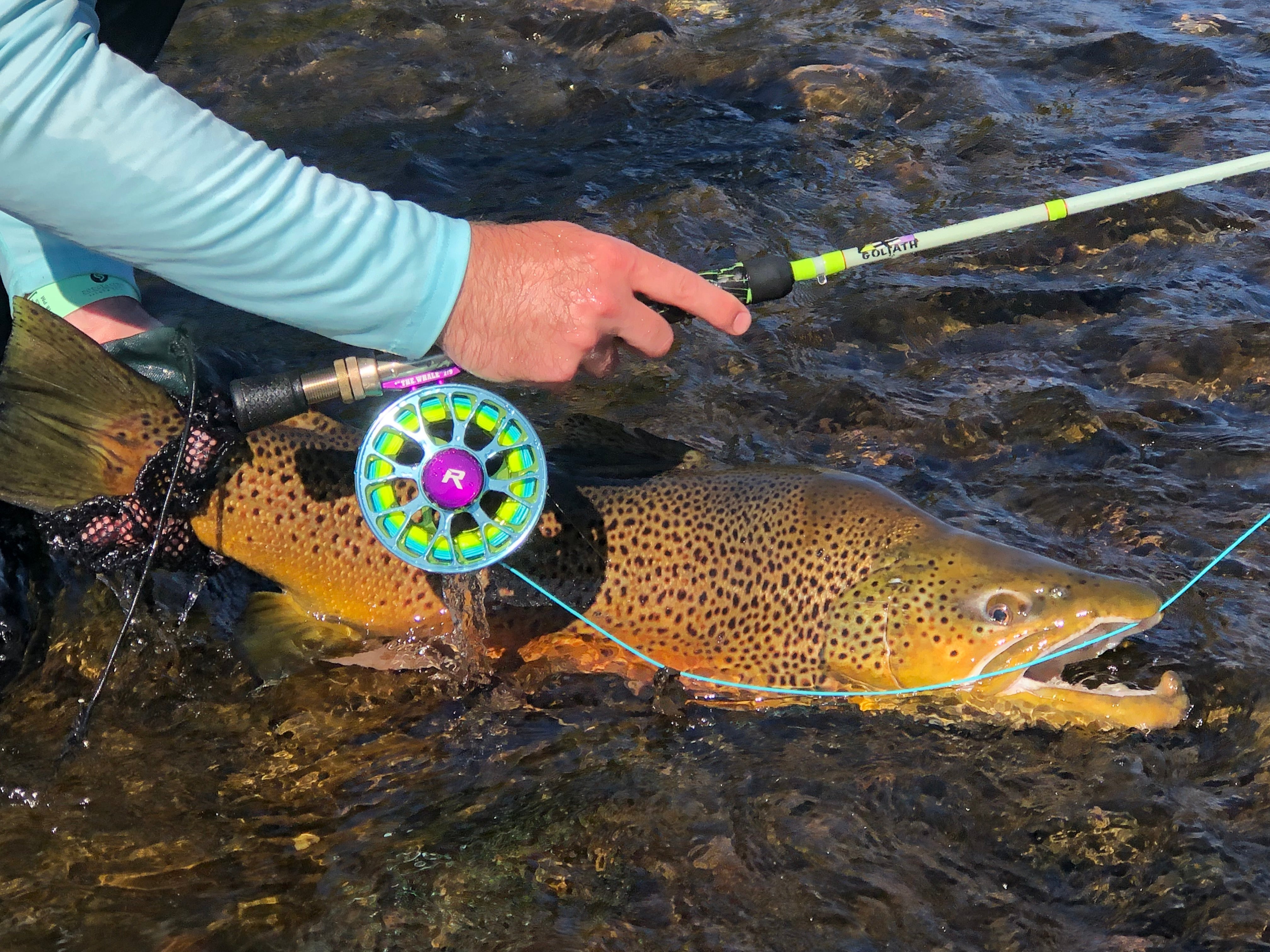

The brown trout came up out of a seam on the Green River below Flaming Gorge, ate a size 20 midge, shook its head twice, and was gone. I reeled in and found the answer curled at the end of my tippet like a tiny pig's tail. My knot hadn't snapped. It had slipped.
Most fly fishing knots don't fail because you picked the wrong knot. They fail because of how the knot was finished: cinched dry, seated too fast, trimmed carelessly, tied in old sun-baked tippet, or left sitting above a wind knot. Wet every knot, seat it slowly, test it hard, clip clean tags, and retie on a schedule.
Key Takeaways
- Lubricate every knot before cinching. Dry friction heats nylon and fluorocarbon and weakens the line right where it bends hardest.
- Seat knots with slow, steady pressure, then test each one with a firm pull before it ever touches the water.
- A curly "pigtail" on a broken tippet means the knot slipped. A clean break means the line was damaged or overpowered.
- Treat a wind knot as a break-off already in progress. Cut it out and retie instead of fishing through it.
- Tippet ages. Heat, UV and a season riding in a hot truck will quietly steal strength from a spool that looks brand new.
That Green River fish still bugs me because I knew better. I had tied that clinch knot in a hurry, with cold fingers, in the half-light before the midges got going, and I pulled it tight dry because the river was two steps away and I didn't feel like bending over. This article is about the small habits that stop that from happening.
Here's the thing about knot tying tips in fly fishing: most advice is about which knot to tie. A well-finished clinch knot will beat a sloppy "stronger" knot almost every time, so let's talk about the finish.
The Afternoon Paul Lost Three Fish in One Run
A few summers ago my buddy Paul and I were fishing a riffle on the Provo River where rainbow trout (Oncorhynchus mykiss) were eating pale morning duns and a steady trickle of beetles off the bank. Paul is a good angler. He reads water better than most guides I know, and his drifts were perfect. He hooked a fish, lost it on the first run, retied, hooked another, and lost that one too. When the third one popped off and he held up a curly tippet, he looked at me like the river owed him an apology.
I asked to see his tippet spool. It was 5X, and the label was faded almost white. Paul admitted it had lived in the side pocket of his sling pack, which lived in the back of his truck, which had spent most of a Utah summer parked at trailheads in the sun. The tippet looked fine. It felt a little stiff and a little chalky, but you'd never have picked it out of a lineup.
We swapped him onto a fresh spool, and he retied with a wet knot, pulled it down slowly, and gave it a proper test tug. He landed the next four fish. Same flies, same drifts, same river. The only difference was the last eighteen inches of material and about ten extra seconds of care at the knot.
Why Do Fly Fishing Knots Break?
Fly fishing knots break because a knot concentrates stress at the tightest bend in the line, and anything that damages that bend, such as heat, a nick, poor seating, or weakened material, lowers the load it can carry. A knot doesn't need to be the wrong knot to fail. It just needs to be finished poorly or tied in compromised line.
Think of a knot like the coils of a spring. When every wrap sits evenly beside its neighbor, the load gets shared across all of them. When one wrap crosses over another or gets pinched tighter than the rest, that single wrap takes the whole load, and the line fails there first. A good knot is a group of wraps sharing work. A bad knot is one wrap doing all of it.
When I look at a broken tippet, I sort the failure into one of five buckets:
Friction burn. Nylon and fluorocarbon both heat up when they slide against themselves under pressure. Cinch a knot dry and fast and you cook the line where it bends.
Poor seating. A knot that isn't fully drawn down has wraps that can still move. Under a head shake they slide and the knot unravels.
Bad tag ends. A tag clipped too close can pull back through the knot.
Old or damaged material. UV light, heat, chemicals like sunscreen and bug spray, and plain abrasion from rocks all weaken tippet over time.
Wind knots and nicks. An overhand knot tied by a bad cast, or a scuff from a snag, creates a weak point that has nothing to do with your connection knot at all.
Knowing which bucket you're in tells you which habit to fix, and the broken end is your best clue.
Break-off diagnosis at a glance
| What you see | Most likely cause | The habit that fixes it |
|---|---|---|
| Curly pigtail at the end of the tippet | Knot slipped: too few turns or not fully seated | Correct wrap count, slow seating, test pull |
| Clean break right at the knot | Friction heat or weakened material | Lubricate every knot, replace old tippet |
| Break in the middle of the tippet | Wind knot, nick or abrasion | Run your fingers down the leader after every fish |
| Break at the tippet-to-leader joint | Too big a jump in diameter or a dry-cinched surgeon's knot | Step down no more than two X sizes per knot |
| Fly gone, tag end frayed | Teeth-clipped tag or hook eye burr | Clip tags with sharp nippers, check hook eyes |
Habit One: Lubricate Every Knot Before You Cinch It
If you take one habit from this article, make it this one. Wet the knot before you pull it tight, every time, no exceptions. River water or a little saliva will do the job. The point is to let the wraps slide into place without grabbing and heating the line.
The analogy I use is rope burn. Grab a rope that's sliding through your hand and it burns your palm. Now imagine that heat happening inside a knot, on material that's six thousandths of an inch thick. Nylon and fluorocarbon don't need much heat to soften at the surface, and a softened spot is a weak spot. Lubrication lets the line slide across itself instead of scorching itself.
Fluorocarbon is even fussier than nylon, because it's stiffer and less forgiving of a poorly seated knot. Scientific Anglers puts it plainly in their knot tying basics guide: moisten knots before drawing them tight, tighten them slowly, and test every knot by pulling on it.
One warning: wetting a knot and then yanking it tight like you're starting a lawnmower defeats the purpose. Lubrication only helps if you seat it slowly.
Habit Two: Seat It Slowly, Then Test It Like You Mean It
Seating a knot means drawing every wrap down snug against its neighbors so nothing can move under load. The fastest way to ruin a good knot is to rush this step. Pull steadily, watch the wraps stack up, and keep pulling until the knot stops changing shape. On a clinch knot, you should see the coils line up neatly in a barrel shape against the hook eye. On a surgeon's knot, both strands should draw down together into a tight, symmetrical lump.
Wrap count matters here too. The standard improved clinch knot calls for five turns, and that's right for the 4X, 5X and 6X tippet most of us fish for trout. Go up to heavier material like 0X through 2X for streamers and big hoppers, and three or four turns will seat better, because thick line can't physically draw down cleanly with too many wraps. Drop down to 7X or ultra-fine fluorocarbon, and a sixth turn gives the knot more grip. Too few turns on fine material is the classic recipe for the pigtail.
Then test it. Not a polite tug. Grab the fly with forceps and pull with real, steady pressure. If the wraps look crossed or lopsided, cut it off before you even test it. I would much rather break a knot in my hands than on a twenty-inch brown trout (Salmo trutta) in the tailout. If it breaks during the test, congratulations, that knot just saved you a fish. Tie it again.
Habit Three: Trim Tags With Intent
The tag end is the little bit of line left over after you tie a knot, and it's where a lot of anglers get sloppy. Clip it flush and it can pull back through the knot. Leave a long whisker and it snags weeds and tangles. The sweet spot for most trout knots is a tag of about a sixteenth to an eighth of an inch. That leaves enough material for the knot to snug down a hair further under load without pulling out.
We went deep on this debate in our post on how long to leave your knot tags, and the short version is that shorter isn't automatically safer. A flush-cut tag looks tidy, but it gives a knot zero margin if it slips even slightly.
Use sharp nippers, not your teeth. I know, everyone does it. I've done it. But teeth crush and fray the tag instead of slicing it cleanly, and every so often they scrape the standing line right next to the knot. Dull nippers do the same, so replace a pair that crushes more than it cuts.
Habit Four: How Old Is Too Old for Tippet?
Nylon tippet should generally be replaced every couple of seasons, and much sooner if it has spent time in heat or sunlight. Heat, UV exposure, humidity and chemicals like sunscreen and DEET all degrade monofilament. Fluorocarbon holds up to UV better than nylon, but neither material lasts forever.
A former Orvis product developer put it well in the company's guide to how long tippet lasts: replace material every two years unless it shows signs of degradation, and store it somewhere cool and indoors, because a vest or pack is the worst place to keep it. That lines up with everything I've seen. Paul's faded 5X spool wasn't old in years. It was old in truck-summers.
Think about tippet like a loaf of bread. Sealed and stored in a cool pantry, it lasts a good while. Leave it on the dashboard in July and it's stale by the weekend, even if it still looks like bread.
Here's my own system. I keep my backup tippet spools in a small box in the house, not the truck. Each spring I retire any nylon spool that's been in my pack for more than a year, and I test any spool I'm unsure about with a wet, seated clinch knot and a pull. If 5X that's rated around five pounds breaks with what feels like a gentle tug, the spool is done.
Watch for warning signs too. Nylon that looks chalky, feels stiff, holds coils like an old phone cord, or breaks when you snap it between your hands is past its prime. Fluorocarbon that has gone cloudy or milky is weaker and more visible to fish.
Habit Five: What Should You Do About a Wind Knot?
Cut it out and retie. A wind knot is a simple overhand knot that forms in your leader or tippet during a bad cast, usually from a tailing loop, and it creates a sharp, pinched bend that can cost the line a big chunk of its strength. Tests I've seen range from about a fifth of the breaking strength to as much as half.
A 5X tippet with a wind knot in it isn't 5X anymore. It might be closer to 6X or 7X in real strength, and it'll let go on exactly the fish you care about most. Picking a wind knot out of tippet doesn't help much either, because the kink left behind is still a weak spot.
The better long-term fix is to stop making wind knots in the first place. They come from a tailing loop, where the fly leg of your cast dips below the rod leg and the two tangle. The usual culprits are sudden power and creeping forward before the back cast straightens. This short video from RIO walks through the fix clearly.
Until your casting is perfect, and nobody's is, build the habit of checking. Every time you land a fish, every time you pull free from a snag, run the leader between your thumb and finger from the fly line down to the fly. You're feeling for bumps, rough spots and little knots. It takes five seconds and it finds problems long before a fish does.
Feel your leader after every fish, and retie instead of gambling. Andrew, the founder of FlyLab and a guy who spends his time chasing genuinely big trout, told us on the Fly Fishing Insider Podcast that one wind knot from a single sloppy cast is enough to lose the fish of the season. His habit is simple: run your fingers down the leader after every fish, and if anything feels off, retie on the spot. He pairs it with moving quietly as a default, because a big trout has usually spotted you before you spot it, and you rarely get a second shot.
Dry Fly Tactics for Selective Trout (free eBook)
Fine tippet and picky risers are where knot habits pay off most. This free eBook covers the rest: reading rise forms, choosing patterns and presenting a dry fly to trout that have seen everything.
Get the free eBook →Habit Six: Build a Re-Tie Discipline
Most break-offs happen on knots that were fine an hour ago. Every fish, every snag, every fly bouncing off a rock and every false cast puts a little wear on the last few inches of your rig. Decide ahead of time when you'll retie, so you're not making that call in the moment.
Here's the schedule I actually follow on the water:
After every good fish. Anything that ran, jumped, or pulled line gets a fresh knot at the fly. The knot just took a beating, and the tippet right above the hook eye probably rubbed against the fish's teeth or jaw.
After any snag you pulled free. If the fly came back, the tippet probably dragged across rock or wood on the way. Feel it. If it's rough, cut above the rough spot.
After three or four fly changes. Every time you retie a fly, you lose a few inches of tippet. After several changes, your 24 inches of 5X might be down to 12, and you're tying to a thicker, stiffer part of the leader than you think. Add a fresh section of tippet instead of chewing further up the taper.
My buddy Tom has a funny version of this. He carries a little mental scorecard and calls it "paying the knot tax." Every fish that goes in the net costs him one knot. He says it's the cheapest insurance in fly fishing, and it's hard to argue with a guy who almost never loses a fish at the fly.
Bonus Habit: Match the Knot to the Material
When two pieces of line are wildly different in diameter, the thinner one gets strangled by the thicker one. A rule of thumb for tippet-to-leader connections is to step down no more than two X sizes, or about .002 inches, at any one knot. Going from 3X (.008 inches) to 5X (.006 inches) is fine. Going from 1X straight to 6X is asking for trouble.
When joining nylon to fluorocarbon, a triple surgeon's or double uni knot holds better than a quick double surgeon's. We broke down the tradeoffs in blood knot vs. triple surgeon's knot.
The best knot for you is the one you can tie perfectly in bad light with cold hands. For a solid shortlist, see our roundup of great fly fishing knots for your repertoire.
My Streamside Knot Routine, Start to Finish
Put all these habits together and you get a routine that takes about forty-five seconds longer than a rushed knot and saves far more than forty-five seconds of heartbreak. Here's exactly what I do when I tie on a fly on the river.
First, I check the tippet, and if it's rough or shorter than about 18 inches, I add a fresh section. Second, I tie the knot with the right number of turns for the material, taking care that the wraps lie next to each other and don't cross. Third, I wet it. Fourth, I pull it down slowly and steadily until the knot stops changing shape. Fifth, I test it with a firm, honest pull. Sixth, I trim the tag with sharp nippers, leaving a little whisker rather than cutting flush. Then I fish.
Advanced Tactics: Cold Hands, Low Light and Big Fish
The habits above cover most situations, but a few conditions make knots harder to tie well. Winter midge fishing on a tailwater like the Green River is the classic example. Numb fingers, size 22 flies and 7X tippet are exactly when anglers rush knots.
My advice: stop fighting it with your fingers. A simple knot tool or a pair of forceps can pre-form a clinch knot so you only have to feed the fly through a loop. We covered one of my favorite tricks in the post on the fastest clinch knot trick for bad eyesight. Flip-up magnifiers on your hat brim help too, especially at dawn and dusk.
For big fish, like a heavy Bonneville cutthroat at Strawberry Reservoir, give every knot the full routine. On permanent fly line to leader connections, a thin coat of UV-curing knot finish smooths a nail knot so it slides through the guides. Skip the coating at the fly, since you'll retie that one too often.
Gear That Makes Good Knot Habits Easier
Fresh tippet comes first. Stone Creek Mono Tippet is a straightforward nylon tippet, and the 4X is rated at 6.4 pounds and the 5X at 5 pounds, which covers most trout fishing. A sharp pair of Loon Rogue Nippers will clip tags cleanly instead of crushing them. For low light, Stone Creek Flip Up Magnifiers clip onto a cap brim. And for fly line to leader connections, Loon UV Knot Sense smooths out a nail knot so it glides through the guides. You can browse the full lineup in our nippers, tools and leaders collections.


Frequently Asked Questions About Knot Tying in Fly Fishing
Should you wet a fly fishing knot before tightening it?
Yes. Wetting a knot before tightening lets the wraps slide into place without friction, which prevents heat damage to nylon and fluorocarbon at the exact point where the line bends hardest. River water or saliva both work. Always follow lubrication with slow, steady seating, because yanking a wet knot tight still causes problems.
How many turns should an improved clinch knot have?
Five turns is the standard for an improved clinch knot on typical trout tippet from 4X to 6X. Use three or four turns on heavy tippet like 0X to 2X, since thick line won't seat cleanly with more wraps. On 7X or very fine fluorocarbon, a sixth turn adds grip and helps prevent slipping.
How much does a wind knot weaken tippet?
A wind knot can reduce tippet strength by roughly a fifth to as much as half, depending on the material and how tightly the knot pulled down. That means 5X tippet with a wind knot might hold closer to 6X or 7X strength. The safe move is to cut the wind knot out and retie rather than fishing through it.
How long does fly fishing tippet last?
Nylon tippet stored somewhere cool and dark generally stays reliable for about two years, but heat, sunlight and chemicals shorten that dramatically. A spool that spent a summer in a hot vehicle or pack may be weak within a season. Fluorocarbon resists UV better but still degrades. Replace any tippet that looks chalky, cloudy or breaks with little force.
Why does my knot break when I set the hook?
A knot that breaks on the hookset usually failed because it was cinched dry, not fully seated, tied in old tippet, or tied with too big a jump in diameter at the tippet-to-leader joint. A hookset that's too hard for the tippet size also contributes. Wet every knot, test it before fishing, and set with a smooth lift on fine tippet.
Tie It Right Once, Fish It All Day
None of these knot tying tips will make you a better caster or a better reader of water. What they'll do is make sure that when you get everything else right, the fish actually ends up in your net.
Pick one habit from this list and make it automatic this week. Wetting your knots is the easiest place to start. Next week, add the test pull. That's how we get to catch any fish, any time, and anywhere, one well-tied knot at a time.
I'm Christian Bacasa, and I'd love to hear the break-off story that finally made you change your knot habits. Tag us on Instagram at @flyfishinginsiderpodcast. If you need fresh tippet or a new pair of nippers, swing by the shop, and if you want deals on equipment, fly fishing trips and a lot more information, join the FFIP Insiders email list.
Join the FFIP Insiders
Grab our free Dry Fly Tactics for Selective Trout eBook, then keep the gear deals, trip intel and tactics coming to help you catch any fish, any time, and anywhere.
Get the free eBook →Tight lines, everyone!