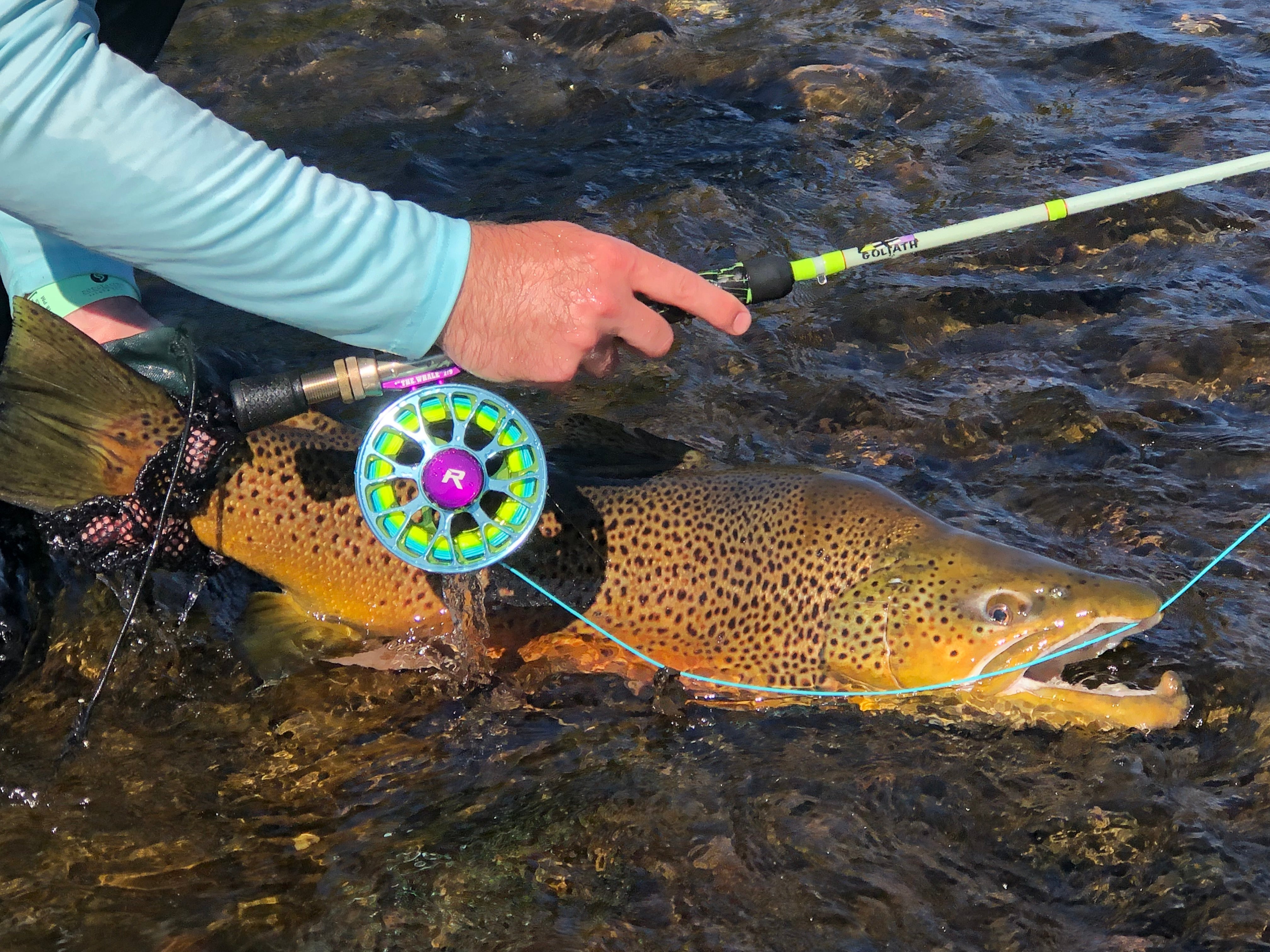

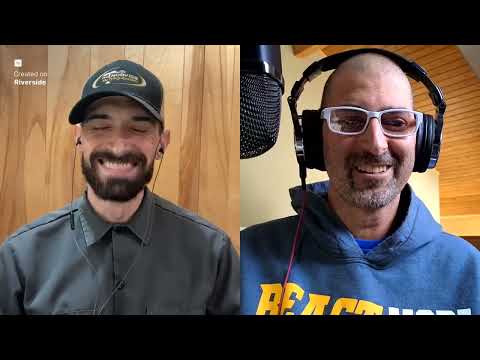
Most people think Pennsylvania and immediately think trout. But over the last decade the state has quietly rebuilt itself into a serious muskie fishery, and there is nothing in fresh water quite like watching a 45-inch predator peel out of a log jam and eat a fly the size of your forearm. On this episode of the Fly Fishing Insider Podcast I talked with Dominic Petruzzi of Streamer King Flies, a fellow PA guy, dedicated fly tyer, and Norvise ambassador who chases these fish in the state's rivers and lakes. We got into how he finds and re-targets muskie in moving water, and how he thinks about designing predator flies that actually get eaten. Whether you tie or buy, this is a look at what makes big-fish flies work.
Why Moving Water Beats the Lake
Pennsylvania stocks muskie and tiger muskie in plenty of lakes, but Dominic's real love is the river. Floating a section, working four to eight miles of water in a drift boat or a two- to three-man cataraft, keeps you seeing fresh structure all day: a rock eddy here, a log jam there, a new weed line around the bend. It also condenses everything. When you hook a 42- to 45-inch fish in a river that's only 30 feet wide, that fight is happening right in your lap. A cataraft has a sneaky advantage too: in low water you can quietly drop your feet to the bottom to hold position instead of dropping an anchor, keeping things stealthy while your partner works the fish.
Muskie Live at an Address
The single most useful concept for river muskie is that these fish don't wander far. A muskie is the apex predator in its system, the lion of that water, and it holds tight to a specific throne: a particular log jam, boulder, or rock pile. Nothing pushes it off that lie except a high-water event or the urge to spawn. That means when you move a fish and don't hook it, you've learned its address. Rest that spot five or ten minutes, change flies, and come back. Unlike trout, muskie will often eat on the second or third look. Dominic's rule of thumb is to give a moved fish real time, then work through your options before moving on: go smaller, change colors within the size range, then super-size to 15 or 16 inches to trigger a big female looking to replace protein after the spawn. And when you float the same run again next trip, that fish will be within ten or twenty feet of where you last saw it.

Designing a Predator Fly That Gets Eaten
When Dominic sits down to design a fly, two things drive every decision: movement and profile. He wants the back half of the fly to breathe and wiggle, and the front to carry the silhouette of the baitfish he's imitating, whether that's the broad head of a sucker or the tall midsection of a perch or bluegill. A classic Bob Popovics approach controls the weight: sparse in the tail with just enough bucktail butts to prop up the flash and keep it from fouling on the hook, then progressively denser stacks of bucktail as you build forward, so bulk grows toward the head. Bucktail is the workhorse here because it floats, sheds water, and casts light. The goal is the illusion of a massive meal that still throws easily all day, which matters when so many of his fishing partners are wrestling with old shoulder and elbow injuries.
Flash is the other lever, and it's about light, not just sparkle. Dominic layers it: Mirage and pearlescent in the back, holographic through the middle, Crystal Flash up front, so the fish reads a different flash profile as the fly turns. He thinks about how light penetrates and refracts at different depths, and even plans his retrieve to swim the fly out of a dark weed bed into a bright, open lane, where that sudden change of light can trigger a following fish to commit. It all comes back to what he calls checking boxes: movement, profile, water push, flash, the right light. Stack enough of those in your favor and follows turn into eats.
The Tip: Thread Control
Dominic's fly-tying tip is deceptively simple: slack is the enemy. Good thread control and consistent tension are what separate a fly that looks like the photo from one where the bucktail spins around the hook and the dubbing won't behave. His mental model, and mine, is to keep the shortest length of thread you can between the bobbin and the hook, and to keep constant, even pressure on every wrap. The trap to avoid is getting behind, where you're pinning material with one hand and frantically wrapping with the other; once you generate slack it's hard to catch up. An auto-bobbin with a clutch helps maintain that Goldilocks tension, but even a standard bobbin works if you palm the drag and, when spinning deer hair or locking in bucktail, feel for that locking wrap that seats the material before you build your thread dam.

Gear for Predator Flies
If Dominic's fly talk has you wanting to tie your own, start with the raw material he leans on hardest: a Pro Grade Bucktails Master Pack gives you the color range to build that back-to-front density, and the 6X-Long Streamer Hook 300 is a solid platform for larger profiles. Not a fly tyer? Proven articulated predators like the Mini Sex Dungeon or a Circus Peanut Envy bring the movement and profile Dominic preaches, straight out of the box. And to keep sharpening the little things, the Tips and Tricks for Fly Fishing eBook is always in your corner. Go move a dragon.
The trip you keep talking about? Go take it
Fly fishing trips you'll never forget, planned with Frontiers Travel. Don't wait.
Book a TripFly Fishing Insider Podcast has a referral partnership with Frontiers International Travel. If you book after being introduced through us, we may receive compensation at no additional cost to you.