
Short answer: a beginner needs a matched rod, reel and line; a leader and two tippet spools; six tools; one fly box with a basic assortment; and waders, boots, a jacket, a hat, and sunglasses. That's it. Everything below explains each choice so you can buy once and go fishing.
One thing to keep in mind: it's fishing. A ton of equipment really isn't required, but like anything, we like to dive in, get the latest and greatest, and expect the experience to be great. I'll warn you that at the beginning, approaching fly fishing from the simplicity side makes things significantly easier.
Choosing the right equipment
Fly rods
Modern rods use composite materials like graphite for a high strength-to-weight ratio. Graphite modulus ranges from about 33 million psi to 65 million psi, with higher numbers meaning stiffer, more responsive rods. Action (slow, medium, fast) affects casting distance and accuracy, and a medium action is a great all-rounder.
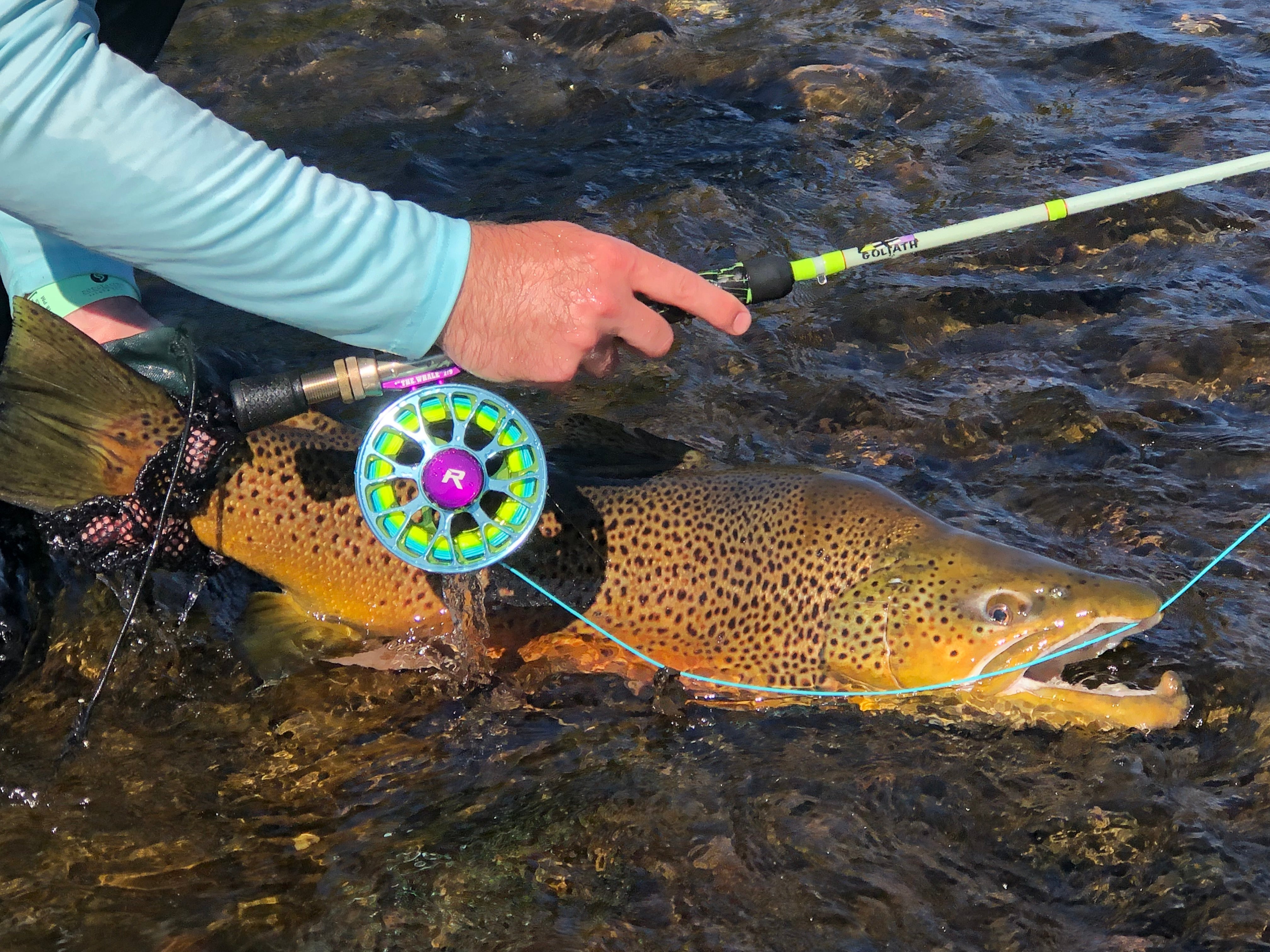
There are a thousand articles telling you to feel the rod and do this and that. Ignore that. You need a good quality beginner rod that lets you learn to cast and covers several fly fishing scenarios. A matched combo is the cleanest way there — the Genesis Rod and Reel Combo is where I'd start most people, with the 23PS as an alternative and the Goliath for bigger water. See all rod and reel combos.
Reels and lines
Drag systems control fish. Disc drags give smoother, more consistent resistance than click-and-pawl systems, which are difficult for beginners. Line weight matches rod weight — a 5-weight line on a 5-weight rod — and the line's mass is what loads and bends the rod so you can cast at all.
Plenty of articles will tell you about balancing, overlining, and much more. The fact is most beginners have no idea what they prefer yet, and most of that advice is the writer's preference rather than yours. Get a setup that performs across many situations so you can learn and then decide. If you want to build it yourself rather than buy a combo, the Armor II Reel or the pre-spooled Silvertip II 5/6 paired with the Moonlit Performance WF Taper Floating Fly Line will serve you for years.
Leaders and tippet
Now you have a rod, reel and line, you need a leader. A standard 7-foot 5X monofilament leader is a perfect start. Rather than replacing the whole leader once you've tied and cut a dozen flies off it, anglers add tippet — a small spool of line tied to the leader's end to extend its life, effectively adding another two or three feet back on.
Pick up a 3X and a 5X spool to start: Stone Creek Mono Tippet and the 5X. See all tippets and leaders and backing.
Tools of the trade
Here's a quick list so you don't have to worry about the details. Are there alternatives? Yes. Will all of these work without being cheap, wearing out, or breaking the bank? Also yes.
Forceps — critical for getting flies out of a fish's mouth and for tying knots. They last a lifetime if you don't lose them, and a hooked handle design helps with exactly that problem. Try the Rambler Tailwater Forceps or the Quickdraw Forceps & Knot Tying Nipper Kit.
Nippers — like proficient nail clippers, but made to cut closer with a flat-faced edge. Many integrate knot assistants and eye-hole pins. The Rambler Tungsten Carbide Nippers hold an edge far longer than bargain steel, and the Nippers with multi tool add a few jobs to the same zinger.
Tippet holder — keeps your spools accessible and organised, and you'll add more spools as you progress. See zingers and lanyards, or the Stone Creek Split Shot Companion for the weights.
Floatants — silicone-based gels and powders keep a dry fly riding high by making it hydrophobic. You need both: gel for a fly that's still dry, powder for one that's absorbed water. Both are cheap and last a long time when not overused. Loon Aquel for the gel, Loon Dust for the powder, and NIRVANA Dry Fly & Leader Floatant as an alternative.
Split shot — simple weight applied to your line to get flies down faster. It sounds minor, but lack of depth is the single biggest mistake anglers make. The Lead Split Shot Assortments give you the range of sizes. Check your local regulations, since some waterways no longer permit lead and require tin.
Strike indicators — they're bobbers, and although fly anglers pride themselves on not calling them bobbers, that's what the dang things are. Let's not overthink it. You want one you can apply quickly and adjust. A small one covers most situations, but beginners often prefer a slightly larger size because it's easier to see.
Fly box — boxes come in every shape, size and colour, and over time you'll find your preference. For a beginner I prefer one box that holds everything, because that simplicity helps you make selections and stay on target. Look for silicone or magnetic inserts that hold flies firmly, a see-through lid for quick identification, and a waterproof closure. The Slim J Magnetic Fly Box or, if you want everything in one place, the BIG BOX.
Fly patterns
Fly design comes from entomology. Dry flies mimic adult aquatic insects like mayflies and caddisflies, using buoyant materials like deer hair and feathers. Nymphs replicate the underwater stage, often weighted to sink. Streamers imitate baitfish with materials like marabou that move lifelike in water.
The critical thing is understanding how fish feed. Roughly 90 percent of the time, fish eat underwater insects and baitfish. That last 10 percent is what most people picture when they think of fly fishing — dry fly fishing, the majestic casting and perfect drift you saw in "A River Runs Through It."
Knowing that, you can choose flies sensibly. What you want are basic patterns that mimic the insects around you. "Wait — there must be thousands of kinds of insects!" There are, and even more flies to imitate them. The good news is that a handful of patterns will cover most situations.
Postfly builds exactly that kind of assortment, and we carry the range. The First Cast Beginner Trout Fly Assortment is 30 flies covering the patterns that work almost anywhere — the right starting point. If you want to focus on surface fishing, the First Cast Beginner Dry Flies Assortment is 18 flies, and the Fly Rod Chronicles Classic Trout Assortment is a tidy 12-pack. Heading to salt? The First Cast Beginner Saltwater Assortment covers it.
The trick is identification, and I have a formula for that. Use this article to master the OSSCP fly selection formula, and an assortment like the one above will give you the patterns you need to be successful. Browse all fly pattern assortments.
Clothing and gear
Clothing for fly fishing is relatively complex, because you need extra pieces to handle constant interaction with water. As a beginner the list is short, but as you experiment with different locations and conditions, layering takes on much more importance. Let's cover the basics and get you on the water.
Waders — waders keep you dry. Many anglers start in cold trout streams, and standing in 50-degree water pulls heat from your body extremely quickly. Fly fishing waders are breathable through the legs with neoprene footies to keep you dry and warm. In summer, anglers often switch to wet wading in shorts and neoprene socks, but waders extend your season to year-round. The Whetstone II Chest Wader is a solid starting point, the Women's Whetstone is cut properly for women, and the MERIDIAN Z adds a front zip. Add a Brookie Wading Belt — that's safety gear.
Want to learn about proper layering? That article covers it in depth.
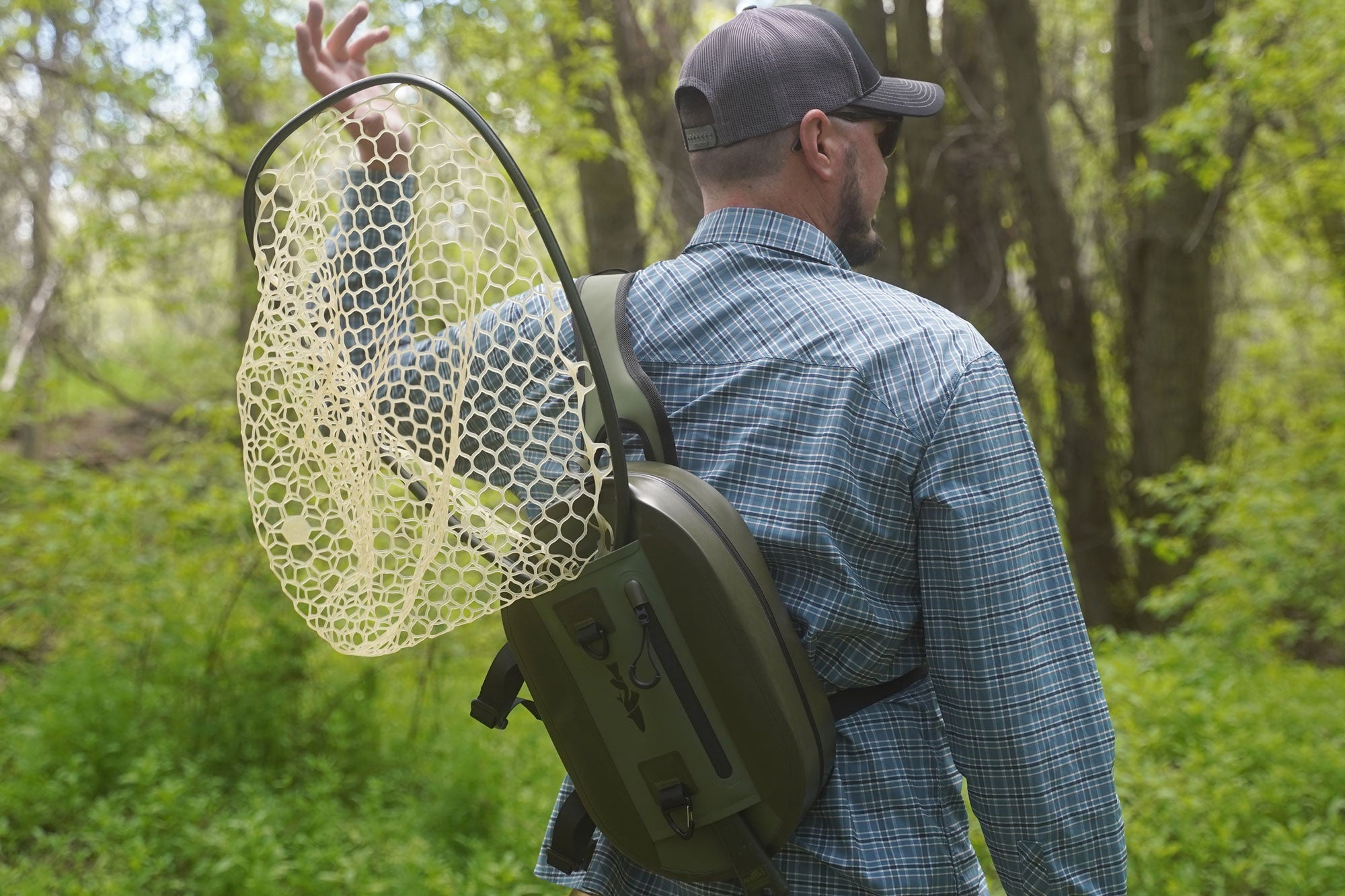
Vest — vests were popularised for simplicity and ease of use. I've recently fallen back in love with them after trying nearly every bag and pack on the market. In my opinion there's no perfect bag; they all have a shortfall. I hadn't used a vest in years and forgot how user-friendly they are. The Deluxe Fishing Vest is the classic, the JHFLYCO Adjustable Mesh Vest breathes better in heat, and pairing either with the submersible JHFLYCO 27L Waterproof Backpack gives you a multi-use setup for everything that must stay dry.
Rain jacket — any rain jacket beats none, but two things matter for fishing. First, a muted colour, which helps when you're sneaking up on fish. Second, wrist gaiters — your hands are often in the water, and a fishing-specific jacket stops water rolling down your sleeves and soaking your arms. The Whetstone Waterproof Wading Jacket and the Deep Eddy both do this, and the packable Frogg Toggs Cascades Pack Jacket lives in a bag permanently. I also look for a smooth exterior — nothing for your line to hang up on.
Hat — largely preference, but a dark under-brim keeps reflected sun out of your eyes. Match the material and structure to the weather you'll fish. More than one is certainly an option. The Brown Trout Straw Sun Hat gives you a real brim; see all hats and gaiters.
Boots — boots are a pet peeve of mine. I prefer a lighter boot that's agile on uneven terrain with a good sole system, over the heavy rigid high-end options. Sole type matters more than price: felt grips slick rock better than rubber, but several states ban felt for spreading invasive species, so check before you buy. We carry Slate Felt Sole Wading Boots and Women's/Youth Stonefly Felt Wading Boots. If you want to skip boots entirely, the Slipstream PVC Bootfoot Chest Wader is cleated and warm.
Sunglasses — one of the most important pieces of equipment, and an area where spending genuinely makes a difference. With good care they'll last years while helping you spot more fish. Look for polarized lenses, and glass in amber or a low-light colour if you can afford it. Here's more in my article on sunglasses for fly fishing.
With this set of gear you're covered bottom to top and ready to work on technique. Browse FFIP Favorites for a shortlist of gear we've actually fished.
Download the Beginner Fly Fishing eBook

Go on a fly fishing trip you'll never forget
We partnered with Frontiers Travel to put you on water that's worth the flight. Tell them where you want to go. Don't wait.
Book a Trip
By Christian Bacasa
Host of the Fly Fishing Insider Podcast
Fly Fishing Insider Podcast Official Website
@flyfishinginsiderpodcast
@dupeafish
Watch on YouTube
Fly Fishing Insider Podcast has a referral partnership with Frontiers International Travel. If you book after being introduced through us, we may receive compensation at no additional cost to you.