
Every angler I know overestimates fish length. Not on purpose — it is just what happens when a fish is thrashing in the net, your hands are wet, and you are trying to eyeball inches against a rubber bag. The fix is about ten minutes of work at the bench, and once you do it you will never guess again. Mark your net.
Why the Net and Not a Tape
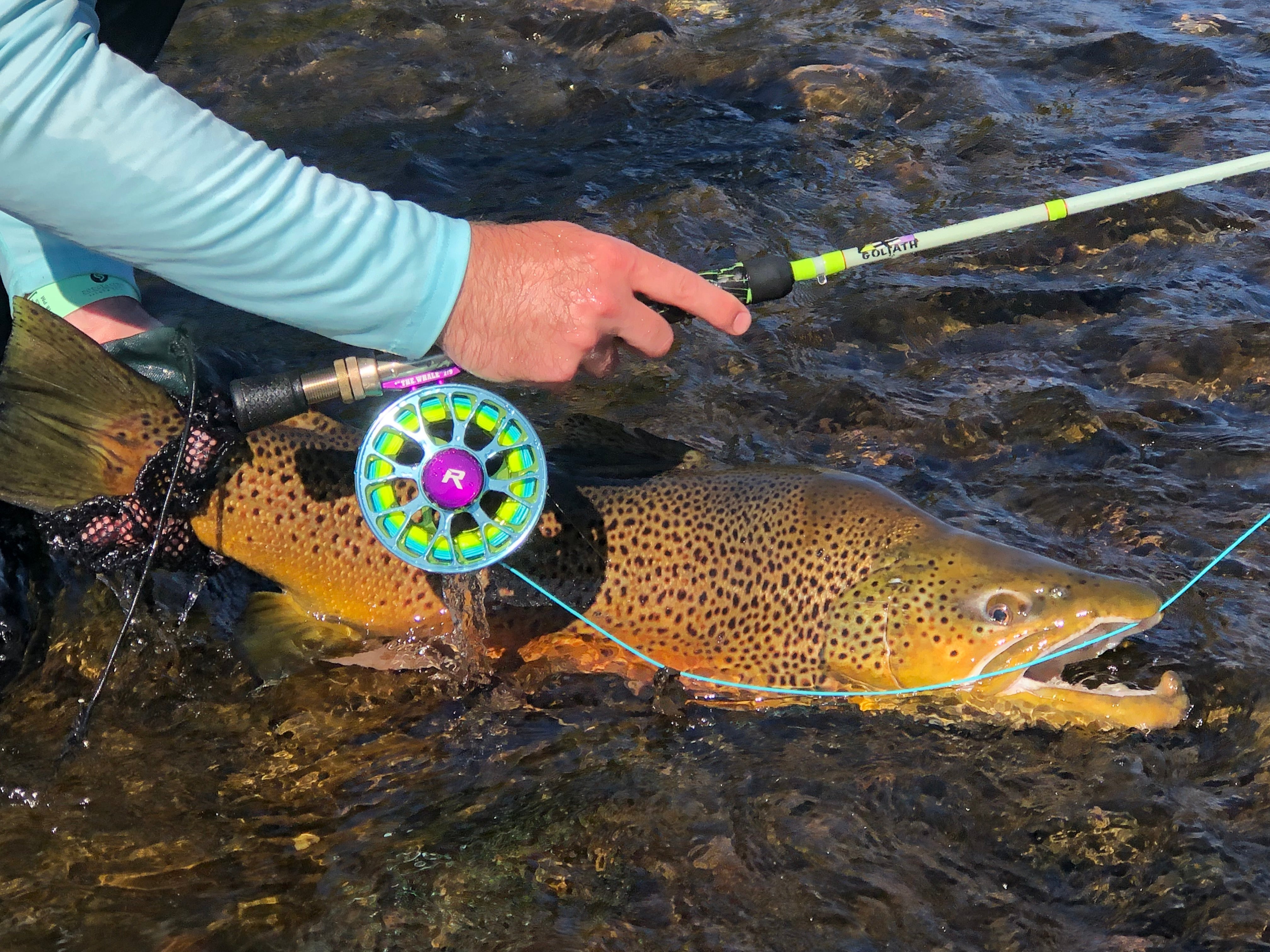
A tape measure means a second tool, a second set of hands, and a fish out of the water while you fumble. A marked net means the measurement is already there, on a tool the fish is already lying in. You lay the fish out, read the mark, and let it go. Total additional handling time: zero.
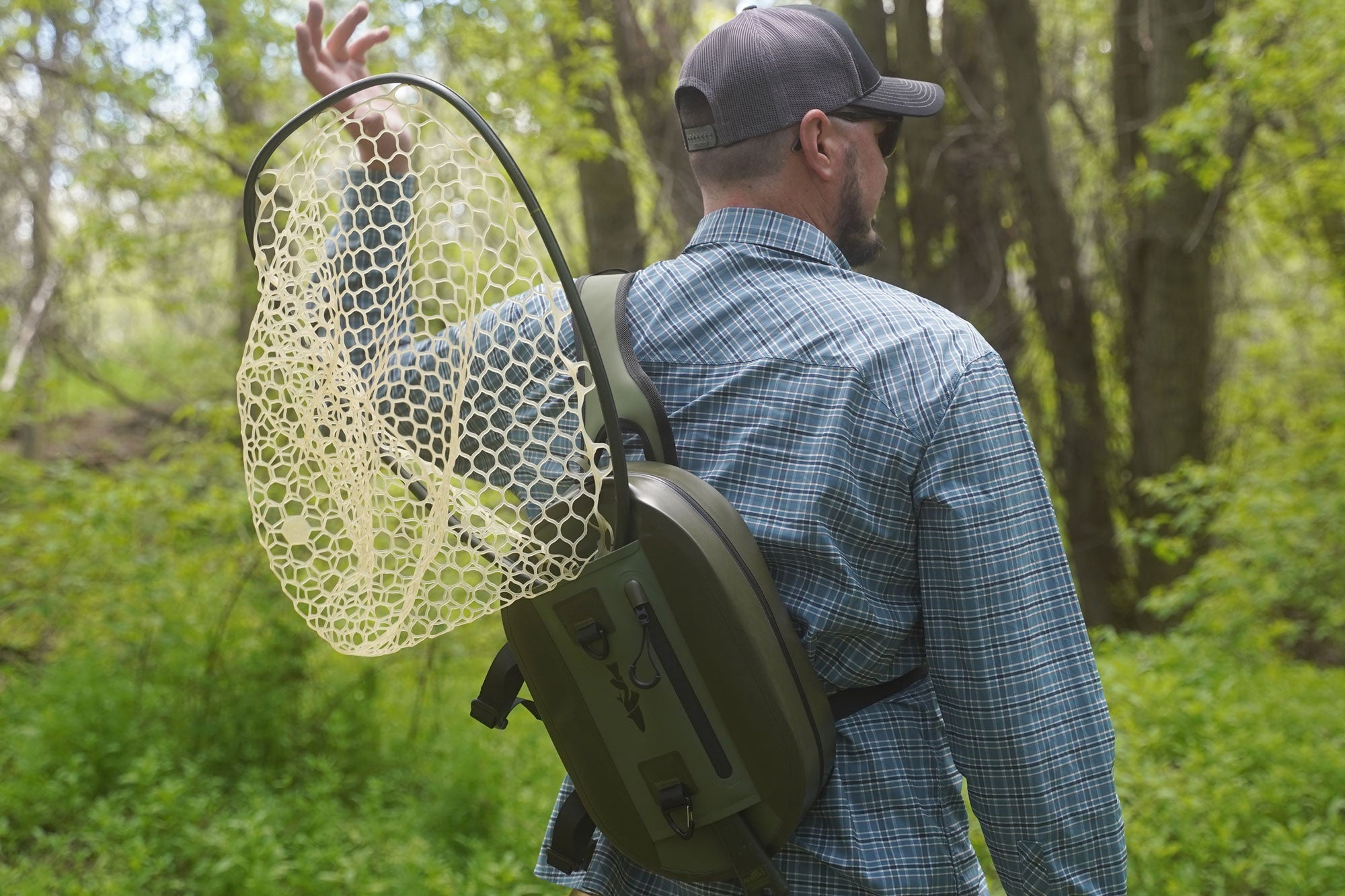
A lot of newer nets ship with measurements printed or burned into the frame or handle already. Mine has them — it is a shorter-handled net I like for trout because it tucks into a hip pack and stays out of the way. If yours has factory markings, start there. Line the fish up from the end point of the net to the head or tail, run down the marks, and you have your number.
Adding Your Own Marks
Factory markings have a limitation: they are generic. They are laid out for an average angler on average water, and your water is not average. On some small streams a six-inch fish is a legitimate catch worth noting. On a tailwater, twenty inches is the number that matters. So do not be afraid to add your own.
The method is simple. Decide what number actually means something on the water you fish most. For most of the trout water I spend time on, twenty inches is a genuinely high-quality fish — that is my personal benchmark, and it is a good general rule that a twenty-inch trout is a real fish in most places. Then extend past whatever the factory gave you and punch in your own hash mark at that spot. A basic punch tool is all it takes. Add the number next to the hash so you are not counting marks with cold hands.

Different Nets, Different Benchmarks
Here is where it gets genuinely useful. I do not mark all my nets the same. The compact trout net gets the twenty-inch hash. I have a separate deep-dish net that I only carry on water that produces larger fish, and that one gets a twenty-four-inch mark instead.
That sounds fussy but it is not — it is just matching the tool to the expectation. If you are fishing a small mountain stream, a twenty-four-inch mark is dead weight you will never use, and a ten-inch mark tells you something real. If you are on a big western river, the reverse. Mark each net for the water it actually rides in the boat for.
What This Actually Gets You
Beyond bragging rights, a consistent measurement habit gives you data. After a season you will know whether your home water is producing bigger fish than last year, whether that one run really does hold better fish than the rest, whether the size class shifted after high water. Guessing gives you none of that, because your guesses drift with your mood.
It also keeps you honest, which I think matters. A fish that is "about eighteen" is usually fifteen. Having the mark right there under the fish settles it, and over time you build a much more accurate internal sense of size — to the point where your eyeball estimates actually get good.
Gear
The honest answer here is that what you need most is a leather punch or a small hole punch and five minutes, which you probably already own or can pick up for a few dollars. If you need the net itself, buy it at your local fly shop where you can feel the handle length and hoop size in your hand — that is not a purchase to make blind, and shorter handles genuinely do behave differently in a hip pack than they look like they will online.
From our side, the Tips and Tricks for Fly Fishing eBook collects a lot of small on-the-water adjustments like this one, and if you are the sort of angler who keeps a twenty-inch benchmark in mind, the Brown Trout Hoodie is probably already your kind of thing.
Related list: 9 Best Fly Fishing Nets for Every Kind of Water