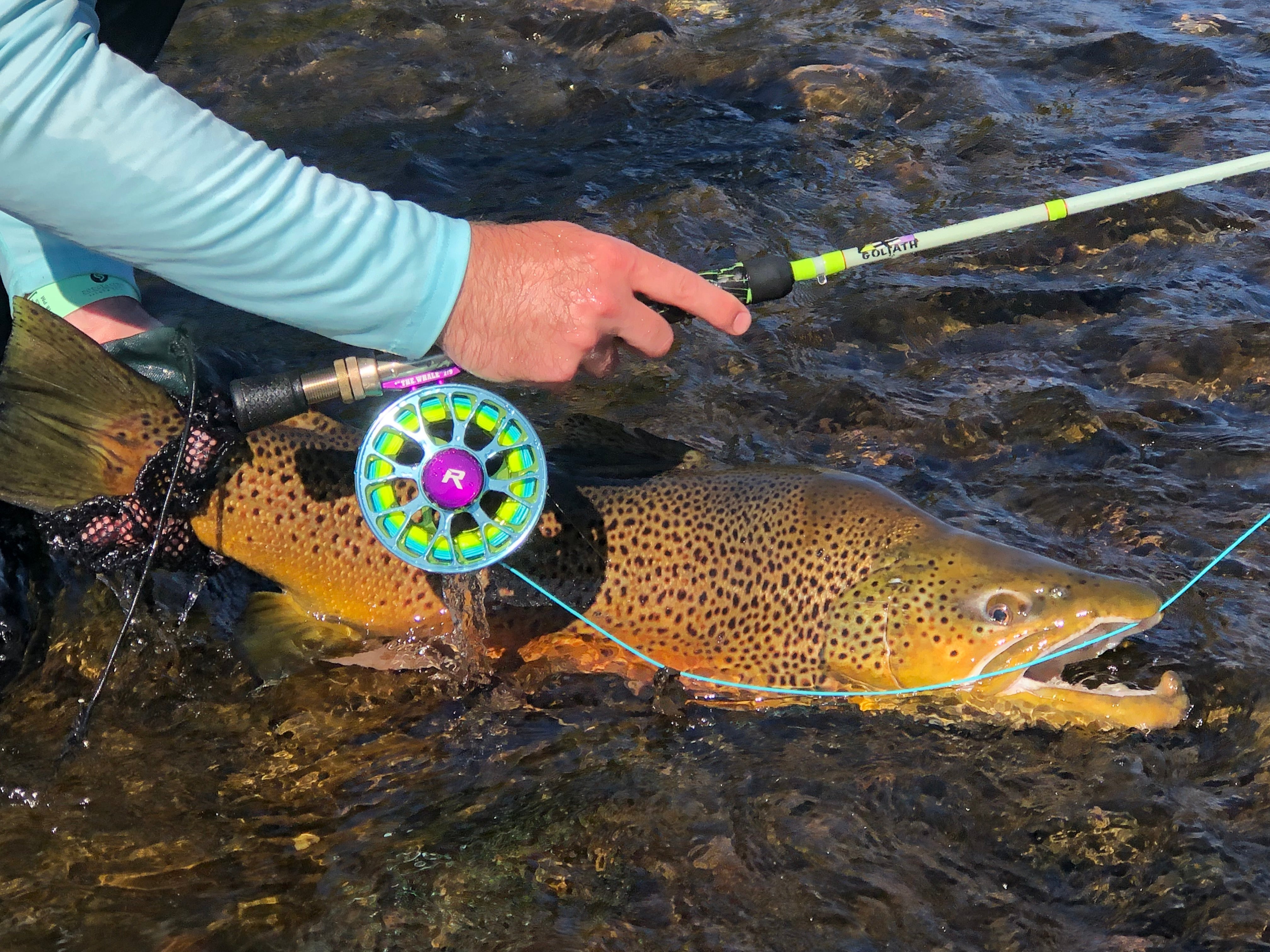

I got John Rael from Bauer Reels and Winston on the show to talk about the water around Twin Bridges, Montana, where the Big Hole, Beaverhead, and Ruby rivers converge to form the Jefferson. John spends his falls chasing lake-run brown trout with a two-handed rod, and the way he described it, staging browns behave a lot more like steelhead than most trout anglers expect. Here's how he approaches it.
Why Fall Browns Stack Up Like Steelhead
As brown trout stage to spawn each fall, resident fish and lake-run fish moving up out of reservoirs both start holding in water you wouldn't normally associate with big predatory browns — classic, soft-water runs where they can rest between pushes upstream toward gravel. John and his crew around Twin Bridges specifically target these staging fish with two-handed rods, treating the water almost exactly like a steelheader would work a run.

Dialing In the Two-Hander Setup
John's go-to is a 12-foot 5-weight Skagit-style two-hander. Depending on the run, he'll swap in sink tips ranging from a 10-foot section of T8 up to a 12.5-foot section of T11 to keep the fly in the strike zone without needing a huge back cast over streamside brush. Casts are shorter than you'd think — usually just the head, the tip, and five or six strips of running line, not bombed across the whole run. Leader is simple and heavy: straight 20-pound, stepping down to about 2.5 feet of 16-pound if fish are acting shy. On flies, he leans on bigger Kelly Galloup-style patterns — double Deceivers, sex dungeons, peanut envys — because he wants big, visible profile changes, not incremental color tweaks.
The Jig Strip That Triggers Reaction Eats
Rather than a straight swing, John works these flies with a jig strip: instead of a continuous hand-strip, he pops the rod tip up and down while his off hand picks up slack, so the fly rises sharply and then falls back on a controlled drop. Early in the fall when fish are more aggressive, he'll drive that movement from the rod tip for a sharper 6-8 inch jig; later in the season as water cools and fish get less active, he switches to a subtler strip-driven jig closer to the water, moving the fly just 3-4 inches at a time. Most eats happen right on that fall, which is exactly why keeping constant, direct contact with the fly matters more here than distance.

Reading the Two River Types Around Twin Bridges
John also broke down how he adjusts between the area's freestone water (the Big Hole) and its tailwater and spring creek water (the Beaverhead and the valley's private spring creeks). Freestone fishing runs bigger and buggier — stonefly hatches early season building into summer mayflies — fished from a drift boat with 5- and 6-weights and a 7-weight streamer rod in reserve. The spring creeks fish smaller and far more technical, with consistent flows and temperatures fed by groundwater year-round, meaning they often fish best exactly when the freestone water gets too warm to responsibly target trout at all.

Gear
If a Twin Bridges fall trip is on your radar, our Essential Elements of Destination Travel for Anglers eBook covers how to plan a trip like this one. And if you're chasing big browns of your own this fall, our Brown Trout Unisex Hoodie is built for exactly this kind of cold-morning streamer session.
Book the season you actually want
The best weeks on the best water go early. Plan it with Frontiers Travel — don't wait.
Plan Your TripFly Fishing Insider Podcast has a referral partnership with Frontiers International Travel. If you book after being introduced through us, we may receive compensation at no additional cost to you.