
Most of us have a short list of dream saltwater destinations, and Western Australia usually isn't on it, not because it isn't world-class, but because almost nobody talks about it. On this episode of the Fly Fishing Insider Podcast I talked with Angus Line, who fishes the enormous range of water from the Perth area up into the remote Kimberley, about a fishery with a species list that reads like a trivia quiz: giant trevally, tuskfish, parrotfish, and the wonderfully named blue bastard. What Angus really handed me, though, wasn't a hot spot. It was a way of approaching brand-new water and difficult fish that works anywhere in the world.

A Fishery Built on Variety
The thing that makes Western Australia special is its sheer range. Around Perth you can find accessible water, and as you push north toward the Kimberley the coastline turns into a vast, lightly pressured maze of flats, creeks, and reef edges. That geography produces an unusual buffet of targets. Giant trevally, the freight trains of the flats, will test your knots and your backing. Tuskfish and parrotfish, reef-oriented and toothy, ask for a completely different presentation. And the blue bastard, a fish so hard to catch it went unnamed by science for years, has become a cult target precisely because it humbles good anglers. The lesson underneath all that variety is that no single rig or fly covers it. You have to match your approach to the animal in front of you.
Research and Adaptability Beat a Magic Fly
Ask Angus how he cracks a new species and he keeps coming back to two words: research and adaptability. Before he ever wets a line for an unfamiliar fish, he wants to understand its behavior, its preferred habitat, and what it actually eats. Parrotfish are his example of why this matters. They can be moody and maddening, feeding hard one moment and ignoring everything the next, so a rigid, one-approach angler goes home skunked. The angler who has done the homework, and who is willing to change flies, depth, angle, and retrieve until something clicks, eventually finds the key. Persistence is the third leg of that stool. Difficult fish are difficult for everyone; the ones who land them are simply the ones who kept adjusting instead of grinding the same failing cast.

Sight Fishing and the Power of Local Knowledge
So much of this fishing is visual, hunting fish in skinny, clear water where you see the target before you cast. That puts a premium on accuracy and a delicate delivery, the same skills that pay off on any flat from Belize to the Bahamas. But Angus's most portable tip is social, not technical: lean on the fly fishing community. Seek out anglers who actually chase the species you want, ask questions, and share what you learn back. When you're planning travel, that same instinct keeps you safe and productive, do real research on the area, think through the ergonomics of your gear setup so you're not fighting your rig all day, and vet the legitimacy of any guide or service before you hand over money. Good local knowledge, honestly earned, shortcuts years of trial and error.

Gear for the Salt
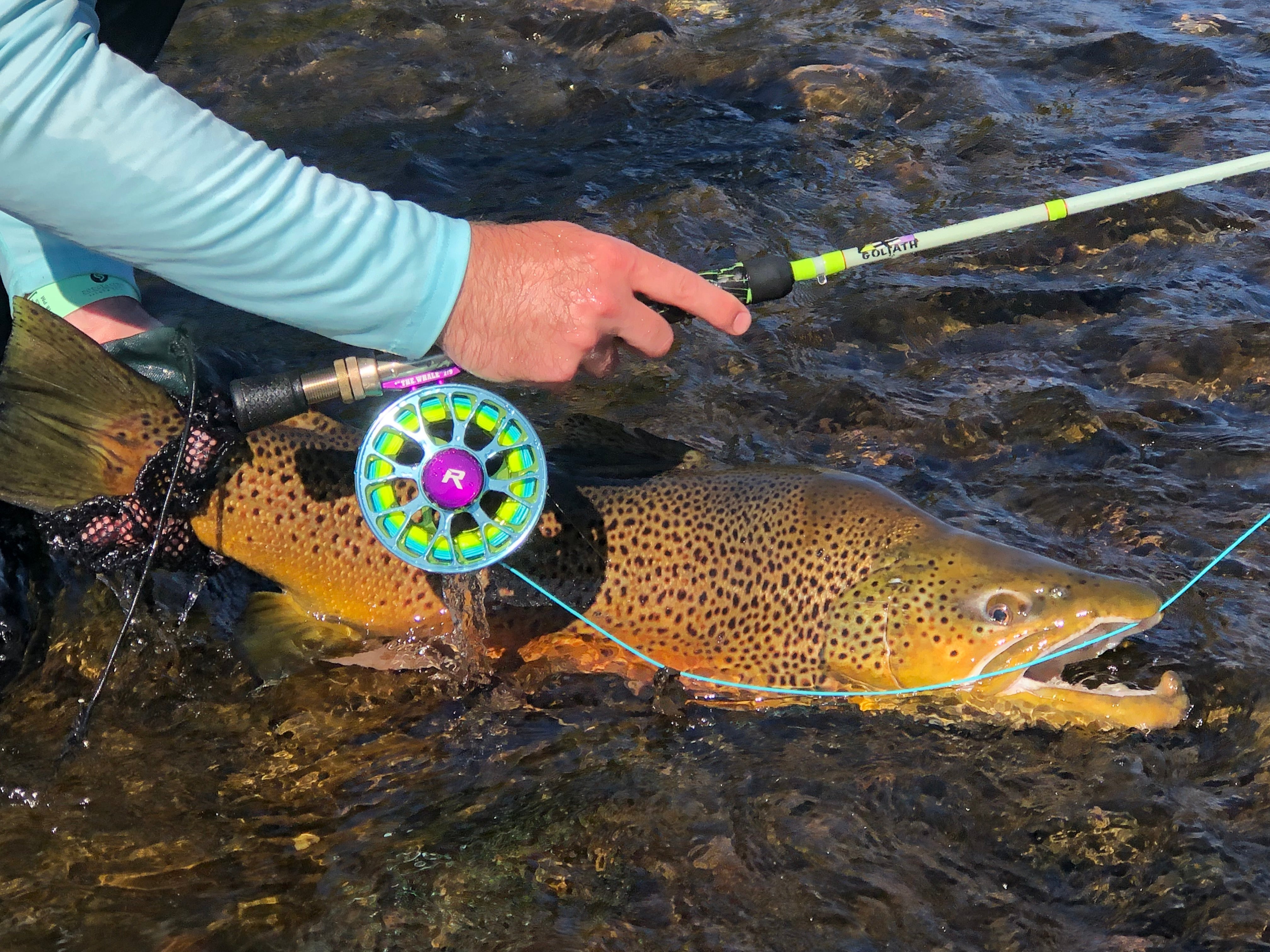
Chasing hard-pulling flats species means tackle you can trust when a GT decides to leave. A dedicated Omega Saltwater Line is built to turn over big flies and cast in wind, exactly the conditions Angus fishes. For the fish themselves, a handful of Clouser Deep Minnows covers the baitfish look that draws strikes across dozens of saltwater species. And when you're truly going to war with the freight trains, a sealed-drag reel like "THE WHALE" reel is made to stop beasts of the sea. Do your homework, stay adaptable, and go find your own blue bastard.
Fly Fishing Insider Podcast has a referral partnership with Frontiers International Travel. If you book after being introduced through us, we may receive compensation at no additional cost to you.