
Fly Fishing Insider Podcast
Search marketing for a fly shop comes down to showing up when someone types a buying question, such as the best fly line or the best tippet. Paid search buys position immediately; SEO earns it over time. Both feed the same goal, more product orders and more booked guide trips.
Chris Hanson owns 3GEngagement, a 20-person digital marketing agency in Colorado that builds websites and runs SEO and paid search for automotive and restaurant clients and, increasingly, for fly shops and fly fishing brands.
Also on Apple Podcasts · Spotify · YouTube
How does a fly shop show up in Google search results?
Getting a fly shop into search results comes down to two levers: paid placement, bought per click, and organic ranking earned through SEO. The searches that matter are buying questions such as the best fly line or the best tippet, because those are the moments when a shop's product or a guide's booking page needs to appear. Everything in the agency's fly fishing work is aimed at those two outcomes, more product orders and more booked guide trips.
What kind of fly fishing clients does the agency work with?
The agency's fly fishing clients include fly shops that both sell product and sell guided trips, an independent fly tyer selling flies direct, and a fly line company. Each client has a different objective, since a shop with a well-known guide on staff is already hard to book and needs product visibility more than trip inquiries. All the work is done in-house across a 20-person team, including content and website builds, with the one exception being organic social media posting, which the agency does not manage.
How did 3GEngagement get started?
3GEngagement began when its founder turned down a promotion. He was working as a digital strategist on a car manufacturer's account when the role was restructured into an 80 percent travel job at higher pay, which he could not take at that stage of family life. He started the company with his wife instead and spent roughly the first four and a half years working from five or six in the morning until ten or eleven at night, taking client calls during dinners out.
What got him into fly fishing?
Fly fishing entered the picture because his wife bought him a guided trip, specifically to force him to stop working. By the end of that first day he was already planning a rod, reel and waders, and he compares the reaction to the day he first ran sled dogs, which turned into twelve years of training and racing. What fly fishing gave him was permission to leave work behind for a few hours, which is the story he was building a film around at the time of the interview.
Why turn down free gear from a brand?
He has had brands send him product he never posted, and told them directly that it was not a fit. The reason is that his followers act on his recommendations and buy what he tells them about, so endorsing something he does not actually use would cost him more than the free gear is worth. His filter is simple: he will only work with a company whose product he can recommend knowing nobody will come back and say they did not like it.
How do you hold a trout for a photo without hurting it?
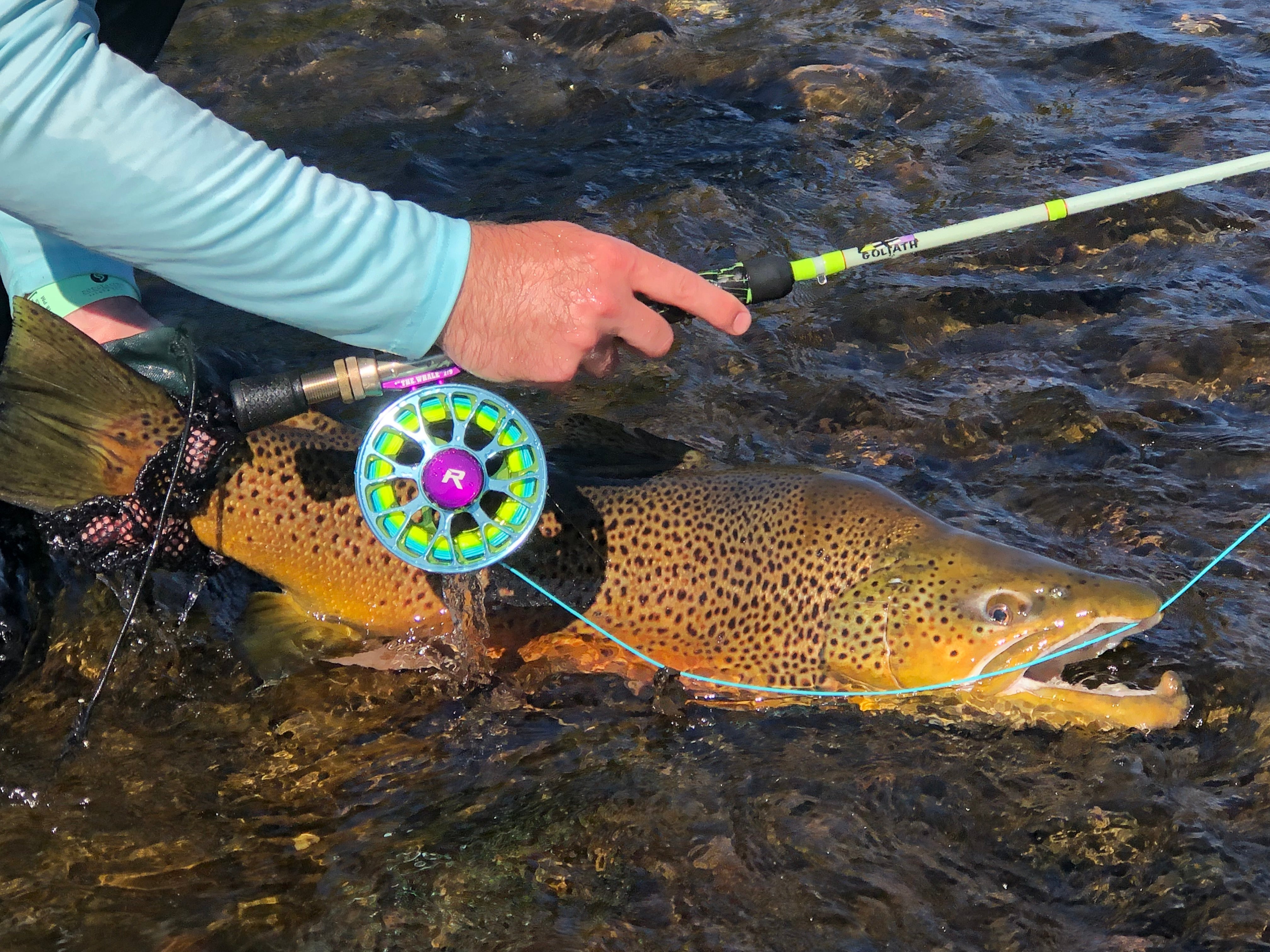
The hard part of a fish photo is the handling, not the camera. Squeezing a struggling trout makes it struggle harder, so the sequence is to keep the fish in the water or in the net, slide a hand underneath it, and wait until you feel it relax before lifting. For a solo shot, holding the arm out well in front of you and staying low over the water is easier than lifting the fish high, and it keeps the fish close to going back.
What would he change about the fly fishing community?
His first change is practical: allow signs beside brown trout redds during the fall spawn in Colorado, so newcomers casting at two big visible fish understand what they are looking at, and so anglers who do know feel the pressure of other people walking past. He also wants more flies-only water on rivers such as Cheesman Canyon. His third change is cultural, calling out anonymous accounts that attack beginners over how they hold a fish or where they choose to fish, rather than sharing their memes.
Key takeaways
- Target buying-intent searches such as best fly line or best tippet, because those are the searches that turn into orders and bookings.
- Paid search buys visibility now and SEO builds it over time; a small shop usually needs both working toward the same conversion.
- Refusing a sponsorship that does not fit protects the only asset an ambassador has, which is that people buy what they recommend.
- Keep a trout in the water or the net, hand underneath, and lift only after it relaxes; squeezing a struggling fish makes it fight harder.
- For a solo fish photo, extend your arm and stay low over the water rather than lifting the fish high toward the camera.
- Signs beside spawning redds would teach new anglers what they are casting at without needing a regulation change on the water.