
Fly Fishing Insider Podcast
Amadou is a felt-like material made from the hoof fungus that grows on birch, boiled down from the layer beneath its outer crust. Squeezed around a waterlogged dry fly it pulls the water straight out of the materials, so the fly can be fished again immediately. Timber & Fins uses it in patches and inside its wooden fly boxes.
David-Alexandre Chabot is the Montreal-based owner and maker behind Timber & Fins, a two-person company producing wood and leather fly boxes, fly wallets, reel cases, tying mats and nets.
Also on Apple Podcasts · Spotify · YouTube
What is amadou and why is it in a fly box?
Amadou comes from the hoof-shaped fungus that grows on birch trees. Peel off the outer crust and boil the layer beneath it, and the hard interior turns into something close to felt. It has been used for drying for centuries - to stop bleeding on a wound, and as tinder for carrying and starting fire. Pressed around a soaked dry fly it draws the water straight out of the hackle and dubbing, and lining a fly box with it does the same job passively.
How is amadou sourced and processed?
For the first year the material was foraged by hand: walking the woods looking for the hoof fungus, cutting it apart and processing it in the workshop. That is a fine experience and a terrible supply chain. The workable answer was a family business in Eastern Europe that makes hats from the same material, so the fungus is processed there and the finished amadou is bought in and cut into patches and box linings.
Why build fly boxes from wood instead of plastic and foam?
The first boxes were cedar, made as Christmas gifts because nothing on the market avoided plastic, foam and silicone. That constraint became the brand's first pillar: no plastic, no foam. It also produced the differentiator, because the amadou lining that replaces foam does something foam cannot - it dries the flies stored in it. Durability is the second pillar and design is the third, with the stated goal being a box a customer hands down rather than replaces each season.
What leather goes into a fly wallet or tying mat?
The leather is bark-tanned rather than tanned with harsh chemicals, and staining is done in-house with water-based stains to keep the finished product free of toxic materials. Weight is matched to the job: a leather tying mat is cut from seven- to eight-ounce hide, which is thick enough that the mat outlasts its owner. Sourcing is the fragile part - supply comes through an importer, and shutdowns forced a change of supplier mid-stream.
What does a fly tying mat with gauges do?
A tying mat normally exists to catch clippings. This one has wet hackle and dry hackle gauges engraved directly into the leather, along with gauges for tails and wings, so it functions as a measuring tool at the vise rather than only as a scrap catcher. That dual purpose reflects where about half the customer base sits: tiers who care about proportion and are already spending on the flies themselves.
What does a two-person gear maker actually build?
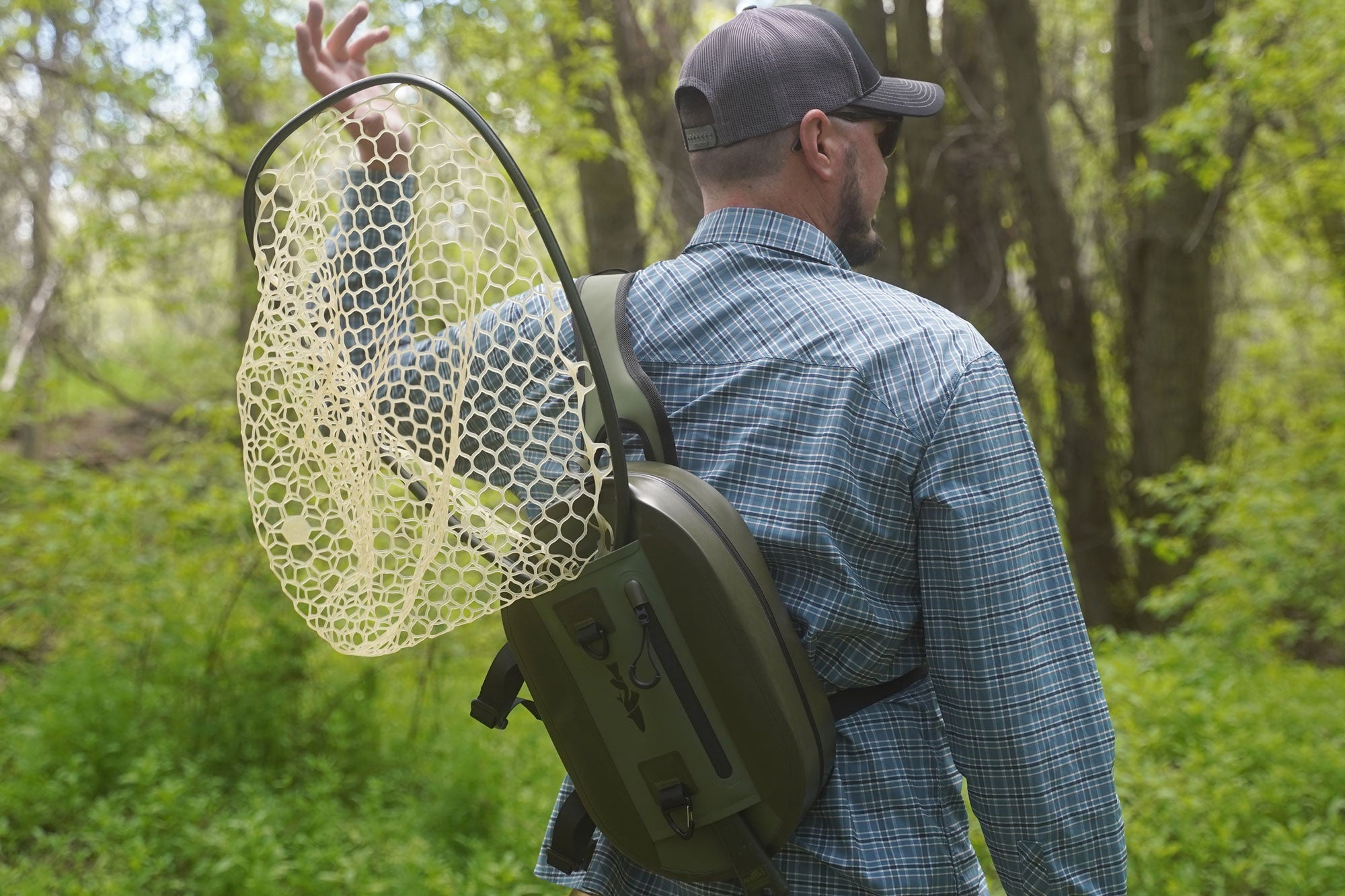
The catalog runs from wooden fly boxes to leather goods and apparel. Fly wallets come in several models: one with two shearling panels and an interior pocket, another with a waterproof notepad for on-water notes and sketches. Reel cases come in two stock sizes or can be made to a customer's own reel measurements. Nets are the scarcest item - a trout net and a steelhead-or-small-salmon net, with only around ten built in a year, so they sell out and reappear irregularly.
How does a small fly fishing brand build a community?
Instagram is the main channel, supported by paid social and magazine placement, but the deliberate move was an ambassador program started roughly six months earlier. It was built to be mixed in age, gender and race, as a direct response to fly fishing's reputation as a sport for older white men. It doubles as a product pipeline: several recent products began as an ambassador's request, including a tool wallet made for someone who ties in hand and needed somewhere to set the fly between steps.
Key takeaways
- Carry an amadou patch for dry flies - squeezing a soaked fly inside it pulls water out of the materials immediately.
- Line or buy a fly box with amadou rather than foam and stored flies dry themselves between outings.
- Bark-tanned leather with water-based stains is the low-toxicity alternative to conventionally tanned goods.
- Look for seven- to eight-ounce leather in a tying mat; thinner hide will not survive years at the vise.
- A tying mat with engraved hackle, tail and wing gauges replaces a separate gauge on the bench.
- Small makers will build to your measurements - a reel case can be made to fit a specific reel if you send the dimensions.