
Fly Fishing Insider Podcast
The White River shad hatch in Arkansas happens when shad from the lake above are pulled through the dam turbines and come out stunned. Trout feed hard on the drifting bait, and 24-inch fish will take a foam shad pattern on the surface. It is not an annual certainty, but it can turn a grinding week into a spectacle.
Christian Bacasa is a co-founder of Dupe a Fish, a fly fishing brand and marketing outfit that works with small manufacturers in the industry, and a co-author of the book Fly Fishing for Leadership.
Also on Apple Podcasts · Spotify · YouTube
What is the shad hatch on the White River in Arkansas?
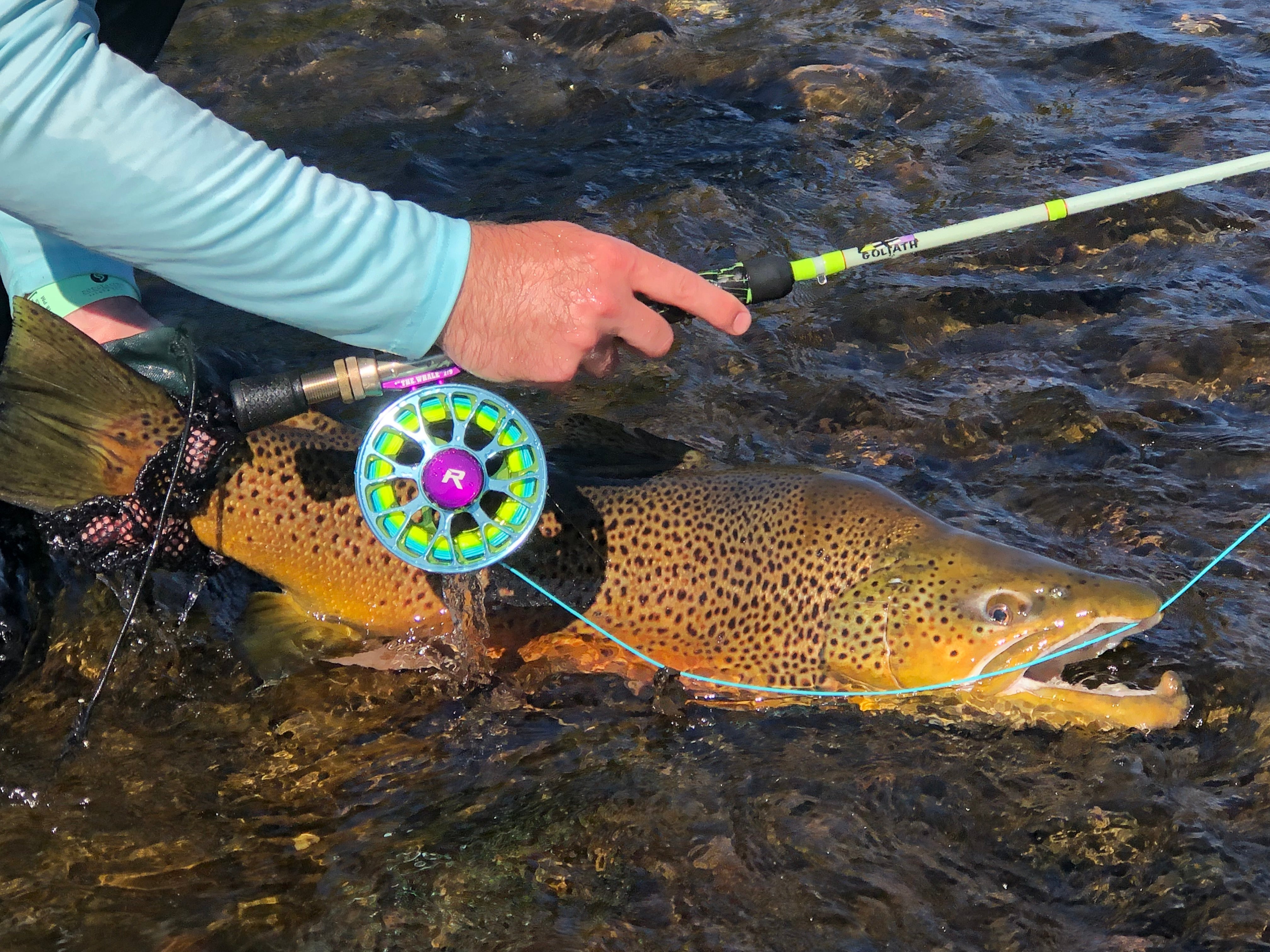
The shad hatch is not a hatch at all. Specific conditions push shad in the lake above the dam down toward the dam face, they go through the turbines, and they come out into the river as stunned floaters. The trout feed on them with no caution, and 24-inch fish will come up and eat a foam shad on the surface. It only happens on a low occurrence through the year, so it is worth calling ahead rather than booking a week around it.
What fly imitates shad coming through the dam?
The pattern to ask for is a wiggle minnow - a foam body with a marabou tail on a single hook. It is often fished dry-dropper style, so it works as a shad imitation and as an indicator over a nymph at the same time. The wiggle minnow keeps moving fish on the White River even when the shad are not running, which is what makes it worth carrying on any trip there.
Where do trout hold on the White River?
Much of the White River has a short run of shallow bank and then a hard shelf that drops from one or two feet to ten or fifteen feet almost immediately. Trout sit just past the shoulder of that drop, and both streamers and nymphs get fished along it. Mid-river holes and sinks hold fish as well, and the flat-bottomed jet and prop boats used there run miles upstream so a party can cover several different stretches in a day.
What streamer setup works on the White River?
An 8-weight is the standard White River streamer rod, with something heavier on windy days. The line matters more than the fly: a full sinking line, or a sink tip with at least a 15-foot head, gets the fly down before the shelf runs out. The preference is an unweighted fly on a heavy sink line rather than a weighted fly on a lighter one, so the line does the work it was designed to do.
Does streamer size change the fish you catch?
Anglers on the White River throw streamers anywhere from four to ten inches, and the size choice is a trade. Flies in the six- to eight-inch range produce the larger fish. Smaller streamers get more eats, but generally from smaller trout. Cast tight to the bank, count roughly eight to ten once the fly has cleared the shelf, then start the retrieve.
How does a fly fishing side project turn into a business?
Dupe a Fish started as a way to justify a gear-heavy saltwater trip and became a marketing and brand-development business for its own label and for other manufacturers in the industry. A second partner joined after seeing how serious the project had become. The hosted trips are not a profit center - open seats get filled through social media so the group travels with new anglers rather than an empty boat.
What is the book Fly Fishing for Leadership about?
Fly Fishing for Leadership grew out of a plan to run leadership curricula at fishing lodges. When the pandemic shut that down, the curriculum became a book instead. Around 70 contributors took part, most of them at vice-president level or above, or owners and chief executives, and each was interviewed about what the water taught them that they carried into business, and the reverse.
Key takeaways
- Call the local shop about the shad hatch before planning around it - it depends on lake conditions and happens infrequently.
- Carry a foam wiggle minnow on the White River; it works as a surface shad imitation and as a dry-dropper indicator.
- Let the line do the sinking: an unweighted streamer on a full sink or 15-foot sink head beats a weighted fly on a light line over a steep shelf.
- Work the shelf shoulder, where the bottom drops from one or two feet to ten or fifteen in a short distance.
- Choose a six- to eight-inch streamer when you want the bigger brown; drop smaller for more eats from smaller fish.
- Count eight to ten seconds after a streamer clears the shelf before starting the strip.