
Fly Fishing Insider Podcast
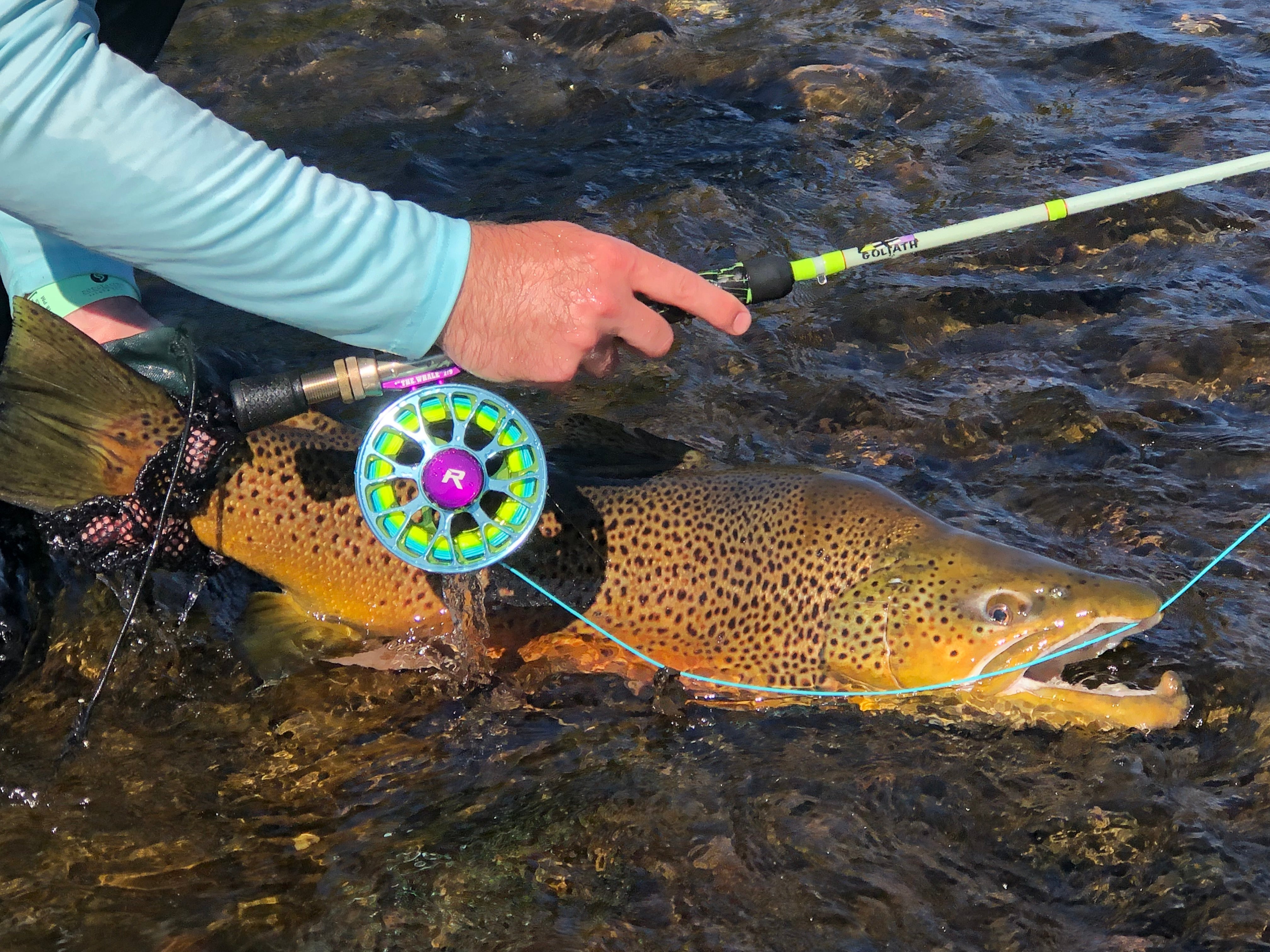
Keep Fish Wet reduces the three principles to air, surfaces, and time. Hold air exposure to 10 seconds or less, wet your hands and keep the fish off dry rocks and banks so the slime layer stays intact, and shorten everything between landing and release, net time included.
Sasha Clark Danylchuck is a fishery scientist and the executive director of Keep Fish Wet, a nonprofit that translates peer-reviewed catch and release research into practices anglers can actually use.
Also on Apple Podcasts · Spotify · YouTube
Why does catch and release science need translating for anglers?
Catch and release research is written for other scientists. Studies use third-person language, spell out methodology in enough detail that another lab could replicate the experiment, and often sit behind paywalls that anglers cannot get past. There are now more than 400 studies on catch and release, and roughly half of them were published in the last decade alone. Turning a 10-page paper into a few paragraphs and bullet points is not dumbing the science down; it is pulling out the findings that actually change what an angler does at the water, including minor points the paper itself may barely discuss.
How many fish die after being released?
In the United States anglers catch roughly 350 million fish a year, and about 57 percent of them are released; release rates in Canada are estimated to be higher still. Some agencies estimate post-release mortality at around 10 percent, which works out to about 20 million fish a year dying after being let go. That number is also the argument for small changes: moving release mortality from 10 percent to 9 percent saves roughly 2 million fish a year. On fisheries already stressed by warming water or habitat loss, every one of those fish counts toward the population's resilience.
What are the three Keep Fish Wet principles?
The first principle is to minimize air exposure, and for most species the research supports a limit of 10 seconds or less. The second is to eliminate contact with dry surfaces, because the mucus layer covering a fish works the way skin does for people, and a fish that loses it becomes vulnerable to disease and fungal infection. That means wetting your hands before handling, not dragging fish onto the bank, and keeping them off rocks. The third is to reduce handling time, meaning everything between landing and release, time in the net included.
Does water temperature change how long a fish can be out of water?
Water temperature has a large effect on how a fish responds to being caught. Trout in water at 55 or 60 degrees tolerate air exposure considerably better than the same fish in water reaching 68 or 70 degrees, where five seconds out of the water does more damage than it would in cooler conditions. Species-specific and even location-specific differences also exist, though no one has yet compared one trout species directly against another. Water temperature is also the one variable an angler cannot control except by choosing not to fish or by targeting something else.
Does pouring Coca-Cola on a fish's gills stop bleeding?
No. A study run by a fishery scientist on the Keep Fish Wet board used pike to test the practice, comparing Coca-Cola, Mountain Dew and plain carbonated lake water made with a soda machine. The carbonation induces bradycardia, a slowing of the heart rate, and a slower heart rate slows bleeding, which is why the trick looks like it works. Once the fish goes back in the water the heart rate climbs and the bleeding resumes. Researchers recorded fish that appeared to stop bleeding for about 30 seconds and then bled heavily from the gills, and some bled out. For a bleeding fish, the best move is releasing it promptly if it can swim away.
Is the keep them wet hashtag actually being used correctly?
The hashtag outgrew the message. Search it on Instagram and a large share of the photos show fish out of the water, handled in ways that do not follow the three principles. Keep Fish Wet's position is not that photographs are the problem: a good photo of a fish is possible inside 10 seconds, and there are real situations, such as landing fish over the high sides of a boat, where a few seconds of air is unavoidable to get a hook out quickly. The organization deliberately does not call out or shame individual anglers, which is a distinction worth making, since most of the pile-ons that happen under fish photos come from other users.
Where does resistance to catch and release come from?
Two kinds of pushback come up. The first is from communities that rely on fish for food, where catch and release reads as playing with your dinner, and where the ability to release a fish you do not need is itself a privilege. Keep Fish Wet is not opposed to harvest; the principles apply only to fish that are going to be released. The second is the shape of social media itself, where constructive discussion about fish handling is difficult and criticism of a posted photo rarely changes anyone's practice.
Key takeaways
- Keep air exposure to 10 seconds or less for most species.
- Wet your hands before touching a fish, and keep it off banks, rocks and dry surfaces to protect the mucus layer that guards against disease and fungal infection.
- Shorten total handling time from landing to release, counting time in the net.
- Trout tolerate air exposure far better at 55 to 60 degrees than at 68 to 70 degrees; adjust handling to water temperature.
- Dropping post-release mortality from 10 percent to 9 percent would save roughly 2 million fish a year in the US alone.
- Pouring Coca-Cola or any carbonated liquid on gills does not stop bleeding; it slows the heart rate temporarily and bleeding resumes on release.