
Fly Fishing Insider Podcast
Finatical Fly Fishing runs guided travel trips built around women anglers, in the US and internationally. The founder books only lodges and guides she has fished with personally, talks with each participant before the trip, and pairs them with a guide by ability and goals - which is what removes the intimidation beginners describe.
Stephanie is the owner and operator of Finatical Fly Fishing, a travel organization that builds fly fishing trips for women, joined by Connie, a first-season angler, and Bonnie, a more experienced angler who returned to the sport after her husband died.
Also on Apple Podcasts · Spotify · YouTube
Why was Finatical Fly Fishing started?
Finatical Fly Fishing came out of a practical problem: a woman who wanted to go on a trip outside her regular fishing group was often the only woman signed up, which meant paying double for a single room. Alongside that were women who stayed off the water entirely because the sport read as male dominated. The trip list has grown by request rather than by plan - the Bahamas, Brazil for peacock bass, US destinations, with a Cuba trip in development.
How does a beginner's first trip actually get built?
The organizer has extended conversations with each participant before the trip and places them accordingly, which matters more than the destination. On one Sun Valley trip a near-beginner wade fished one day with a guide of 40 years' experience, floated in a boat the next, and on the third day fished a high mountain creek where the guide put her on around 50 fish before lunch. That repetition, cast and set over and over, is what locked in the hook set that no amount of explanation had.
Which guides do these women's fly fishing trips use?
The trips deliberately feature women guides, who are far more common now than they used to be - two guiding on the Green River in June and three on the September Sun Valley trip, all of them certified casting instructors. Two of the partner lodges, in Mexico and the Bahamas, are run and at least part-owned by women. The organizer books both men and women, but the selection criterion is the same: guides who teach well across every ability level.
What makes the Ranch section of the Henry's Fork so difficult?
The Ranch is two sections totaling about eight miles of the Henry's Fork, named for the families from the Union Pacific Railroad who settled and ranched the area in the early 1900s; the property was donated to the state in 1984. The water is flat, open and technical, and the fishing is dry fly only in character - stalking risers and making one clean presentation, closer to bonefishing than to pocket water. A 14-foot leader to 5.5X or 6X and a genuine match of the hatch are the baseline, and getting skunked there is normal.
What should a trout angler practice before a first bonefish trip?
The advice given to a Henry's Fork angler heading to salt water is to learn the double haul and practice it on windy days, not calm sunny ones, because the wind is what the trip will actually deliver. Bonefishing splits into two modes: sight fishing to visible traveling or feeding fish, and fishing the mud, where bonefish rooting on the bottom cloud the water and the fly gets jigged back through it. The first hookup is a shock - an 8-weight into the backing on a 12-inch fish.
What lowers the intimidation barrier for a new angler?
One participant had stayed off the water for 25 years despite three decades of summers on a fishing river, largely because she assumed she was supposed to be able to see the fish and could not. In a women-only group she could say she did not understand a term or did not see the sign of a fish without that costing her anything. The turning point she describes came weeks after her trip, when she read the water, placed the fly, hooked, netted and released a fish alone with nobody watching.
What rod and leader setup do you need for the Henry's Fork?
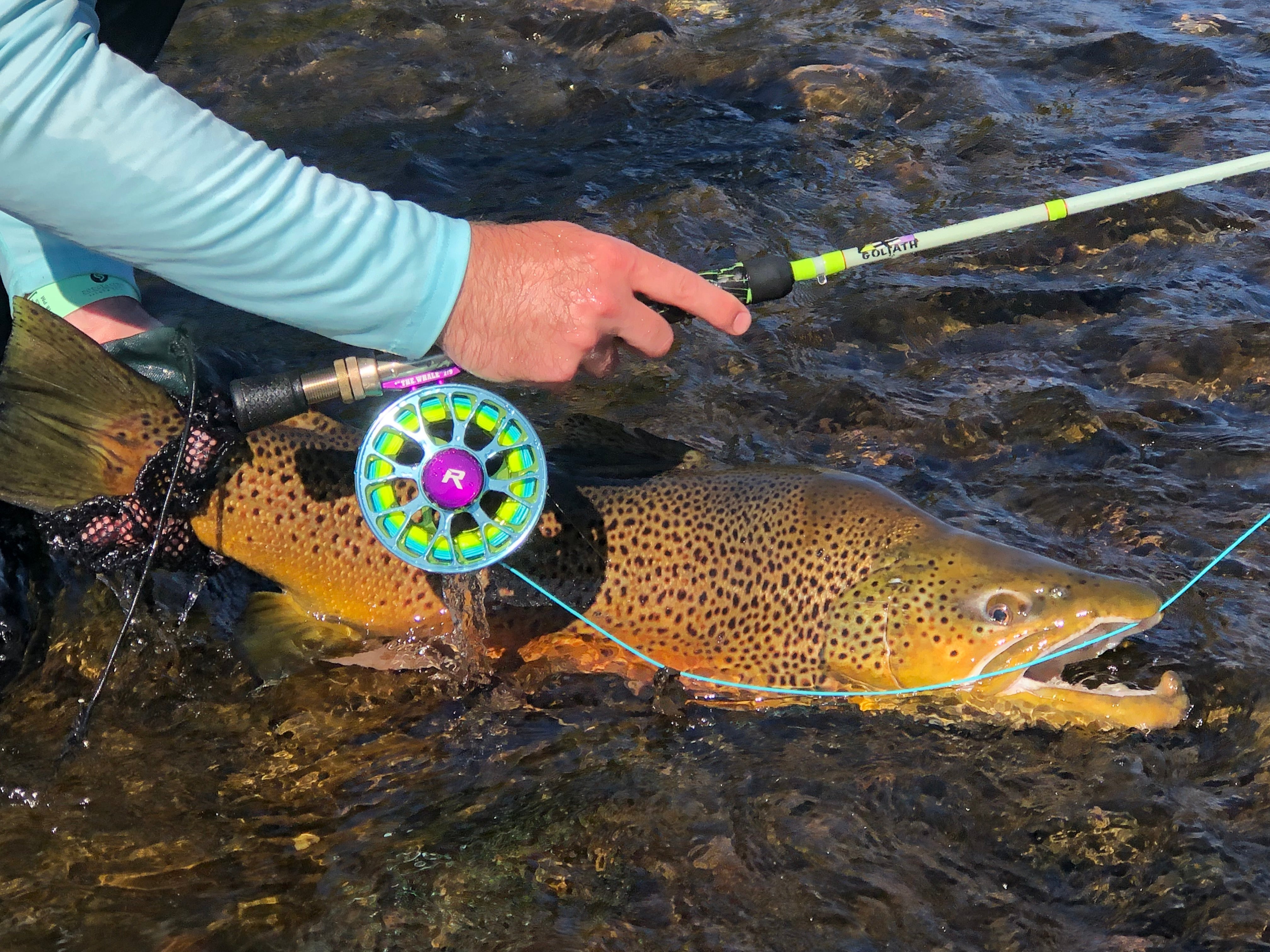
Most anglers on the Henry's Fork fish a 5 or 6 weight. On the technical Ranch water that means a 14-foot leader tapered to 5.5X or 6X; one participant attributes a skunked day to fishing 5X when the fish wanted 6X. Other sections take a different leader entirely - a much shorter, heavier setup around 4X for streamers on the lower river, where big brown trout eat hoppers and streamers. Camping and lodging are both available nearby, which keeps a trip flexible.
Key takeaways
- Ask a trip organizer to match you to a guide by ability and goals - the pairing determines the week more than the destination does.
- Repetition builds the hook set faster than instruction; a day of many small fish teaches more to a beginner than one hard day chasing size.
- Practice the double haul on windy days at home so that the wind on a saltwater flat is not the first time you meet it.
- On flat technical dry fly water, plan on a 14-foot leader to 5.5X or 6X and expect blank days as part of the fishery.
- Book lodges the organizer or agent has personally fished, so the reputation being vouched for is firsthand.
- Asking for help out loud is the skill that shortens the learning curve - build or join a group where that is easy to do.