
Fly Fishing Insider Podcast
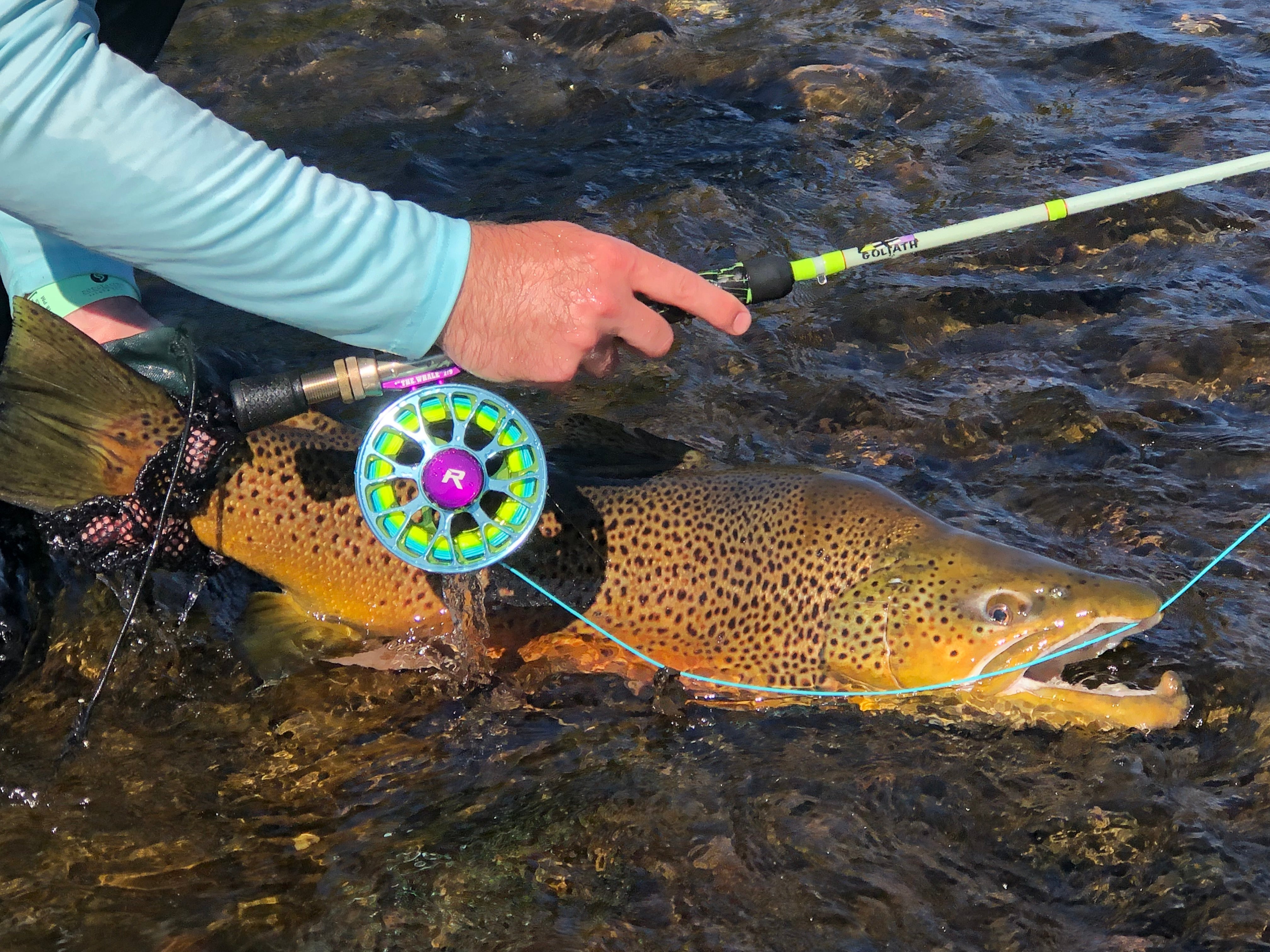
Measure a fish by laying the fish along the net frame from the head or the tail and reading the markings on the frame. Where a factory net lacks the number you care about, punch your own hash mark at that length - 20 inches on most trout water, 24 inches on rivers that grow bigger fish.
Also on Apple Podcasts · Spotify · YouTube
Why measure the fish you catch?
Measuring gives a fish a real number instead of an estimate, and estimates drift upward over a season. Tracking length also builds a picture of what a given stretch of water actually produces, which is more useful than a general sense that the fishing was good. Measuring in the net keeps the fish supported in water the whole time, which is the point of doing it there rather than on a bank or a tape.
How do you measure a fish in a net that already has markings?
Many current nets ship with measurement marks printed or burned into the frame. Lay the fish along the hoop, line the head or the tail up with the end point of the net, and read where the fish ends against the marks on the frame. The read is quick enough that a fish measured this way spends only a few seconds out of the current.
How do you add your own measurement mark to a net?
Factory marks cover generic lengths, not necessarily the length that means something on the water you fish. A simple punch tool solves that: measure out from the reference end of the net frame, then punch a hash mark into the frame at the length you care about. A marker line extended from that punch makes the hash easier to find with a wet fish in the net.
What length should you mark on a trout net?
Twenty inches is the mark on the trout net here, because a 20-inch trout is a high-quality fish across most of the waters this net sees. Setting the mark around a personal goal, rather than a round number, is the useful part: the goal is fish that are large for the body of water they came from. On small streams that same logic can mean marking a much shorter length, since a six-inch fish is worth knowing about on some creeks.
Should you carry more than one net?
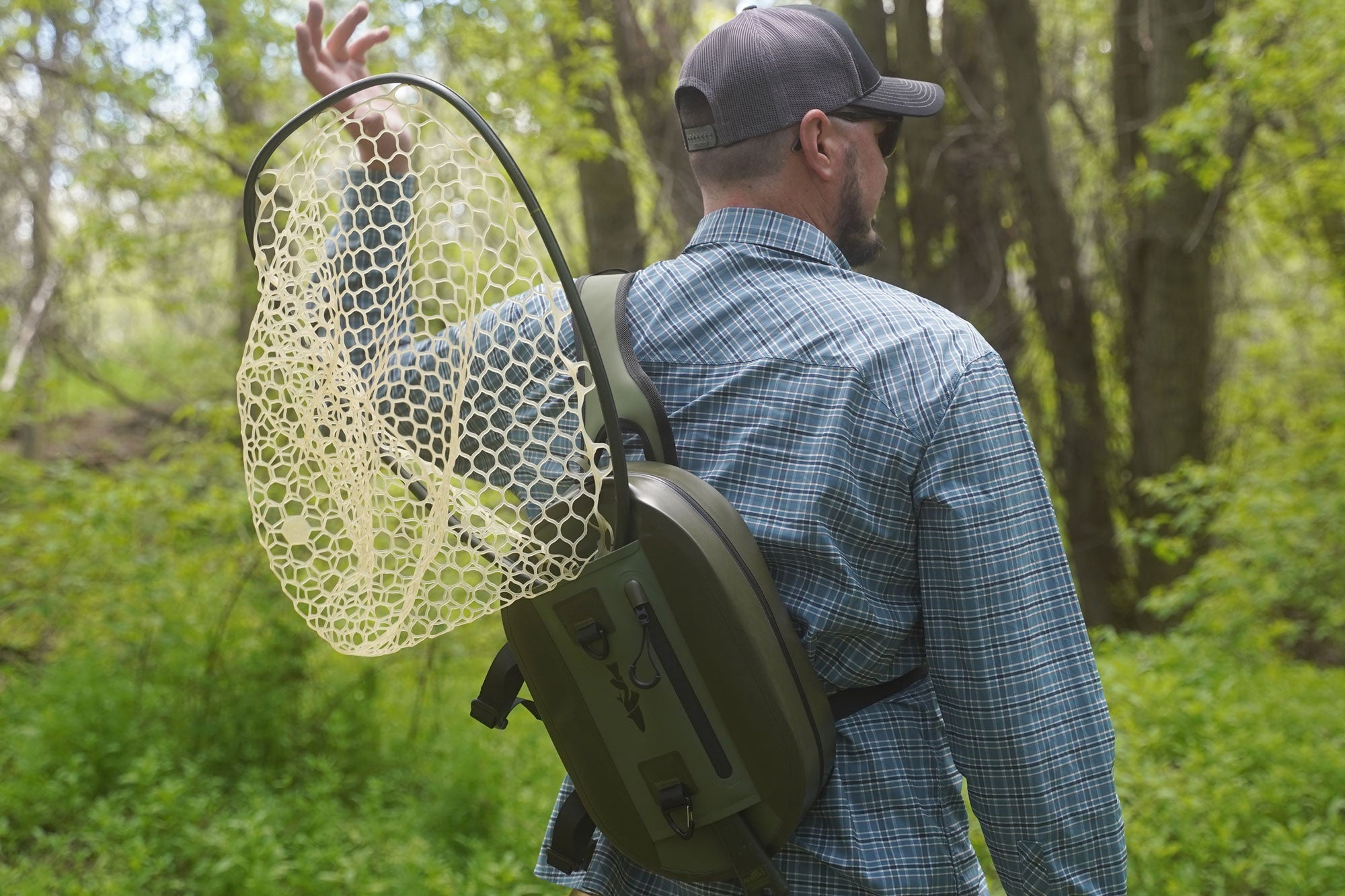
Two nets cover two different jobs. A compact, short-handled trout net tucks into a hip pack and handles most stream fishing. A deep-dish net rides along on waters that produce larger fish, and that net carries its own hash at 24 inches, because 20 inches is not the meaningful threshold there. Matching the net and its markings to the water keeps the measurement useful instead of arbitrary.
Key takeaways
- Lay the fish along the net frame from the head or tail and read the length off the frame, keeping the fish in the water while you do it.
- Nets that come with factory measurement marks handle the common lengths, but those lengths may not be the ones that matter on your water.
- A punch tool and a marker let you add a permanent hash mark at any length you choose.
- Twenty inches is a useful trout mark across most waters; on a small stream a much shorter mark tells you more.
- A deep-dish net carried for bigger water earns a 24-inch mark instead, so each net's markings match the fish it will hold.