
Fly Fishing Insider Podcast
Big trout feed on their own schedule, not yours. Tagging studies showed 20-inch-plus browns moving seven to eleven miles a night, then holding tight by day. Target them at dusk, in bad weather, and in pockets that boats and bank anglers skip, using the heaviest tippet they will still eat.
Andrew Steketee of FlyLab.fish, the fly fishing gear review site, grew up night-fishing dry flies for brown trout in Michigan and now fishes in Colorado.
Also on Apple Podcasts · Spotify · YouTube
Where do big trout go at night?
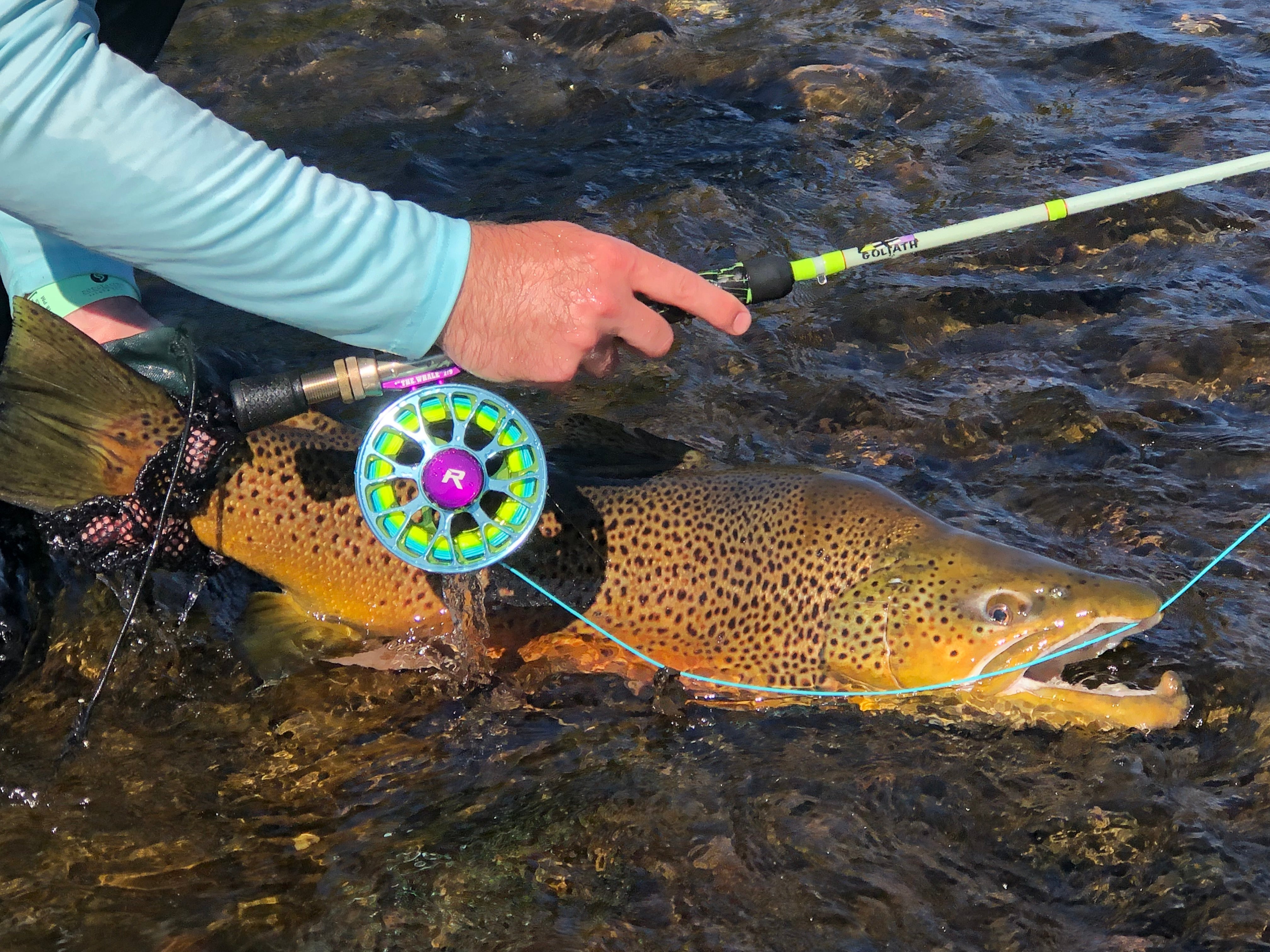
Big trout barely move during daylight and then travel long distances after dark. Early telemetry studies on Michigan brown trout showed that 20-inch-plus fish moved roughly seven to eleven miles in a night, running loops out from a daytime lie and returning by morning. A fish feeding on a hatch might only slide 100 feet, but a fish hunting baitfish can cover miles. That means the biggest trout are most available when almost nobody is on the water.
Why aren't the biggest trout in the obvious honey holes?
Deep, obvious holes get fished all day, and the biggest trout get driven out of them. Two easy tells that water is over-pressured are a worn foot trail down to the bank and a hole everyone talks about. Big trout instead sit in water that is hard to reach and hard to fish: pocket water, heavy hydraulic banks where drift boats are forced to pull off, and structure where you will lose flies. If you are not breaking off flies, you are probably not fishing where the big ones live.
How do you fish a pod of rising trout without spooking the biggest one?
A pod of rising trout has a hierarchy. On rivers like the Bighorn and the Missouri, the two largest fish sit in the middle of the pod, with seven or eight smaller-but-still-big fish ringing the outside like scouts. Hook one of the outside fish and the alphas go down immediately. The move is to let your dry drift through the outside fish without setting the hook, even if one eats it, and work your presentation to the interior fish. Read the rise forms too: the biggest fish often shows only a dimple or a flared gill.
What tippet should you use for big trout?
Fish the heaviest tippet a big trout will still eat, not the lightest you can get away with. Steketee fishes 4X fluorocarbon routinely and cannot remember the last time he fished 5X or 6X. Heavy tippet lets you turn a fish off a rock or away from a log, lands fish faster and is better for the fish. In dirty water with a big stonefly you can go heavier still, and a loop knot restores fly movement if you are worried the heavier tippet kills the drift.
What kind of rod handles a big trout best?
The first seven to fifteen seconds after the hookset decide whether you land a big trout, and nobody can predict what the fish will do in that window. Steketee prefers older medium-action rods for big fish because they flex and absorb a head thrash or a sudden run instead of transmitting it straight to the tippet. A big-trout rod still needs enough backbone to move the fish off a rock or away from a log once the initial run is over.
How do you set the hook on a big trout?
The hookset changes with the fly and the depth. On a dry fly, a big trout hooks itself with its own weight, so lift the rod, come tight and let the fish do its thing rather than ripping the fly out mid-eat. Slow head-and-tail rises on a spring caddis need patience; explosive stonefly takes in shallow water let you come up immediately. On a streamer, a trout set fails because it pulls the fly away from the fish, so strip strike as you would in saltwater.
What spooks big trout before you even cast?
Big trout in shallow or bank-side water are exposed and on high alert for raptors, so anything above them registers. False casting a fly line over a feeding fish is the single most common mistake; cast off to the side and mind your shadow. Grinding studded boots on rock, jingling gear, a bright white hat, neon clothing, music on the boat and an untrained dog running fifty feet ahead all put fish down. Overcast, rain and snow work in your favour because cloud cover makes big fish feel safe enough to feed.
Key takeaways
- Tagged 20-inch-plus brown trout moved seven to eleven miles in a single night and sat still all day.
- Fish the heaviest tippet the trout will still eat; 4X fluorocarbon is the working default, never 6X or 7X.
- The two biggest fish in a rising pod sit in the middle, surrounded by smaller sentinel fish you must not hook.
- Strip strike on streamers; lift and come tight on dries; you cannot set too hard when nymphing at depth.
- Fish single flies for big trout - a two-fly rig gives a large fish a decision to make and a reason to refuse.
- Weather that keeps other anglers home, like snow and heavy overcast, is when big trout feel safe enough to rise.