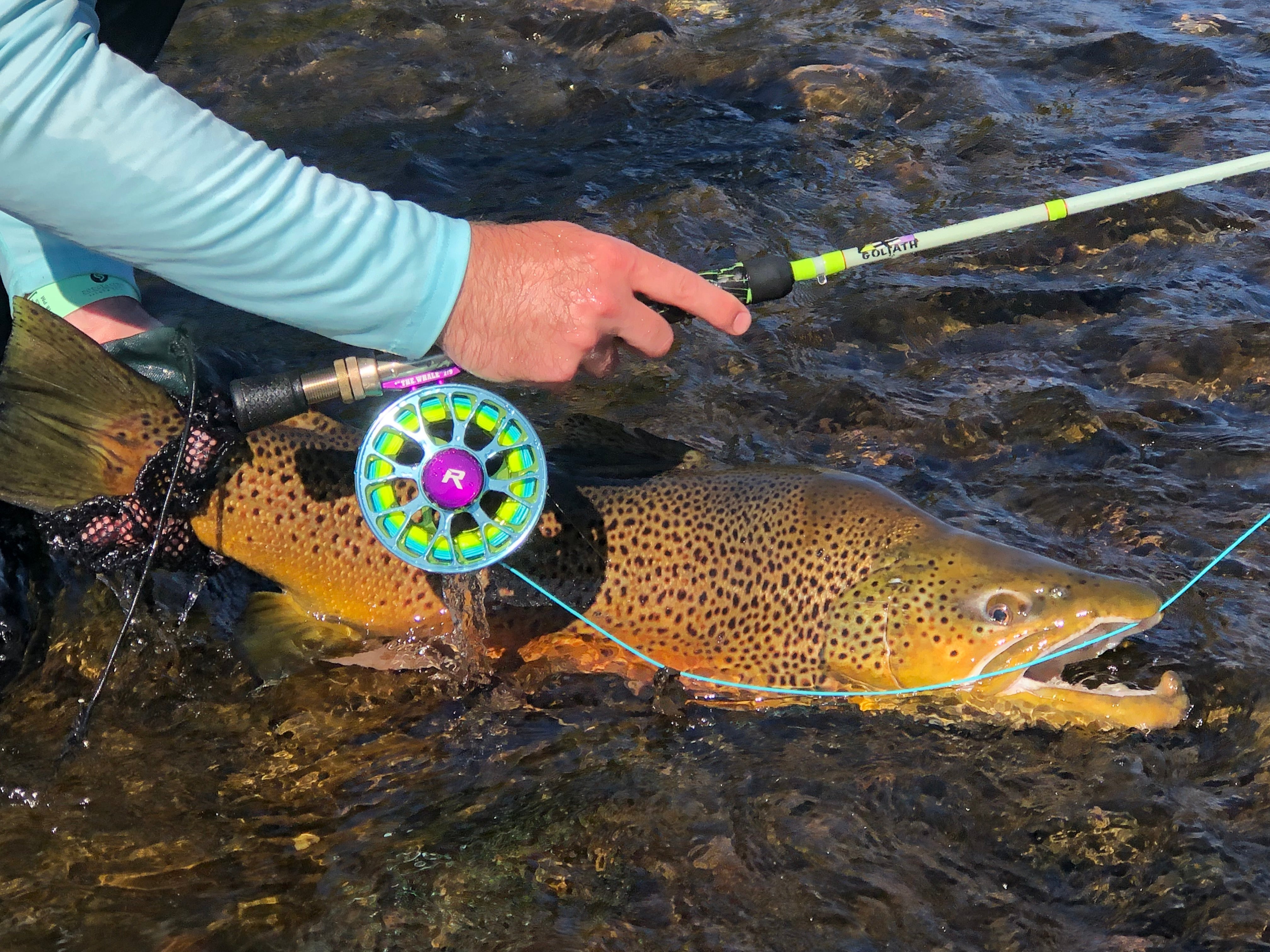

The best brown trout I have ever hooked on the Green River below Flaming Gorge ate a streamer that wasn't moving. I had thrown a weighted sculpin pattern across a seam, gotten a bad mend, and stood there for four or five seconds with my rod tip up, watching the fly tumble along the bottom while I untangled my line hand from a loop. Then the line came tight — not a jolt, more like the river had gotten heavier — and a fish I never got a good look at broke me off against a ledge.
I had been stripping streamers for fifteen years at that point, and a mistake taught me something I had refused to learn on purpose: a streamer that drifts like a dead thing is often more convincing than a streamer that swims like a healthy one. Big brown trout are opportunists first and hunters second, and a drifting, tumbling baitfish is the cheapest meal in the river.
Dead drifting a streamer means presenting a weighted baitfish or sculpin pattern with no strip and no swing, letting it tumble along the bottom at the exact speed of the current. It works because it imitates an injured or dislodged baitfish, and it is the most reliable streamer presentation in cold water below about 45 degrees, when trout will not chase a fast-stripped fly.
Key Takeaways
- A dead-drifted streamer imitates a wounded or displaced baitfish — the meal a big brown trout gets for free.
- Cold water is the trigger. Below roughly 45°F, a trout's willingness to chase collapses, but its willingness to eat something arriving at its face does not.
- Rig it like a heavy nymph, not like a streamer: floating line, a short stout leader, and enough tungsten to tick bottom.
- The take is subtle. You will feel weight building, not a grab — which is why most anglers drift right through it.
- Sculpins are the best model. They have no swim bladder and live on the bottom, so a sculpin out of position tumbles instead of swimming.
The March Float Where Dave Quit Stripping
A couple of Marches ago I floated a stretch of the lower Provo River with Dave, water at 42 degrees, flows a little up and the color of weak tea. He was throwing a big articulated streamer on a sink tip and working it hard — strip, strip, pause, strip — the way most of us learned to fish streamers from videos. Three follows in two hours, no eats. Classic cold-water streamer fishing: the fish show up behind the fly and then decline.
I talked him into a swap that he clearly thought was a downgrade. Off came the sink tip and the articulated fly. On went a floating line, a seven-and-a-half-foot leader of 1X, and a single size 6 tungsten cone-head sculpin pattern. The instruction was simple: cast it up and across like a nymph, mend, follow it with the rod tip, and do absolutely nothing else until it's below you.
He hated it for about twenty minutes. Then a brown trout (Salmo trutta) somewhere around nineteen inches ate the fly as it tumbled off the edge of a boulder shelf, and he set the hook on what he described as "a branch that got heavy." Two bends later he did it again. By the takeout he had four fish on a presentation with no action in it whatsoever, on an afternoon when the moving fly had gotten him three lookers.
Here's the thing: Dave is a good angler, and his instinct — make the fly look alive — is a correct instinct in July. In March it was the whole problem. A trout sitting in 42-degree water is running on a slow engine. Making him sprint after a meal is asking him to spend more calories than the meal is worth, and he knows the math better than we do.
Why Do Big Brown Trout Eat a Dead-Drifted Streamer?
Big brown trout eat a dead-drifted streamer because it looks like an injured, dying, or dislodged baitfish, which is the single highest-value, lowest-effort meal available to a large predatory trout. A healthy minnow can outmaneuver a trout. A tumbling one cannot. When a fish that size gets a chance at four inches of protein that isn't going anywhere, he takes it — and he takes it calmly, which is exactly why the take feels like nothing.
The biology backs this up better than most fly fishing theories. The primary baitfish in a lot of western trout rivers is the mottled sculpin (Cottus bairdii), and the USGS species profile for the mottled sculpin describes it as a benthic ambush predator that lives in gravel and rocky rubble in swift water and grows to about six inches. Sculpins have essentially no swim bladder. They cannot hover in the water column the way a shiner can — they sit on the bottom and dart from rock to rock, and when a heavy current or a hooked-up trout knocks one loose, it tumbles downstream in the exact drift you are trying to imitate.
Brown trout specifically hammer them. Researchers at Utah State University found that predation on native sculpin by introduced brown trout exceeded that by native cutthroat trout in the systems they studied. If you fish brown trout water with a sculpin population, you are fishing over predators that have already decided sculpins are worth eating. Your job is just to present one in a way that looks free.
The cold-water math
Trout are ectotherms, so their metabolism tracks water temperature. Somewhere around the mid-50s a brown trout will happily run down a fast fly. In the mid-40s he'll follow it and refuse. Below 40 he mostly won't leave his lie at all. What does not change is that he still has to eat, and he will still open his mouth for something that drifts to him.
That's the whole strategic argument for this technique. On the days when the stripped streamer produces follows and nothing else — late fall, winter, pre-runoff spring, and the first cold snap of autumn — the dead drift converts those same fish. It is not a beginner's fallback. It is the presentation that works when the exciting one has stopped working.
How Do You Dead Drift a Streamer?
Dead drift a streamer by rigging it like a heavy nymph and fishing it like one: cast up and across, mend immediately to kill any downstream belly, follow the fly with your rod tip at current speed, and keep just enough contact to feel weight without pulling the fly off its line. The single most common error is fishing it like a streamer — a mend too late, a strip "just to check," or a tight line that swings the fly out of the seam.
The rig I use
Floating line, full stop, for water under about five feet deep. The floating line lets me mend, and mending is the entire technique. I use a 7.5- to 9-foot leader in 0X to 2X — heavy enough to turn over a weighted fly and to hold a big fish in current, and short enough that I stay in contact. Fluorocarbon earns its money here, because it sinks and it survives dragging across rock.
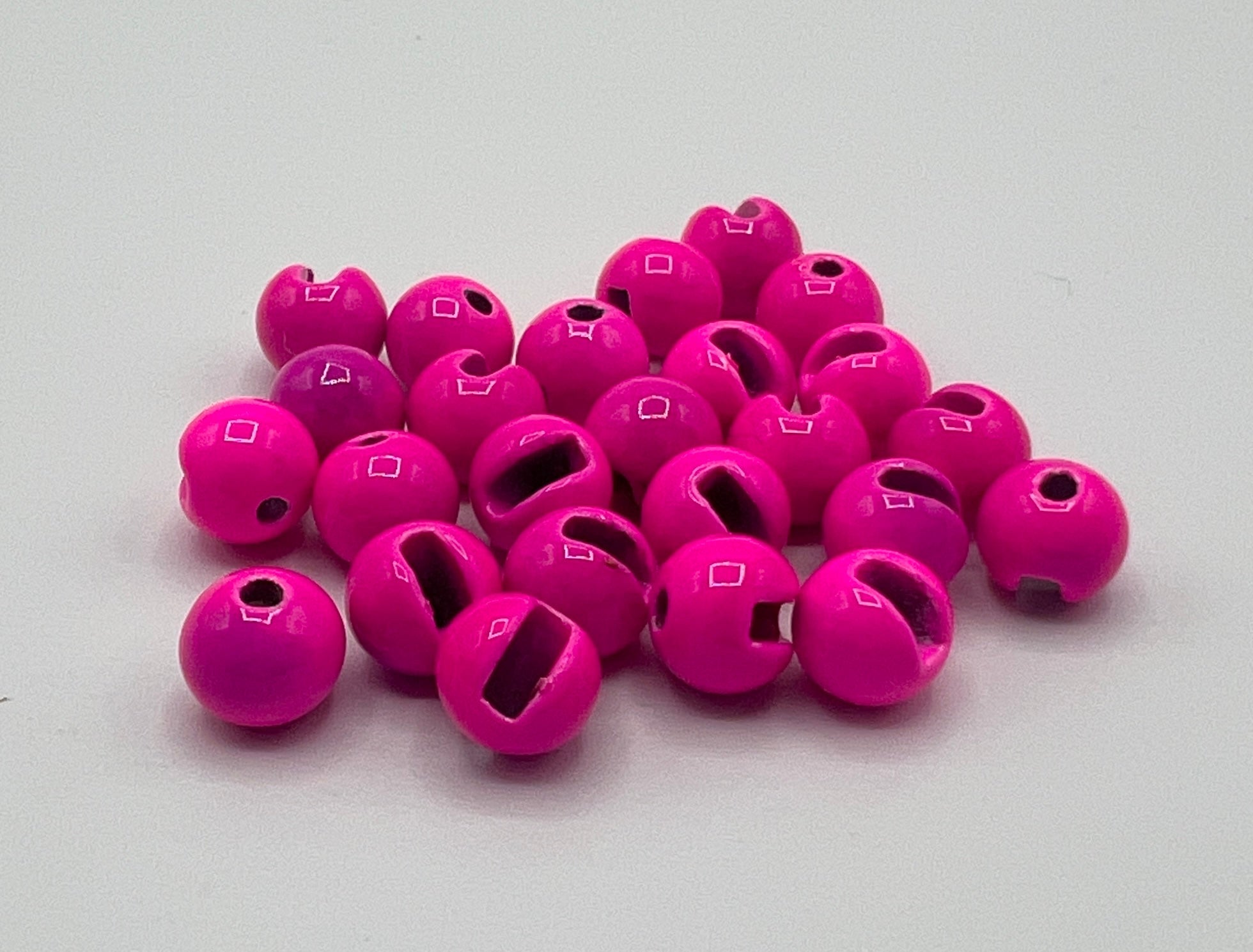
Weight goes on or in the fly, not on the leader, whenever I can manage it. A tungsten cone or a heavy bead gets the fly down and, more importantly, makes it fish nose-down with a jigging attitude on any slight hesitation. If I need more depth, I'd rather size up the fly's weight than hang split shot eighteen inches above it, because shot creates a hinge and kills the tumbling look. For deep runs, a sinking power leader off the floating line gets you down without giving up mendability.
Fly choice
Keep it smaller than your normal streamer. Size 4 to 8 is the range that both drifts convincingly and hooks well: a weighted sculpin pattern, a tungsten Woolly Bugger, a conehead bugger in olive, black, or rust. Big articulated flies are wonderful for stripping and terrible for dead drifting — too much material means too much water resistance, and they plane instead of tumble. If you tie, weight your dead-drift streamers heavier than feels reasonable and keep the dressing sparse.
The drift, step by step
Cast up and across, about 45 degrees, aiming five to ten feet upstream of the water you actually want to fish. That upstream slack is your sink time. Throw an immediate upstream mend the moment the fly lands, and then a second one before the line starts to belly. Track the fly downstream with your rod tip, holding the tip low and pointed at the line, and strip in only the slack that accumulates — never enough to move the fly.
Let the drift run all the way past you and into the hang-down below. A huge percentage of eats come at the end, when the fly finally comes tight and starts to rise off the bottom like a stunned baitfish getting swept out of a slot. Do not rip it out to recast. Let it hang for a three count. Then give it one slow six-inch lift and lower — and be ready, because that lift is the second-most-likely moment for a fish to eat.
Feeling the take
This is where anglers lose fish they never knew they had. A dead-drift streamer eat does not feel like a streamer eat. It feels like the fly got heavier, or like you brushed a rock that didn't let go. There's a reason for that: the trout ate something drifting toward him and simply closed his mouth on it — no chase, no crash. If your instinct is to wait for the yank, you will strip right through it.
If it feels like a branch getting heavier, set the hook. Blane Chocklett — the musky guide and fly designer behind the Game Changer — made this point on his episode of the Fly Fishing Insider Podcast, and it is the single best piece of strike-detection advice for a drifted streamer. Keep constant tension, treat any building resistance as a fish, and set immediately instead of waiting for a jolt. Predators often eat coming toward you rather than crashing the fly, so the anglers waiting for a hard strike are the ones stripping right through the take.
On the hookset itself, I use a low sweep downstream rather than a vertical lift. Lifting pulls the fly up and out of the fish's mouth; sweeping low and downstream drives the hook into the corner of the jaw, which is where you want it on a heavy fish. If you're fishing directly downstream at the end of the drift, a firm strip-set with the line hand beats any rod motion.
Dry Fly Tactics for Selective Trout (free eBook)
Cold water won't last forever. When the fish come back to the surface, this free eBook covers rise forms, pattern choice, and presenting to trout that have seen everything.
Get the free eBook →Where to Fish a Drifted Streamer
The dead drift shines in specific water, and knowing which water saves you hours. I'm looking for places where a dislodged baitfish would naturally end up, and where a big trout can sit still and let food come to him.
Boulder shelves and drop-offs. Any spot where the bottom falls away from two feet to five feet is a conveyor belt. Drift the fly over the lip and let it fall down the face. That fall is the eat.
Deep inside bends. The slow, deep gut of a bend collects everything the river carries. It's also the hardest water to fish with a stripped streamer, because you can't keep the fly deep and slow at the same time. A drifted fly lives there naturally.
Bank seams and undercut banks. Cast tight, mend hard, let the fly tuck under. A big brown holding under a cut bank in 40-degree water is not coming out to chase, but he'll take two steps sideways for something tumbling past his nose.
Below riffles and shelf drops. The first twenty feet of the pool below a riffle is where a sculpin that got rolled in the fast water ends up. That is prime real estate, and it's the spot I'd fish first on a strange river in winter.
Ledges and rock slots on tailwaters. On the Green River and other western tailwaters, the fly falling into a slot between two ledges will produce eats that no swung or stripped presentation ever gets.
Advanced Variations Once the Basic Drift Is Comfortable
The dead drift with a twitch at the top
Drift the fly clean for the first two-thirds, then give it one short twitch at the end. It is the same logic as a dry-dropper reset: the twitch is a trigger, not a retrieve. A trout that has been tracking a drifting fly without committing often eats within a half second of that twitch. One twitch, not four.
Streamer under an indicator
Purists cringe, but suspending a weighted sculpin under a big indicator is deadly in slow, deep winter water, and it solves the depth-control problem completely. Set the indicator so the fly rides about a foot off the bottom, and treat every hesitation as a fish. It's also the easiest version to teach a new angler, because the strike detection problem disappears.
Two-fly rigs
Hang an 18-inch dropper off the streamer's hook bend with a small nymph — a size 16 pheasant tail or a red midge larva — and you've built a rig that covers both the "big meal" and "easy snack" options. On tough days, most of my fish come on the little fly, which tells you something honest about how good the streamer bite really was. Tie the dropper tippet one size lighter so a snag costs you the nymph and not the sculpin.
The sink-tip version for deep water
When the run is over six feet deep or pushing hard, a floating line stops getting there. A floating line with a sinking tip, fished with the same up-and-across mend-and-follow rhythm, keeps the fly deep without turning the presentation into a swing. The trade-off is mending: you can't mend a sunk tip much, so make the sink happen with your cast angle instead. If you want the deeper mechanics of what a sink tip does to a fly, we covered it in what your sink tip is actually doing on the swing.
Color, profile, and when to size up
Olive, brown, and rust imitate sculpins in most western rivers; black is the best low-light and off-color choice; white shows up in muddy water. Profile matters more than pattern name, which is the point Blane Chocklett makes at length in our breakdown of why the Game Changer works — profile, movement, and vibration. For dead drifting, you want a broad-headed, sparse-tailed fly that rolls; save the long-bodied swimmers for stripping.
When to Dead Drift and When to Strip
Both presentations catch fish. Choosing correctly is mostly about water temperature, clarity, and how the fish have been answering. Here's the call sheet I actually use on Utah rivers:
| Conditions | Water temp | Presentation | Fly |
|---|---|---|---|
| Winter, low clear flows | Under 40°F | Dead drift only, deep and slow | Size 6–8 weighted sculpin |
| Pre-runoff spring, rising water | 40–46°F | Dead drift with a twitch at the end | Size 4–6 conehead bugger |
| Spring runoff, off-color | 44–50°F | Dead drift tight to banks | Size 4 black, heavy |
| Summer, warm and clear | Over 55°F | Strip or swing; dead drift at midday | Articulated or baitfish |
| Fall, pre-spawn browns | 48–55°F | Strip first, dead drift the refusals | Size 2–6 sculpin or bugger |
The honest limitation: a dead-drifted streamer covers far less water per hour than a stripped one. You are trading search speed for conversion rate. On a big unfamiliar river in warm water, stripping is the better use of the day. On a cold river where you already know where the fish live, the drift wins. Our roundup of seasonal streamer strategies lays out how that balance shifts month to month, and if you want the wider trophy-hunting picture, ten streamer tactics for trophy trout covers the whole toolkit.
Gear for Dead Drifting Streamers
You do not need a dedicated streamer setup for this. A 9-foot 6-weight with a floating line covers almost all of it, which is part of why I like teaching it — the drifted streamer is the one big-fish technique you can fish with the rod already in your hand. What matters is having heavy enough flies and a leader that won't fold. Everything below is live on the Fly Fishing Insider Podcast shop, and the full streamer fishing collection has the rest.


If you tie your own, load up on cone heads and tungsten beads in the fly tying section and weight these patterns heavier than you think you need. And if you'd rather just buy a winter box, the fly patterns collection carries buggers and sculpins in the sizes that matter here.
One more practical note before the questions: winter and pre-spawn seasons carry real regulatory differences by section — closures, gear restrictions, and tributary rules. Read the current Utah Division of Wildlife Resources fishing regulations for the water you're fishing, and handle pre-spawn and post-spawn brown trout carefully in cold water: keep them wet, skip the long photo, and let them recover facing into the current.
Frequently Asked Questions
What is a dead-drifted streamer?
A dead-drifted streamer is a weighted baitfish or sculpin pattern fished with no strip and no swing, drifting at exactly the speed of the current the way a nymph does. The goal is to imitate an injured or dislodged baitfish rather than a healthy swimming one. It is fished on a floating line with a short stout leader, cast up and across, mended immediately, and tracked downstream with the rod tip.
When should you dead drift a streamer instead of stripping it?
Dead drift a streamer when water temperatures drop below about 45 degrees, when fish are following a stripped fly without eating, or when you are fishing deep slow water where a stripped fly can't stay down. Stripping is better in warm water over 55 degrees and when you need to cover a lot of unfamiliar river quickly. A good rule: strip to find fish, dead drift to convert the ones that followed.
What size and type of streamer works best for dead drifting?
Size 4 to 8 weighted sculpin patterns, conehead Woolly Buggers, and tungsten-beaded buggers in olive, black, brown, or rust work best for dead drifting. Keep the fly sparse and heavy so it tumbles rather than planes. Large articulated streamers are poor choices for a dead drift because their bulk creates water resistance that holds them up in the current instead of letting them roll along the bottom.
How do you detect a strike on a dead-drifted streamer?
A strike on a dead-drifted streamer usually feels like weight building rather than a hard grab, because the trout eats a drifting fly calmly instead of chasing it down. Keep light contact through the drift and set on anything that feels heavier or hesitates, including things you assume are rocks. Many anglers use a large indicator in slow winter water specifically to make these subtle takes visible.
Can you dead drift a streamer under an indicator?
Yes, and it is one of the most effective winter presentations for big brown trout. Suspend a weighted sculpin or bugger about a foot off the bottom under a large indicator, mend to keep the drift honest, and set on any hesitation. The indicator solves depth control and strike detection at the same time, which makes it the easiest version of the technique to learn and a strong choice in slow, deep water.
What leader do you need for a dead-drifted streamer?
Use a 7.5- to 9-foot leader in 0X to 2X for a dead-drifted streamer, preferably fluorocarbon because it sinks and resists abrasion on rock. Heavier tippet turns over a weighted fly, holds big fish in heavy current, and lets you pull free from snags on the bottom, which you will hit constantly if you are fishing this technique correctly. For deeper water, a sinking power leader off a floating line adds depth without costing you the mend.
Go Let It Tumble
The next cold morning you're on the water and the streamer bite feels dead, try this before you give up and tie on a nymph: same rod, same floating line, one heavy sculpin, and a drift with absolutely nothing added to it. Cast up and across, mend twice, follow with the rod tip, and let it hang at the bottom of the swing. Set the hook on anything that gets heavy.
It's a quiet way to fish, and it takes some faith the first hour, because doing nothing feels like doing nothing. Then a brown trout you never saw closes his mouth on your fly, and you understand why it works. That's been my favorite kind of lesson since I started the Fly Fishing Insider Podcast — the one where the boring option turns out to be the right one.
If you get one on a drifted streamer this season, send it to us on Instagram at @flyfishinginsiderpodcast. Helping you catch any fish, any time, and anywhere is the entire point of this thing.
Join the FFIP Insiders
Get gear deals, trip intel, and tactics to help you catch any fish, any time, and anywhere — start with our free dry fly eBook.
Get the free eBook →Tight lines, everyone!