
There's a run on the Weber River that humbled me for three straight seasons. Chest-deep green water sliding over a shelf of rounded cobble, the kind of seam that looks like it should hold a brown trout under every rock. I fished it with good flies, good drifts, and a perfectly reasonable rig, and I caught almost nothing in it. Paul finally watched me work it one afternoon and said the thing I needed to hear: "Your flies are swimming, man. They're not fishing."
Here's the short answer. There are three deep nymphing techniques that actually get flies down in heavy water: put the weight on the fly with tungsten beads and jig hooks, put the weight on the leader with split shot or putty above the flies, or put the weight in the line with a sink tip or sinking leader. Pick one primary method per rig, then give the flies enough drift distance to reach bottom before they enter the strike zone.
He was right. My nymphs were riding two feet over the fish for the entire drift, then finally ticking gravel about the time the line came tight and swung out of the seam. I didn't have a fly problem. I had a depth problem, and depth is a problem you solve with physics, not with your fly box.
Key Takeaways
- Deep nymphing techniques break down into three levers: weight on the fly, weight on the leader, and weight in the line. Stacking all three at once is what makes a rig un-castable.
- Tungsten is roughly 70 percent denser than lead and more than twice as dense as brass, which is why a 3.5 mm tungsten bead out-sinks a much larger brass one.
- Depth is mostly a math problem: sink rate versus current speed. In fast water you need to cast far enough upstream that the flies arrive at the fish already on bottom.
- Split shot buys you depth cheaply but costs you contact and casting quality. It belongs on big, deep, slow-to-medium water, not on a tight-line rig you're trying to feel.
- If you aren't ticking bottom occasionally, you are not deep enough — and no fly change will fix that.
Why Your Nymphs Are Fishing the Wrong Two Feet
Before we get to the three methods, it's worth being honest about what's actually going wrong on most drifts, because it's almost never a shortage of tungsten.
A trout holding in heavy water has picked its lie for one reason: the ratio of calories available to calories spent. It sits in the cushion behind a rock or in the slower band of water right along the bottom, and it lets the current deliver food. It is not interested in climbing two feet of fast water to intercept a size 16 pheasant tail. That's not stubbornness, it's arithmetic — the swim costs more than the bug is worth.
Which means the game isn't "get some weight on there." The game is: your fly needs to be in the bottom foot of the water column, for the part of the drift that passes over the fish. Those two conditions are different, and most anglers only satisfy the first one — eventually, too late, right at the end of the swing.
Here's an analogy that made this click for a client of mine. Think of your drift like a plane landing. Everybody focuses on how heavy the plane is. What actually matters is the glide path: where you start your descent relative to the runway. Start your descent over the runway and you're going to overshoot it no matter how heavy the aircraft is. Deep nymphing in heavy water is the same problem — you have to start the sink well upstream of the target.
Fix the depth before you touch the fly box. Ryan Jarvis, the Monic Fly Lines rep and streamer and casting specialist, made this point on the podcast better than I could: a trout in current isn't going to burn calories climbing two feet for your nymph, so if the fly never reaches the zone, every pattern change you make is meaningless. His field check is beautifully simple — you should be ticking bottom roughly every eight to ten casts. Only once you're passing that test is a change in size, color or profile worth trying. Listen to the full episode with Ryan for the casting side of it too.
Method One: Weight on the Fly
Weight on the fly means the mass lives in the pattern itself — a tungsten bead, a jig hook, lead-free wire under the body, or all three. This is my default for anything I'm fishing on a tight line, and it's the method I'd teach first.
The reason is contact. When the weight is at the hook, every twitch, tick, and stop telegraphs straight up the tippet to your hand and your sighter. Put an inch of split shot a foot above the fly and you've inserted a hinge between you and the bite. You'll still catch fish. You'll miss some too.
Why tungsten and not brass. Tungsten has a density right around 19.3 grams per cubic centimeter. Brass sits near 8.5, and even lead only reaches about 11.3. That means a tungsten bead is more than twice as heavy as a brass bead of the same size, and about 70 percent heavier than the same volume of lead. In practice, you can fish a size 16 nymph that sinks like a size 10 — small profile, big sink rate, which is exactly the combination selective trout in fast water reward.
Why jig hooks matter. A jig hook with the bead slotted at a 60- or 90-degree eye rides point-up. That does two things: it dramatically cuts snagging on a cobble bottom, which means you can fish genuinely deep instead of "deep enough not to hang up," and it puts the weight at the front of the fly so it dives nose-first rather than falling flat. On the Provo River in high water I'll fish a 3.8 mm slotted tungsten bead on a jig hook and hang up maybe a third as often as the same weight on a standard hook.
Here's the bead sizing I actually use, matched to hook size and water:
| Hook size | Tungsten bead | Best water |
|---|---|---|
| 18–16 | 2.0–2.5 mm | Shallow riffles, winter tailwater, slow clear flats |
| 16–14 | 2.8–3.3 mm | Standard riffle and run water, 2–4 ft deep |
| 14–12 | 3.5–3.8 mm | Fast runs, 3–5 ft, moderate to heavy flow |
| 12–8 | 4.0–4.6 mm | Heavy pocket water, runoff, deep buckets |
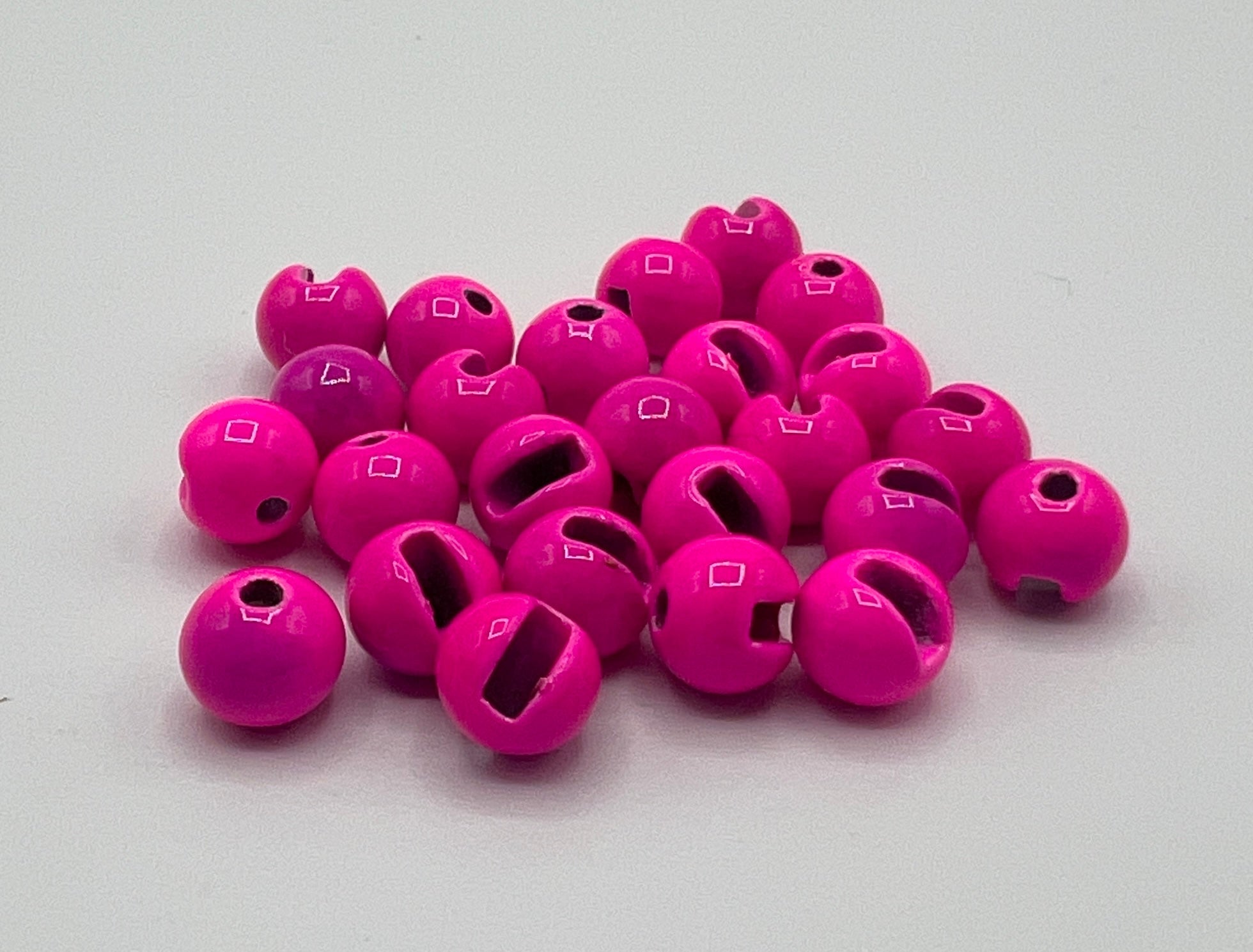
The mistake people make here is treating bead size as a fly-tying detail. It isn't — it's your depth control. I carry the same three patterns in three bead weights each, and I change the weight far more often than I change the pattern. If you tie your own, buying a couple of jars of slotted tungsten beads in different sizes will do more for your nymphing than any new material will.
That Ventures Fly Co. breakdown is a good visual of how the depth decision cascades through the rest of the rig. Watch it with the bead chart above in front of you — the sizing logic lines up.
Method Two: Weight on the Leader
Weight on the leader means split shot, tungsten putty, or a weighted sleeve crimped or molded onto the tippet above your flies. This is the oldest trick in the book and the most misunderstood.
Where it wins: big, deep water where you need a lot of mass in a hurry and you don't want to fish a fly the size of a pinky. A 6-foot bucket on the Green River in spring, or a deep slot on a freestone during runoff, is exactly the place where two or three small shot solve a problem that no reasonable bead can.
Where it loses: contact and casting. Shot on the leader hinges, it tangles, it flings, and it puts a dead weight between your rod tip and your fly. It's also the reason a lot of indicator rigs feel "mushy" on the take.
Placement. I put shot 8 to 12 inches above my point fly, or just above the top fly on a two-fly rig. Closer than eight inches and the shot kills the fly's drift and the fish feel it; farther than twelve and the fly floats up off the bottom in the current. On a two-fly rig I'll sometimes put the shot between the flies, which sinks the point fly hard and lets the dropper ride just above it in the feeding lane.
Several small instead of one big. This one is worth internalizing: two or three small shot spread across four inches of tippet sink about the same as one large shot, but they cast better, hinge less, and — importantly — they bounce over cobble instead of wedging in it. One fat BB shot is a snag looking for a place to happen. This is a habit I picked up from the bounce-rig crowd, and it transferred straight over to my deep nymphing.
On lead. Check your regulations before you add any weight, because some waters restrict added weight, and some restrict lead specifically. The Utah Division of Wildlife Resources fishing guidebooks spell out the rules on the water I guide, and every state publishes something equivalent. Tungsten putty is a clean alternative where lead is restricted, and it has the side benefit of being reshapeable — you can add a pinch or peel one off without cutting your tippet.
The Orvis walkthrough above covers the mechanics of crimping shot without crushing your tippet, which is the single most common way anglers break off on the first good fish of the day. If you take one thing from it, take the part about seating the shot gently and checking the line afterward. I've written more about the trade-offs in fly fishing weights: pros, cons, and applications if you want the full comparison.
Dry Fly Tactics for Selective Trout (free eBook)
When the heavy water finally lays down and fish start looking up, this is the other half of the playbook — free, no strings.
Get the free eBook →Method Three: Weight in the Line
The third of the deep nymphing techniques is the one most trout anglers skip: put the weight in the line itself, with a sink tip, a sinking poly leader, or a full sinking line.
I know — that sounds like streamer gear. And it mostly is. But there's a specific situation where it's the right answer for nymphs, and it's worth knowing: big, deep, relatively even water where you're swinging or slow-drifting weighted nymphs and soft hackles through a long run, and where you need the entire rig held down rather than just the fly.
Think of a wide tailwater flat running four to six feet deep at a steady two feet per second. With shot, your leader belly rides up in the surface current and lifts the flies no matter how much weight you pile on. With a five-foot sinking poly leader, the connection point itself is below the fast surface layer, and the whole system fishes level. That's a different presentation, not just more weight.
A few honest caveats. You give up bite detection compared to a tight-line rig with beads. You give up the ability to change depth quickly. And you absolutely need to know your sink rates — a type 3 poly leader and a type 6 behave nothing alike. If you want to go deeper on the mechanics, our breakdowns of sinking fly lines and what the details actually mean and poly leader versus standard leader are the right place to start.
Where I use it in practice: late fall on the Green River below Flaming Gorge with a heavy soft hackle and a poly leader, swinging the last third of a long run after I've nymphed the head of it. It's the difference between fishing a run and fishing all of a run.
How Far Upstream Should You Cast to Get Your Nymphs Deep?
You should cast far enough upstream that your nymphs have finished sinking before they reach the fish — which in fast water usually means two to four times the target depth in horizontal distance. The faster the current and the deeper the lie, the farther upstream your cast has to start.
The logic is simple even if the exact numbers aren't. Two things are happening at once during the sink: your fly is falling, and the current is carrying it downstream. Sink time multiplied by current speed equals how far downstream the fly travels before it gets to depth. That downstream distance is your glide path, and if you don't build it into the cast, you never get a fishing drift — you get a sinking drift followed by a swing.
Here's the working chart I use as a starting point. These are field rules of thumb from Western freestone and tailwater water, not lab numbers, and you should adjust them the moment your flies start ticking bottom too early or too late.
| Current speed | Target depth | Upstream cast distance | Typical rig |
|---|---|---|---|
| Slow (walking pace or less) | 2–3 ft | About 1.5× the depth | 3.0 mm bead, no shot |
| Moderate riffle | 3–4 ft | About 2× the depth | 3.5 mm bead, or 3.0 mm plus one small shot |
| Fast run | 4–5 ft | About 3× the depth | 3.8–4.0 mm bead on a jig hook |
| Heavy pocket water / runoff | 5–6 ft+ | 3–4× the depth | 4.0 mm bead plus two small shot, or a sink tip |
The practical version of this, standing in the river: pick the rock or seam you think holds a fish, then look upstream of it and find the spot where your fly needs to enter the water. That entry point, not the fish, is your target. Once I started aiming at the entry point instead of the lie, my hookup rate in fast water changed more than it did from any rig adjustment I've ever made.
And calibrate constantly. Ticking bottom is your altimeter. If you go twenty casts without touching a rock, add weight or lengthen your lead. If you're hanging up every other drift, take weight off — you're plowing, not drifting, and a plowed fly doesn't look like food. The high-stick nymphing approach to pocket water is the delivery method I default to when the lead distance gets short and the water gets violent.
Which Deep Nymphing Method Should You Use?
Use weight on the fly for anything you're fishing on a tight line in water under about five feet deep, weight on the leader for indicator rigs in deep buckets and runoff, and weight in the line for long even runs where you're swinging nymphs or soft hackles. TJ and I argued about this for an entire drive to the Logan River before we realized we were both right about different water.
| Weight on the fly | Weight on the leader | Weight in the line | |
|---|---|---|---|
| Best for | Tight-line and euro rigs, pocket water, anything under 5 ft | Indicator rigs, deep buckets, runoff, 5 ft and deeper | Long even runs, swung nymphs and soft hackles |
| Bite detection | Excellent | Fair | Poor to fair |
| Castability | Good | Poor with heavy shot | Good, but it's a different stroke |
| Depth change speed | Fast (swap a fly) | Fast (add or remove shot) | Slow (change the leader or line) |
| Snag rate | Low on jig hooks | High with one big shot | Moderate |
The rule I've settled on after a lot of trial and error: start with weight on the fly, add weight on the leader only when the fly alone can't get there, and go to weight in the line only when the presentation itself needs to change. That order keeps your contact as good as the water allows.
Four Things That Keep Your Nymphs Shallow
Even with the right weight, these four habits will hold your flies off the bottom all day.
Too much slack at the start of the drift. If your line lands in a pile and the current pulls it tight before the flies have sunk, that tightening lifts the flies. Land the cast with a tuck or a stop so the flies enter first and the leader follows, and the whole sink happens in a straight line.
Indicator set too shallow. The single most common indicator error I see. Your indicator should be set at roughly one and a half to two times the water depth, not at the depth itself, because the current bows the leader. Set it at four feet in four feet of water and your flies are riding at two.
Tippet that's too thick. Diameter creates drag in the water column just like it does in the air. Dropping from 3X to 4X on the same fly measurably improves sink rate in fast water. Fluorocarbon helps too — it's denser than nylon and cuts the film better.
Mending after the flies are down. A big upstream mend mid-drift yanks the rig toward the surface. If you need to mend, do it early and do it with a reach cast on the delivery instead. The goal is one continuous descent, not a sawtooth.
If you want to go further on this whole subject, nymph depth and presentation is the companion piece — it covers the drift-quality side of the same coin.
What I Actually Carry for Deep Water
You don't need much of a weight system, but you do need it organized, because fumbling for the right shot in fast water is how you end up fishing the wrong depth by default.
My deep-water kit is four things: a box of jig-hook tungsten nymphs in three bead weights, a split shot dispenser with two or three small sizes, a tool to open shot without crushing tippet, and a spool of 4X fluorocarbon. That's it. Everything else is optional.
On flies, I'd start with two shapes rather than twenty patterns. A big rubber-legged stonefly nymph covers the "something meaty on the bottom" job in heavy water, and a slim tungsten perdigon covers the "gets down fast and doesn't spook anybody" job. Between those two shapes, in a couple of sizes each, you can fish almost any heavy run in the West. Browse the full fly patterns collection and the fly pattern assortments if you'd rather buy a spread than tie one, and the tools collection has the shot and the pliers.


If you tie, a jar of slotted tungsten beads at $5.99 is the cheapest depth upgrade in fly fishing — same patterns you already tie, three different sink rates.
One More Thing: Read the Flow Before You Pick the Weight
This is the habit that separates anglers who adapt from anglers who guess. Before I drive to the river I pull up the gauge. The USGS real-time water data for Utah tells me the cubic feet per second on every major stretch, and that number determines my starting weight before I've seen the water.
On the Provo, for example, there's a world of difference between 200 cfs and 700 cfs. At the low number I'm starting with a 3.0 mm bead and no shot and fishing 5X. At the high number I'm starting with 4.0 mm on a jig hook, two small shot, and 3X, and I'm fishing the soft edges instead of the middle. Same river, same fish, completely different deep nymphing setup — and I knew which one to rig in the truck instead of burning an hour figuring it out.
Frequently Asked Questions
How deep should my nymphs be in fast water?
Your nymphs should be in the bottom foot of the water column for the portion of the drift that passes the fish. In heavy water, trout hold in the slower boundary layer right along the bottom and will not climb far to intercept a fly. The practical field test is that you should feel your flies tick the bottom roughly every eight to ten casts — often enough to prove you're down, not so often that you're plowing.
Is it better to use split shot or heavier flies?
Heavier flies are better when you want contact and bite detection, which covers most tight-line and euro nymphing. Split shot is better when you need a lot of mass fast in water deeper than about five feet, or when you want to keep a small fly profile while still reaching bottom. My rule: start with weight on the fly, and add split shot only when the fly alone cannot get there.
How much heavier is tungsten than brass?
Tungsten has a density around 19.3 grams per cubic centimeter, versus about 8.5 for brass — so a tungsten bead is more than twice as heavy as a brass bead of the same diameter. Tungsten is also denser than lead, which sits near 11.3. That density is why a small tungsten-beaded nymph can sink like a much larger fly while keeping a natural profile.
Where exactly should split shot go on a nymph rig?
Place split shot 8 to 12 inches above your point fly, or just above the top fly on a two-fly rig. Closer than eight inches and the shot deadens the fly's movement and the fish feel it on the take; farther than twelve and the fly rides up off the bottom in the current. Use two or three small shot spread over a few inches rather than one large one — they cast better and bounce over cobble instead of wedging in it.
Do I need a sink tip to nymph deep water?
You don't need a sink tip for most deep nymphing. A sink tip or sinking poly leader earns its place on long, even runs four to six feet deep where the surface current lifts your leader belly no matter how much weight you add, and on swung nymphs and soft hackles. For pocket water and tight-line work, weight on the fly is faster to adjust and gives far better bite detection.
Why do my nymphs hang up constantly when I add weight?
Constant snagging usually means one of three things: a single large split shot instead of several small ones, standard hooks instead of jig hooks, or simply too much weight for the current speed. Switch to point-up jig hooks with slotted tungsten beads, break one heavy shot into two or three small ones, and remove weight until you're touching bottom every eight to ten casts rather than every drift.
Does tippet diameter really change how fast a nymph sinks?
Yes. Tippet diameter creates drag in the water column, and thinner tippet lets the same fly sink measurably faster in current. Dropping from 3X to 4X is a real depth adjustment, not a cosmetic one. Fluorocarbon adds to the effect because it is denser than nylon and cuts through the surface film more cleanly — which is why I fish fluoro tippet on almost every deep nymphing rig.
Go Find the Bottom
Here's your homework, and it's the assignment that fixed that Weber River run for me. Pick one piece of heavy water you've never done well in. Fish it for thirty minutes with your normal rig and count how many times you feel the bottom. Then add weight — a bigger bead, or a shot — and lengthen your upstream cast by a third, and count again.
If the second number is bigger, you just found the two feet of water you'd been missing. If your catch rate goes up along with it, you've learned the lesson permanently, which is a much better teacher than I am.
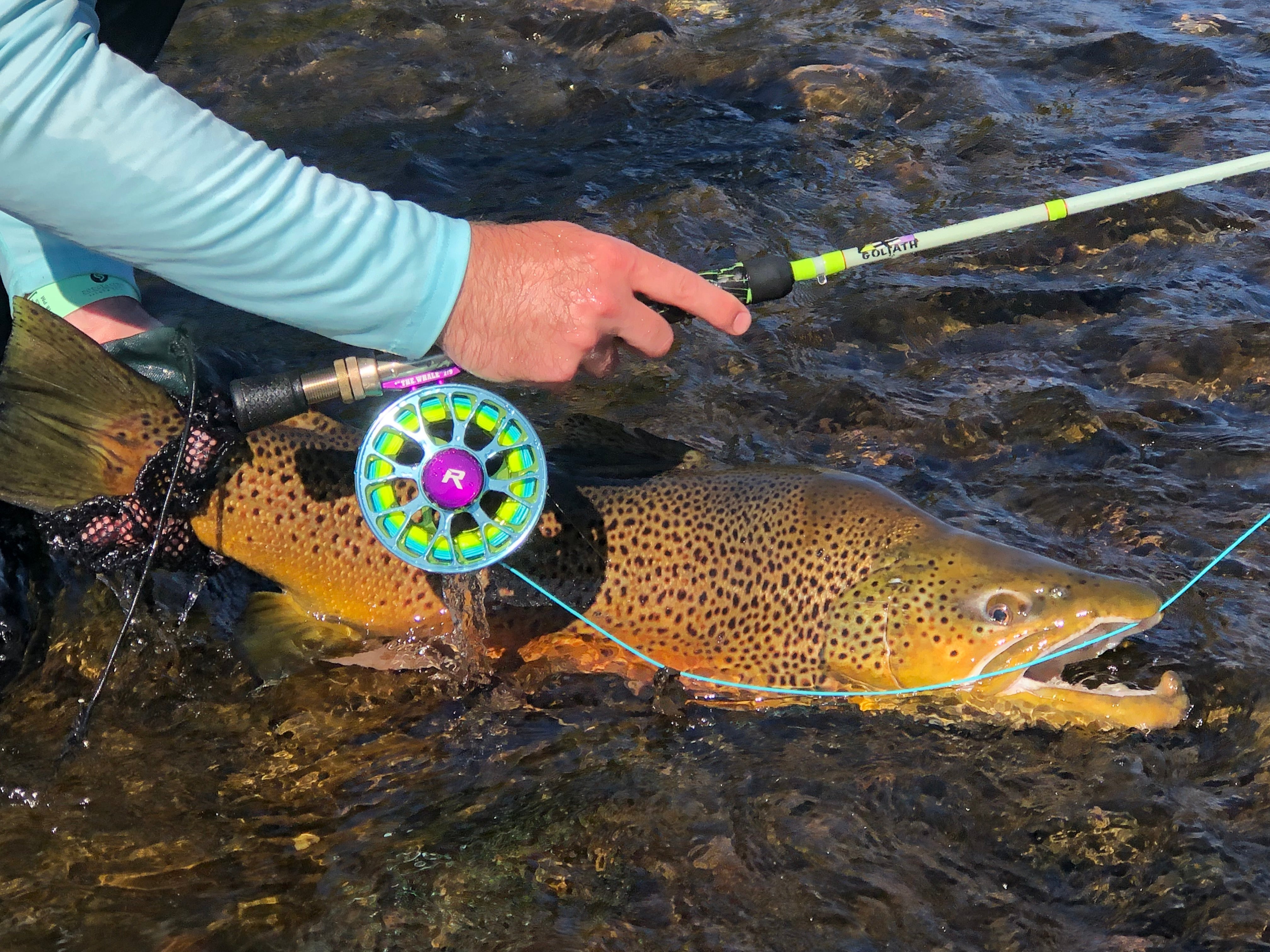
That run on the Weber, by the way, gave up a 21-inch brown trout (Salmo trutta) the first afternoon I fished it with a 4.0 mm bead and a twenty-foot lead. Same run. Same flies I'd been throwing for three seasons. The only thing that changed was how deep they were, and when.
If you want more of this from the people who fish rivers for a living, the river and freestone fly fishing tips from podcast guests roundup is where a lot of these habits came from in the first place. Come tell me how it goes — tag @flyfishinginsiderpodcast with the fish you pull out of the run that used to beat you. That's the whole point of this thing: helping you catch any fish, any time, and anywhere.
Join the FFIP Insiders
Get gear deals, trip intel, and tactics to help you catch any fish, any time, and anywhere — straight to your inbox.
Get the free eBook →Tight lines, everyone!