
Caddis flies are a staple in the diet of trout and many other freshwater fish. These aquatic insects, found in streams, rivers, and lakes worldwide, offer fly anglers numerous opportunities to mimic nature and hook up with some beautiful fish. Here are pro tips on how to fish a caddis fly effectively.
Before we get started, let's talk about identification and identification of the hatch. If you haven't already, I highly suggest that you read How to Identify a Caddis and Hatch.
Caddis Life Cycle
The caddis fly life cycle consists of four stages which are paramount to understand when thinking about how to fish a caddis: egg, larva, pupa, and adult. Each stage presents a unique opportunity for the angler. Knowing when and how to imitate each stage can greatly increase your success.

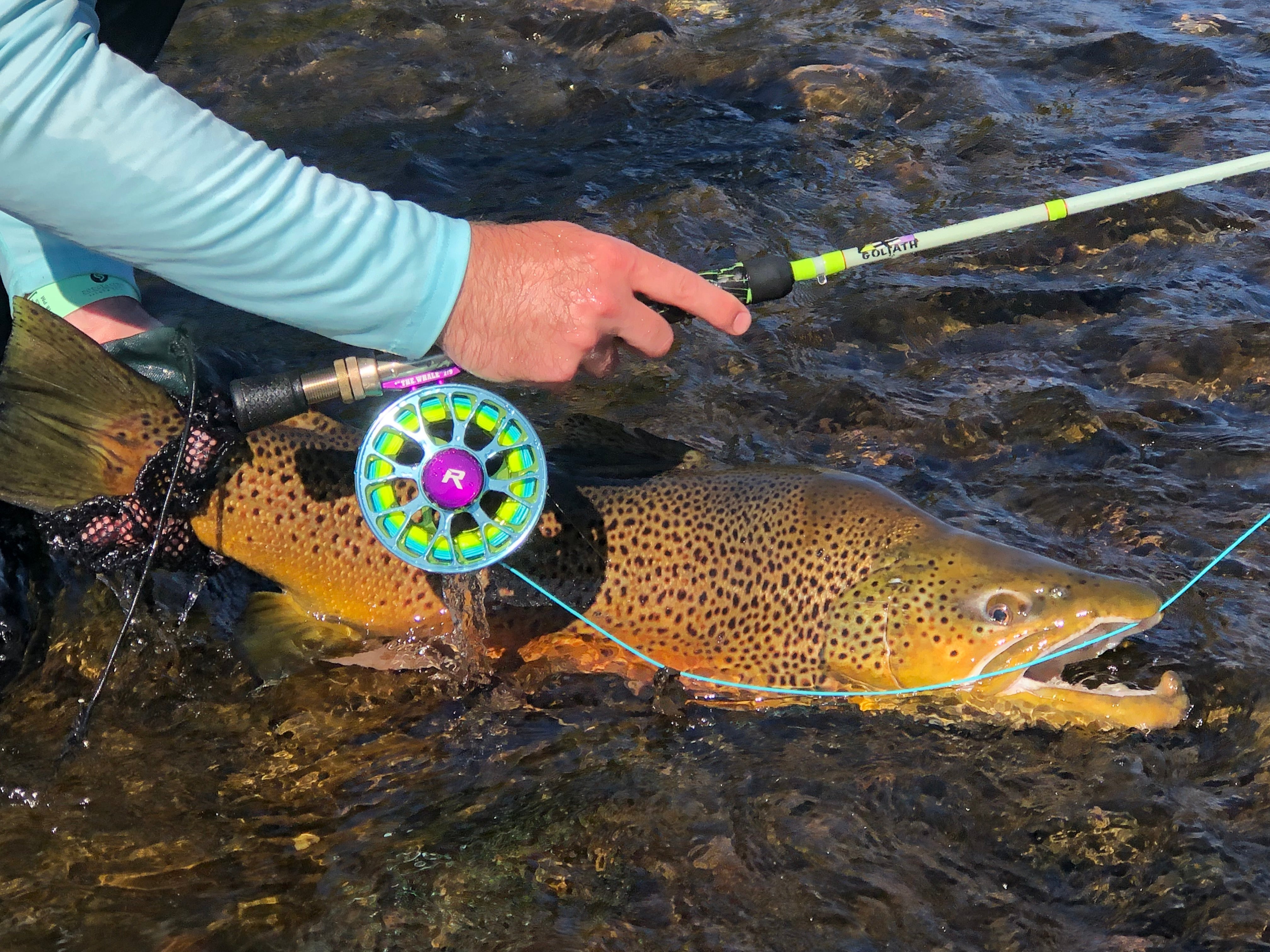
This boat of a brown was taken on a soft hackle imitating a rising caddis.
Choosing the Right Imitation
Critical to all of these phases is selecting the core items of silhouette, size, and color when looking to match a hatch. More importantly, it can often be getting the fly in front of the fish. This is especially important when fishing underwater with nymphs.
Larvae: This is the nymphal stage. Caddis larva patterns like the Green Rock Worm or Czech-style nymphs are effective. The color can vary from green to tan, so observe the local varieties.
Pupa: This stage sees the caddis encased in a cocoon, rising from the stream bed to hatch on the surface. Having a perfect fly is less important than knowing the stage and how to fish the caddis representation for it.
Adult: Once the caddis reaches the surface, it quickly sheds its pupal shuck and becomes an adult. Dry fly patterns like the Elk Hair Caddis or CDC Caddis mimic this stage effectively.
How to Fish a Caddis Presentation
When presenting flies, there are techniques for each phase when thinking about how to fish a caddis pattern. In simplification, I'm going to cover nymphing and dry fly fishing. If you want to learn the intricacies of nymphing you should read Understanding Nymphing and Wet Flies. In this article, I'm going to keep it light on technique and provide more of a direction.
Larva: Use a dead drift technique. Cast upstream and let your fly drift down naturally with the current. Use a weighted fly or split shot to get your imitation down to the bottom. Indicator nymphing or a form of tight lining is typical.
Pupa: As the pupa rises to the surface, employ an active retrieve. A combination of short, twitchy pulls and pauses can mimic this rising behavior. Another technique is the "Leisenring Lift," where you allow the fly to drift downstream, and as it reaches a spot where you suspect fish, slowly lift your rod tip. This is a common swinging technique for wet flies. Listen to this tip on wet flies.
Adult: Cast the dry fly upstream and let it drift down over fish-holding spots. It's vital to ensure a drag-free drift. If the caddis are actively fluttering on the surface, occasionally twitch the rod tip to imitate this behavior. Try using a tag-based leader where you have a dry on the upper tag and a weighted pupating hackled emerger on the bottom. Lift your rod tip until the fly flutters or daps on the line as the weighted fly acts as an anchor. This can be one of the most effective ways to entice a trout to a surface eat.
Observe and Adjust When Learning How to Fish a Caddis
When learning how to fish a caddis, always keep an eye on the water. If you notice trout rejecting your fly, it may be time to switch patterns or adjust your presentation. Maybe the fish are taking emergers just below the surface, or they might be keying in on a specific size or color of caddis. I discussed this in How to Identify a Caddis and Hatch.
Fish the Hatch
During a caddis hatch, the action can be fast and furious. When I was first learning how to fish a caddis, I can remember seeing a blanket of caddis so thick that you couldn't tell what was real or not while on the Teton River in Idaho. At the same time they were so prolific in the air that you had to cover your mouth and ears to try and keep their annoying presence out of every orifice. In situations like that, gather yourself and focus on areas with good surface activity. In this case they weren't taking dry flies. Remember, fish might also take pupa just below the surface, especially when adults are splashing and hitting the surface hard.
The Evening Dance
Caddis often return to the water in the evening to lay eggs. This is a fantastic time to go when learning how to fish a caddis. Try starting with an adult caddis pattern and pupa dropper. The "skittering" technique, where you actively twitch and move your fly across the surface, can be especially effective. X-Caddis patterns are a fantastic solution for this. Another is the Corn Fed Caddis often popularized by USA Fly Fishing Team member, Lance Egan.

Late night finding a flooded hole from high water got us into a handful of these nice browns on small elk hair caddis.
Equipment and Tackle When Learning How to Fish a Caddis
Depending on the average fish size, water size, and so on, a 2 to 5-weight fly rod with a floating line is ideal for caddis imitations. I prefer a 4-weight dry fly rod and a 3-weight euro nymphing rod. For dry flies, a tapered leader ending in 5X or 6X tippet is perfect. For nymphing, consider a longer leader and possibly a heavier tippet. Euro-specific lines and extra-long leaders with line indicators when European-style nymphing is ideal. Additionally, this can be especially deadly with caddis nymph patterns. They are often heavy, and the pupa is great with slight lifts throughout the drift to give them that rising action.
In the shop: the Moonlit Performance WF Taper Floating Fly Line, Stone Creek Mono Tippet, and the JHFLYCO Euro Nymph Combo 9'0" 4WT if you want a dedicated nymphing setup.
Caddis flies to carry


Cover the adult stage with the Goddard Caddis Dry Fly and the Hemingway Caddis. For a broader spread that covers the hatch across a season, the Elk Hair Caddis Assortment and the Fly Rod Chronicles Dry Fly Assortment are both good starting points. For the subsurface stages, the Jigged Caddis Larva and Braided Caddis Pupa handle larva and pupa, and the Basics Collection Bead Head Nymph Assortment rounds out the box.
Tying your own? The Barbless Caddis Pupa and Larva Hook 9254 is shaped specifically for these patterns. Browse all fly patterns and assortments.
Learning how to fish the caddis fly requires a blend of observation, understanding, and technique. By focusing on the caddis' life cycle and adapting your approach, you can enhance your success and enjoy the rich rewards of fly fishing. Remember, nature is full of nuances. The more closely you can imitate the natural behavior of the caddis, the better your chances of fooling those wary trout. Learning takes repetition of good practice. When learning how to fish a caddis fly always consider the technique, phase, and observations that are occurring to maximize your learning curve. Good luck out there!
Learn a ton more by reading these two articles.
OSSCP for Perfect Fly Selection
Systematizing your Cast for a Perfect Drift
Download the Dry Fly Tactics for Selective Trout eBook

The trip you keep talking about — go take it
Fly fishing trips you'll never forget, planned with Frontiers Travel. Don't wait.
Book a Trip
By Christian Bacasa
Host of the Fly Fishing Insider Podcast
ffipodcast.com
@flyfishinginsiderpodcast
@dupeafish
Watch on YouTube
Fly Fishing Insider Podcast has a referral partnership with Frontiers International Travel. If you book after being introduced through us, we may receive compensation at no additional cost to you.