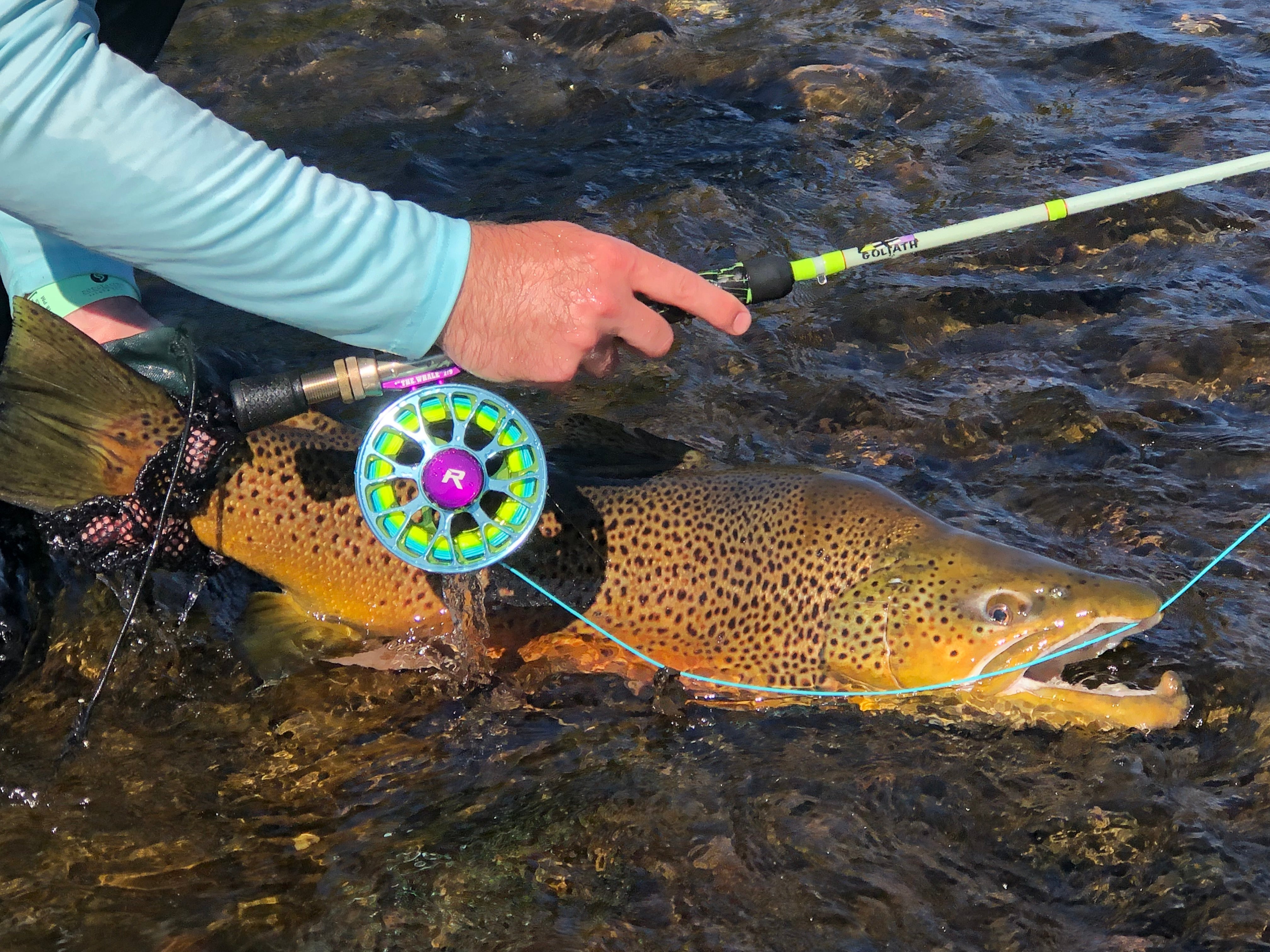

The first time I fished a mono rig next to a buddy running a standard indicator setup, I didn't say a word about it. We were on the Middle Provo in late October, working the same braided run above a bridge pool with essentially the same two flies tied on. Forty minutes in, I'd landed four brown trout and he'd landed one. He waded over, looked at my reel, and said, "Where's your fly line?" It was still on the spool. That's the whole argument for the mono rig in one sentence — and it's where the mono rig versus fly line nymphing debate usually goes off the rails, because people hear "no fly line" and assume gimmick instead of a physics problem with a specific solution.
The short answer: a mono rig drifts better than fly line for nymphing inside about 25 feet because monofilament has a fraction of the mass, so almost no line sags onto the water to drag your flies. Fly line still wins past 30 feet, in hard wind, and any time you need to mend a long indicator drift or fish dries. Most anglers need both, on separate spools.
Key Takeaways
- Mass is the whole story. Under the AFFTA standard, the first 30 feet of a 5-weight fly line weighs 140 grains. Twenty feet of 20-pound monofilament butt section weighs a tiny fraction of that — which is why one sags and one doesn't.
- The mono rig wins the close game. Inside roughly 25 feet, contact nymphing with a mono rig gives you direct depth control, instant strike detection, and a drift with no line belly to fight.
- Fly line wins the long game. Past 30 feet, in wind, on big open flats, and for any presentation that needs a real mend or a delicate dry, fly line is still the better tool and it isn't close.
- You don't have to choose forever. A second spool loaded with a mono rig costs less than a night in a fishing town and converts your existing rod in about 90 seconds.
- Rod length matters more than rod price. A 10-foot rod buys you two or three more feet of usable tight-line reach than a 9-footer, and that reach is the mono rig's entire operating range.
I'm Christian Bacasa, host of the Fly Fishing Insider Podcast, and I've guided a lot of Utah water with both systems rigged and ready. Here's my honest read on mono rig versus fly line nymphing: where each one genuinely drifts better, where the internet oversells the mono rig, and how I decide before the first cast.
The Day Todd Stopped Blaming His Flies
My buddy Todd is one of the most stubborn fly changers I know. Give him a slow hour and he'll go through nine patterns before he'll consider that the problem might not be the bug. Last spring we hit the Weber below Rockport on a cold, bright morning, and he did exactly that — pheasant tail, Frenchie, black perdigon, something purple, back to the pheasant tail — while his indicator rode a fat belly of fly line that curled downstream of the bobber on every drift.
I finally asked him to do one thing before he changed flies again: watch the fly line between his rod tip and the indicator for three drifts. On drift number two he said, out loud, "Oh. That's ugly." The line was hitting the fast seam between him and the bucket he was fishing, getting shoved downstream, and pulling the indicator — and therefore the nymphs — a half step ahead of the current before the flies ever got to depth. He'd been fishing a fly that never reached the fish, and blaming the fly.
That is the problem the mono rig was built to solve. Not fly selection. Not hook sharpness. Not some mystical European technique. Just the simple, boring, physical reality that fly line is heavy, water pushes on heavy things, and everything downstream of the push pays the price.
What Is a Mono Rig, and How Is It Different From Fly Line Nymphing?
A mono rig is a long monofilament leader — usually 20 to 30 feet of it — that replaces fly line entirely for the part of the cast that's outside your rod tip. The fly line stays on the reel. Everything you're fishing, casting, and drifting is mono. Fly line nymphing, by contrast, keeps 20 to 50 feet of coated fly line in play, with a 9- to 12-foot tapered leader on the end and usually an indicator somewhere in the mix.
Here's the build I use as a baseline. About 20 feet of 20-pound Maxima Chameleon (roughly 0.017 inches in diameter) as a butt section, nail-knotted to the fly line so I can still reel it in. A short transition of 12-pound. Then 20 to 24 inches of bi-color sighter material in the 0.011 to 0.014 range so I can see what the leader is doing, a tippet ring, and 4 to 6 feet of 4X, 5X, or 6X tippet (0.007, 0.006, and 0.005 inches respectively) down to the flies. That's it — no indicator required, no fly line weight, no taper doing any casting work.
The analogy I keep coming back to is a garden hose versus a piece of kite string. To push water thirty feet across a yard, the hose is the right tool — it has mass and structure and it delivers energy. But if you want to feel a moth land on the far end, the kite string wins every time, because there's almost nothing between you and the thing you're trying to feel. Fly line is the hose. A mono rig is the kite string. Neither one is "better." They're built for different jobs.
If you want the deeper dive on building the leader itself, I wrote a full breakdown in Micro-Leader Nymphing: The Ultralight Mono Rig That Replaced My Euro Leader, and the section-by-section formulas live in Euro Nymphing Leader Formula. Everything I'm comparing below assumes a leader built roughly along those lines.
Why Does Fly Line Sag Ruin a Nymph Drift?
Fly line sags because it's heavy, and a sagging line puts slack and drag into your nymph drift before the flies ever reach the fish. The American Fly Fishing Trade Association sets line weights by grain weight of the first 30 feet: a 4-weight is 120 grains, a 5-weight is 140 grains, a 6-weight is 160 grains. That mass is what makes a fly line castable. It's also what makes it fall — into the water, onto the seam, into the fast tongue you're trying to fish across.
Twenty feet of 20-pound mono butt, by comparison, is a rounding error on that number. You can hold it off the water with a 10-foot rod and it stays where you put it. That single difference cascades into everything else:
Sag becomes slack. Every inch of fly line that dips toward the water is an inch of your connection to the fly that isn't straight, and when a trout eats, that slack has to disappear before anything else happens. On a mono rig there usually isn't any — the leader hangs in a shallow, controlled curve from rod tip to sighter to flies, and a take registers as a stop, a tick, or a sideways twitch you see before you feel.
Slack becomes drag. The moment any part of the line touches a current moving at a different speed than the water your flies are in, that current starts steering the drift. This is micro-drag, and it's why a technically perfect fly gets ignored. With a mono rig you simply don't have enough material on the water for the river to grab.
Drag becomes a depth problem. Nymphs that are being towed don't sink; they plane. On a tight line the flies fall on a nearly vertical path, because nothing is pulling them downstream faster than they want to go. That's why a size 14 tungsten jig on a mono rig often outfishes a heavier fly under an indicator — same weight, fished honestly.
Mono Rig vs Fly Line Nymphing: The Honest Comparison Table
I'd rather hand you a table than a sales pitch. Here's how the mono rig and fly line nymphing actually stack up on the factors that decide a day of trout fishing.
| Factor | Mono Rig (tight line / contact) | Fly Line + Indicator |
|---|---|---|
| Effective range | Roughly 15–25 ft; best inside two rod lengths | 25–60 ft comfortably, more with a haul |
| Line on the water | Almost none — leader is held off the surface | 10–30 ft of fly line, all of it draggable |
| Strike detection | Immediate; you see and feel the same take | Delayed by slack and indicator buoyancy |
| Depth control | Precise and adjustable mid-drift by rod height | Set by indicator position; changes take time |
| Hook-set speed | Fast — very little slack to remove first | Slower — the belly has to come tight first |
| Wind performance | Poor above about 15 mph; nothing to punch with | Good; line mass cuts wind and carries the cast |
| Mending | Largely unnecessary, and largely impossible | Excellent; mends are the whole skill set |
| Big open flats and tailouts | Weak — you can't reach the fish | Strong — cover water you can't wade to |
| Dry flies | Workable but compromised on delicate presentations | Purpose-built for it |
| Fighting and landing fish | Trickier at range; mono beds on the spool | Straightforward; line and drag do the work |
| Rod that suits it | 10 to 11 ft, 2–4 weight | 9 ft, 4–6 weight |
| Learning curve | Steeper — it's a lob and a track, not a cast | Gentler — most anglers already own the skill |
Where the Mono Rig Genuinely Drifts Better
The mono rig drifts better anywhere the water is broken, close, and complicated. Pocket water is the clearest case. On the Provo in a pocketed riffle stretch, you might have four different current speeds inside a 10-foot circle. Fly line cannot survive that — whatever you lay across those seams will start dragging within a half second. A mono rig lets you drop the flies into one pocket, hold the leader vertically above them, and fish that seam in isolation like it's the only water on the river. Then you take one step and do it again.
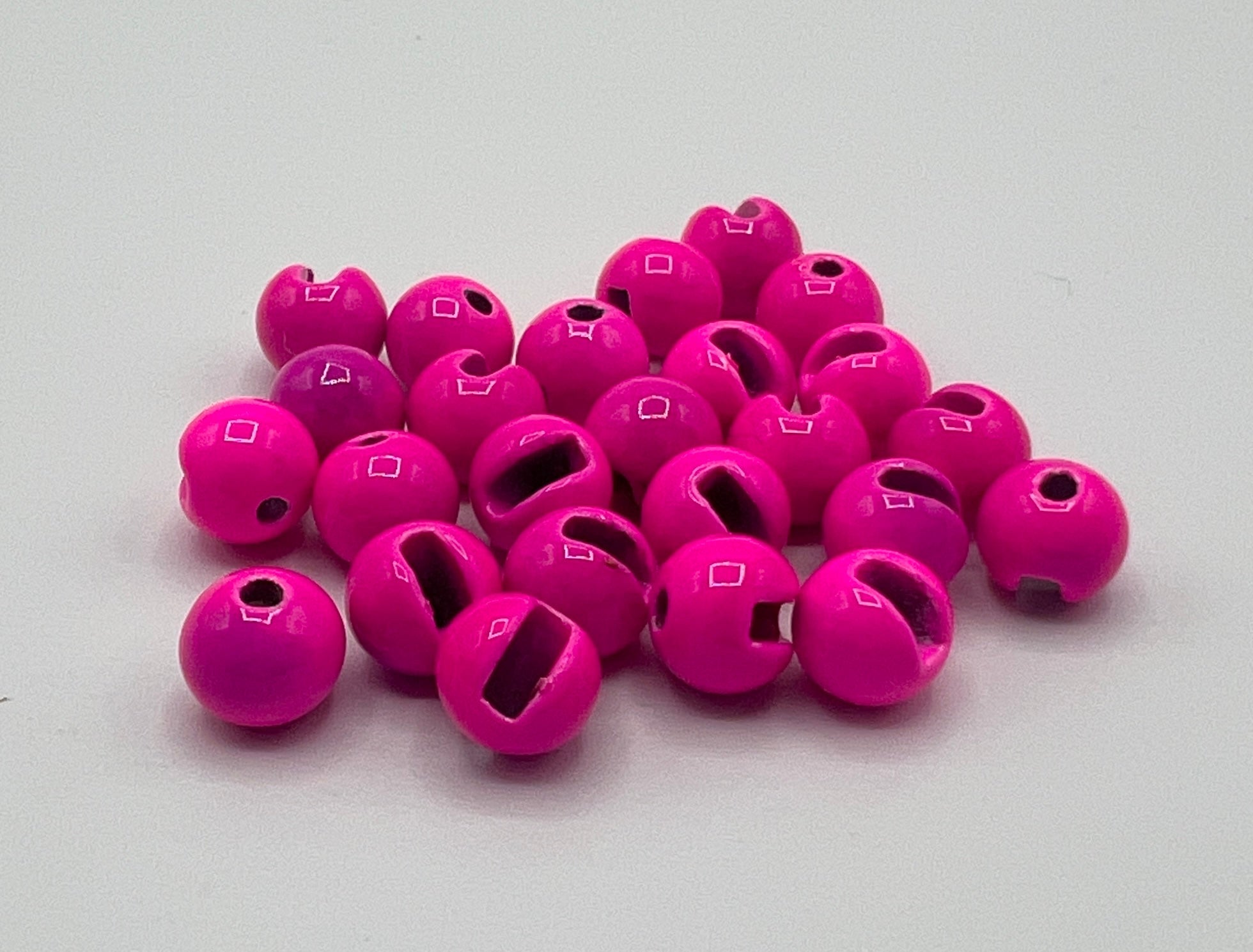
It also drifts better in fast, deep slots where the flies need to get down now. Because you're not fighting a line belly, your weight works for you instead of against you. I regularly fish a single 3.5 mm tungsten bead jig on a mono rig in water where I'd have needed two split shot and a big bobber to reach the same depth under fly line.
And it drifts better on heavily pressured water, for a reason that has nothing to do with drift quality: there's less stuff on the surface. No indicator slapping down, no fly line shadow sweeping across a lie. On the Green River below Flaming Gorge, where the brown trout have seen more bobbers than most of us have seen fish, that quiet approach is worth real fish. I go deeper on that water in Tailwater Tactics: How to Fool Picky Trout with Small Flies and Precise Nymphing.
One more advantage gets undersold: the mono rig makes you better at everything else. When you can feel your flies, you learn what bottom feels like, what a soft eat feels like, what a leaf feels like. Take those hands back to an indicator rig and you'll read the bobber differently forever.
Where Fly Line Still Wins, and It Isn't Close
Here's the part the mono rig crowd tends to skip. Fly line beats a mono rig the second the fish are far away.
Distance. A mono rig has a hard ceiling around two rod lengths. Past that you lose contact — the leader bellies, the sighter stops telling the truth, and you're just nymphing badly with expensive mono. On a big western tailwater a lot of the best water is 40 feet out and you are not wading to it. That's fly line water, full stop.
Wind. A mono rig has no mass to carry, so the cast is really a weighted lob powered by the flies. Put 20 mph of canyon wind on that and the system falls apart. Fly line has grain weight to punch with, and a decent double haul still puts flies where you want them.
Long, slow, even water. Big flats and tailouts with uniform current are where an indicator shines. The current is consistent, so a well-mended drift stays honest for 30 or 40 feet. Trying to tight-line a 60-foot tailout is like trying to eat soup with a fork.
Fighting big fish. When a 22-inch brown decides to leave, I want fly line and a reel drag between us, not 25 feet of mono that will bed into itself on the spool. It's manageable, but it's real.
Versatility in one setup. If you get one rod for the day and the plan includes a hopper at noon, a caddis at dusk, and nymphs in between, fly line is the answer. Lines for that job are not exotic — a good all-purpose floating taper like the Perfect Taper Floating Line handles dries, indicator rigs, and small streamers without complaint, and the whole fly lines collection is worth a look before you convince yourself you need three of them.
Don't buy a specialty line before you own one line that does everything. Josh Jenkins, who designs fly lines at Scientific Anglers, made the case on his FFIP episode that most trout anglers are best served by a single all-purpose floating line rated a half size heavy for the rod, used for dries, indicator rigs and small streamers alike — and that a sinking polyleader gets you depth cheaper than a second line does. That matters in this comparison, because the honest version of the mono rig argument isn't "sell your fly line." It's "own one good floating line, then add a mono rig spool for the close, technical work it can't do."
Dry Fly Tactics for Selective Trout (free eBook)
Drift quality is drift quality whether the fly floats or sinks — this free eBook breaks down the presentation habits that fool picky trout on top.
Get the free eBook →How I Actually Decide, Before the First Cast
I don't think about mono rig versus fly line nymphing as a philosophy. I think about it as four questions I answer standing on the bank, usually in under a minute.
1. How far away is the fish I most want to catch? If the answer is "inside two rod lengths," mono rig. If it's "out there past that current tongue," fly line. This single question settles it maybe 60 percent of the time.
2. How many current speeds are between me and that fish? One consistent speed favors fly line and an indicator, because a mend will hold the drift honest. Three or four speeds in twelve feet favors the mono rig, because no mend can fix that.
3. What's the wind doing? Under 10 mph, either. Ten to fifteen, mono rig gets awkward but workable if you shorten up. Above that, fly line and a shorter leader.
4. Can I get closer? Almost nobody asks this, and it saves the day most often. A mono rig's weakness is range — and range is negotiable. If the wade is safe and the approach is low and slow, I'll spend five minutes moving twenty feet rather than accept a drift I don't believe in.
Position is doing more work in this comparison than most gear arguments admit. A mediocre drift from the right spot beats a beautiful drift from the wrong one, every time — which is why the best tight-line anglers I fish with look like they're stalking more than casting.
Converting a rod from one system to the other
You do not need two rods to run both systems. What you need is a second spool or a cheap second reel. Load one with your floating line and a standard 9-foot leader. Load the other with backing, 100 feet or so of cheap running mono, and your mono rig leader. Swapping takes about 90 seconds on the bank.
If you do decide a dedicated stick is worth it, length is what you're buying. A 10-foot rod gives you meaningfully more tight-line reach and line-off-the-water control than a 9-footer, which is why a 10-foot 3-weight has become the default contact-nymphing tool. I broke down the tradeoffs in Rod Length Effects on European Nymphing. But if your 9-foot 5-weight is what you own, fish it. It'll do 85 percent of this.
Advanced: Running Both Systems in the Same Run
Once you stop treating this as a either-or, a third option shows up that outfishes both: use them in sequence on the same piece of water.
My standard approach on a run I don't know is to fish it close-to-far with the mono rig first. Start at the tail, work the near seam, then the middle, taking everything I can reach on a tight line. Trout in the near water get disturbed by line and leader long before they get disturbed by a fly, so taking those fish first with the quietest system I have is free money. Only when I've fished out to the limit of contact do I consider switching for the far bank.
The second advanced move is deliberately fishing a mono rig with slack. Cast it across, throw a small upstream curve, and let the flies drift on a semi-slack leader while you watch the sighter — you get most of the sag advantage of mono with a little more reach than strict contact allows. It's the natural bridge to the indicator-on-a-mono-rig approach for deep, slow water.
The third is changing what "weight" means. On a mono rig, the fly is the weight. So instead of adding shot when the water gets deeper, I change flies — a 3.0 mm bead becomes a 3.5, or the point fly gets swapped for a heavier jig and the dropper stays small. That keeps the rig clean and keeps the leader casting the same way all day. A tidy box of tungsten jigs like the tactical black perdigons in a couple of bead sizes covers most Western water, and there are plenty more in the fly patterns collection.
One regulations note, since tight-line rigs usually carry two flies: fly and hook limits vary by state and sometimes by individual water. Utah's are published in the Utah Division of Wildlife Resources guidebooks, and the USGS real-time streamflow data will tell you more about whether the drive is worth it than any forecast will.
The Gear That Actually Matters for Each System
The honest gear list for this comparison is smaller than you'd expect. For the fly line side: one good floating line matched to your rod and a leader that turns over. For the mono rig side: butt material, sighter material, a tippet ring, and tippet. Everything else is preference. The one place I'd spend real money is tippet — on a mono rig you're often fishing 5X or 6X on fish that fight hard in current, and cheap tippet fails at the knot at exactly the wrong moment. Buy good line, replace it every season, and stop blaming your knots.


Frequently Asked Questions
Is a mono rig the same thing as euro nymphing?
Not quite. Euro nymphing describes a family of competition-derived contact techniques — Czech, Spanish, French — that are usually fished on a long mono leader. The mono rig is the leader system itself, and it can be fished for more than nymphs: streamers, wet flies, even dries. Think of euro nymphing as the technique and the mono rig as the platform. There's a fuller side-by-side in Euro-Style Nymphing vs. Indicator Nymphing.
Can I fish a mono rig on a normal 9-foot 5-weight rod?
Yes, and plenty of people do. You'll give up two or three feet of reach and some line-off-the-water control compared to a 10-foot rod, and a stiff 5-weight is less forgiving on 6X tippet. But the system works. Fish it on what you own before you spend $400 to find out whether you like it.
Does the mono rig cast, or do you just lob it?
It's a lob, and that's not an insult. The flies carry the energy, so the stroke is a smooth, rounded, open-loop delivery rather than a crisp casting loop. If you try to cast a mono rig like fly line, you'll tuck the flies into your tippet and spend the morning untangling. Slow down, use the rod's whole arc, and let the weight do the work.
Do I need a sighter, or can I just watch the leader?
You need a sighter. Clear mono at 15 feet in glare is essentially invisible, and the sighter is how a tight-line drift communicates with you — its angle tells you depth, its speed tells you drag, and its hesitation tells you a fish. Twenty to twenty-four inches of bi-color material above a tippet ring is the standard for a reason.
How deep can I fish a mono rig?
Practically speaking, water up to about five or six feet deep is comfortable if you can get within two rod lengths of it. Deeper than that, or farther than that, and contact gets unreliable — the leader angle flattens out and you lose the ability to feel bottom. That's exactly the situation where converting the same rig to an indicator setup makes sense, which is a whole technique of its own.
Will a mono rig spook fewer trout than an indicator?
Usually yes, for two reasons: nothing large hits the water on delivery, and no fly line shadow sweeps over the lie. That advantage is biggest on clear, pressured tailwaters and smallest in broken freestone water where fish can't see much anyway. It is not a license to walk up on a fish — approach still beats equipment.
Which one should a beginner learn first?
Fly line and an indicator. It transfers to casting, to dry flies, and to every other kind of fly fishing you'll ever do, and the feedback loop is gentler. Once you're catching fish consistently and you're frustrated by drifts you can't control, that frustration is the signal you're ready for a mono rig.
So Which One Drifts Better?
Inside 25 feet, in complicated water, the mono rig drifts better and it isn't close. Past 30 feet, in wind, or on long even water, fly line drifts better and that isn't close either. The anglers I know who catch the most trout aren't loyal to either one — they're loyal to the drift.
If you take one thing from this, let it be Todd's lesson on the Weber: before you change your fly again, watch what's happening between your rod tip and your flies. Most of the time the answer to "why aren't they eating" is written right there on the water, and it has nothing to do with the bug. Getting that part right is most of what it takes to catch any fish, any time, and anywhere.
Fish the mono rig close and quiet, fish the fly line far and confident, and let the river tell you which day it is. Then come tell me about it — I'm always up for hearing how it went.
Join the FFIP Insiders
Get gear deals, trip intel, and tactics to help you catch any fish, any time, and anywhere — straight to your inbox.
Get the free eBook →Tight lines, everyone!