
Musky have a nickname for a reason: "the fish of ten thousand casts." Guide Chris Willen, who runs a musky operation across Northern Wisconsin and chases the same fish south into Tennessee through the winter, joined the Guided series to break down what actually separates anglers who put fish in the net from anglers who just log hours. None of it is complicated — it's three specific habits, done consistently, that most people skip.
Tip 1: Log Serious Hours on Your Home Water
Chris is blunt about this one: there's no substitute for volume. Musky bite in short, unpredictable windows, and the only way to capitalize on them is to already know your water cold — where fish hold, what conditions trigger a bite, and when those windows tend to open. That familiarity only comes from fishing the same water repeatedly, not from chasing a different lake every trip. If you've only got one home fishery, that's actually an advantage — put in the time there before you spread yourself across new water.
Tip 2: Come Ready to Cast — a Lot
"I cannot think of another fish you're going to cast more for in a day," Chris says, and he means it literally: musky fly fishing means throwing big flies on 10, 11, and 12-weight rods, all day, often without a single follow to break up the monotony. Casting practice before a trip isn't optional the way it might be for a day of trout fishing — show up already able to turn over a big fly with a heavy sink-tip line, or you'll burn out your form (and your shoulder) by lunch.
Tip 3: Be Relentless About the Strip-Set
The single biggest gap between musky that eat and musky that actually get landed, according to Chris, is the hook-set. A rod-set — lifting the rod tip the instant you feel a take — is close to a guaranteed miss. Train yourself to keep the rod tip down and drive two or three hard strip-sets before the rod ever comes up. It feels unnatural at first if you learned to fish trout, where a gentle lift is often correct, but with musky it's the difference between a story and a fish in the net.
Bonus: Figure-Eight Like You Mean It
Chris calls out the figure-eight as the move most anglers do half-heartedly. If you can't see the bottom where you're fishing, you're not seeing every follow — which means every figure-eight matters, blind or not. His specifics: make your turns as wide as you can, since musky make big sweeping turns rather than tight ones and track a bait better through a wide arc; change depth through the turn by sticking the rod tip into the water and bending at the knees, since a fly skating on the surface rarely triggers a strike the way one changing depth does; and strip your leader down so only the wire — not the mono or fluorocarbon butt section — is left outside the rod tip, which is what lets you actually control a big fly through a tight figure-eight. He also flags gear specifics: use wire over heavy fluorocarbon, since musky inhale a fly deep enough to bite through 80 or 100-pound fluoro, and look for a leader system built with a short mono/floro section specifically so more of it strips into the rod.
One More From the Water: Handle Fish Fast
Chris also flagged a conservation detail worth carrying into any big-fish fishery: if you net a fish in current and it isn't facing upstream in the net, it's effectively drowning. Get it turned and get it out of the heavy current immediately. Keep photos and measurements quick, use long-handled release tools and jaw spreaders built for musky, and don't be afraid to cut a fly free rather than fight a hook out — musky handle rough entry into a net or grip better than a long fight to save a $4 fly.
Gear
Gearing up for a musky season of your own? A few things from the shop line up directly with this episode:
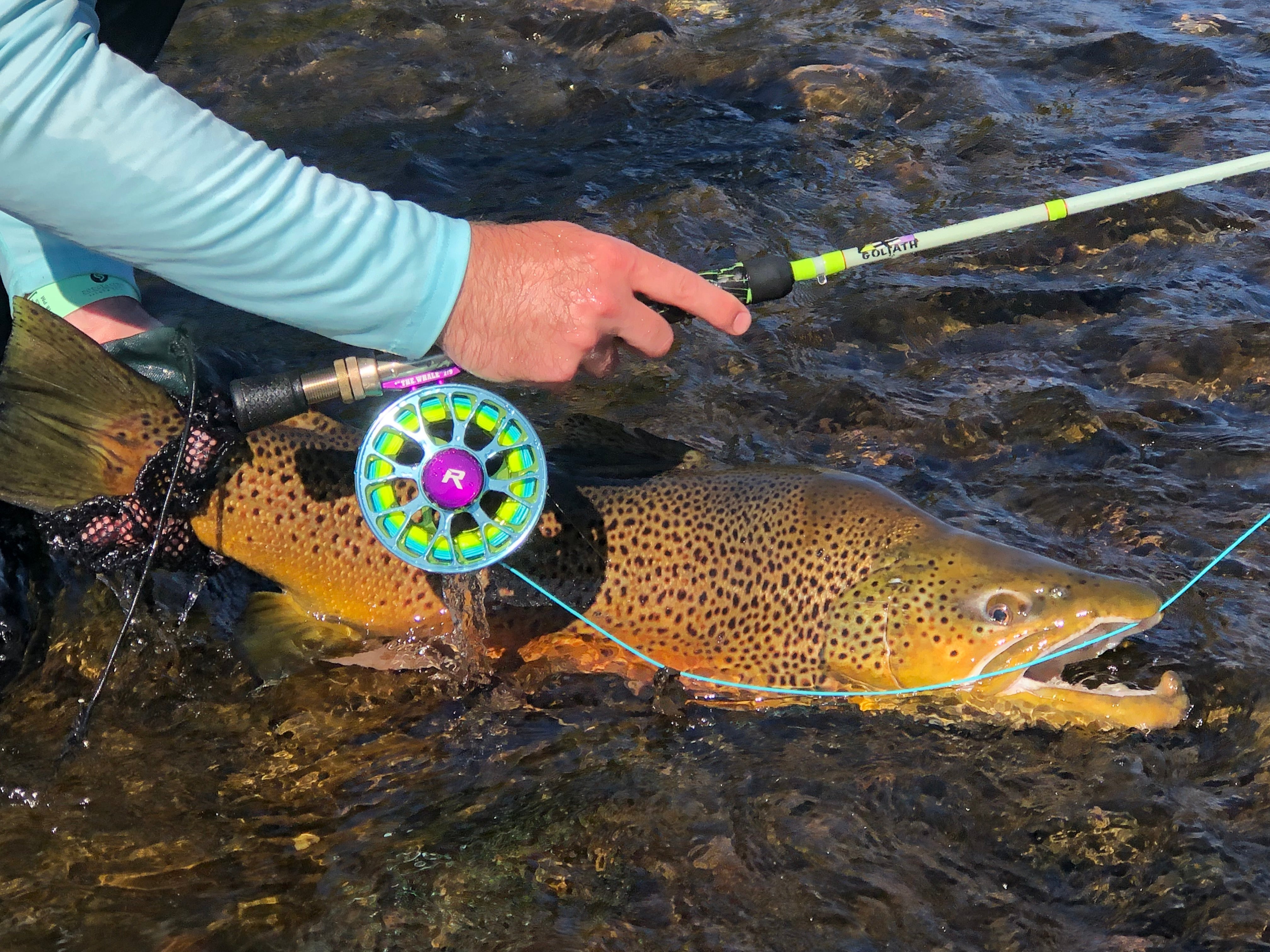
- Goliath Rod — an 8-12 weight built for exactly the big-fly, big-fish casting Chris describes
- Waterproof Briefcase Box — sized for the oversized musky and pike flies that don't fit a standard fly box
- Tips and Tricks for Fly Fishing eBook — more field-tested habits like the ones Chris shared here
Fly Fishing Insider Podcast has a referral partnership with Frontiers International Travel. If you book after being introduced through us, we may receive compensation at no additional cost to you.