
Short answer: tarpon are among the oldest and hardest-fighting fish you can target on a fly. Plan on a 10 to 12-weight, an extremely firm strip-set into a bony jaw, and bowing to the fish when it jumps. Expect to hook far more than you land — that's normal, and everyone talks about both numbers in the same sentence.
Historical significance
Tarpon have a rich history, intriguing early marine biologists and fishermen with their formidable size and spectacular acrobatics. The first scientific descriptions date back to the 19th century, with tarpon recognised for their remarkable biology and their cultural significance in coastal communities.
I can only imagine the tales that came from schools of giant tarpon breaching the surface to gulp air and show those menacing dorsal fins. They must have been terrifying to see rolling in sizable groups.
Evolution
With tarpon we're tracing a lineage that spans millions of years. They belong to the family Megalopidae, part of the ancient order Elopiformes, a group of fishes that has existed since the Cretaceous period. That suggests tarpon have roots potentially dating back as far as 100 million years.
Those ancestral tarpon were likely quite different from the fish we know today. They evolved during a period of significant global change in both climate and geography, which shaped their development. The prehistoric oceans they inhabited teemed with life forms now extinct, and in that dynamic environment ancestral tarpon had to adapt to survive — leading to traits like their robust silvery scales and their ability to gulp air.
This long history equipped them with a remarkable ability to adapt. They tolerate a wide range of salinities, which is why you'll find them in saltwater, brackish, and freshwater habitats. Their air-breathing ability, developed early in their evolution, lets them thrive in oxygen-depleted water, giving them a survival edge nothing else in the neighbourhood has.
Understanding that ancient lineage adds depth to fishing for them. When you hook a tarpon you're not just connecting with a challenging sport fish — you're connecting with a species that carried the legacy of a bygone era through vast planetary change to arrive in front of your boat.
What makes tarpon a prize catch
Size, strength, and fighting ability, primarily. But the real difficulty is the mouth: their bony jaws make setting a hook that stays connected feel almost impossible while they thrash like a junkyard dog on the end of a chain. It's common to talk about how many you hooked and how many you landed in the same conversation.
Techniques and strategies
Extremely firm hook sets with bite leaders are standard. Then comes the acrobatics. The most common technique is to bow — rotate your rod tip 90 degrees from upright to inverted, often plunging it into the water. That redirection of the line and pull on the fish reduces its ability to breach and shake the hook free.
For the full breakdown of the cast, the strip-set, and those critical opening seconds, read Tarpon on the Flats: the cast, the strip-set, and the first ninety seconds, and reading and leading fish on the flats.
Ten common tarpon questions
What's the best time of year to fish for tarpon?
Prime season typically runs late spring to early summer, with May and June being peak months in many locations such as the Florida Keys. This varies by geography, and prime season is usually dictated by when the non-resident fish return and offer up the trophy catch.
What rod and reel do I need?
A 10 to 12-weight paired with a high-quality reel and a strong drag to handle their runs. Flies are typically lighter now and more anglers are switching from 12s down to smaller rods for accuracy. Either way, putting the wood to a hooked fish and leveraging your leg strength is the key.
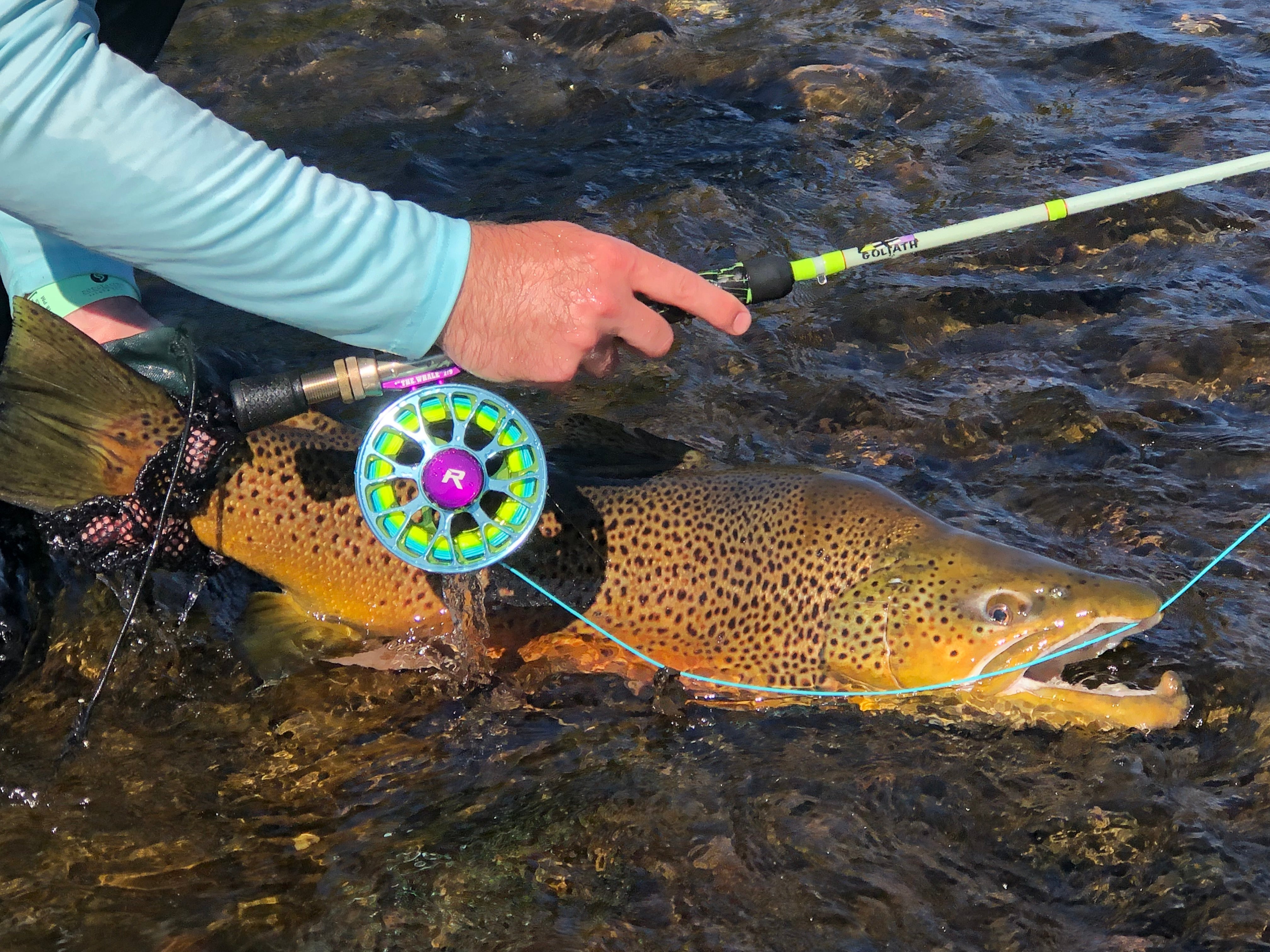
In the shop, "THE WHALE" covers 9/11 and 12/14 with a sealed drag built for salt. Pair it with a saltwater-specific line — the Moonlit WF Saltwater or the Silvertip Saltwater WF, both built with stiffer cores that don't go limp in tropical heat. See all fly lines.
What are the most effective fly patterns?
Popular patterns include the Tarpon Toad, Deceiver, Cockroach, and EP flies. Anything mimicking the appearance and movement of baitfish, crabs, and shrimp works. My favourite by far is a black and purple EP Minnow.
Starting a saltwater box? The Postfly First Cast Beginner Saltwater Assortment and the Fly Rod Chronicles Saltwater 10pk cover the basics, with the Dirty Marsh Crab for crab patterns.
Where are the best destinations?
The Florida Keys, Belize, Costa Rica, Louisiana, and the Yucatan Peninsula in Mexico. Each offers a different experience and a different kind of shot.
What techniques work best?
Sight fishing on the flats and casting near mangroves or river mouths. Presentation and accuracy are everything, as tarpon can be remarkably selective. Night fishing around piers and walls has become popular and is absolutely deadly.
How do you handle and release a tarpon properly?
With extreme care. Use a landing glove to control the fish, support its weight horizontally, and avoid taking it out of the water at all, especially larger specimens. Unlike a lot of species, tarpon can completely exhaust themselves, so revive, rest, then release. Releasing a weakened fish is often likened to sending it into the underworld as bait for sharks.
What sizes are common on a fly?
Juveniles typically run 10 to 30 pounds and adults 40 to over 100, with exceptional fish above 200. In my opinion the 75-pounders are the most fun — they fight like crazy without you battling a single fish for over an hour.
Do I need a special permit?
It depends on location. In many areas, including Florida, a saltwater fishing licence is required, and some places have specific tarpon tags or permits. Check local regulations before you travel.
What are the main challenges?
Their strength and acrobatics will test your gear and your skills. Their wariness and selective feeding demand precise presentation and stealth. And they're often just out of reach — like wrangling a dog into the car when it knows it's going to the vet.
Can tarpon be targeted in freshwater?
Yes. They're primarily saltwater fish but are found in brackish and freshwater too, especially juveniles. In Belize we love targeting them in the water sloughs found all over San Pedro.
Planning a tarpon trip
Tarpon travel is the kind that rewards a specialist. The fish are seasonal and migratory, the best weeks book a year out, and flights, transfers, guides, and boats all depend on each other — one delayed connection and the whole thing unravels.
The Fly Fishing Insider Podcast works with Frontiers International Travel, who have been booking sporting travel since 1969 and know these lodges and destinations first-hand. Start planning your tarpon trip, see what a trip with Frontiers looks like, or read the trip planning FAQ.
Closer to home, our Certified Guides & Lodges are operations we know personally and stand behind.
Fly Fishing Insider Podcast has a referral partnership with Frontiers International Travel. If you book after being introduced through us, we may receive compensation at no additional cost to you.
Heading to Belize? You can get tarpon, bonefish, permit and snook all in one trip. Use code FFIPodcast for 10% off your booking.
Role in marine ecosystems
Tarpon play a significant role in marine ecosystems, primarily through their position in the food chain. As juveniles they're prey for larger predators such as sharks and barracuda, which is crucial for maintaining natural balance and supporting food web dynamics.
As they mature they become apex predators, feeding on smaller fish, crustaceans, and occasionally molluscs. That behaviour controls the populations of those smaller species, which in turn affects the health of the whole system. Their feeding habits influence the distribution and abundance of their prey, indirectly shaping the structure of the marine community.
They're also migratory, which contributes ecological connectivity between environments. By moving between freshwater, brackish, and saltwater systems, they facilitate nutrient transfer and contribute to the health of various water bodies.
Conservation
Conserving tarpon matters not only for their own populations but for the health of marine ecosystems generally. A significant part of that is sustainable fishing practice — catch and release, particularly for large breeding-age individuals, so the reproductive capacity of the population is maintained.
Regulation matters too. In some regions specific laws govern tarpon fishing, including seasonal restrictions, size limits, and gear requirements that are less harmful to the fish. These reduce overfishing and bycatch.
Habitat conservation is equally important. Protecting the coastal and estuarine habitats crucial for spawning and juvenile development means preventing degradation from coastal development, pollution, and climate change. Healthy mangroves, seagrass beds, and river deltas provide shelter and feeding grounds.
Research and monitoring underpin all of it. Scientific study of tarpon behaviour, migration, and population dynamics is what makes informed management possible, and tagging projects generate the data that shapes effective policy.
Want to know more about tarpon conservation? Look at the Bonefish & Tarpon Trust. Here's a podcast on tarpon in Texas you may enjoy.
Sun and salt
Tarpon fishing means long days on reflective water with no shade. A hooded sun shirt like the FORLOH SolAir, a wide-brim Tarpon Straw Sun Hat, and a neck gaiter for the back of your neck. Keep gear dry in a Boat Bag Dry Bag, and rinse everything in fresh water at the end of each day — salt destroys hardware and reel finishes faster than anything else you'll expose gear to.
More on the species: read the bonefish deep dive.
Book the season you actually want
The best weeks go first, and the difference between a good trip and a great one is usually timing. Tell us the season you want and we'll find the water that fishes then.
Book a TripTight lines, everyone!

By Christian Bacasa
Host of the Fly Fishing Insider Podcast
Fly Fishing Insider Podcast Official Website
Instagram Fly Fishing Insider Podcast
Instagram Dupeafish
Watch on YouTube