
Stop fishing for trout when the water hits your cutoff, not when the fishing slows. Most trout anglers quit at 65 to 68 degrees Fahrenheit, and Montana FWP closes rivers from 2 p.m. to midnight once daily highs reach 73 degrees for three straight days. Carry a thermometer, fish at dawn, and switch species when the river warms.
The first August I really paid attention to a thermometer, I watched a run on a Utah tailwater go from 58 degrees at 7 a.m. to 67 degrees by 1 p.m. Same run, same fish, same fly. The only thing that changed was the number on a $20 piece of plastic clipped to my pack — and that number was the difference between a healthy released trout and one I would have watched wobble away.
Fishing hot water well is a technique, not a mood. It has a tool, a measurement, a decision point, and a set of adjustments — same as a reach cast or a tuck cast. Here at the Fly Fishing Insider Podcast we treat it that way, because "I'll just be careful" is not a plan, and the trout you release in warm water is the one most likely to die after you walk away.
What Temperature-First Fishing Is (and What Problem It Solves)
Temperature-first fishing means the thermometer, not the calendar or the hatch chart, decides whether you fish, where you fish, and when you walk away. The default habit runs the other way: you booked the day off, you drove two hours, the forecast said 95 degrees but the shop said the tricos were popping, so you fish until the bite dies and call that a decision. It is not a decision. It is a schedule.
The problem this solves is delayed mortality — the trout that swims off looking fine and dies an hour later. Warm water holds less dissolved oxygen, and a fish that fights hard in warm, low-oxygen water can run out of the physiological headroom it needs to recover. The Utah Division of Wildlife Resources puts it plainly in its drought-year guidance: warm water holds less oxygen than cold water, and the combination of high temperatures and low oxygen stresses coldwater species like trout. You do not see that cost on the bank. That is exactly why anglers keep paying it.
The other half of the problem is regulatory. Western states manage the same risk with closures, and the rules change mid-season, sometimes mid-week. If you fish the Rocky Mountain West in July and August, knowing how those triggers work is as much a part of your technique as your mend.
What Water Temperature Is Too Warm for Trout?
Trout water temperature thresholds are a range, not a single line, and reputable sources cluster tight. Trout Unlimited's Chris Hunt tells anglers that if the thermometer reads anything above 65 degrees Fahrenheit, head back to the truck, and that water approaching 70 degrees is often fatal. Colorado Parks and Wildlife, explaining the voluntary closures it rolled out across roughly 460 miles of river in July 2026, points to trout stress above 70 degrees. Montana Fish, Wildlife and Parks uses 73 degrees as a restriction trigger, and reporting on the 2026 closures noted that water at 77 degrees and above is lethal to trout.
Here is how I read those numbers as one system. Below 60 degrees is normal trout water and your handling can be routine. From 60 to 65 degrees, fish it but start shortening fights. At 65 to 68 degrees you are in the honest cutoff zone — that is where I stop, and where most conservation-minded anglers I know stop. Above 68 degrees you are fishing on the trout's credit, and above 70 you are simply killing fish slowly whether you see it or not. Pick your number before the season, write it on your thermometer case, and do not renegotiate it at 1 p.m. with fish rising.
Sascha Clark Danylchuk, executive director of Keep Fish Wet, joined the Fly Fishing Insider Podcast on episode 93 to talk about what the catch-and-release science actually says — including how water temperature changes what a fish can tolerate. Episode page.
Step-by-Step Mechanics: The Heat-Day Routine
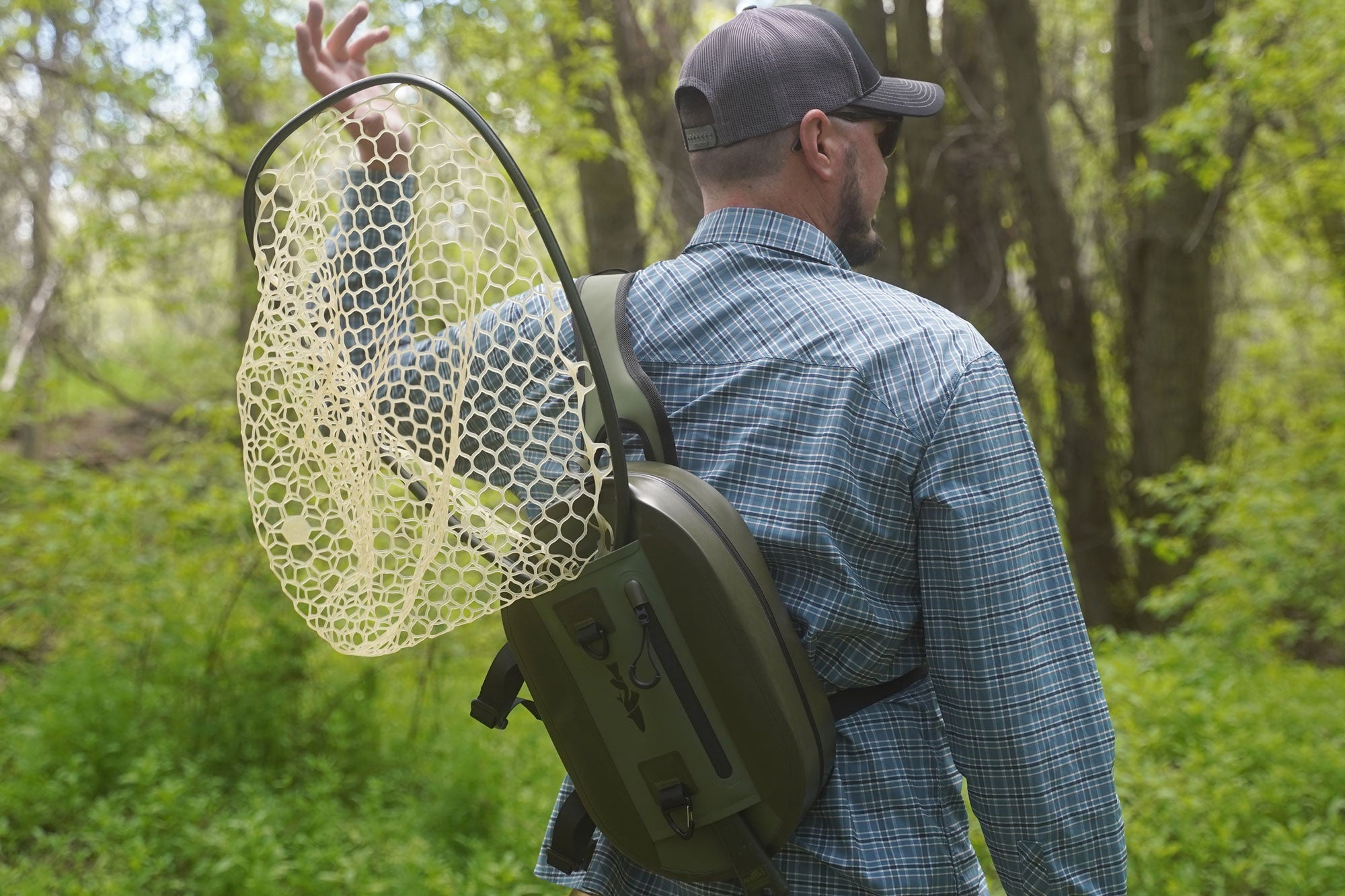
- Clip the thermometer where you will actually use it. A stream thermometer buried in a pack is a thermometer you will skip. Mine rides on the outside of my sling with the flies, next to the nippers.
- Take the first reading before you rig up. Sink the stem in moving water at the depth you intend to fish, out of direct sun and away from a warm shallow edge, and give it a few seconds to settle. A reading taken in six inches of sun-baked gravel is not the river's temperature.
- Take a second reading two hours later. The number that matters is not the morning reading, it is the trend. A river climbing two degrees an hour at 9 a.m. is telling you exactly what 1 p.m. looks like.
- Set your cutoff out loud. Say it to your fishing partner: "We're off the water at 66." Naming the number in advance is the whole trick, because at 66 degrees with fish rising you will want to talk yourself out of it.
- Fish the coldest hours hard. First light through mid-morning is the window in a heat wave. Montana FWP's own advice to anglers during restrictions runs the same direction — start at dawn, be off the water around midday, and look to high-elevation lakes and deep reservoirs when rivers get warm.
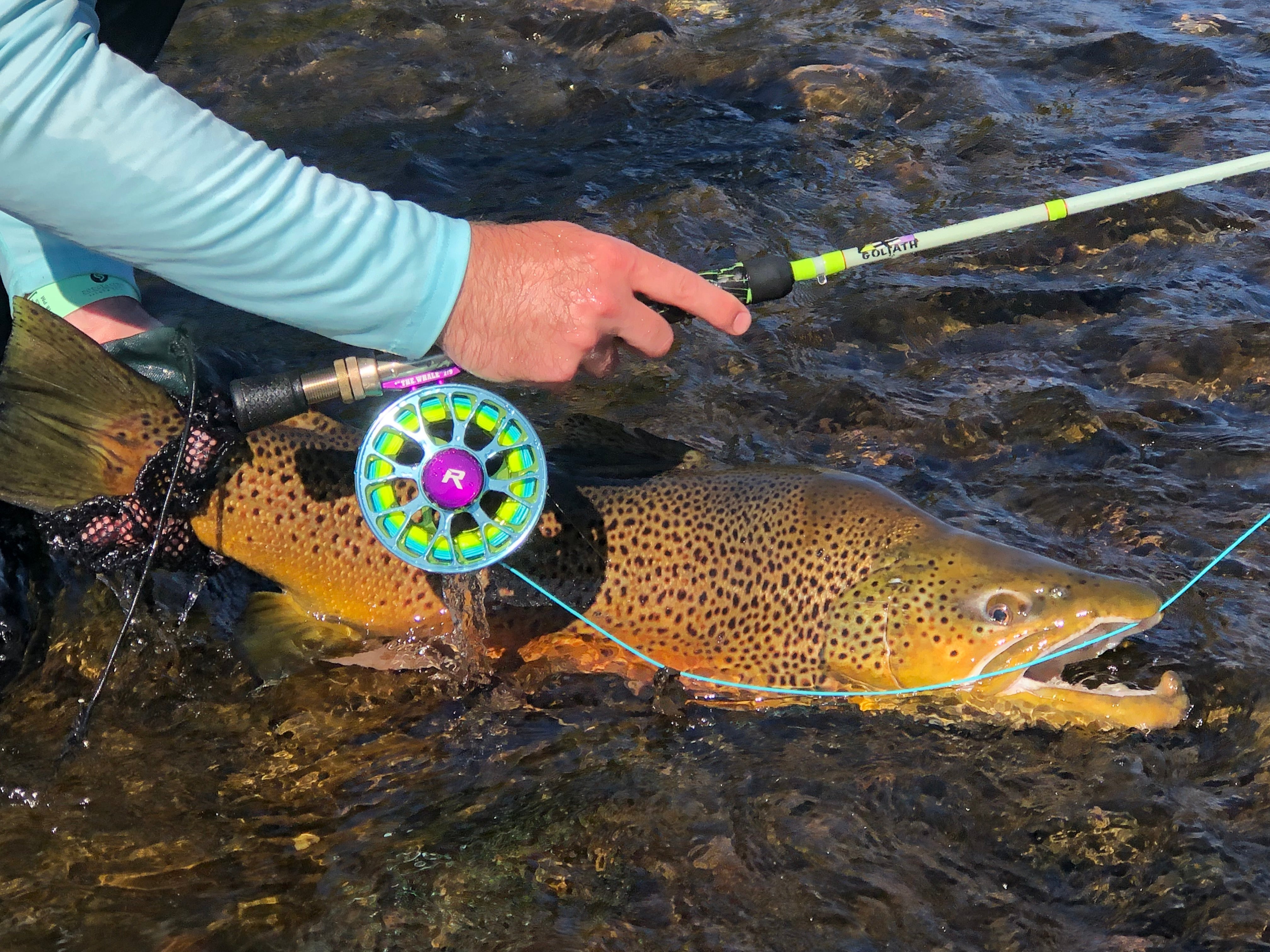
- Shorten the fight on purpose. Go one tippet size heavier than you would in June, use the butt of the rod, and walk the fish down rather than letting it run laps. An exhausted trout in 66-degree water is the one that does not make it.
- Land, unhook, and release without lifting. Net the fish in a deep rubber bag, leave it in the water, back the barbless hook out with forceps, and let it swim off on its own. On a hot day, skip the photo — Utah DWR specifically advises against photographing fish in hot weather.
- Move, switch, or go home. When the reading crosses your cutoff, you have three good options and one bad one. The good ones are: go up in elevation, go to a warmwater fishery, or go get a sandwich. The bad one is "one more hour."
Danylchuk's framing on that episode is the cleanest version of handling I have heard: minimize air exposure, keep fish off dry surfaces so the slime layer stays intact, and reduce total handling time from net to release. She also made the point that drives this whole article — a trout can tolerate a few seconds of air at 55 degrees far better than it can at 68 or 70. The rules do not change in warm water. The margin does.
How Do Hoot-Owl Restrictions Actually Work?
A hoot-owl restriction is an emergency rule that prohibits fishing between 2 p.m. and midnight, leaving the cool morning hours open. Montana Fish, Wildlife and Parks applies them under its drought policy when streamflows drop below critical levels for fish, when water quality is diminished, or when maximum daily water temperatures reach at least 73 degrees Fahrenheit for three consecutive days. The name comes from old logging rules that shut work down in the heat of the day, when only the owls were still at it.
Three things worth knowing about hoot-owl restrictions before you plan a trip. First, they are section-specific: one stretch of a river can be restricted while another runs normally. Second, they escalate — when conditions keep deteriorating, agencies move from hoot-owl hours to full drought closures, as Montana FWP did on sections of the Beaverhead and Big Hole. Third, other states use different tools for the same problem: Colorado Parks and Wildlife leans on voluntary closures, which are requests rather than citations, and in July 2026 those covered roughly 460 miles across 16 waters, including a voluntary noon-to-midnight closure on 74 miles of the Rio Grande.
The practical version: check the managing agency's closure page the night before you drive, and again the morning you fish. A restriction announced on Tuesday is live on Wednesday, and your fishing buddy's report from last week is not current information.
Match the elevation to the calendar. Alice Owsley, a Yellowstone-area guide, made this point on Guided episode 2: fish the lower elevations early and late in the season and move up high in midseason, and walk to the water slowly enough to actually read it before your first cast. In a heat wave that becomes a survival plan for your fishing, not just a strategy — the same drainage that is 70 degrees in the valley can be in the 50s a few thousand feet up.
Reading Conditions & Adjusting
Cold water comes off the bottom of the reservoir, so the first miles below the dam stay fishable when the freestones are cooked. Take a reading at the dam and another a few miles down — the rate of warming tells you how far downstream your fishable water ends that day.
This is the water that crosses the line first and recovers slowest. Fish it at first light, then leave. If it was 67 degrees at noon yesterday and today is hotter, do not bother driving out — the river does not reset overnight in a heat wave the way it does in June.
Elevation is the cheapest air conditioning in fly fishing. Going a few thousand feet up a drainage often buys ten degrees, and small-stream trout in cold water are forgiving about fly choice. Montana FWP points anglers toward mountain lakes and deep reservoirs during restrictions for exactly this reason.
The species that thrive at 75 degrees are usually within an hour of the trout water you just left. Utah DWR has been expanding warmwater production — channel catfish, walleye and wipers — precisely because those fish handle heat and lower oxygen better. A popper at dusk for smallmouth is not a consolation prize.
Treat the 2 p.m. cutoff as a ceiling, not a target. If the river is warm enough for the state to restrict afternoons, your own thermometer may tell you to be done by 11 a.m. The regulation protects the fishery at scale; your reading protects the fish in your net.
Common Mistakes
You check at 7 a.m., see 58 degrees, and fish until 3 p.m. on that number. The river gained eight degrees while you were congratulating yourself.
Read it every couple of hours and watch the trend line, not the single number.
Air temperature drops at 7 p.m.; water temperature lags hours behind it. The evening rise in a heat wave is often happening in the warmest water of the day.
Trade the evening session for a dawn session. That is the thinking behind hoot-owl hours in the first place — mornings open, afternoons and evenings closed.
6X and a nine-minute battle is a fun story in October and a dead fish in August.
Fish one size heavier, put real pressure on, and net the trout while it can still swim off under its own power. Utah DWR's release guidance starts in the same place: minimize fighting time, because exhausted fish die at higher rates.
Fish out of the water, hands dry, three attempts because the first two were blurry.
Skip photos on warm days, or shoot the trout in the net in the water with wet hands. Keep Fish Wet's principles are the short version: minimize air exposure, keep fish off dry surfaces, reduce handling time.
Spring seeps and cold tributary mouths stack fish in a heat wave, and they are easy to spot. They are also the fish's last safe address.
Leave the refuges alone. Catching every fish out of the one cold pocket in a mile of river is not a technique, it is a shooting gallery.
Plenty of warm rivers never get a restriction, either because the state uses voluntary measures or because nobody has taken a reading that week.
Let the regulation be the floor and your thermometer be the standard. Colorado's voluntary closures carry no citation at all — they only work if anglers act on them.
Author's Story & Key Insights
I guide in Utah, so my summer calendar is built around this problem. A few Augusts ago my buddy Todd and I had a day circled for a low freestone stretch we love. We got there at 6 a.m., fished a genuinely great morning on hoppers, and at 10:40 the thermometer read 65. Todd had two fish rising in front of him. I said the number out loud, he swore at me, reeled up, and we drove ninety minutes and two thousand feet up to a creek we barely fish — and caught small, bright cutthroat until we were tired of it in water that never got above 56.
Here is the part I did not expect: that detour is now one of my favorite days of that whole season. The heat did not cost us a trip, it handed us a new piece of water. That reframe is the single most useful thing I can pass along — a cutoff is not a punishment, it is a prompt to go find the cold water you have been driving past for years.
The other insight is about honesty. Nobody watches you take that reading. There is no ranger at the truck. Hot-water discipline is one of the few parts of fly fishing that is entirely self-enforced, which makes it a pretty good measure of how much you actually care about the fishery you keep saying you love.
Write your cutoff number on the thermometer case in permanent marker before the season starts. It sounds silly until the afternoon you are standing in a warm run with fish eating, doing math in your head to justify one more hour. A number you set in March is honest. A number you set at 1 p.m. in August never is.
Terms You'll Hear
- Hoot-owl restriction
- An emergency rule closing fishing from 2 p.m. to midnight so anglers only fish the cool part of the day. Montana Fish, Wildlife and Parks is the agency most associated with the term.
- Drought closure
- A full closure of a river section to fishing, the step beyond hoot-owl hours when flows, temperature or water quality keep deteriorating.
- Voluntary closure
- A request rather than a regulation, used heavily by Colorado Parks and Wildlife. No citation attaches, so compliance is entirely on the angler.
- Dissolved oxygen
- The oxygen actually available in the water for a fish to breathe. Warm water holds less of it, which is why heat and exertion compound each other.
- Delayed mortality
- A released fish that dies later from the cumulative stress of the fight, handling and air exposure. It is the cost anglers never see.
- Thermal refuge
- A pocket of colder water — a spring seep, a tributary mouth, a deep shaded run — where trout stack up during a heat wave.
- Tailwater
- A river below a dam. Bottom-release dams send cold water downstream, which is why tailwaters often stay fishable when nearby freestones do not.
Recommended Fly Patterns for Your Warmwater Plan B
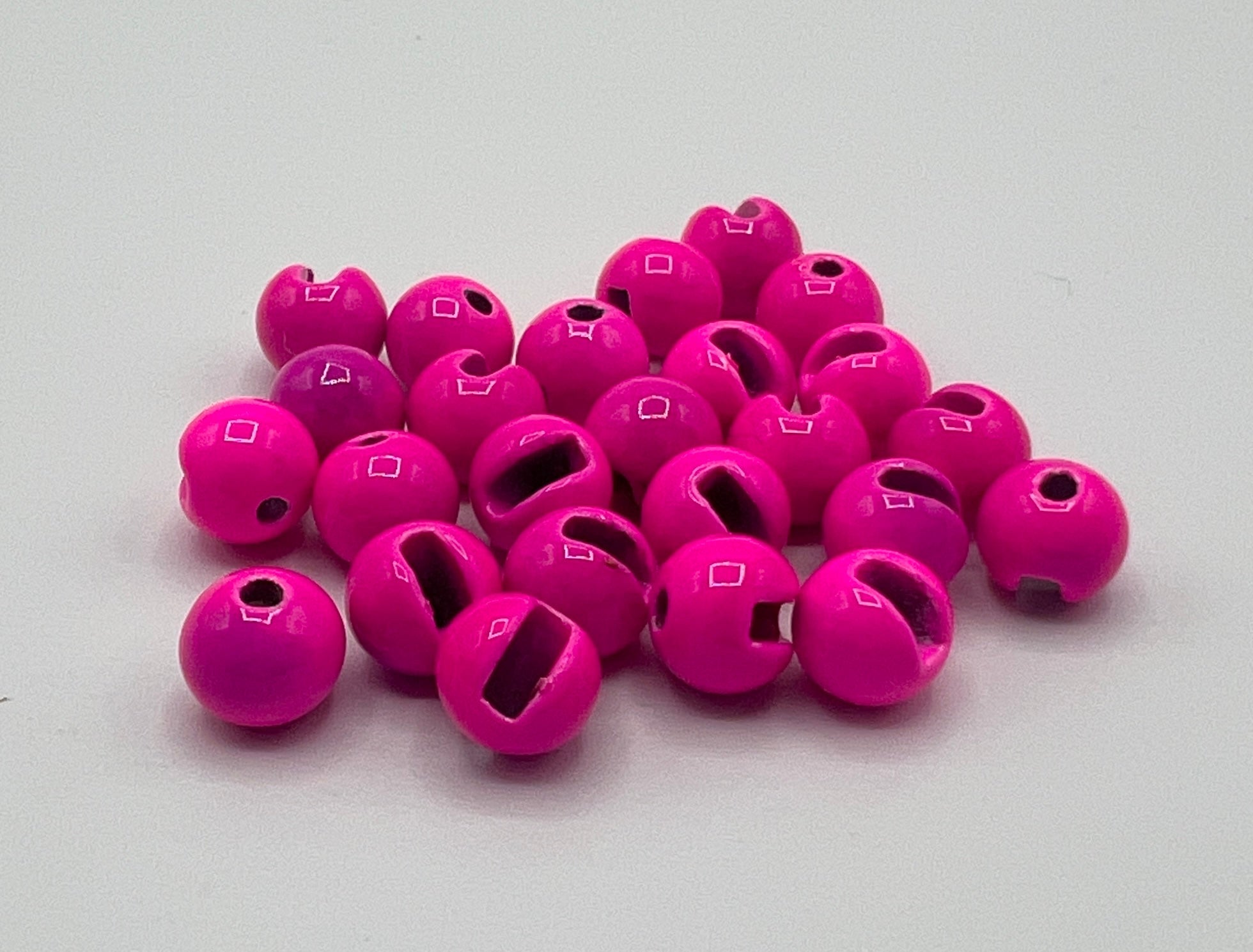
When the trout water crosses your cutoff, the fastest way to save the day is a box you already packed. These are the two I keep in the truck all summer for bass and panfish water, from our fly patterns collection.


Recommended Gear for Hot-Water Days


Two more things worth reading while you wait for the water to cool: our primer on how water temperatures affect fly fishing covers the species-by-species comfort ranges behind these cutoffs, and fly fishing the White River in summer shows what a big tailwater looks like when the freestones around it are too warm to touch.
Regulations, closures, flows and water temperatures change fast and vary by river section. Everything here was accurate when this article was published in September 2026, and hoot-owl restrictions in particular are enacted and lifted mid-season. Always confirm current rules and conditions with the managing state agency before you fish.
Tight lines, everyone!
Take the reading, set the number, and go find cold water. Join the FFIP Insiders for tactics, gear deals and trip intel to help you catch any fish, any time, and anywhere.
Join freeShow us your cold-water detour on Instagram @flyfishinginsiderpodcast