
Fly Fishing Insider Podcast
Pocket water gets skipped because indicator rigs cannot drift small pockets and most anglers will not wade to reach them, yet electrofishing turns up trout in water six to eighteen inches deep. In winter, fish move to slower deeper water, and the productive sequence is dry dropper first, then a deeper nymph rig, then a streamer last.
Devin Olsen is a Fly Fishing Team USA competitor from Utah, author of Tactical Fly Fishing, trained fisheries biologist and owner of the online shop Tactical Fly Fisher.
Also on Apple Podcasts · Spotify · YouTube
How did Devin Olsen get into competitive fly fishing?
Devin Olsen held a fly rod at seven, caught his first fish on a fly at nine, and was fishing fly-only by twelve. His first competition came at nineteen on a televised fly fishing contest in Oregon, where he was drawn against two anglers who later became teammates. He entered a Team USA regional in 2006, finished high enough to reach nationals and then to make the team, and made his first world championship team in 2009.
What does a world championship week look like?
Teams arrive early to adjust to the time change and practice, though the American team typically gets only five to seven days while some European teams show up two or three weeks ahead. The actual competition venues are usually closed to practice beforehand, so teams fish water they hope is representative, which only transfers so far. Olsen estimates a quarter to 30 percent of his annual fly tying volume happens during those practice and competition days.
Why do anglers overlook pocket water?
Two things keep anglers out of pocket water. Most are unwilling to wade aggressively enough to reach it, so they take the easy gravel entry and fish what is in front of them. The second reason is mechanical: an indicator rig with split shot cannot get a drift into a small pocket with strike detection and a natural presentation at the same time, so anglers who try it catch little and conclude the fish are not there.
How many trout actually hold in shallow pocket water?
Working on electrofishing crews changed Olsen's picture of pocket water entirely. Skinny water of a few inches to a foot and a half deep produced trout tumbling out of it in numbers he had never suspected while fishing the same water types. Because so few anglers present flies there, pocket water fish are among the easiest to catch once the presentation is right.
How useful is a stomach pump on trout?
A stomach pump earns its place mostly on unfamiliar water, and world championship venues often have no hatch chart or fly recommendations available at all. It is a guide, not a rule: on a recent lake day the samples came back roughly 98 percent daphnia, which is not imitable, and the fish ate beadhead buggers anyway. Many competition patterns are impressionistic or attractor-based rather than exact imitations.
How do you fish trout rivers in winter?
Cold water lowers trout metabolic rates, so winter fish stack into slower, deeper water and the productive holding spots become far fewer. Olsen works those spots in three passes: a dry dropper first, because the water is often too slow and even for a standard euro drift and the suspended nymph presents better from a distance; then a deeper nymph rig to reach fish lower in the column; then a streamer pulsed through on the euro rig. Streamers go last because fish that have been stirred up by one stop responding well to nymphs.
What does a good nymph drift look like?
Olsen watches for what he calls the downshift. The fly sinks through the top 10 to 20 percent of the drift into the slower boundary layer near the bottom, and the leader responds by tightening and straightening slightly as the fly slows while the tippet above keeps traveling at surface speed. Add an occasional tick of the bottom every four to six casts and the rig is in the right part of the column. The other half of the skill is remembering exactly what the rig looked like on the last fish and reproducing it.
How do you spot trout before you cast?
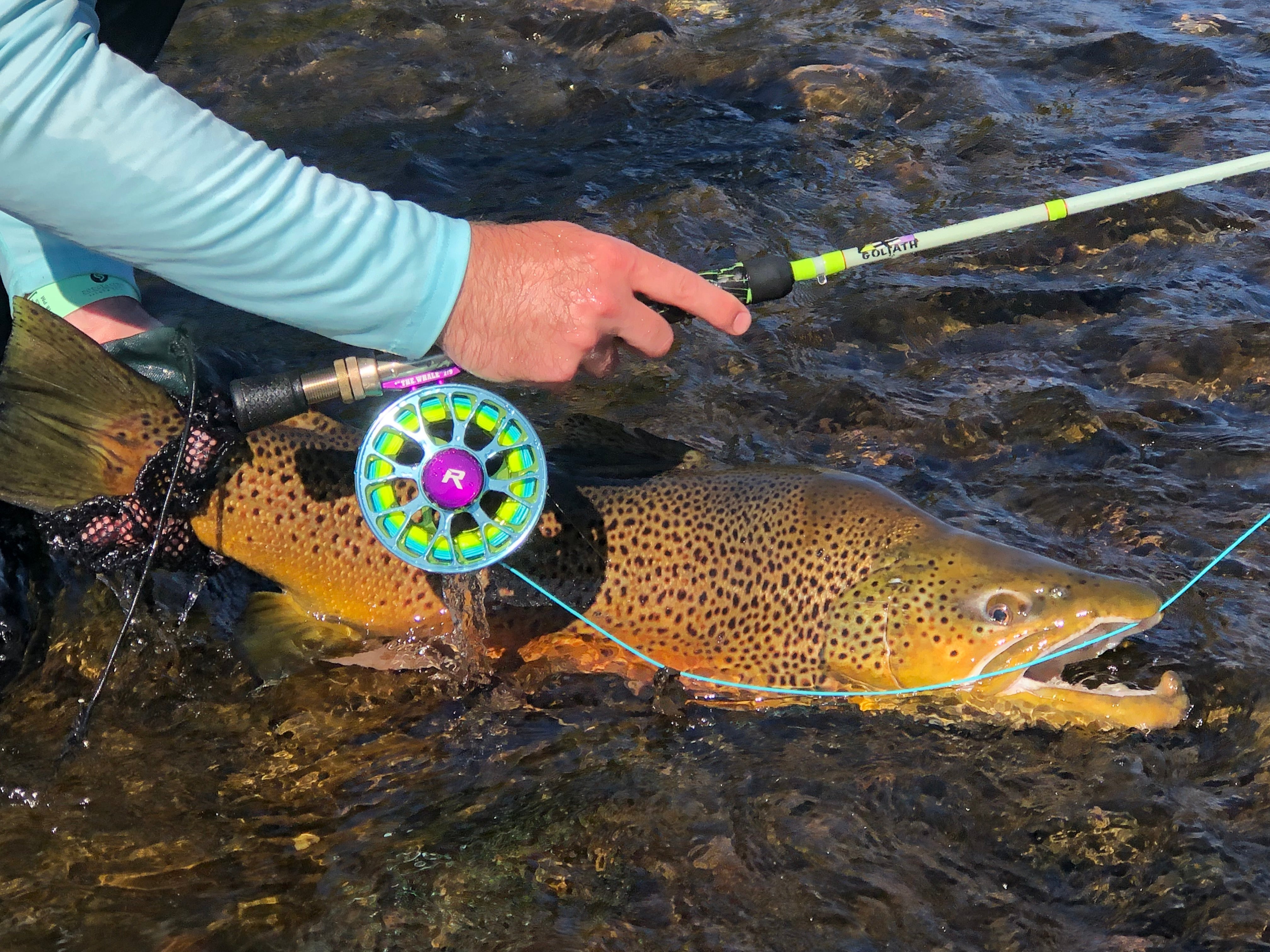
Color comes first: local brown trout show an orange cast, South Island brown trout in New Zealand carry a green tone on the back, and rainbows give themselves away with a stripe of crimson or pink that looks nothing like a river bottom. Sometimes the shadow is visible before the fish. Movement and fin shape confirm it, and fish that spook ahead of a wading angler are worth studying, because the water they came out of tells you what similar water upstream is worth a careful look.
Key takeaways
- Electrofishing surveys turn up trout in pocket water only inches to 18 inches deep - water most anglers never fish.
- An indicator rig with split shot cannot deliver a natural drift plus strike detection inside a small pocket; that is a rig limitation, not an absence of fish.
- In winter, fish slower deeper water and work it in three passes: dry dropper, then a deeper nymph rig, then a streamer last.
- Run the streamer last, because fish stirred up by a streamer stop responding well to nymphs.
- Watch for the downshift - a slight tightening and slowing of the leader as the fly drops into the slower layer near the bottom - and expect the bottom to tick every four to six casts.
- Spot fish by color first: orange on local browns, green on New Zealand South Island browns, crimson on rainbows.