
Fly Fishing Insider Podcast
Yes, if you want Alaska without a lodge budget. The Kenai River sits on the road system under three hours from Anchorage, fishes for rainbow trout year-round, and holds sockeye, silver and pink salmon runs from May through October. Average rainbows run 16 to 18 inches; 25-inch-plus fish are the real target.
Dallas Voss is a fly fishing guide based in Kenai, Alaska, and has guided the Kenai River for about seven years.
Also on Apple Podcasts · Spotify · YouTube
Is the Kenai River worth fishing compared to a remote Alaska lodge?
The Kenai River sits on Alaska's road system, so anglers can fly into Anchorage and drive to the river in under three hours instead of chartering into a remote camp. That makes a single guided day trip realistic rather than committing to a ten-day itinerary or a week-long lodge package priced around ten thousand dollars. Because the Kenai Peninsula also offers glacier tours, bear viewing, kayaking and hiking, non-anglers in the group have somewhere to be while one person fishes.
How big are Kenai River rainbow trout?
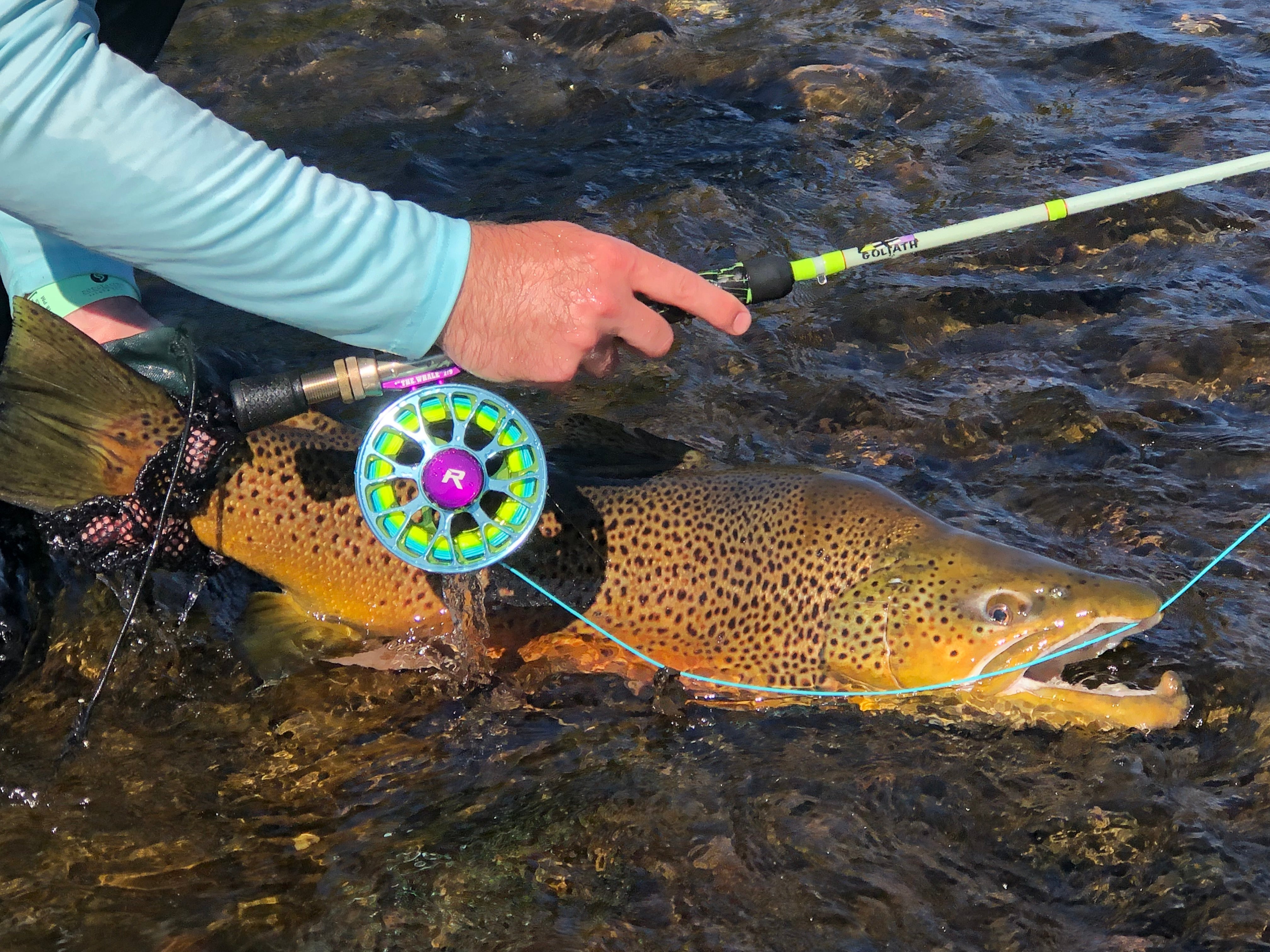
A typical day of Kenai rainbow trout fishing produces fish in the 16 to 18 inch range, with anything over 20 inches counting as a good fish. Twenty-five inches is the threshold worth bringing to hand for a photo, and 30 inches is the trophy most visiting anglers are chasing. Big Kenai rainbows are notably athletic, running and jumping repeatedly rather than rolling over after one run, which Voss attributes to a protein-rich diet of salmon eggs and flesh.
When do salmon run on the Kenai River?
Each Kenai salmon species runs on its own schedule, and most species come in two distinct pushes. King salmon show around May and again in June, though king fishing was closed at the time of recording because of a statewide decline. The first sockeye run arrives in mid-June and funnels into the confluence with the Russian River; a second, larger-bodied sockeye run enters the lower Kenai from mid-July into early August. Silver salmon start showing in mid-August with a second run around early September.
What is flossing for sockeye salmon, and is it fly fishing?
Flossing is a technique used on sockeye salmon because sockeye stop feeding once they enter fresh water and will not bite a fly. The angler casts a weighted line roughly ten feet upstream, lets it sink four or five seconds so the leader rides along the bottom where the fish swim with open mouths, then sweeps the rod so the hook pulls into the corner of the jaw. Voss is explicit that flossing is not fly fishing, and that fly rods are used only because they are a light, comfortable setup for hours of repetitive casting. Regulations require the fish to be hooked in the mouth.
Can you take Alaska salmon home after a guided trip?
Guides typically fillet the day's salmon on the river and bag them, then drop the fillets at one of several processors in town for cleaning, vacuum packing, freezing and boxing. Anglers can collect the fish boxes at the end of the trip and check them as airline luggage, which cost Christian about fifty dollars for one bag near the 50-pound limit. The alternative is to have the processor ship the boxes timed to arrive after the angler is home. Sockeye limits during the run are commonly three per person per day, and can rise to six if escapement goals are met.
Do you need to worry about bears while fly fishing the Kenai?
Bears on the Kenai system are most commonly encountered around the Russian River and Cooper Landing, where they are there for the same salmon the anglers are. Because these bears are habituated to crowds, Voss's practice is to give them space, avoid agitating them, and turn and walk away rather than pressing for a closer look, with extra caution around a sow with cubs. Many anglers walking into the Russian carry bear spray, mainly as insurance against surprising a bear at close range on a blind corner.
What are pink salmon years and why do they matter for trout?
Pink salmon spend two years at sea, so the Kenai's pink run returns on even-numbered years, with only stragglers showing on odd years. Even years mean far more eggs dropped and, later in the season, far more decaying flesh in the system, both of which put weight on the resident rainbow trout. The pinks also concentrate the fishing, because they spawn on known gravel bars and the trout stack up behind them, whereas in an odd year the rainbows spread out across a very large river.
Key takeaways
- The Kenai is on the road system: fly into Anchorage, drive under three hours, and fish a single day instead of committing to a ten-day trip.
- Average Kenai rainbows run 16 to 18 inches; over 20 is a good fish, and 25 to 30 inches is the trophy target.
- Sockeye stop feeding in fresh water, so they are hooked by flossing, not by eating a fly - and anything hooked outside the mouth must be released.
- Guided outfits generally supply rods, waders, boots and tackle, so visitors need a fishing licence and warm rain gear; 10-foot 7-weights are the standard trout setup.
- Pink salmon return on even years, and the extra eggs and flesh make rainbow trout bigger and easier to locate on known spawning gravel.
- Late August is Voss's favourite window, when sockeye, early silvers and the bead trout bite overlap in a single day.