
Fly Fishing Insider Podcast
Hinged nymphing ties the tippet in behind a yarn indicator so it hangs at 90 degrees. The tippet matches the water depth and stays one diameter throughout. The fly and split shot land first and the indicator last, feeding slack down the line so the nymph sinks free and drifts dead.
Dan Gracia is a former guide who has fly fished since 1976 and taught fly fishing schools from 1987 to 1997 with his mentors Dean Schubert and Dave Hickson.
Also on Apple Podcasts · Spotify · YouTube
How do you set up a hinged nymph rig?
A hinged nymph rig starts with a 7.5-foot leader tapered to 2X or 4X, with a small tuft of yarn tied on the end as the indicator. The tippet is then tied to the leader right behind the yarn, so it hangs down at 90 degrees rather than trailing, and that tippet runs one unbroken diameter all the way to the fly. Keep at least 2X of difference between the leader and the tippet, and cut the tippet to the depth being fished, four feet of tippet for four feet of water, so the fly rides in the bottom six to nine inches.
How do you cast so the fly lands before the indicator?
The whole hinged nymphing method depends on the fly and split shot hitting the water first and the yarn landing last and behind them. The simplest way is to open the loop about four feet above the water so the rig folds over and drops in sequence, which lets the indicator feed slack at the fly instead of dragging it. In wind, overpower the cast and drive it lower, or use a tuck cast to force the fly down. A nymph falling on slack line sinks as fast as it would if you simply dropped it in by hand, which is why BB shot is enough even in fast water.
Where should the split shot go on a nymph rig?
Six inches above the fly is the working default for split shot on a hinged nymph rig, with a usable range of four to eight inches. Closer than four inches and the fly stops moving with the microcurrents, which is the whole reason the weight is carried on the shot rather than in the fly. Moving the shot farther back buys a more natural drift but costs strike detection, since the slack between shot and fly has to straighten before the indicator can register anything.
Why does hinged nymphing struggle in the tailout of a pool?
In a tailout the streambed rises and the water column compresses, which speeds up the flow near the bottom instead of slowing it. That reverses the usual relationship and the fly gets pushed past the indicator, dragging the rig instead of drifting it. Tailouts are better handled with a short-line, tight-line approach than with the hinged setup, or by making a deliberately straight upstream cast so everything lands stretched out.
What color indicator should you use on a spring creek?
Use the smallest piece of yarn that will still float the rig, which on a spring creek can be a fraction of what a freestone stream needs. Skip red and hot orange on pressured water: pressured trout have learned to move aside for them, and a fish that has seen a red pinch-on will drift down and out of the lane to let it pass, then slide back into place. Green yarn works well and stays visible, while white disappears in a foam line.
How do you tell a trout ate your nymph when the indicator never moves?
On clear spring creeks a trout takes a nymph roughly four or five times for every one indication the indicator gives, so once the yarn is within about two feet of a visible fish, stop watching the yarn and watch the fish. A quick sideways move and snap back, or a lateral shift that ends in a hard stop, is a feeding move, and if the indicator is within a foot the fish probably has your fly. When a trout opens its mouth you get a flash of white jaw: wait for the white to disappear, then set off to the side so the hook slides into the corner rather than pulling straight back out.
How do you fight a big trout on 6X tippet?
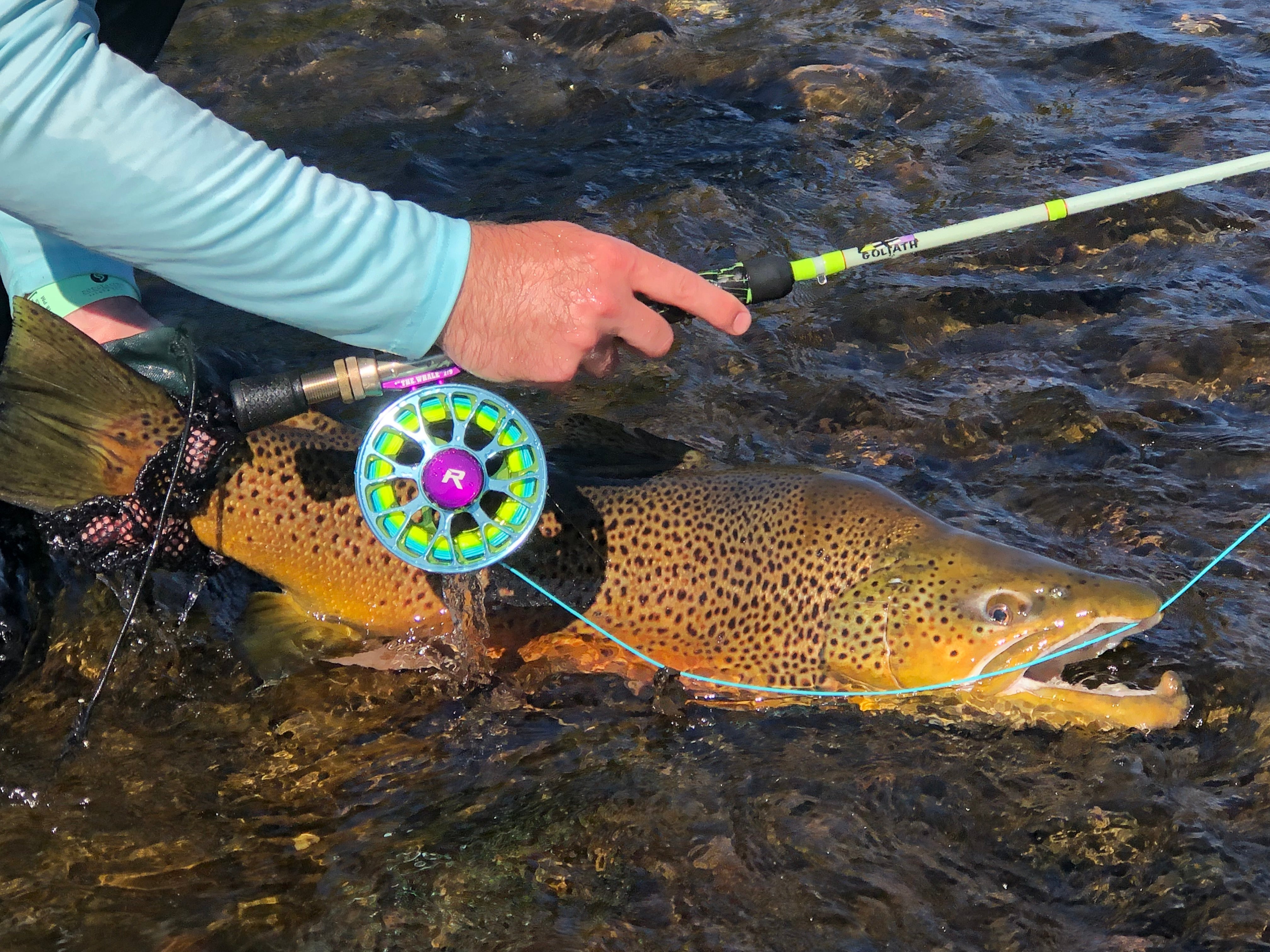
The rule for fighting a big fish on light tippet is simple and rarely followed: pull hard whenever the fish is not pulling, and give whenever it shakes its head, jumps or runs. Move the moment you hook up, because a big fish usually takes a second to realize it is hooked, and those seconds are your chance to drag it away from the log or the undercut it was holding in. Keep the rod inside about 45 degrees to either side and lead the head, since the fish can only follow where its head goes, and steer it out of the main current into the soft edges. Never let the rod flatten out toward the fish, because that is where the shock absorber disappears and the tippet takes the full jolt.
Key takeaways
- Cut the tippet on a hinged rig to match the depth being fished and retie when you move to deeper water, rather than adjusting the indicator up the leader.
- Never draw a knot up dry; friction from tightening nylon, copolymer or fluorocarbon can leave a knot that slips later, and a curlicue on the tag end means the knot slipped rather than the tippet failing.
- Use copolymer, not fluorocarbon, above the indicator for dead drift work, because a sinking leader cannot be mended without moving the fly.
- Fish an orange fly through a clear run once and watch what the current actually does to it; it is the fastest way to learn why a drift is failing.
- Move the split shot closer to the fly when you can see fish but are not connecting, and farther back only when you need a more natural drift.
- When a fish flashes white on the take, wait for the mouth to close before setting the hook, then sweep off to the side.