
An all-inclusive fly fishing lodge cost normally covers your room, every meal, guided fishing, boats and fuel, and transfers once you are inside the programme. It almost never covers airfare, the charter leg, licences, gratuities, alcohol, flies or trip insurance. Plan on adding 20 to 50 percent on top of the lodge rate, and budget gratuities first.
Todd called me from a hotel lobby in Anchorage the night before his flight out to camp, and he opened with a sentence I have heard from a dozen anglers: "I thought this was all-inclusive." He was not wrong about the lodge rate. He had that number memorised and he had saved for it honestly. What he had not counted was the hotel he was standing in, the charter leg the next morning, the overweight charge on his duffel, the nonresident licence, the king salmon stamp, and the gratuity envelope nobody had mentioned. Long story short, he was about $2,400 light on a trip he thought he had fully funded. The week was everything he hoped. The surprise at the front end was not.
I'm Christian Bacasa, I host the Fly Fishing Insider Podcast, and I book travel as an Authorized Agent for Frontiers International Travel — FFIP's travel partner since Frontiers was founded in 1969. In about 25 years in this sport and 225-plus episodes of talking to lodge owners and guides, I've learned that almost nobody is being dishonest about "all-inclusive." Lodges use the phrase for the part of the trip they control. The gap is between what a lodge controls and what a traveller experiences. So instead of another list of lodge rates, this post is a worksheet you can fill in for any trip, anywhere, and know your real number before you put down a deposit.
What does an all-inclusive fly fishing lodge cost actually include?
An all-inclusive fly fishing lodge cost normally includes six things: your room, every meal and soft drink, guided fishing at the published guide-to-angler ratio, the boats and their fuel, transfers between the lodge's arrival point and the lodge itself, and lodge equipment like rain gear loaners, coolers and fish care. It's a genuinely generous package, and it's why a lodge week feels effortless once you're there. You stop deciding about logistics and start deciding about flies.
Here's the thing, though. "All-inclusive" in fly fishing travel is not the phrase it is in a Cancún resort brochure. At a resort it is a promise about your whole holiday. At a fishing lodge it describes an operating programme — the part of the week the lodge staffs, feeds, guides and insures. Everything before you reach the lodge's gate, and everything that is legally or culturally yours to hand over personally, sits outside that programme by design.
Two details inside the "included" column move the value of the rate more than anything else, so read them carefully on the lodge's own information sheet. The first is the guide ratio: two anglers per guide is the world standard, one-on-one is usually a paid premium, three to a boat is occasionally a discount. The second is whether the rate is quoted per person double occupancy — nearly every rate you'll see is, which is exactly why the single supplement catches solo travellers off guard. Going alone? Read our post on booking a fly fishing trip solo first.
What does "7 nights / 6 fishing days" actually mean?
"7 nights / 6 fishing days" means you sleep at the lodge seven times and you fish six full days, because the first and last days are travel days consumed by the charter or drive in and out. That phrasing is the single most useful thing on a lodge's rate sheet and the thing readers skim past fastest. Learn to read it like a contract, because the cost per fishing day — not the cost per night — is the number that lets you compare two lodges honestly.
Do the arithmetic both ways and the picture changes. A 7-night, 6-day programme and a 6-night, 6-day programme at the same weekly rate are not the same trip; the second is better value and a harder travel day. A 7-night, 5-day programme usually signals a brutal arrival — a float-plane relay, a border crossing, a ride out to a mothership — and that fifth day is honest scheduling, not stinginess. Rachel booked what she read as a "week" in Chilean Patagonia and worked out on the plane that the programme was four and a half fishing days, because the lodge fished half days on arrival and departure. She still loved it. She'd have picked a different week had she caught it earlier.
Two more phrasings to watch. "Fishing days" at a fly-out lodge sometimes means "days on the programme," and weather can turn a fly-out day into a road-system day with no refund — normal, and covered by the lodge's weather policy rather than your rate. And "full-day guided" runs 8 hours or 11 depending on latitude and season. In Alaska in late June a full day is long; in Belize in November dark comes early. Neither is a defect. Both change what your money buys.
What is not included in an all-inclusive fly fishing lodge price?
The costs not included in an all-inclusive fly fishing lodge price fall into three buckets: the travel that gets you there, the fees and gratuities that are yours to pay, and the consumables you burn through. The worksheet below is the whole point of this post — copy it into a note and fill in the right-hand columns for the trip you're considering. The ranges are planning ranges from trips I've booked and fished, except where a figure links to the agency or carrier that publishes it.
| Line item | Usually in the rate? | Typical planning range | Pay when |
|---|---|---|---|
| Room, double occupancy | Yes | In the rate | Deposit + final payment |
| All meals and soft drinks | Yes | In the rate | Prepaid |
| Guided fishing at published ratio | Yes | In the rate | Prepaid |
| Boats, skiffs, motors, fuel | Yes | In the rate | Prepaid |
| Transfers inside the programme | Yes | In the rate | Prepaid |
| Daily fly-outs or long-run days | Sometimes | $0 if included; $300–$1,200 per week as an add-on | Prepaid or on site |
| International / domestic airfare | No | $400–$2,200 per person, economy | When you ticket, 3–10 months out |
| Regional, charter or float-plane leg | Sometimes | $250–$1,400 round trip | Prepaid with the lodge, or at the charter desk |
| Gateway hotel, each side of the trip | No | $150–$350 per night × 1–2 nights | On site or prepaid |
| Fishing licence | No | $45 for a 7-day nonresident Alaska licence; under $150 for a nonresident season in most western states | Online before you fly, or at the lodge |
| Species stamp or add-on permit | No | $45 for a 7-day Alaska king salmon stamp | With the licence |
| Destination permit / conservation fee | Sometimes | BS$20 per trip or BS$150 annually in The Bahamas; $10–$60 elsewhere | On arrival, often cash |
| Guide gratuities | No | Plan 15–20% of the fishing portion of the week | End of the week, on site |
| Lodge and house staff gratuity | No | A separate pooled envelope — budget it separately | End of the week, on site |
| Alcohol | Rarely fully | $0–$300 per week depending on the bar policy | On your lodge account |
| Flies, leader and tippet you burn | No | $60–$250 for a week, more on a flats trip | Before you go, or at the lodge shop |
| Rod and reel rental | Sometimes free loaners | $30–$75 per outfit per day where it is charged | On site |
| Excess or oversize baggage, rod tube | No | Standard checked-bag and overweight fees apply; Delta caps fishing gear at 115 linear inches and charges overweight past 50 lb | At the airport counter |
| Charter-leg excess weight | No | Alaska Seaplanes allows 50 lb and charges $1.35–$2.00 per pound over | At the charter desk, on the scale |
| Sales, lodging or tourism tax | Sometimes | 0–14% depending on the jurisdiction | On the invoice, or added on site |
| Travel insurance | No | Commonly quoted as a single-digit to low-double-digit percentage of insured trip cost | At deposit, not later |
| Single-occupancy supplement | No | Roughly 10–30% of the per-person rate | Prepaid with the trip |
| Satellite wifi and calls | Sometimes | $0–$25 per day where it is metered | On your lodge account |
| Laundry, fish processing, shipping fish home | Sometimes | $0–$400 depending on how much you box up | On site, at departure |
One line on that worksheet deserves saying out loud rather than leaving in a table cell. Gratuities are the single most commonly under-budgeted line in fly fishing travel. Not the most expensive — airfare usually wins that — but the one people discover last, at the worst moment, with no ATM in sight. And it is two lines, not one: the guides who put you on fish, and the cooks, housekeeping and camp staff who made the week work. Tipping at a fly fishing lodge covers how much, in what form, to whom, and when.
- The lodge rate itself — lodges publish it and hold it
- Meals and guided days, which almost never get quietly reduced
- Prepaid charter legs arranged through the lodge
- Licence fees, which agencies publish openly
- Gratuities, because nobody puts them on an invoice
- The bar tab, which compounds quietly over seven nights
- Flies and leader after a week of hard, honest losses
- Excess weight at a charter desk with a real scale
Open a dedicated trip fund and let it fill itself. A grayling guide out of Fairbanks, Alaska gave us a tip I now repeat to almost every angler who tells me a lodge week is out of reach: open a separate account that exists only for fishing travel, automate a small transfer into it every payday, and then stop thinking about it. His point was that a separate, auto-funded account is what turns a dream trip into a booked date, because the money is already gathered when the deposit deadline arrives. It also happens to be the cleanest way to fund the whole worksheet above — the add-ons included — instead of only the lodge rate.
Why does the final number always come in higher than the lodge rate?
The final number comes in higher than the lodge rate because anglers compare lodges by the one figure that's easy to find and hard to misread — the weekly rate — then discover the other twenty lines one at a time, in the order the trip presents them. That's a sequencing problem, not a greed problem, and the fix is simple: build the worksheet before you shortlist, not after you deposit.
The mechanism repeats, so it's worth naming. A lodge rate is a single, confident, comparable number. Every other line arrives from a different vendor on a different schedule — an airline three months out, a licence portal the week before, a charter desk on the morning of, a gratuity envelope on the last night. None of them feels large. Together they are routinely a quarter to a half of the lodge rate again. Jay, who books one big trip every other year, put the worksheet in a spreadsheet with a "who I pay" column beside every line, and the trips stopped surprising him. That's the whole technique.
There's a second, quieter reason the total moves, and it's the one that changes decisions: add-on load scales with remoteness, not with luxury. A comfortable western lodge you can drive to has a thin add-on layer. A modest tent camp four flights and a float plane from home has a thick one. Two trips with identical lodge rates can land two thousand dollars apart all-in, and the cheaper-on-paper one is sometimes the expensive one. If you're weighing that tradeoff, our breakdown of Alaska by lodge, fly-out, or road system is the closest companion to this worksheet.
Dry Fly Tactics for Selective Trout
A free eBook from the FFIP library — because the cheapest line on your worksheet is the fishing you get better at before you fly.
Download the free eBook →How much should I add on top of the lodge rate?
Add 20 to 30 percent on top of the lodge rate for a domestic western lodge week, 25 to 40 percent for a Caribbean flats week, and 30 to 50 percent for a remote fly-out week. Those are planning percentages I use to sanity-check a budget before anyone quotes anything, and they hold up well across the trips I've booked through Frontiers International Travel. They are ranges, not quotes — the point is to know which band you are in before you fall in love with a specific lodge.
| Trip shape | Add-on load on top of the lodge rate | Biggest swing line | Cash and card notes |
|---|---|---|---|
| Domestic western lodge week — Montana, Idaho, Utah, Colorado; drive or one flight | +20% to +30% | Airfare, then gratuities; the licence layer is small | Cards work everywhere; bring gratuity cash or a chequebook |
| Caribbean flats week — Belize, The Bahamas, Mexico, Cuba-style logistics | +25% to +40% | Airfare plus the bar tab, permits and tourism taxes | Bring more cash than feels sensible; small-island card terminals fail |
| Remote fly-out week — Alaska bush camps, float-plane programmes, far-north lodges | +30% to +50% | The charter or float-plane leg and excess weight on the scale | Cash only past the last real town; no ATM, no reliable signal |
Two caveats. The percentages run against the lodge rate, so a low rate in a remote place produces a startling percentage and a modest dollar figure — do the dollars too. And the band you land in is partly a choice: shoulder-season weeks, fewer fly-out days and a roommate all pull you toward the bottom of it. Our post on shoulder season fly fishing trips is the biggest lever most anglers have never pulled.
Which fly fishing lodge costs are prepaid, and which do I pay on site?
Prepaid costs are the ones with a contract behind them: the lodge deposit and balance, the single supplement, prearranged charter legs, airfare, insurance, and any fly-out package bought in advance. On-site costs depend on what you consume or hand over: gratuities, the bar tab, the lodge shop, rentals, laundry, fish processing, local permits, and excess weight at the charter desk. Knowing which bucket each line falls into is what stops you arriving somewhere remote with the wrong kind of money.
So here's what I actually do. I settle everything with a contract behind it on a credit card, deliberately — the card gives me a paper trail, some purchase protection, and often a baggage or trip-delay benefit. Then I work out the on-site number and carry it in cash, in the right currency, in small bills. For a western week that's a few hundred dollars. For a remote camp with no ATM it's the full gratuity envelope plus a cushion, because you cannot fix a shortfall from a gravel bar. Paul got caught out in Belize when the lodge's card terminal died on the last morning and only US twenties worked. The manager carried him. Don't plan on luck.
A few rules that have never let me down. Ask the lodge in writing which items settle on site, whether they take cards, and whether there's a card surcharge — in much of the Caribbean there is. Bring clean, small US bills to Latin America and the Caribbean; torn notes get refused. Split your cash across two bags and tell your card issuer where you're going. And if you're going off-grid, ask the question nobody thinks to ask: is there anywhere between the airport and the lodge to get cash? Increasingly the answer is no.
How do I use this worksheet to choose between two lodges?
Use the worksheet to convert two lodge rates into two all-in numbers, then divide each by the number of actual fishing days. That figure — all-in dollars per fishing day — is the most useful comparison in fly fishing travel and the one almost nobody calculates. It accounts for travel days, single supplements, charter legs and licence layers at once, which the headline rate cannot.
Run it and the results are sometimes uncomfortable. A remote camp with a lower weekly rate and two float-plane legs can come out above a western lodge you can drive to. A Caribbean week with a punishing single supplement can lose to a pricier lodge that pairs you with a roommate free. A bundled fly-out package can beat à la carte fly-outs even at a higher headline number. None of that shows up until you do the division.
Then, and only then, weigh what the worksheet cannot price: whether the fishing suits how you actually cast, whether the water is the water you've been dreaming about, and how much weather risk you'll carry. This is where an agent earns their keep, because a good one already knows which lodges quietly include the charter leg. That's the argument in our post on using a booking agent versus booking direct. If you'd rather split the difference and spend on guides where it matters, the hybrid DIY approach to a Belize saltwater trip is a good template — and the hub for all of it is the questions to work through before you book.
What gear actually lowers your worksheet total?
Most gear advice raises your budget. A few pieces genuinely lower it, and they all do the same job — they stop you paying a fee twice.
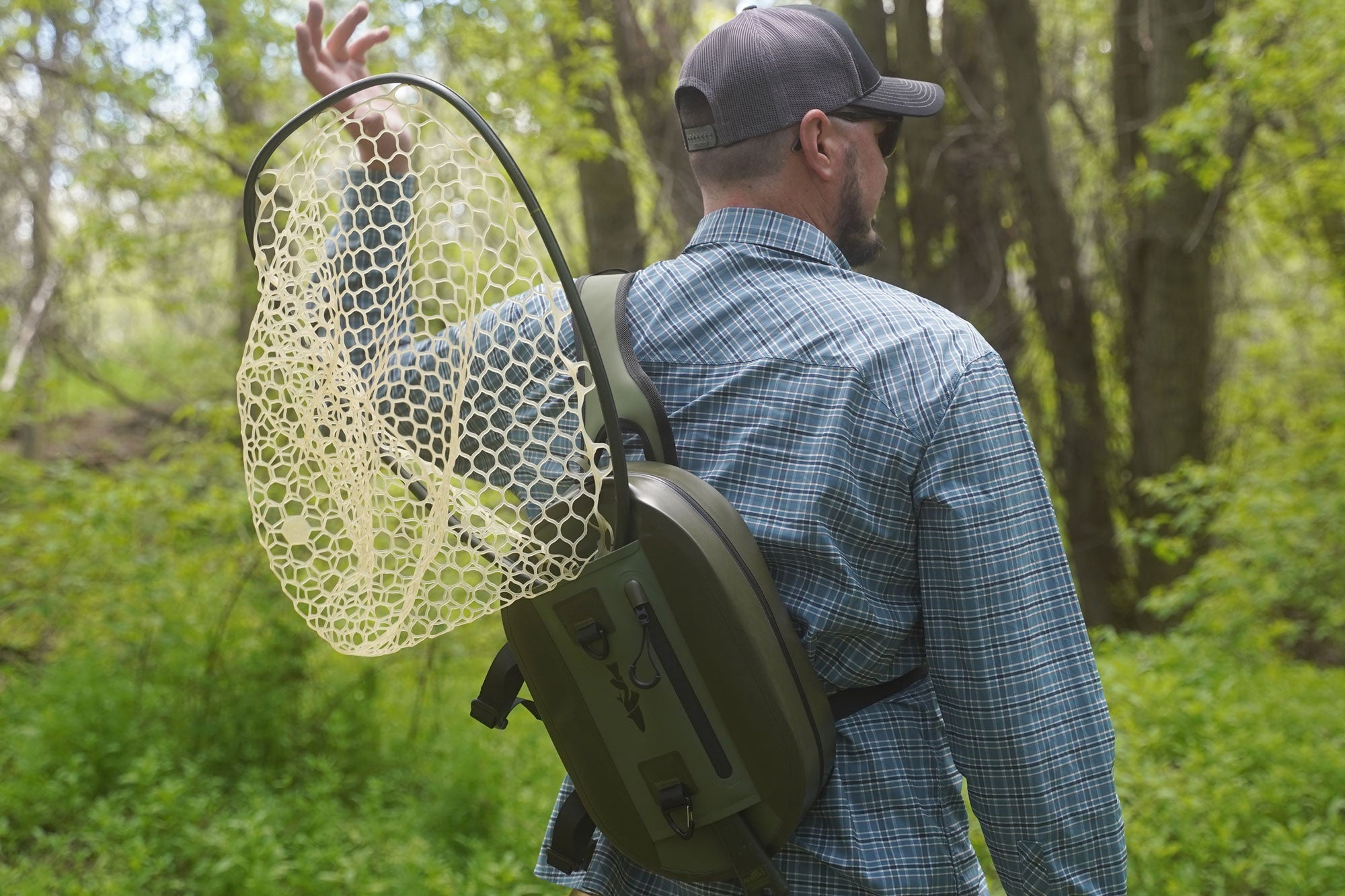
A proper rod and reel tube is the least glamorous money-saver in fly fishing travel. It keeps your rods inside your checked allowance instead of becoming a separate oversize item, and it survives being loaded into a float plane by someone in a hurry. I've replaced one rod that travelled in a hard tube and four that travelled in soft cases. Browse the rod tubes collection if yours is held together with tape.
A soft, weighable duffel matters most on the charter leg. Bush operations weigh everything, and a rigid roller spends 8 to 10 pounds of your allowance on the case itself — at a per-pound excess rate that's real money on the scale. Crushable also stows in a small aircraft instead of getting bumped to the next flight. The dry bags collection is where I'd start.
And buy your flies before you go. I've happily paid lodge-shop prices, but destination pricing is destination pricing, and the week you lose eight flies to a mangrove is not the week to discover it. Sort a box from the fly pattern assortments and ask the lodge for its actual fly list instead of guessing. On whether to bring outfits at all, our post on renting gear at the lodge or bringing your own runs the same logic over rods and reels.


Frequently Asked Questions
Does an all-inclusive fly fishing lodge rate include alcohol?
Most all-inclusive fly fishing lodge rates do not fully include alcohol. The common patterns are a cash bar billed to your room, beer and wine included at dinner with spirits charged, or bring-your-own with the lodge providing mixers and ice. A few high-end operations do include everything. Ask directly before you go: over seven nights the difference is easily a few hundred dollars, and in a bring-your-own destination you want to buy bottles in the gateway town.
Is airfare ever included in an all-inclusive fly fishing lodge price?
Commercial airfare is essentially never included in an all-inclusive fly fishing lodge price. What is sometimes included is the final regional or charter leg — the float plane, bush flight or boat transfer from the gateway town — and that inclusion is worth real money, so confirm it first when comparing two lodges. Read the rate sheet for where the programme starts and ends. "Programme begins in Anchorage" and "programme begins at the lodge" describe very different invoices.
How much should I budget for gratuities on a week at a fly fishing lodge?
As a planning figure, budget 15 to 20 percent of the fishing portion of your week for guides, plus a separate pooled amount for lodge staff. Gratuity norms vary by country and by lodge, some lodges publish guidance in their pre-trip packet, and a few add a service charge that changes the maths entirely. Ask your lodge or your agent what is customary at that specific operation, bring it in cash, and read our post on tipping at a fly fishing lodge for the breakdown.
Do I still need my own fishing licence if the lodge is all-inclusive?
Yes, in almost every case you buy your own fishing licence even at an all-inclusive lodge, because a licence is issued to a person and not to a property. Some lodges sell licences on site and add them to your account, and a few destinations fold a permit into a package. Alaska publishes its nonresident fees openly — a 7-day nonresident licence and a 7-day king salmon stamp are $45 each as of September 2026 — and The Bahamas publishes a sport fishing permit at BS$20 per trip or BS$150 annually.
What happens to my money if weather cancels fishing days I already paid for?
Weather cancellations are governed by the lodge's own policy, not by your rate, and most lodges do not refund fishing days lost to weather because the staff, food and boats were provisioned for you anyway. What good lodges do instead is substitute fishable water — a road-system river instead of a fly-out, a leeward flat instead of an exposed one. This is the risk trip insurance and a well-chosen travel window are meant to manage, so read the actual policy wording rather than a summary.
Is a non-angling partner charged the full all-inclusive rate?
A non-angling partner is usually charged a reduced non-angler rate covering the room and meals but not a guided boat, and the discount is often smaller than people expect, because lodging and food are the expensive part of running a remote lodge. Some lodges have no non-angler rate and charge full price. If only one of you fishes, ask for that rate in writing early — it also affects the single supplement and the room configuration.
Should I put my fly fishing lodge deposit on a credit card?
Paying a lodge deposit by credit card generally gives you a clearer paper trail and, depending on the card, purchase and travel protections a wire transfer does not. Some remote lodges take cards only for deposits, add a processing surcharge, or require a wire for the balance — all normal. This is informational rather than financial advice: card benefits differ enormously, so read your own card agreement and policy wording, and ask which payment methods the lodge accepts before the deadline.
Related reading
- Before you book: the questions to work through first — the hub this worksheet belongs to.
- Tipping at a fly fishing lodge — the detail behind the most under-budgeted line on the worksheet.
- Booking agent versus booking direct — who warns you about the lines that aren't on the rate sheet.
- Rent gear at the lodge or bring your own — run the same worksheet over rods, reels and baggage fees.
- Shoulder season fly fishing trips — the single biggest lever for pulling your all-in number down.
- Alaska: lodge, fly-out, or road system — where remoteness and add-on load collide hardest.
Fill the worksheet in once and you'll never book a trip the old way again. You'll also stop quietly deciding a trip is out of reach based on a number that was never the real number in either direction. Some trips are cheaper all-in than they look; some are considerably more. The only way to know is to write the lines down, and that takes twenty minutes.
If you want help pricing a specific week rather than a category, that's what I do — start at our travel page and tell us what you're dreaming about. Follow along at @flyfishinginsiderpodcast on Instagram, where I post the unglamorous logistics as much as the fish, and join the FFIP Insiders — trip openings and planning worksheets go to that list first. Helping anglers catch any fish, any time, and anywhere starts with knowing what the trip actually costs.
Tight lines, everyone!
Go on a fly fishing trip you'll never forget
We partnered with Frontiers Travel to put you on water that's worth the flight. Tell them where you want to go. Don't wait.
Book a TripFly Fishing Insider Podcast has a referral partnership with Frontiers International Travel. If you book after being introduced through us, we may receive compensation at no additional cost to you.
A note on prices, policies and rules. Everything in this guide reflects what Fly Fishing Insider Podcast could verify as of September 2026. Licence and stamp fees, destination permits and conservation fees, lodging and sales taxes, airline checked-bag and oversize rules, charter weight allowances and per-pound excess rates, gratuity norms, single-occupancy supplements and insurance pricing all change, sometimes at short notice. Treat every figure here as a planning range rather than a quote, confirm licences on the issuing agency's own page and baggage rules on your carrier's own page, and read the actual policy wording before you pay. Frontiers International Travel confirms live pricing, policies and availability at the time you book.