
Decide item by item, not trip by trip. Bring your waders, boots, reels, lines, leaders and tippet; rent fly fishing gear at the lodge when the right rod weight is one you don't own; buy flies on site. Most Alaska lodges loan rods and flies free, and most saltwater lodges expect you fully rigged.
A buddy of mine stood in the gravel outside a Bristol Bay lodge at seven in the morning holding a cup of coffee and nothing else. His rod tube was still in Seattle. The lodge manager walked out of the shop with a 7-weight already strung, handed it over, and said this was a better rod for here anyway. He caught the biggest rainbow trout of his life that week on a rod he'd never touched before Tuesday.
I'm Christian Bacasa, I host the Fly Fishing Insider Podcast, and I book travel as an Authorized Agent for Frontiers International Travel. In 25 years in the sport and 225-plus episodes of asking lodge owners what actually goes wrong, I've watched anglers blow this decision in both directions — hauling four rod tubes to a lodge that loans current-model rods free, or landing at a bonefish lodge with a 6-weight and a trout line. The real question isn't rent or bring.
Should you rent fly fishing gear at the lodge or bring your own?
Here's the verdict, and it sounds like a dodge until you look at the table: rent some items, bring others, and the split barely changes from trip to trip. The mistake almost everyone makes is treating it as one decision. It isn't one decision. It's nine small ones.
Rods are the strongest case for renting, because the correct rod weight for a destination is often a weight you don't own. Reels are a bring if you own the right size. Fly lines are the item most worth bringing and the one most often wrong on a rental. Waders and boots are almost always a bring. Flies are almost always a buy-there. Leader and tippet are a bring, and bring more than you think.
| Item | Rent or bring | Why | Ask this |
|---|---|---|---|
| Rods | Rent — if the lodge has the right weight | An 8-weight for bonefish, a 12-weight for tarpon, a 7-weight for Alaska rainbow trout. Renting beats buying a rod for one week. | "What rod weights do you have, and are they current models?" |
| Reels | Bring — if you own the right size | A drag you trust and backing you've inspected. Reels pack flat in carry-on. | "Will your rental rods take my reel, and do your loaner reels come loaded?" |
| Fly lines | Bring — always | A tropical taper goes coily on a cold morning; a cold-water line turns to spaghetti on a 90-degree flat. Lines are light and cheap. | "What lines are on your rental rods, and what taper do your guides want?" |
| Waders | Bring — almost always | Fit and dryness are the whole game for six straight days. | "Do you stock loaner waders in my size, chest-high and breathable?" |
| Wading boots | Bring — almost always | Rental boots are a blister machine. Six days in someone else's boots is how a great trip becomes a limp. | "Are felt soles allowed, or do I need rubber soles without studs?" |
| Flies | Buy there, or use the lodge's | Local patterns, local sizes, local colors. Buying flies at the lodge isn't a rip-off — it's the cheapest way to be right. | "Are flies included, sold on site, or should I bring my own?" |
| Leader and tippet | Bring — more than you think | Light, cheap, and the thing you actually run out of on day four. | "What leader length and tippet strength do your guides want?" |
| Pack, pliers, sun gear | Bring | Fit items and consumables. Nobody wants to share pliers. | "Is there a shop on site if I forget something small?" |
| Landing net | Leave it | On a guided trip the net is the guide's, and it's bigger than yours. | "Are there unguided days where I'd want my own net?" |
| Rain gear, wading staff, boat bag | Situational — ask | Some lodges stock rain jackets, most don't. A staff matters on heavy water and is dead weight on a flat. | "Do you provide rain gear, and will I want a wading staff here?" |
What gear does a fly fishing lodge provide?
What a fly fishing lodge provides varies so much between operations that there's no useful industry standard to quote you. There's only what specific lodges publish. So here's what four real operations say on their own websites as of September 2026 — and notice how far apart they are.
Alaska West Lodge on the Kanektok River publishes that it keeps loaner waders, boots, rods, reels and lines available at no charge, and asks you to request what you need on the registration form. It also provides flies at no charge, and says that if you can't bring any, they'll hook you up. That's close to a full outfit, free.
Rainbow River Lodge goes further, publishing that it provides rods, reels, flies, leaders, tippet and everything else needed to fish if you'd rather not travel with your own. It supplies complimentary waders and non-felt wading boots — specifically non-felt soles with no studs, per Alaska Department of Fish and Game rules — and runs a stocked pro shop. It does ask you to bring a quality Gore-Tex rain jacket.
No See Um Lodge in Bristol Bay publishes that it will furnish all of your flies and loan rods and reels at no charge, with fees only for loss or damage. Its packing guide is blunt about what it won't cover: chest-high Gore-Tex waders are a must, sturdy wading boots are required, felt soles are prohibited, a good rain jacket is highly recommended. Its published rod advice is useful on its own — a 6-weight or 7-weight all-around, a 4-weight or 5-weight for dry flies, an 8-weight for salmon.
Then compare all three to Mars Bay Bonefish Lodge on South Andros. Its what-to-bring page is a bring-your-own list top to bottom: an 8-weight and a 9-weight, with the 9-weight recommended for the 10 to 20 mph winds that are normal there. A large-arbor reel with 200 yards of 20 to 30 pound backing. Floating weight-forward line. A 12-foot leader including tippet, 14 feet in calm conditions and 10 in heavy wind. And 16 to 20 pound fluorocarbon tippet, with instructions not to go lighter. Wading boots are called required and commonly forgotten. Rental rods aren't mentioned at all.
That's the whole lesson in four lodges. Remote Alaska operations frequently loan everything, because float planes lose luggage and guides would rather hand you the right tool than watch you fight the wrong one. Owner-operated saltwater lodges frequently assume you arrive rigged, because flats gear is specific and they aren't in the rental business. Neither approach is wrong. But pack for one and book the other and you have a problem — and the fix costs one email, which belongs on the same list as the rest of the questions to ask before booking a fly fishing lodge.
When is it smarter to rent fly fishing gear at the lodge?
It's smarter to rent fly fishing gear at the lodge whenever the correct rod for the destination is one you don't own and wouldn't use again for two years. That test eliminates most of the hand-wringing. Nobody needs to buy a 12-weight for one tarpon week, or a dedicated 7-weight to fish Alaska once. If the lodge has it and its guides fish it daily, renting is cheaper and better.
The second reason is quality, and it surprises people. The word "rental" makes anglers picture a taped-up rod with a mismatched reel from 2004. At the lodges I book through Frontiers, the loaner rack is often current-model rods that arrived through a brand relationship — an operation running an Orvis, Sage or Winston program frequently has this season's rods on the wall, because the brand wants guests casting them. Ask directly: are your rental rods current models, and what brand? A lodge that's proud of the answer names the model.
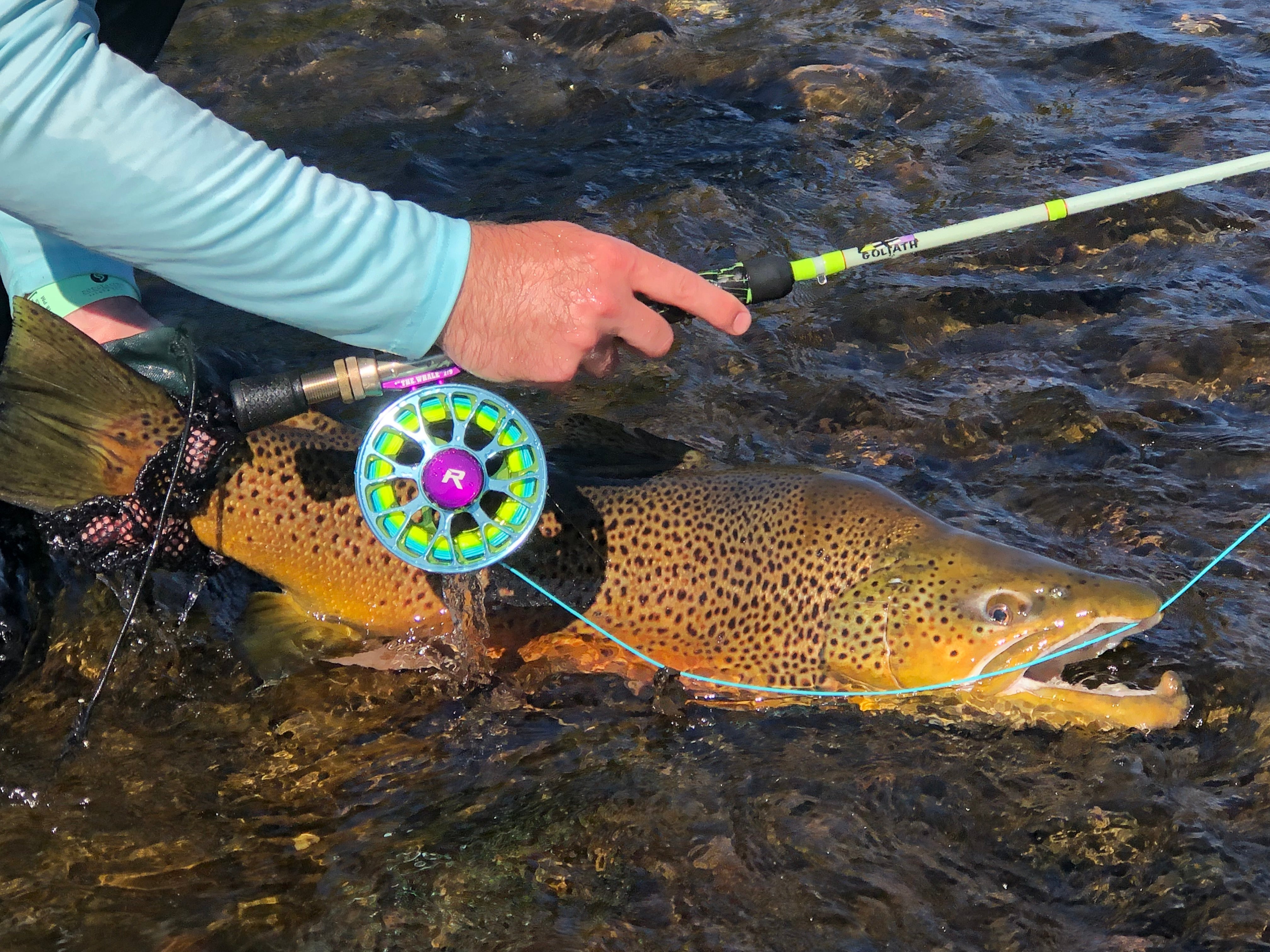
Size up to a 7-weight for Alaska rainbow trout. Kyle Shea made this point to me and it stuck: the travel 5-weight you love at home is the wrong rod for Alaska rainbows. You're throwing mice and flesh flies, often with weight, at big fish sitting in real current, and a 7-weight does that job while a 5-weight just makes you work. Hear him lay it out on his episode. That's the argument for renting in one sentence — the rod you own is frequently the wrong rod for the destination, and the lodge owns the right one.
The honest case against renting a rod
Now the other side. You cast your own rod better than you cast a stranger's rod — that's not sentiment, it's timing. You know where your rod loads and what it does at 40 feet into a headwind, and you don't want to learn that while a guide counts the seconds before a bonefish spooks. A week is a long time on an unfamiliar stick.
So here's the compromise I actually use: bring the rod you cast well in a weight that's genuinely useful at the destination, and plan to rent the specialty weight. On a Belize week that means my 8-weight in the tube and the lodge's heavier stick if permit or tarpon come up. On an Alaska week it means bringing an 8-weight I trust and taking the lodge's 7-weight for the mouse game. Familiar rod for most of the fishing, correct tool for the rest. More on that in travel fly rods: the myths and the reality.
Which fly fishing trip gear list items should never leave home?
Four categories on a fly fishing trip gear list should come from your own closet every time, and three of them are cheap. This is where the rent-or-bring conversation usually goes wrong: anglers agonize over the rod, then hand their whole week to a rental fly line and a pair of borrowed boots.
Fly lines: the item most worth bringing
Your fly line does more for your fishing than your rod does, and it's the item most often wrong on a rental setup. Not broken. Wrong. A tropical taper has a hard coating built to stay limp at 85 degrees, and on a 45-degree Montana morning it comes off the reel in coils that won't shoot through a guide. A cold-water line on a tropical flat goes soft and sticky and wraps around your feet. Same rod, same reel, completely different week.
So even when I plan to rent the rod, I bring the line. A spooled line weighs almost nothing and a guide can swap it onto a lodge reel on the boat ride out. If you take one thing from this article, take that. Not sure what taper the water calls for? Ask what the guides fish — that question always gets a real answer. Our fly lines collection is built around that decision.
Waders and boots: fit is the whole game
Bring your own waders and boots, with one exception. Six days is long enough that a wader that binds across the chest or a boot that rubs your heel stops being an annoyance and becomes the thing you think about all day. Rental boots in particular are a blister machine — not because lodges stock bad boots, but because a boot molded to somebody else's foot for two seasons will never be right for yours.
The exception is a trip where you truly won't wade: a full-boat tarpon or redfish week, a mothership operation, a float where you fish from the boat all day. There, waders and boots are heavy luggage that never leaves the bag. Get that answer in writing, because "some wading" and "we wade all day" are different packing lists. Our waders and wading jackets collection is where I'd start if yours are due anyway — break new waders in at home, not on day one.
Leader and tippet: bring more than you think
Leader and tippet is the category anglers under-pack most reliably, which makes no sense, because it's light and cheap. You'll lose leaders to mangrove roots, to wind knots, to a guide re-rigging you three times in a morning. Mars Bay telling South Andros guests to bring 16 to 20 pound fluorocarbon and not go lighter is a good reminder that destination tippet is often heavier than what's in your vest right now. Double whatever you think you need — our tippets collection has the spools worth packing.
The small personal stuff
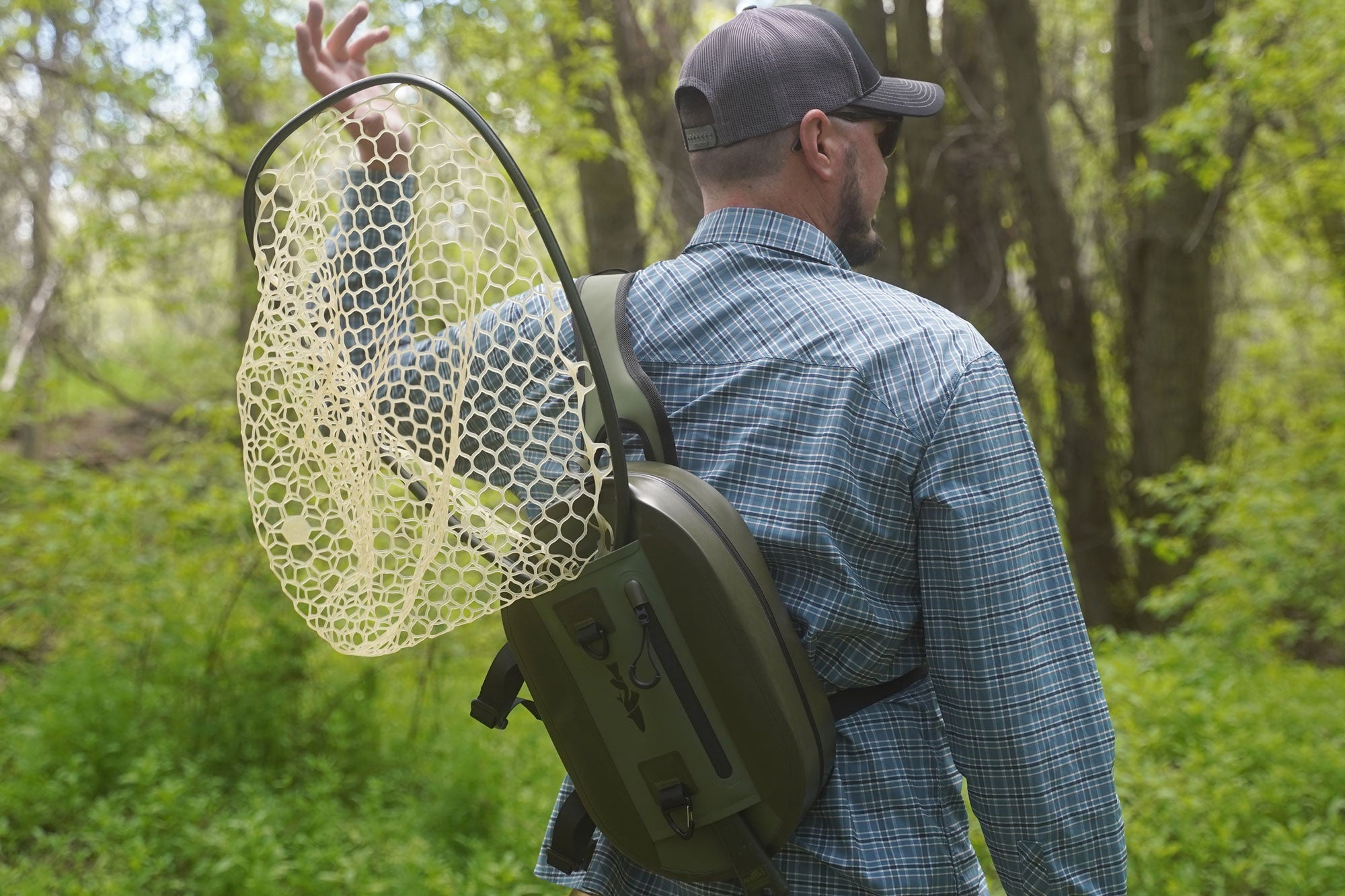
Pack, pliers, nippers, hemostats, hat, buff, sun gloves, polarized glasses and a spare pair, plus sunscreen you actually like. Fit items and consumables, and a remote pro shop may not have your thing. The one item to leave home on a guided trip is your net — the guide's is bigger, better and already in the boat. Bring a net only for unguided or walk-and-wade days.
Dry Fly Tactics for Selective Trout
If your trip has a dry fly day in it — and most western and Patagonia weeks do — this free eBook is the part of your prep that doesn't go in a bag.
Download the free eBook →Do lodges provide flies, or do you buy them there?
Many lodges do provide flies, and at the ones that don't, buying flies at the lodge is almost always right. Alaska West publishes that it provides flies at no charge. No See Um publishes that it will furnish all of them. Rainbow River includes flies, leaders and tippet with its loaner rods and reels. On the saltwater side you're likelier to find flies for sale in a lodge shop than included, but the logic is identical.
The pattern that works at a destination is a local answer, and often a narrow one. Mars Bay names a Gotcha on a size 4 hook with bead chain eyes and Veverka's Mantis Shrimp — not "shrimp patterns," but specific hooks and specific eyes. The guide standing next to you has watched a thousand bonefish refuse the almost-right fly.
So let me say it plainly, because I hear the complaint every season: buying flies at the lodge is not a rip-off. It's the cheapest possible way to be correct. Twenty or forty dollars in local flies on arrival is a rounding error against a lodge week, and it replaces a box you filled at home from a photo on the internet. I still bring a small box I have confidence in, because confidence counts for something. But I budget for local flies and I've never regretted it. The line items actually worth scrutinizing are in what all-inclusive really covers.
What happens if your luggage is late?
If your luggage is late, a lodge with rental gear turns a ruined week into an inconvenient Monday — and that fact alone should influence which operation you book. This is the argument nobody makes in the rent-or-bring debate, and it may be the most important one on this page.
Think about the geometry of a lodge trip. Commercial flight to a gateway city, then a regional flight, then often a float plane or a boat. Every handoff is a chance for a rod tube to go somewhere else, and the deeper you go, the longer a bag takes to catch up. A tube that misses a connection in Seattle can take three or four days to reach a Bristol Bay lodge, because it waits for the next scheduled flight in. On a six-day trip, that's the trip.
Now put two lodges side by side with identical fishing and identical price. One publishes loaner rods, reels, lines, waders, boots and flies at no charge. The other publishes nothing about rentals. For a destination that takes three flights to reach, I book the first one, and I'll say why out loud: it's free trip insurance that never shows up on the invoice. Todd and I have both had bags arrive late on hosted trips, and "no problem, grab a rod off the rack" beats calling an airline from a satellite phone.
It changes how you pack, too. Reels, lines, leaders, tippet, flies, glasses and one set of fishing clothes go in carry-on, because those light items are what make a loaner rod fishable. The rod tube and the waders can go checked, because a good lodge can replace those. More on that split in flying with fly rods and gear, and on the anxiety of over-packing in fly fishing trip packing uncertainty.
- The right rod weight isn't in your closet
- The lodge publishes loaner rods and names the models
- You're connecting through two or more flights
- You'd otherwise buy a rod you'd use once every three years
- It's your first trip to that fishery
- You own the correct weight and cast it well
- It's waders, boots, a reel, a line, leader or tippet
- The lodge's page reads like a bring-your-own list
- You're on a DIY trip with no lodge shop behind you
- You have a rod you fish better than anything else
What I actually travel with
Enough theory. Here's what goes in my bags, because "it depends" is a terrible answer. Two lists, saltwater and western, both assuming a guided lodge operation.
A saltwater week
- One 8-weight I cast well, in a four-piece travel tube — plus a second if I'm hosting and might lend it.
- Two reels with fresh saltwater-taper floating lines and 200-plus yards of backing, both in carry-on, plus a spare line in the pack.
- Fluorocarbon in 12, 16 and 20 pound, more than I'll use. Tapered leaders plus material to build my own.
- A small box of flies I trust, and a plan to buy local ones on arrival.
- Flats booties, not wading boots. Sun shirt, sun gloves, buff, wide-brim hat, two pairs of polarized glasses, reef-safe sunscreen.
- No waders, no net, no wading staff. And no 10-weight or 12-weight — that's the lodge's job if permit or tarpon come up.
A western week
- A 9-foot 5-weight for dry flies and a 9-foot 6-weight for streamers and wind — that covers most water from the Madison to the Green.
- Two reels, a floating line on each, plus a sink tip I can swap.
- Waders and boots broken in and leak-checked in the bathtub at home. I'm serious about that step.
- Nippers, forceps, pliers, split shot, indicators. Leaders in 3X through 6X and tippet down to 6X, with spares.
- A rain jacket, because a Montana afternoon has opinions.
- My own net if any day is walk-and-wade without a guide. The euro nymphing rod only if there's a day for it.
Notice what's identical in both lists. Reels, lines, leader, tippet and personal gear come from my closet; the specialty rod is what I'm happy to source at the destination. That pattern holds whether you're headed to Belize, Bristol Bay or an Idaho spring creek. If you're still deciding whether the trip itself fits, run it through the skill level check first — gear is the easy part of trip readiness.
The six questions that settle it
Send these six questions to the lodge, or to me if I'm booking your trip through Frontiers, and the rent-or-bring decision answers itself in one reply. I ask every one of them on every trip I put together.
- What rod weights do you have, and are they current-model rods? Tells you whether renting is viable and how seriously the operation takes gear.
- What does a rental rod cost per day, or is it included? Free loaners are common at remote lodges; shops and outfitters more often charge, and the daily rates I see run roughly $30 to $50 for a rod-and-reel combo.
- Are flies included, sold on site, or should I bring my own? Ask which three patterns the guides would want you to have if you tie.
- Do you provide rain gear? Some lodges stock jackets. Most publish that a Gore-Tex shell is on you.
- Do you stock loaner waders and boots, and in what sizes? Even if you bring your own, a leak on day two isn't the end of your week.
- What happens if my luggage is delayed? Listen for a specific process, not a reassuring noise.
One bonus question if you're flying in on a float plane: what's the weight limit per person, including gear? That answer sometimes makes the decision for you, because a 50-pound bush plane allowance and three rod tubes don't coexist. When it's tight, the loaner rack stops being a nice-to-have and becomes the plan. That's the kind of detail the whole Before You Book series exists to catch before it catches you.
The gear that earns its place in the bag
You don't need to buy anything to take a good trip. But three items genuinely change how a travel week goes, and they're what I'd spend money on before another rod. All three protect or organize the gear you decided to bring — the light stuff that makes a rental rod fishable.


Frequently Asked Questions
Do fly fishing lodges charge for rental rods?
Some fly fishing lodges charge for rental rods and some loan them free. Remote Alaska lodges frequently publish loaner rods, reels and lines at no charge, with fees only for loss or damage. Shops and outfitters in destination towns more commonly charge a daily rate, and the rates I see run roughly $30 to $50 per day for a rod-and-reel combo as of September 2026. Get the number in writing before you assume either way.
If I rent a rod at the lodge, do I still need my own reel?
You don't strictly need your own reel if the lodge loans reels with backing already on them, but bringing your own is the better play when you own the right size. A reel you've fished has a drag you trust and backing you've inspected, and reels pack flat in a carry-on. Confirm the lodge's rental rods will seat your reel — most will, but a heavy saltwater reel on a light trout rod balances badly.
Can I rent waders and boots at a fly fishing lodge?
Many lodges stock loaner waders and wading boots, especially in Alaska, where Rainbow River Lodge and Alaska West both publish complimentary waders and boots. Renting them is a fine backup and a poor plan A. Wader and boot fit determines how your legs and feet feel on day five, and borrowed boots cause blisters that borrowed waders never will. Bring your own and treat the lodge's stock as your spare tire.
How many flies should I bring if the lodge sells them?
Bring one small box of patterns you have real confidence in — twenty or thirty flies is plenty — and budget to buy local patterns on arrival. The flies on a lodge counter were chosen by the guides who fish that water daily, in the hook sizes and eye weights that actually work there. If the lodge includes flies at no charge, bring your box anyway for the comfort of fishing something you believe in.
Is it worth buying a new rod for one destination trip?
Buying a new rod for one destination trip is worth it only if the weight will earn its keep at home too. An 8-weight is a genuinely useful rod for most anglers, so buying one before a bonefish trip makes sense. A 12-weight for a single tarpon week does not. Rent the specialty weight at the lodge and put the savings toward a better fly line or an extra guided day.
What gear should go in my carry-on versus my checked bag?
Put reels, fly lines, leader, tippet, flies, sunglasses and one set of fishing clothes in your carry-on, because those light items are what make a loaner rod fishable if your checked bag is late. Rod tubes, waders and boots can be checked, since a well-stocked lodge can substitute those. Check your airline's current carry-on rules for tools like pliers and nippers before you pack them up front.
Related reading
- Flying with fly rods and gear — the carry-on versus checked decision in detail, which is the other half of this article.
- What all-inclusive really covers — whether rental gear, flies and licences sit inside or outside the package price.
- Is this trip right for my skill level? — because the wrong rod is a smaller problem than the wrong trip.
- Telescoping and packable fly rods — if you'd rather solve the rod problem with luggage-friendly gear than with a rental.
- Gear tips that actually matter — guest tips on the kit decisions that change outcomes.
- Saltwater flats tips — the rod weights, lines and leaders flats guides want you to show up with.
One last thing
Long story short: stop asking whether to rent or bring, and start asking it one item at a time. Bring what fits your body and what's light and cheap. Rent the expensive specialty thing you'd use once. Buy the flies there. Ask the six questions. That's the whole system, and it's saved me money, luggage fees and at least one trip.
If you've got a rent-or-bring story — a loaner rod that out-fished your own, or a fly box that turned out useless 4,000 miles from home — I want to hear it. Find me on Instagram at @flyfishinginsiderpodcast. And if you want the trip-planning stuff before everyone else, join the FFIP Insiders, where I share the lodge answers and gear notes that don't make it into an article. Helping anglers catch any fish, any time, and anywhere is the whole point, and packing correctly is a bigger part of that than most people admit.
Tight lines, everyone!
Go on a fly fishing trip you'll never forget
We partnered with Frontiers Travel to put you on water that's worth the flight. Tell them where you want to go. Don't wait.
Book a TripFly Fishing Insider Podcast has a referral partnership with Frontiers International Travel. If you book after being introduced through us, we may receive compensation at no additional cost to you.
Want help sorting out what a specific lodge provides before you buy a rod you don't need? That's part of what I do as an Authorized Agent — take a look at our travel page and tell me where you're headed.
A note on prices, policies and rules. Everything here reflects what Fly Fishing Insider Podcast could verify as of September 2026 on the lodges' own published pages. What a lodge provides, loans, rents or sells — rod weights on the rack, whether flies are included, wader and boot sizes in stock, rental rates, rain gear, pro shop inventory and float plane weight limits — changes season to season. Wading footwear regulations, including felt sole restrictions, are set by state and national agencies and change too. Treat every figure here as a planning range rather than a quote, and confirm the gear list in writing with the lodge before you pack. Frontiers International Travel confirms live pricing, policies and availability at the time you book.