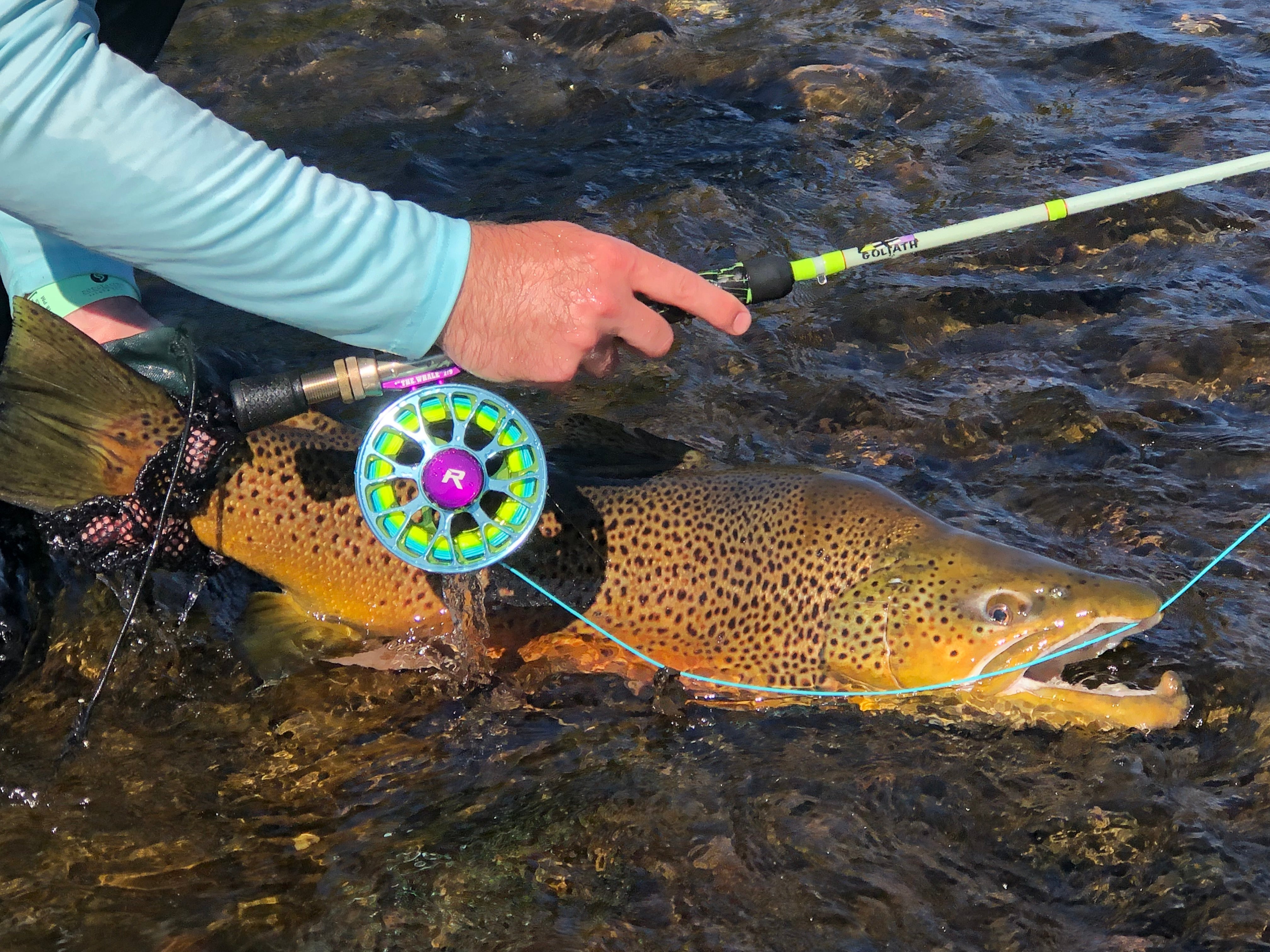

The biggest brown trout I've ever put in a net on the Green River below Flaming Gorge ate a size 20 black midge. Not a seven-inch articulated streamer. Not a mouse at midnight. A little black thread body with a copper wire rib and a bead the size of a pinhead, drifting a foot off the bottom on a cold March morning. That fish went twenty-five inches, and when I tell that story at the boat ramp, people nod politely and then go right back to tying on the biggest fly in their box.
The best flies for big trout are the ones that match what big trout eat most often, and that is usually small: midges, scuds, stonefly nymphs and mayfly nymphs in sizes 4 to 22, plus a 2- to 4-inch sculpin or leech streamer for low light. Big trout eat big flies when conditions line up. They eat small bugs every single day.
Key takeaways
- Big trout are opportunists, not specialists. Most trophy trout in western rivers eat far more insects and crustaceans than fish on an ordinary day.
- Pick trophy trout flies by forage first: tailwaters run on midges and scuds, freestones run on stoneflies and caddis, and streamer patterns earn their keep in specific windows.
- Choose size before color. A fly that is the right size and silhouette in the right depth beats a perfect color in the wrong zone.
- Big nymphs like stoneflies are the bridge fly: available all year, full of calories, and heavy enough to anchor a small dropper.
- Save the biggest streamers for low light, off-color water and the fall pre-spawn, and go smaller when fish follow without eating.
The day Tanner's streamer box went back in the truck
A couple of winters ago I spent a day on the Green with my buddy Tanner, who had just come back from a streamer trip in Montana and was absolutely convinced that the way to a big fish was a big meal. He had a box full of articulated flies that looked like they could eat a small dog, and he was going to fish them all day whether the river cooperated or not. I love that kind of commitment. I also knew what the water looked like that morning: gin clear, 38-degree water coming out of the dam, and trout stacked in the soft seams sipping something we could barely see.
Tanner worked the banks hard for two hours. He moved one fish, a decent rainbow that followed and turned away. Meanwhile I was nymphing a slow seam behind a boulder with a small scud on top and a size 20 midge below it, and I was catching fish steadily, including two browns over twenty inches. Around noon Tanner waded over, watched me release the second one, and asked what I was using. When I showed him, he laughed and said, "That's a fly for little fish." Then he borrowed two of them.
He landed a twenty-two-inch brown on the midge about forty minutes later. That fish had probably been lying in that seam all morning eating hundreds of tiny larvae while Tanner's streamer swam past like a steak dinner that nobody ordered. The lesson wasn't that streamers don't work. They absolutely do, and I'll get to exactly when. The lesson was that big trout eat what the river serves, and on most days the river serves small food.
Why the "big fly, big fish" rule steers anglers wrong
The idea that big flies catch big fish comes from somewhere real. A large trout can eat a large meal, and a large meal gives it a lot of calories for one chase. The trouble is that a trout doesn't think about what it can eat. It thinks, in its simple fishy way, about what it can eat right now for the least effort. That's an energy budget, and energy budgets favor whatever food is abundant, predictable and easy to catch.
Think of it like this. You could drive across town for the best steak in the city, or you could sit at a conveyor-belt sushi bar where small plates roll past your elbow all day long. If you're hungry on a Tuesday, you're eating the sushi. A big trout parked in a tailwater seam is sitting at that conveyor belt. Thousands of midge larvae, scuds and mayfly nymphs drift past its nose every hour, and it barely has to move its fins to eat them. Chasing a baitfish across the run costs real energy and doesn't always pay off.
The other piece of the misconception is visibility. We see the big eats. A brown trout crushing a streamer on the swing is the kind of thing you remember for years, and every magazine cover and social media feed is full of those moments. Nobody posts the quiet take on a size 20 midge where the indicator barely hesitated. So the highlight reel teaches us that big fish eat big flies, while the stomach contents tell a much more boring and much more useful story.
Do big trout eat small flies?
Yes, big trout eat small flies constantly, and in many rivers small food makes up the bulk of their diet. Large trout do become more willing to eat fish as they grow, but they rarely stop eating insects and crustaceans, especially in rivers where those foods are abundant and prey fish are not.
The research backs up what guides see on the water. A 2020 meta-analysis of brown trout piscivory published in Scientific Reports found that brown trout (Salmo trutta) generally become predominantly fish-eating somewhere between 140 and 300 millimeters long, but that piscivory runs higher in lakes than in rivers and depends heavily on how many prey fish species are available. Closer to home, Utah State University researchers studying brown trout and native sculpin in the Logan River found that fish showed up in roughly a third of the diets of brown trout age three and older, according to their published study of brown trout predation on sculpin. Flip that number around and it says something important: on any given day, most of those adult brown trout had been eating something other than fish.
Rainbow trout (Oncorhynchus mykiss) lean even harder toward invertebrates in most rivers. On famous tailwaters like the Green River in Utah, the San Juan in New Mexico and the Bighorn in Montana, huge numbers of trophy-sized rainbows and browns grow fat almost entirely on midges, scuds, sowbugs, aquatic worms and small mayflies. Those rivers are proof that you don't need a baitfish-heavy diet to grow a twenty-four-inch trout. You need a steady, dense supply of small food and cold, stable water.
What do big trout actually eat? The forage menu by water type
Big trout eat whatever is most abundant and easiest to catch in their particular water, so the best flies for big trout change with the type of river or lake you're fishing. The table below is how I think about it when I'm packing a box for trophy trout. These are my rules of thumb from years on Rocky Mountain water, not a scientific survey, and your local fly shop will always know the details for a specific river better than any chart.
| Water type | Everyday forage | Go-to big-trout flies | Typical sizes |
|---|---|---|---|
| Tailwater (Green, Provo, San Juan) | Midge larvae and pupae, scuds, sowbugs, aquatic worms, BWO nymphs | Zebra Midge, beaded scud, San Juan Worm, Pheasant Tail | 12–22 |
| Freestone river | Stonefly nymphs, caddis larvae and pupae, mayfly nymphs, sculpin | Pat's Rubber Legs, bead head caddis pupa, Hare's Ear, sculpin streamer | 4–16, streamers 2–4 in. |
| Spring creek | Scuds, sowbugs, small mayflies, midges | Scud, sowbug, small Pheasant Tail, midge pupa | 14–22 |
| Lake or reservoir | Chironomids, leeches, damselfly nymphs, scuds, baitfish | Chironomid pupa, balanced leech, damsel nymph, small minnow | 8–18 |
| Seasonal bonus (any water) | Hoppers and beetles in late summer, mice on summer nights, spawn-season eggs | Foam hopper, beetle, mouse pattern | 6–14, mice 2–3 in. |
Notice how much of that table lives below size 12. That's the whole point. If you build your trophy trout fly box around the biggest bugs in the shop, you're building a box for the five percent of days when big food is on the menu and ignoring the other ninety-five.
The big-trout fly box, built forage first
Here's how I actually stock a box when I know I'm chasing the largest fish in a river. I build it from the bottom of the food chain up, because that's where big trout spend most of their feeding hours.
Midges: the everyday meal
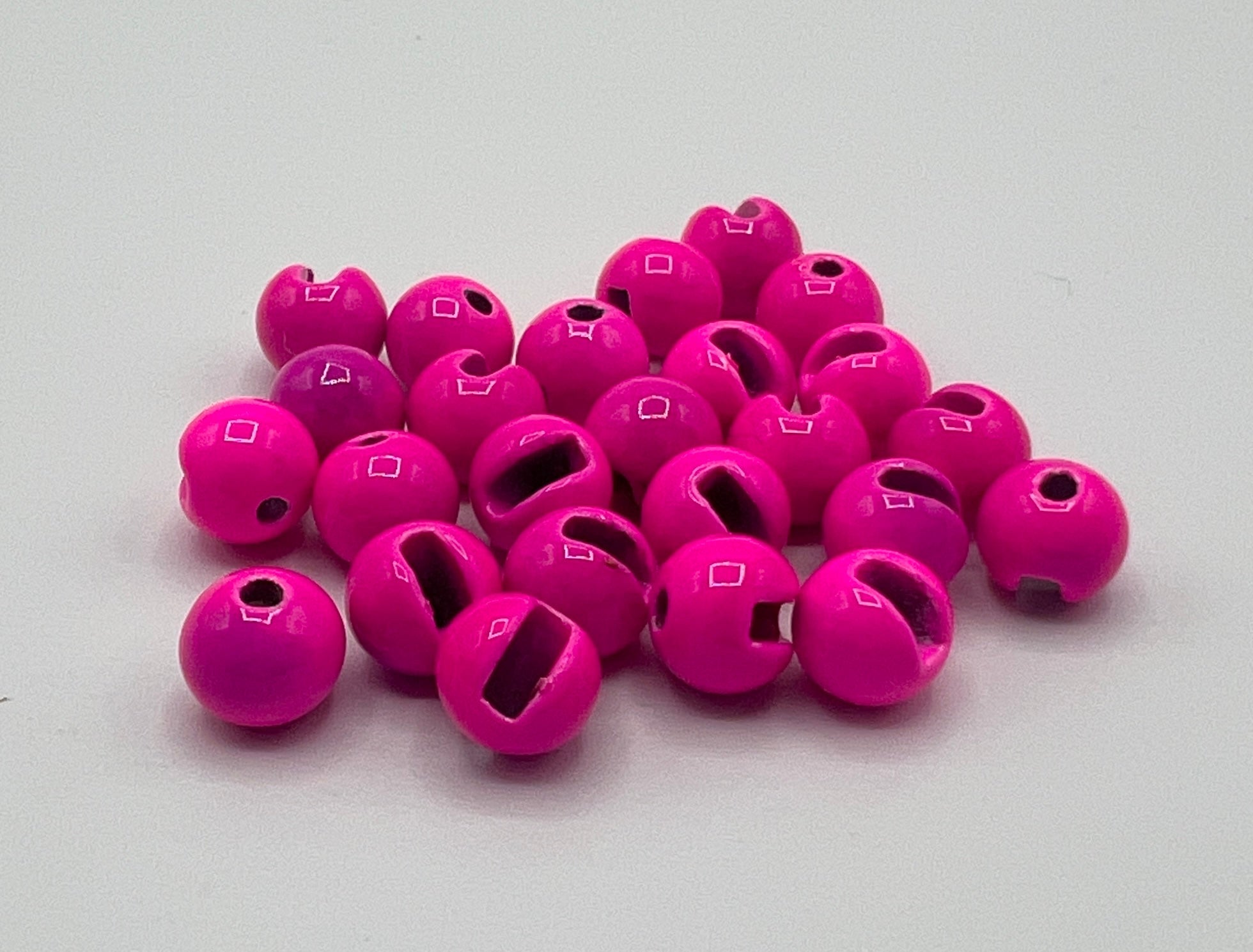
Midges (family Chironomidae) hatch every month of the year on most western tailwaters, and in winter they're often the only thing moving. A big trout sitting in a slow seam can eat midge larvae and pupae by the hundreds without ever leaving its lie. My workhorse is a black or red Zebra Midge in sizes 18 to 22, fished as the bottom fly under a scud or a small stonefly. If you want to get better at reading these tiny bugs on the water, our guide on why stoneflies belong in your box pairs nicely with this section, because the stonefly-and-midge combination is one of my favorite big-fish rigs.
Scuds and sowbugs: the protein bar
Scuds are small freshwater crustaceans, and in alkaline tailwaters and spring creeks they can be unbelievably thick. Pick up a handful of weed on the Provo River or the Green and you'll often see dozens of them wriggling in your palm. For a big trout, scuds are like protein bars: small, dense and everywhere. I fish olive, tan and orange scuds in sizes 12 to 16. The orange one isn't a mistake, either. Scuds turn orange when they die, and trout seem to love them after a flow change knocks a bunch loose.
Stonefly nymphs: the bridge between small and big
Large stoneflies like the salmonfly (Pteronarcys californica) and golden stones spend one to several years crawling around the bottom of freestone rivers before they hatch, so trout see them in every month of the season. That makes a big stonefly nymph one of the few truly large foods that is also always available. A Pat's Rubber Legs in sizes 4 to 10 is my favorite big nymph for big trout because it has real calories, it sinks fast, and it doubles as the anchor that gets a small dropper down to the bottom.
Mayfly and caddis nymphs: the bread and butter
Pheasant Tails, Hare's Ears and bead head caddis pupae in sizes 14 to 20 cover the mayfly and caddis larvae that live on nearly every rock in a trout river. These aren't glamorous flies. They're the ones that quietly produce when nothing is hatching, and big trout eat them like popcorn during the late-morning drift.
Leeches and sculpin: the real streamers
When I do tie on streamer patterns for trophy trout, I think about what a big fish actually chases. In most western rivers that's sculpin, dace, small suckers and juvenile trout in the 2- to 4-inch range, plus leeches in lakes and slow water. A Pine Squirrel Leech or a compact Sculpin Bunny covers a lot of that ground, and both are easier for a hesitant fish to eat than a fly the length of your hand.
Mice and terrestrials: the seasonal feast
Late summer hoppers and summer-night mice are the big trout's version of a holiday dinner. They show up for a few weeks or a few hours, and the biggest fish in the river will absolutely come up for them. They're worth carrying. They're just not worth building your whole approach around.
Dry Fly Tactics for Selective Trout (free eBook)
Big, picky trout reward anglers who pay attention to size, drift and timing. Grab the free eBook and get the FFIP playbook for fooling fish that have seen it all.
Get the free eBook →How I actually pick a fly for a specific big fish
When I've found a big trout, or a spot where I know one lives, I run through the same short checklist every time. It's basically the OSSCP fly selection formula we've talked about before, tuned for trophy fish.
Step one: name the water type and the dominant forage. Before I open a fly box, I ask myself what this particular river feeds its fish most. Tailwater below a dam? I'm starting with midges and scuds. Boulder-strewn freestone? Stoneflies and caddis. A lake with a big leech population? Leeches. That one question eliminates two-thirds of my box.
Step two: look before you cast. Flip a couple of rocks, sweep the weeds, and watch the fish if you can see it. A big trout that is swaying side to side in the current, opening its mouth every few seconds, is eating small drifting food. A big trout that is holding tight to a log and not moving is either resting or waiting on something bigger. Those two fish want different flies.
Step three: choose size first, then silhouette, then color. Size is the thing most anglers get wrong with big fish, because we want to give a big trout a big fly. Match the size of the naturals you found under the rocks. Then match the general shape: skinny midge, curled scud, chunky stonefly. Color comes last, and a range of natural olives, browns, blacks and tans handles almost everything.
Step four: put it where the fish is eating. The most perfect fly in the world fails if it drifts a foot over the fish's head. Big trout in cold water rarely move far for small food, so I add weight until the rig ticks bottom now and then. Depth is usually the missing ingredient, not a better pattern.
Step five: change one thing at a time. If a big fish refuses, I change size before I change pattern, and I change depth before I change anything. Swapping everything at once teaches you nothing about what that fish wanted.
One more piece of this puzzle is how you approach the fish in the first place. The best fly in the world won't matter if the trout sees you coming, and our breakdown of the stealth and leader system for hunting big trout covers the approach side in detail.
The fish only judges the fly. When streamer designer Blane Chocklett, the creator of the Game Changer, joined us on Guided Episode 9, he made a point I think about every time I chase a big trout: the fish never sees your rod or reel, only the size, profile and movement of what you put in front of it. His advice is to audit your box for the water you fish most and put your money into convincing patterns before upgrading tackle. For trophy trout, that means a box built around the real forage in your home river.
When do big flies catch big trout?
Big flies catch big trout when conditions make large prey easy to find and worth the chase: low light, off-color water, the fall pre-spawn and rivers with abundant baitfish. Outside those windows, a big streamer mostly moves fish instead of hooking them.
I'm not anti-streamer. Some of my favorite days on the water have been spent pounding banks with a sink tip, and when the conditions are right, nothing else gets the attention of a big brown trout like a well-fished sculpin pattern. Here are the windows where I reach for the bigger flies.
Low light. Early morning, late evening and heavy overcast days give big trout cover to roam and hunt. Brown trout in particular get bolder when the sun is off the water. My friend Aaron has a rule that he doesn't tie on a streamer until the shadows cover the river, and he catches more big browns than almost anyone I know.
Off-color water. After a storm or during the tail end of spring runoff, water clarity drops and small flies get harder to find. A bigger, darker fly pushes water and shows up as a silhouette. This is also when the Mini Sex Dungeon style of articulated streamer shines, because it moves a lot of water without being so big that fish shy away.
The fall pre-spawn. From roughly September into November across most of the Rocky Mountain West, brown trout get territorial and aggressive as they stage to spawn. A streamer that invades their space can trigger a strike that has nothing to do with hunger. Please check your state's regulations for seasonal closures and leave fish alone once they're on their redds.
Night and mice. On summer nights, a big trout that sat under a cut bank all day may cruise the shallows looking for a mouse or a big moth. A Morrish Mouse swung slowly across a tailout after dark is one of the most exciting ways to fish, but it's a specialty tactic, not an everyday one. Know the water in daylight first, and check whether night fishing is legal where you are.
Advanced tactics: the anchor-and-sniper rig
My favorite way to fish for big trout combines both halves of this whole argument. I call it the anchor-and-sniper rig. The anchor is a big stonefly nymph, usually a size 6 or 8 rubber legs, that carries real calories and sinks the rig fast. The sniper is a small fly tied 14 to 18 inches below it: a midge, a scud or a small Pheasant Tail that matches what the fish are actually eating.
The anchor gets the rig into the bottom third of the water column where big trout feed, and sometimes a big fish eats it outright. More often, though, the stonefly acts like a dinner bell that gets the fish looking, and the trout eats the small fly trailing behind. When my friend Josh started fishing this rig on the lower Provo, he told me the split was close to four eats on the small fly for every one on the stonefly. I've seen roughly the same thing on the Green and the Weber, and it's a nice reminder that the small fly does most of the work even when a big one is on the line.
There are a few details that make this rig work. Keep the tippet to the dropper one size lighter than the tippet above the anchor, so if you snag the bottom fly you lose only the small fly. Fish it under an indicator in slow, deep seams, or tight-line it in faster pocket water. And if you're getting refusals on a pressured river, drop the anchor entirely and fish a single small fly with a couple of split shot. Clear water and educated trout can make a two-fly rig look unnatural, and a single clean drift often wins.
Another advanced move is what I think of as downsizing your streamer on the follow. If a big fish chases your 4-inch sculpin and turns away, don't throw a bigger fly. Keep the same color and the same retrieve and go to a 2- to 3-inch version. Many anglers do the opposite, and it costs them fish. A follow means the fish was interested. A refusal at the last second usually means the fly was a little too much.
Gear for picking the best flies for big trout
You don't need a new rod to catch bigger trout. You need a smarter box. If I were starting a big-fish box from scratch, I'd buy a set of small tailwater flies, a set of big stonefly nymphs, and a handful of compact streamers before I spent a dime on anything else. A 9-foot 5- or 6-weight handles all of it except the heaviest articulated streamers, and a 4X to 6X fluorocarbon tippet covers the small-fly end of the rig. Here are the flies from the Fly Fishing Insider Podcast shop I'd put in that box first.


If you'd rather browse, the full fly pattern assortments collection has ready-made sets for tailwaters, freestones and terrestrial season, and the streamer fishing collection has the leeches, sculpins and articulated flies for those low-light days.
Frequently asked questions about flies for big trout
What is the best fly for catching big trout?
There's no single best fly for big trout, because big trout eat whatever is most abundant in their river. On tailwaters, a size 18 to 22 midge or a size 12 to 16 scud catches more trophy fish than anything else. On freestone rivers, a big stonefly nymph like a Pat's Rubber Legs in sizes 4 to 10 is the most reliable big-fish fly year-round.
Do big trout eat small flies?
Yes. Big trout eat small flies every day, especially in tailwaters and spring creeks where midges, scuds and small mayfly nymphs are extremely abundant. A large trout can gain a lot of calories eating hundreds of small insects without leaving its feeding lie, which often beats chasing a baitfish.
What size streamer is best for trophy trout?
For most western rivers, a streamer between 2 and 4 inches matches the sculpin, dace and small trout that big fish actually eat. Larger streamers can work in off-color water, low light and the fall pre-spawn. If trout follow a streamer without eating, try a smaller version of the same fly rather than a bigger one.
What do big brown trout eat in rivers?
Big brown trout in rivers eat a mix of aquatic insects, crustaceans and small fish. Stonefly nymphs, caddis larvae, mayfly nymphs, scuds and midges make up much of the diet, with sculpin, dace, small suckers and juvenile trout added as brown trout grow. Research on Utah's Logan River found fish in only about a third of adult brown trout diets.
Is it better to fish nymphs or streamers for big trout?
Nymphs catch more big trout on most days because they imitate the food trout eat most often. Streamers catch big trout during specific windows like low light, stained water and the fall pre-spawn. The most productive approach is to carry both and pick based on conditions instead of fishing one style all the time.
What time of year is best for catching big trout on flies?
Big trout can be caught all year. Winter on tailwaters is excellent for midge fishing, spring and early summer bring stonefly activity on freestone rivers, late summer is prime for hoppers, and fall is the classic streamer season for big brown trout. Pick your flies to match the season's dominant food.
Go feed the big ones what they actually eat
Here's the thing I want you to take to the river this week. The biggest trout in your home water probably ate a bug smaller than your pinky nail this morning, and it'll probably eat another few hundred before dark. That doesn't make big flies wrong. It just means that the anglers who consistently land trophy fish are the ones who fish the menu instead of their hopes. Build your box from the bottom of the food chain up, fish it deep, and save the big meals for the days that call for them. That's how you catch any fish, any time, and anywhere, including the big ones.
I'd love to hear what's working on your home water. Tag me on Instagram at @flyfishinginsiderpodcast with your biggest fish and the fly that fooled it, and if you want deals on flies, gear and trips, join the FFIP Insiders email list. My name's Christian Bacasa, and I'll see you on the water.
Join the FFIP Insiders
Get gear deals, trip intel, and tactics to help you catch any fish, any time, and anywhere. Start with our free eBook, Dry Fly Tactics for Selective Trout.
Get the free eBook →Tight lines, everyone!