
There is no universal number. How often you catch fish fly fishing depends mostly on the water. Small freestone streams tend to give more, smaller fish. Pressured tailwaters and hatch-rich technical rivers give fewer, harder-earned ones. Trophy water trades numbers for size. Judge a day against the water you are on, and count good chances rather than fish.
The first question in the parking lot is always the same. How many did you get? It's the wrong question, and it's the one that quietly ruins more days than bad weather does.
When somebody calls me about a trip, the first thing I ask is what I call angler expectation: what do you actually want out of this? Numbers, a big fish, a new species, a place you've never seen, a day with your kid? That answer changes the water, the guide, the timing and the whole plan. It also decides whether you come home happy. Skip that conversation and you can have a genuinely great day on hard water and still feel like you failed.
The Old Way of Thinking: Is a Fish Count the Best Measure of a Day?
The default mindset treats catch rate as one fixed number that ought to apply everywhere. You caught fifteen on a small mountain creek in July, so two on a technical tailwater in October feels like failure. Someone on the internet posted a net shot every hour, so your afternoon of refusals feels like a skill problem.
It's like judging every restaurant by how fast the food arrives. Speed is one measure, and it tells you nothing about what you actually went there for. Held to a single number, you'll grind water that isn't producing, skip the water that would teach you the most, and quit on days that were going fine.
The truth is less dramatic and a lot more useful: the water sets a range, and your approach decides where you land in it.
The Mindset Shift
Your water sets the ceiling. Your approach decides how close you get to it. Measure the day against what that specific water can realistically give, and count good chances, not just fish in the net.
A good chance is a fish that showed itself, a clean drift through a likely lie, a refusal that told you something, a take you missed. Count those and you get feedback every hour instead of a verdict at the end of the day. It also keeps you honest: ten good chances and no fish landed is a hookset conversation, while zero chances in two hours is a location conversation.
How This Plays Out on the Water: What Should You Expect by Water Type?
Here's how I set expectations for the water types most trout anglers fish, and what a good day looks like on each. Small freestone streams sit at the generous end of this spectrum: wild fish in tight quarters that rarely see a fly, usually willing, usually small, and the day is measured in how many pockets you can cover well. Everything below gets harder from there.
Pressured tailwaters near a city
Tailwaters like the middle Provo River here in Utah hold a lot of trout in a small amount of water, and a lot of anglers too. The fish see flies every single day. That combination means high fish density and low forgiveness: a great day is absolutely possible, but it comes from fishing well, not from the river handing you anything.
Zach Lassek, who guides out of Park City, Utah, talked on his Fly Fishing Insider Podcast episode about what that pressure does to a new guide's head: losing sleep the night before a trip, wondering whether he had the right flies, whether he knew enough, whether the day would come together. That's a professional describing water most of us fish on a Saturday. If a working guide feels that on pressured water, a slow morning isn't a referendum on you.
What a good day looks like: a handful of fish you earned, plus a clear sense of which seam, depth and drift produced them. Expect to make small adjustments constantly, and expect other anglers.
Zach Lassek on guiding Utah's heavily pressured middle Provo River, from the Fly Fishing Insider Podcast.
Hatch-rich technical rivers and spring creeks
This is the water that humbles people, and for a reason most anglers never hear. Bill Longstreet, a guide on New York's Upper Delaware, explained it on his Fly Fishing Insider Podcast episode: the hatches there are so prolific and the food supply so constant that the trout are never really scrounging. They don't have to be opportunistic, so they can afford to be as picky as they want.
That is the whole explanation for why a river absolutely stuffed with bugs and fish can feel impossible. It also tells you what to change. Bill Longstreet is emphatic that a downstream presentation to rising fish matters enormously there, and that when the surface goes quiet he'll work broken, turbulent riffle water with a dry dropper to keep clients connected rather than staring at flat water waiting for a rise.
He also says the quiet part out loud: on that river, once in a while you get blanked, and it happens to everybody. His job on those days becomes making sure people have a good time and learn something they didn't know that morning. Coming from a working guide, that should take a lot of weight off your shoulders.
What a good day looks like: a few fish fooled on purpose, in front of fish that had every reason to refuse. Spring creeks like Penns Creek in Pennsylvania ask the same kind of patience.
Upper Delaware guide Bill Longstreet on why hatch-rich rivers make trout so selective, from the Fly Fishing Insider Podcast.
Ask where the fish are before you ask what they're eating. Pennsylvania drift boat guide Bill Nolan flips the question everyone asks in the fly shop. Instead of what are they hitting on, ask where the fish are right now: riffles, pools, deep runs or up on the surface. A so-so fly presented where trout actually are beats a perfect fly drifted through empty water, and on hard days that single question is usually the difference. Bill Nolan explains it on his Fly Fishing Insider Podcast episode.
Trophy water, where you trade numbers for size
Alaska is the clearest example, and it comes with a misconception attached. James Johnson, who runs lodging and guiding on Alaska's Naknek River system, spent a good part of his Fly Fishing Insider Podcast episode unwinding the idea that Alaska is a western dry fly trip with bigger fish. The truly big lake-run rainbows there are hardly ever caught on a dry, and not often on a nymph either. That's a streamer, egg and flesh game, and knowing it in advance is the difference between a great week and a confused one.
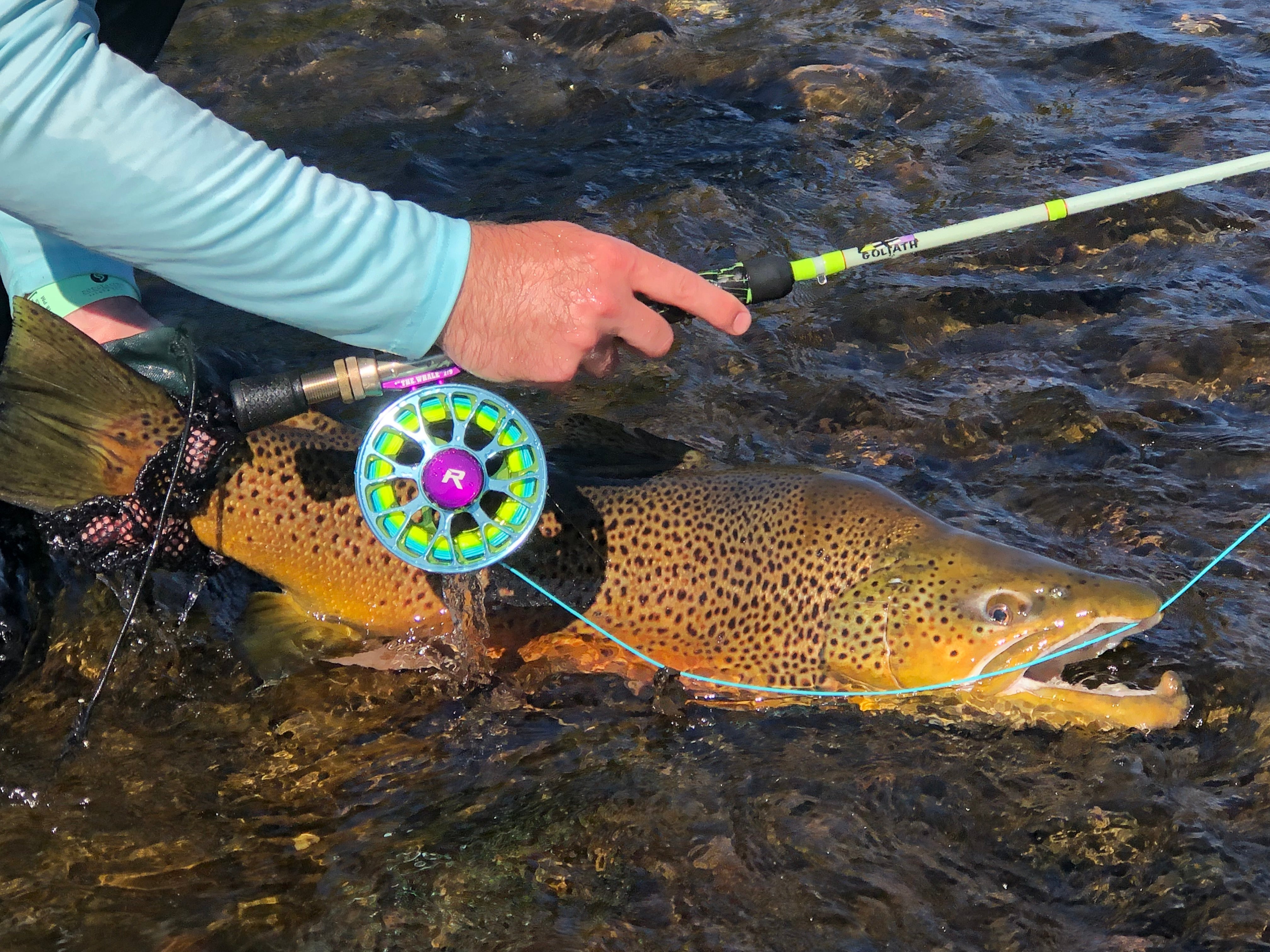
The same logic applies to any trophy fishery, including the big brown water closer to home. You are trading contacts for size. Hours can pass without a bend in the rod, and then the day turns in ten minutes. James Johnson's other piece of advice fits right here: keep moving, keep showing the fly to fresh water, and be fit enough to cover ground, because on that kind of water the number of quality shots you create is what you actually control.
What a good day looks like: one or two fish you'll be describing for years, and a lot of casts in between. If you want a sense of the specific fishery, our Naknek River guide covers it in detail.
James Johnson on what Alaska's big rainbows actually eat, and why he tells anglers to keep moving, from the Fly Fishing Insider Podcast.
What Are the Traps That Ruin a Good Day?
None of these are technique problems. They're the expectation habits that turn a normal day into a bad one.
Comparing your count to someone else's water. A friend's photo dump from a different river on a different day becomes the bar you judge yourself against.
Compare only against that water, that season and those conditions. A local fly shop or guide will tell you in thirty seconds what a normal day looks like there. Ask before you go, not after.
Letting the first slow hour decide the day. Nothing in the first hour, so you write off the day and start fishing carelessly.
Judge the day only after you've made real adjustments: depth, position, and the water type you're fishing. A slow start on hard water is data collection, not a result.
Grinding a spot because it "should" be producing. The run looks perfect, so you keep casting instead of believing what the water is telling you.
Give it a fair, systematic pass, then move. Fresh water beats another twenty casts at fish that have already seen your fly, and a rested run often fishes better an hour later.
Counting only what you land. Refusals, missed takes and follows all get filed as nothing happened.
Track chances. Fish moved, eats missed, clean drifts through good lies. That's the scoreboard that actually tells you whether your day is working.
Booking a trip without saying what you want out of it. You assume the guide knows you're after one big fish, and the guide assumes you want a bent rod all day.
Say your expectation out loud when you book, and again in the boat. Numbers day, big-fish day, learning day or a day your kid stays interested are four different trips, and a good guide can build any of them if they know which one you want.
Author's Story & Key Insights
The trip that taught me this was Alaska. My fishing partner Todd and I spent most of a day working hard, moving a lot, and not filling anybody's highlight reel. Then late in the day, on the last run, our guide put us on a spot under an overhanging bush and we doubled on two of the best fish of the trip. It happened in about three seconds after hours of nothing.
On another pass through the same run we hooked up instantly and both hauled in tiny little smolt, and the three of us laughed until we couldn't stand up straight. Same water, same day, two completely different scoreboards. The fish count never told the story of either one.
- Set the expectation before the trip, not after. It's the single best predictor of whether you'll enjoy the day.
- Hard water is hard for guides too. Blank days happen to professionals on technical rivers.
- Density and difficulty are different things. A river can be full of fish and still make you work for every one.
- On trophy water, your job is to create quality chances, not to accumulate fish.
Pro Tip from Christian
Before your next trip, write one sentence describing what a good day on that specific water looks like, in chances rather than fish. Then run it past a local shop or the guide you booked. That thirty-second conversation has saved more trips for me than any fly ever has.
Go fish it for what it is
Tell us what a good day looks like on your home water. Tag us @flyfishinginsiderpodcast, and if you want help matching the water to what you actually want out of a trip, our certified guides and lodges are a good place to start.
Find a Guide or LodgeJoin the FFIP NewsletterGo on a fly fishing trip you'll never forget
The water you keep thinking about is bookable. Tell us where you want to go and we'll help you get there. Don't wait.
Book a TripFly Fishing Insider Podcast has a referral partnership with Frontiers International Travel. If you book after being introduced through us, we may receive compensation at no additional cost to you.